Artwork
Mercury
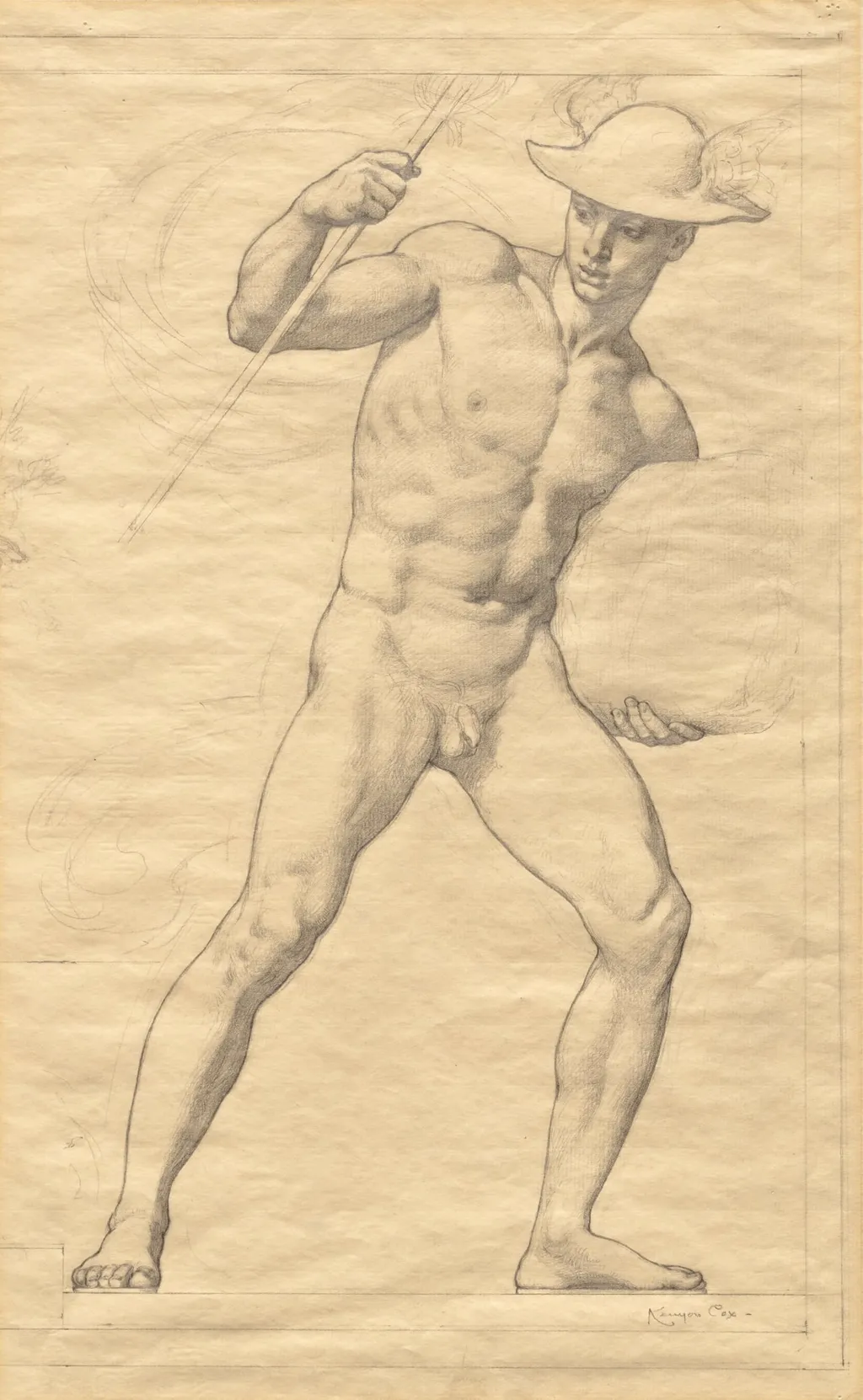
Mercury is a drawing by Kenyon Cox. It dates from 1912 and is held in the collection of the Cleveland Museum of Art.
About this work
A man in blue sandals floats above a dark floor. His wings are small and neat. He holds a staff in one hand.
This is Mercury, the Roman messenger god. Cox painted him like a real person, not a grand statue. The colors stay soft. The light fades at the edges.
It reminds me of Renaissance drawings. Look up Kenyon Cox (American, 1856–1919) to see more.
Overview
Created in 1912 by American artist Kenyon Cox, this drawing depicts Mercury, the Roman messenger god, in a quiet, intimate scale.
Created in 1912 by American artist Kenyon Cox, this drawing depicts Mercury, the Roman messenger god, in a quiet, intimate scale. Rendered in soft tones and delicate lines, the figure hovers above a shadowed ground, suggesting movement without dramatic flair. The work is part of the collection at The Cleveland Museum of Art, reflecting Cox’s interest in classical themes interpreted through a modern, restrained aesthetic.
Subject & Meaning
Mercury, known for speed and communication in Roman myth, is portrayed not as a monumental deity but as a humanized figure. His small, tidy wings and bare feet in blue sandals convey grace rather than power. The staff he holds, a traditional attribute, anchors his identity without embellishment. The image invites contemplation of divine presence in everyday form, aligning with Cox’s humanist approach to mythology.
Technique & Style
Cox employed subtle washes and fine linear detail to model the figure, avoiding bold contrasts. Light gently recedes toward the edges, creating a sense of atmospheric depth. The rendering recalls Renaissance draftsmanship in its precision and restraint, yet the muted palette and soft focus reflect early 20th-century sensibilities. The figure’s anatomy is naturalistic, grounded in observation rather than idealized grandeur.
History & Provenance
The drawing was completed in 1912 during the final years of Kenyon Cox’s career, a period when he increasingly focused on mythological subjects in intimate formats. It entered the collection of The Cleveland Museum of Art through documented acquisition, likely from the artist’s estate or a private collector. Its preservation reflects early institutional recognition of Cox’s draftsmanship beyond his more prominent paintings.
Context
In early 20th-century America, academic artists like Cox maintained a dialogue with classical antiquity amid rising modernist trends. While contemporaries experimented with abstraction or bold expression, Cox turned inward, refining traditional forms with quiet intensity. This drawing stands as a quiet counterpoint to the era’s visual upheavals, rooted in Renaissance ideals yet shaped by contemporary sensibility.
Legacy
Though less widely known than his large-scale murals, this drawing exemplifies Cox’s enduring commitment to disciplined draftsmanship and classical subject matter. It remains a reference point for understanding how American academic artists negotiated tradition and modernity. Its presence in a major museum collection affirms its role as a thoughtful, understated contribution to the revival of mythological themes in early modern art.
Artist & collection

Artist
Kenyon Cox was an American painter, illustrator, muralist, writer, and teacher. Cox was an influential and important early instructor at the Art Students League of New York. He was the designer of the League's logo,…



 Male Nude
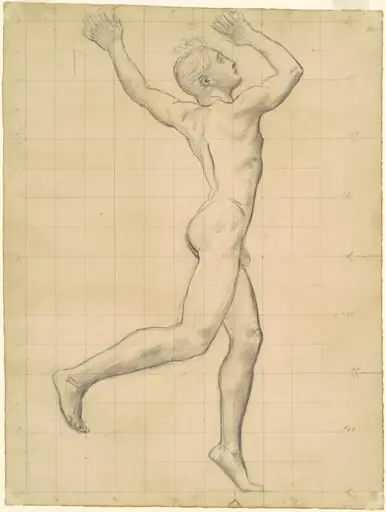 Study of Apollo for "Apollo and Daphne"
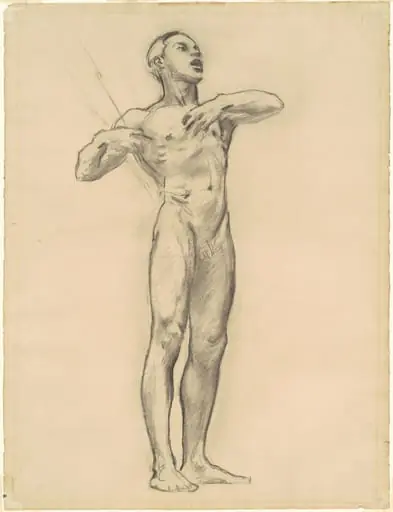 Study of Orpheus for "Classic and Romantic Art"
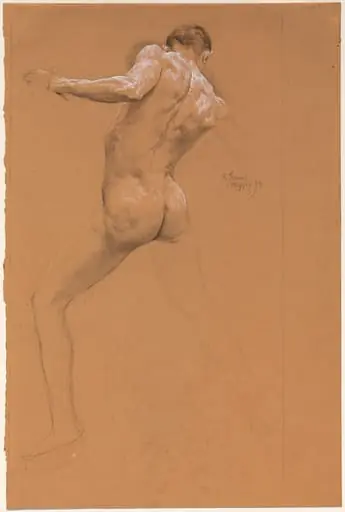 Standing Male Nude from Behind
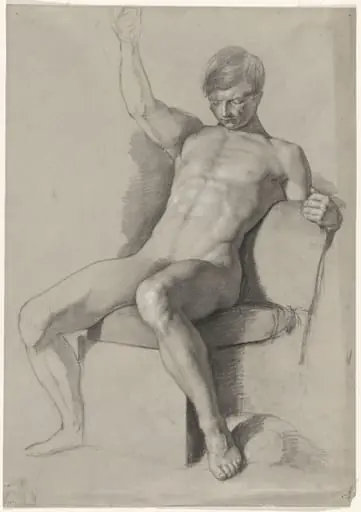 Seated Male Nude with Raised Right Hand
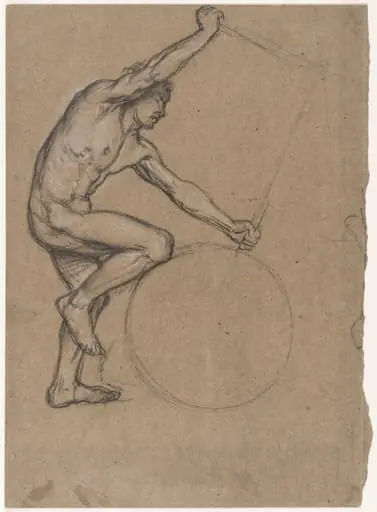 Study for the painting, "The Catapult", exhibited at the Royal Academy, 1868
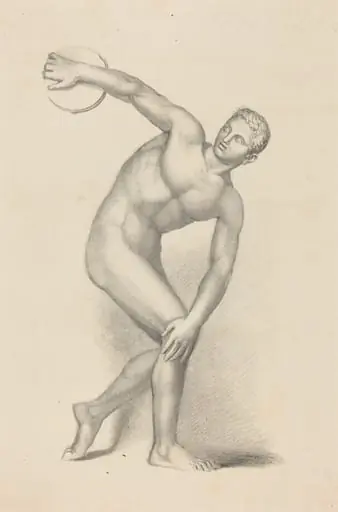 Discobulus, by Myron
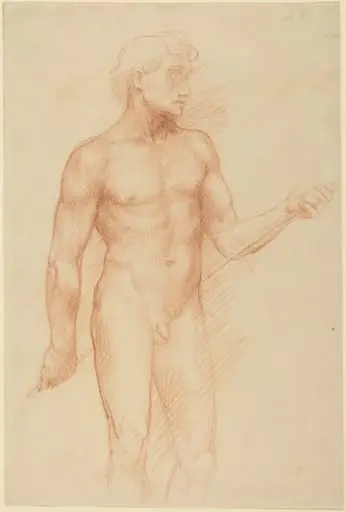 Study of a Man's Figure, Holding Rod behind Back
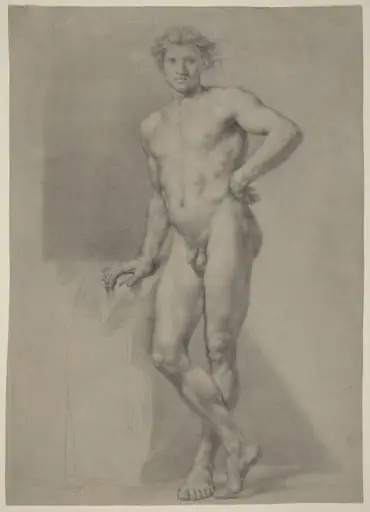 Male Nude Study
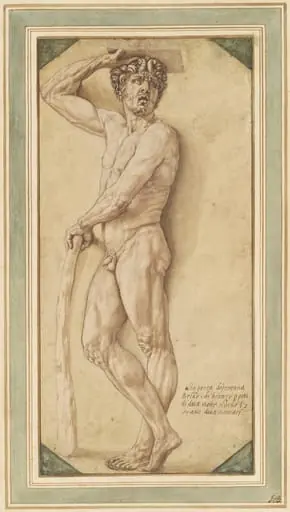 A Satyr
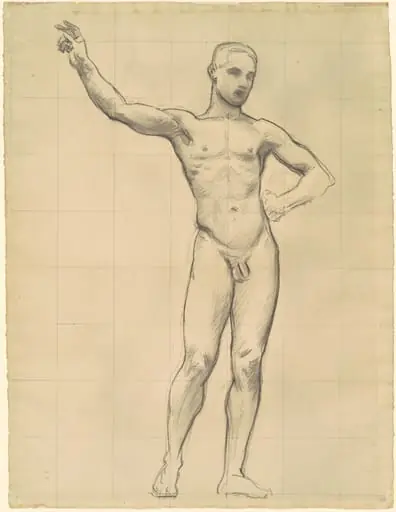 Study of Apollo for "Apollo and the Muses"
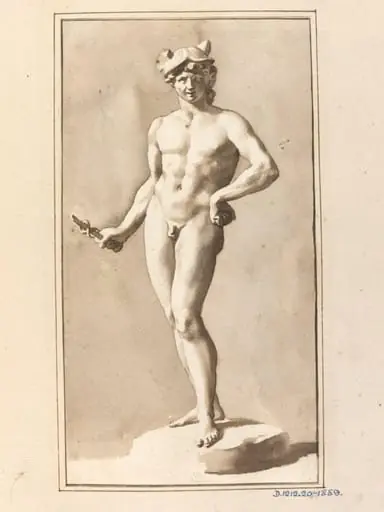 Mercury