Artwork
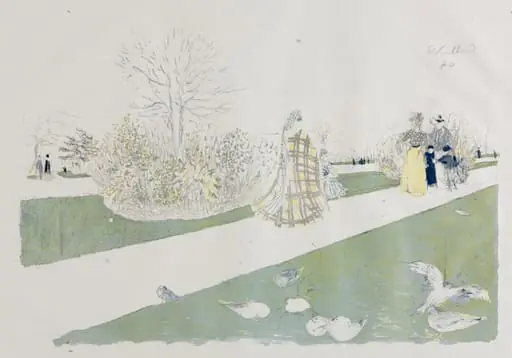
Woman in a Striped Dress
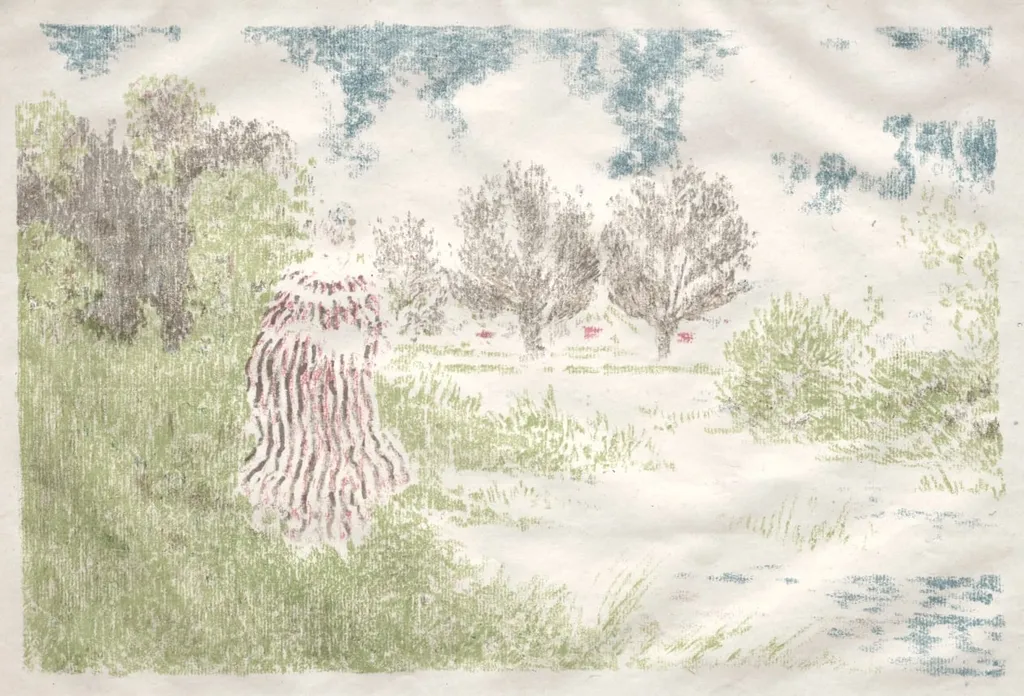
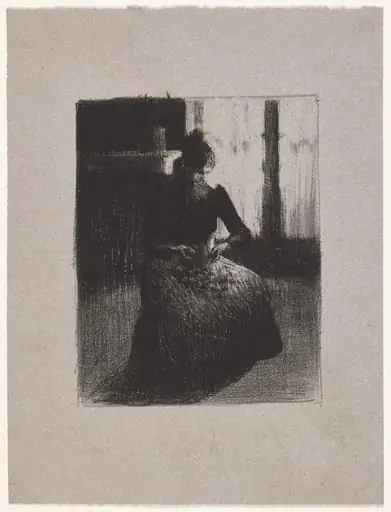
Woman in a Striped Dress is a print by the Impressionist artist Ker-Xavier Roussel. It dates from 1900 and is held in the collection of the Cleveland Museum of Art.
About this work
Overview
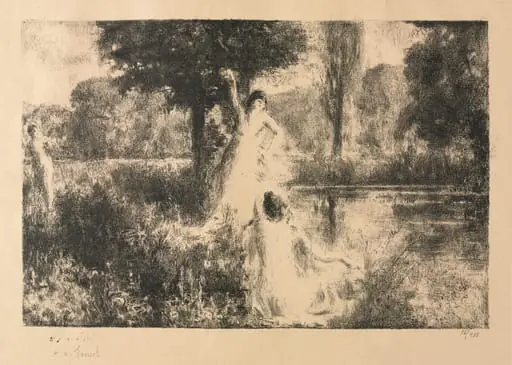
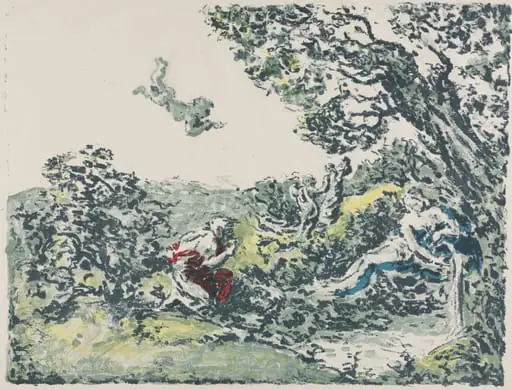
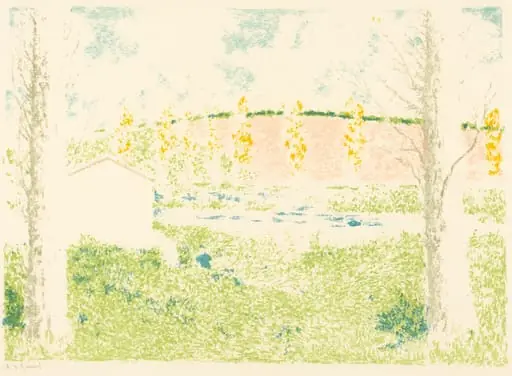
Created by Ker Xavier Roussel, this print depicts a woman walking through a spring garden, her form subtly integrated into the surrounding foliage. The composition dissolves the boundary between figure and environment through rhythmic repetition of line and color, reflecting early 20th-century interests in decorative harmony and visual unity.
Subject & Meaning
The woman is not portrayed as a distinct individual but as an element within a larger natural pattern. Her presence suggests contemplative movement through a cultivated landscape, evoking a quiet fusion of human life with the rhythms of nature. The lack of facial detail or narrative context invites interpretation as a symbolic figure rather than a specific person.
Technique & Style
Roussel employed flat, interlocking forms and a restrained palette of muted tones to unify the figure and background. Stripes on the dress echo the swirling stems and petals of the garden, creating visual continuity. The print’s linear precision and absence of chiaroscuro reflect influences from Japanese woodcuts and Art Nouveau design.
History & Provenance
Produced in the early 1900s, the work emerged from Roussel’s association with the Nabis group, who sought to elevate decorative art and challenge traditional perspective. Though not widely exhibited during his lifetime, the print is now recognized as part of a broader European movement toward stylized, non-naturalistic representation in printmaking.
Context
This piece aligns with contemporaneous efforts by artists like Gauguin and Bonnard to dissolve the separation between subject and setting. It responds to industrial-era anxieties about alienation by presenting the human form as harmoniously embedded in nature, a counterpoint to the fragmentation seen in emerging modernist styles.
Legacy
The print contributes to a lineage of works that treat the human figure as an organic component of its environment. While not widely influential in its time, its approach to pattern and integration anticipates later developments in modern graphic design and abstract figuration, particularly in the use of color and form to unify disparate elements.
Artist & collection

![Trees [verso], by David Cox](https://artifactworldgallery.com/img/david-cox--trees-verso--2f59ba73e183df09-w320.webp)