Artwork
Satyr and Flying Cupid
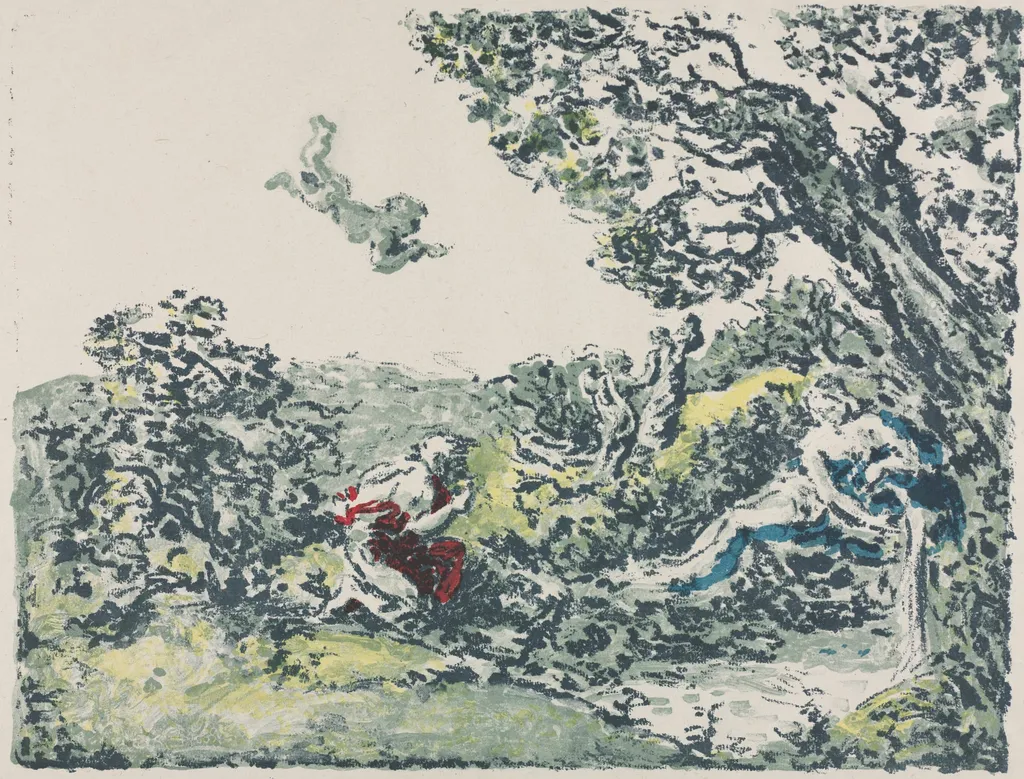
Satyr and Flying Cupid is a print by Ker-Xavier Roussel. It dates from 1900 and is held in the collection of the Cleveland Museum of Art.
About this work
If you like this strange mix of nature and myth, look up Ker Xavier Roussel (French, 1867–1944) for more of his odd, dreamy work.
This painting shows a wild, dreamy scene with two figures in the middle. One looks like a goat-man with red hair, and the other is a small, winged child. The background is a messy mix of greens, blues, and whites—like a stormy forest with floating rocks.
The red-haired figure might be a satyr, a half-goat, half-man from old myths. The small figure with wings is probably Cupid, the god of love, but here he’s flying upside down.
If you like this strange mix of nature and myth, look up Ker Xavier Roussel (French, 1867–1944) for more of his odd, dreamy work.
Overview
Satyr and Flying Cupid is a 1900 print by French artist Ker Xavier Roussel, depicting a mythological scene in a dreamlike natural setting. The work is part of the collection at The Cleveland Museum of Art. Unlike traditional mythological renderings, Roussel’s composition eschews clarity for atmospheric ambiguity, blending figures and landscape into a single, unsettled vision.
Subject & Meaning
The image presents a satyr—a creature of classical myth with goat-like features—alongside a small, inverted winged figure likely representing Cupid. Their interaction is ambiguous: neither embraces nor confronts. The inversion of Cupid suggests disruption of conventional love symbolism, while the satyr’s wild presence evokes untamed nature. Together, they inhabit a realm where myth dissolves into psychological suggestion.
Technique & Style
Roussel employed a fluid, almost impressionistic technique, using layered washes and soft contours to blur boundaries between figure and environment. The palette of muted greens, blues, and whites creates a hazy, atmospheric depth, while the satyr’s red hair serves as a focal contrast. Forms are suggested rather than defined, reinforcing the dreamlike, unstable mood of the scene.
History & Provenance
Created in 1900, the print emerged during Roussel’s association with the Nabis group, known for symbolic and decorative approaches to art. It entered The Cleveland Museum of Art’s collection in the 20th century, though its exact provenance prior to acquisition remains undocumented. The work reflects Roussel’s broader interest in mythological themes filtered through a personal, introspective lens.
Context
Roussel worked amid late 19th-century French artistic movements that rejected realism in favor of emotion and symbolism. His mythological subjects diverged from academic norms, favoring psychological nuance over narrative clarity. Satyr and Flying Cupid aligns with contemporaneous explorations of the subconscious, echoing Symbolist preoccupations with nature, myth, and inner states.
Legacy
Though not widely exhibited, the print exemplifies Roussel’s distinctive voice within Symbolist printmaking. His blending of classical motifs with surreal, organic forms influenced later artists seeking alternatives to literal representation. The work remains a quiet testament to his ability to evoke mystery through restrained, atmospheric means rather than dramatic spectacle.
Own this work as a print
Artist & collection

 A Rocky Wooded Landscape with a Figure by a Stream
 Trees Reflected in a Brook
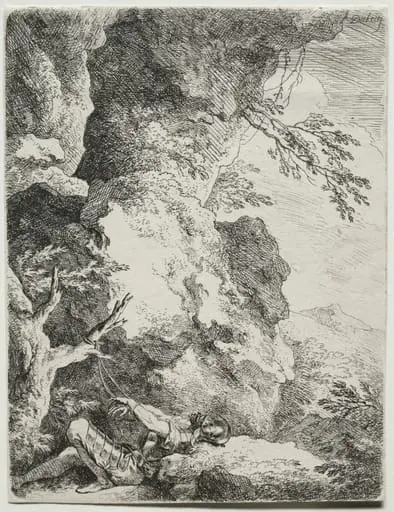 St. William, The Hermit Saint
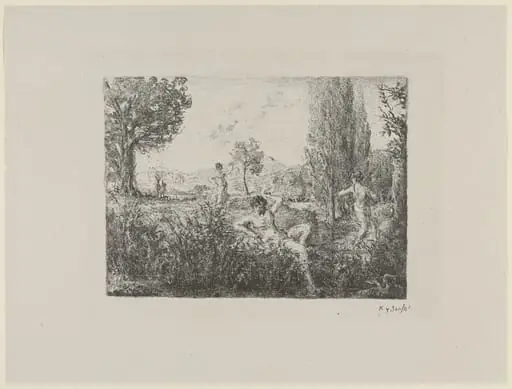 Untitled
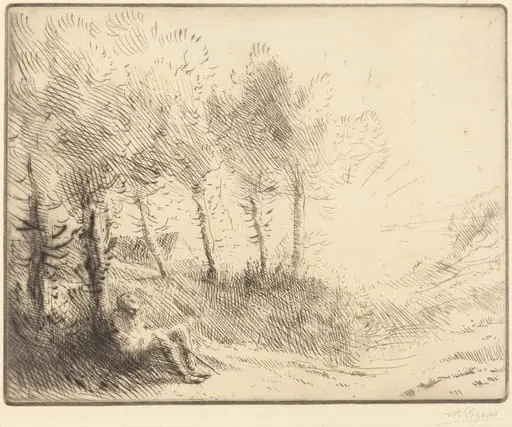 Landscape (Paysage)
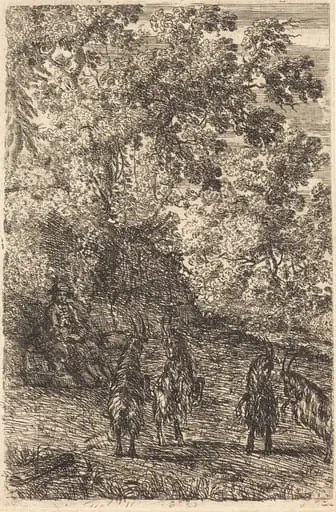 Shepherd with Four Goats (Les quatre chèvres)
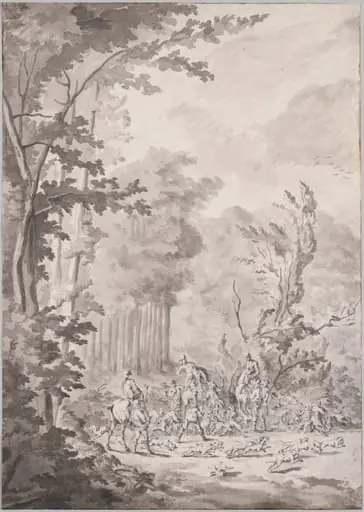 A Hunting Party at Marly
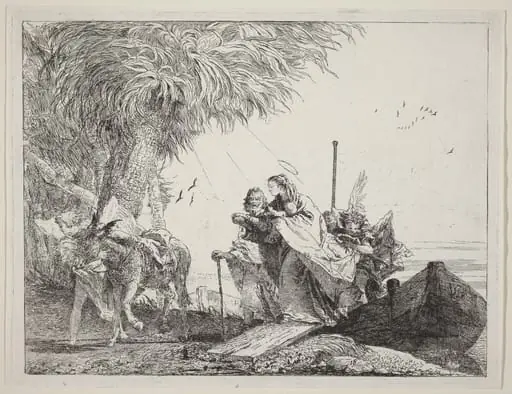 The Holy Family Disembarking
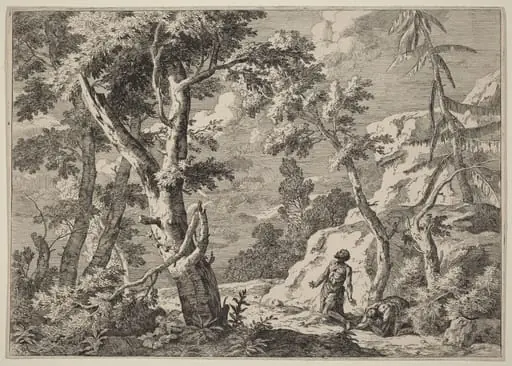 Two Men Penitent in the Wilderness
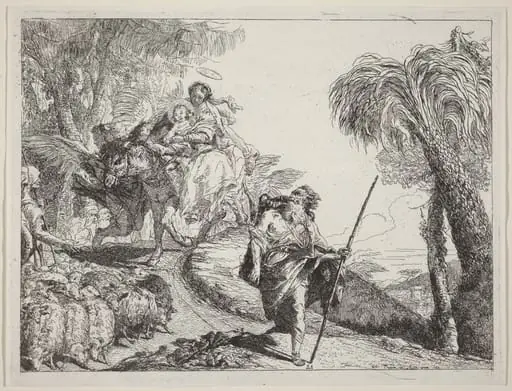 The Flight with Joseph in the Foreground
 Satyrs and Putti Playing with Animals
 Valley in Bourgogne (Une vallee en Bourgogne)