Artwork
Children Paddling, Brighton
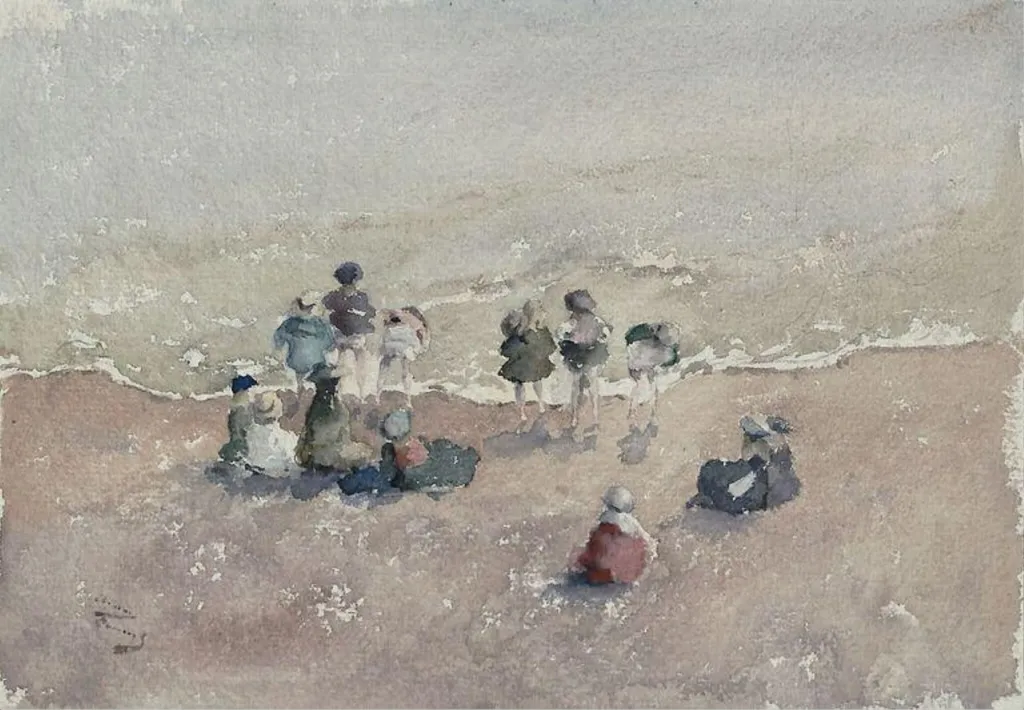
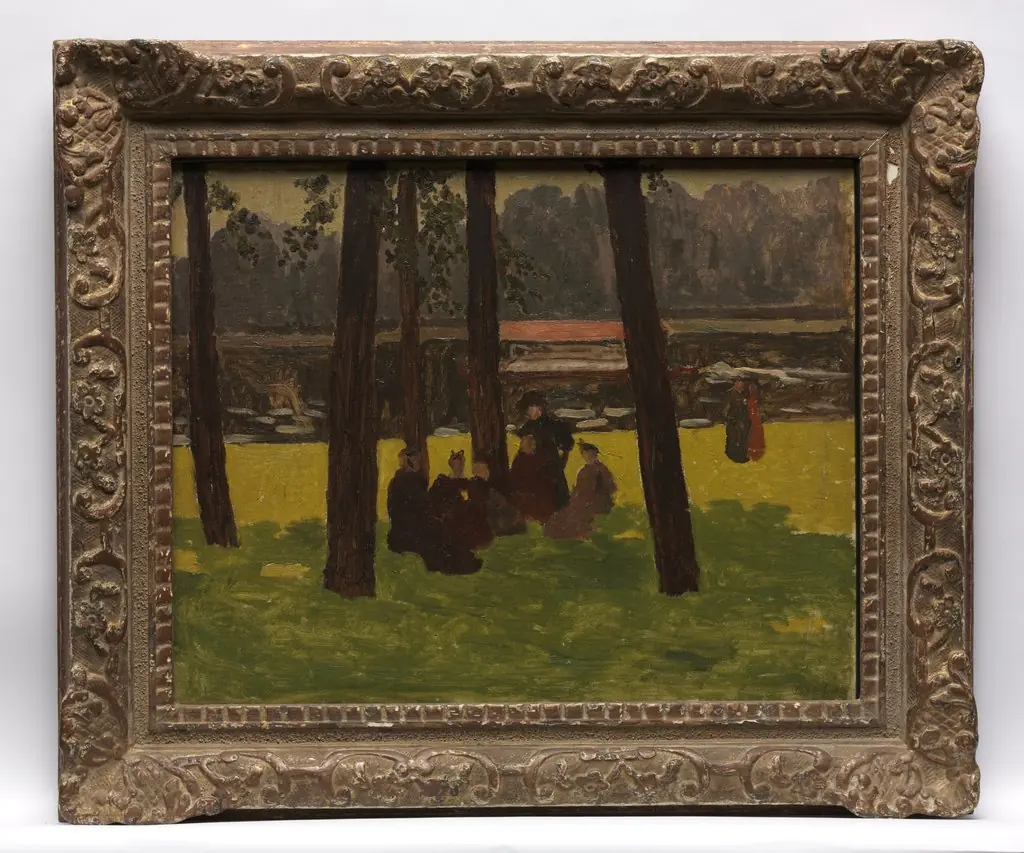
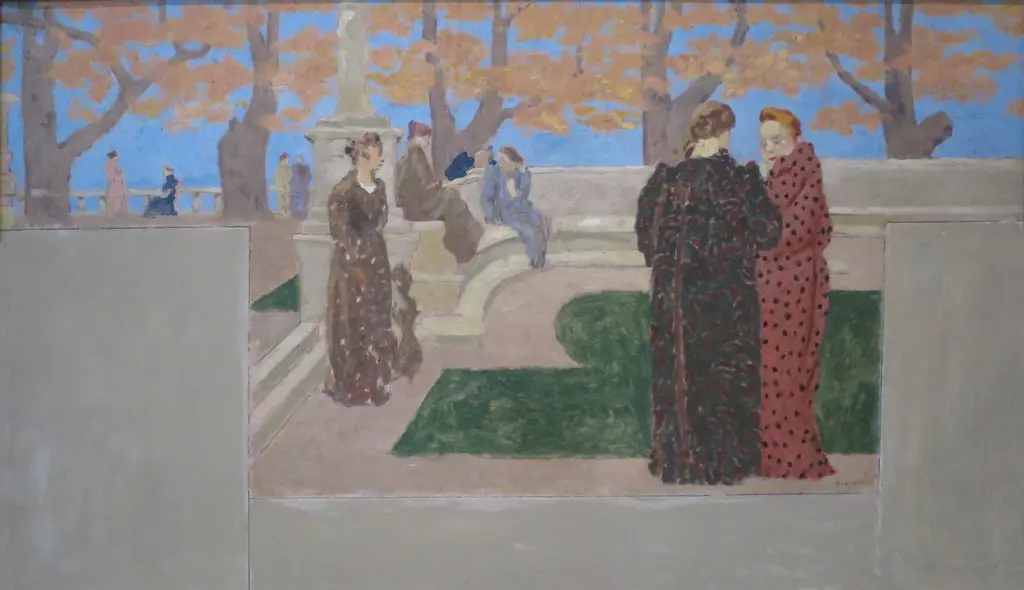
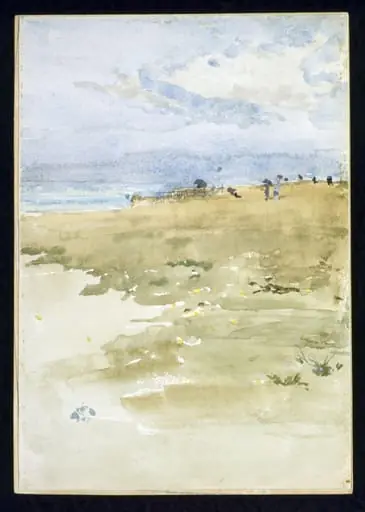
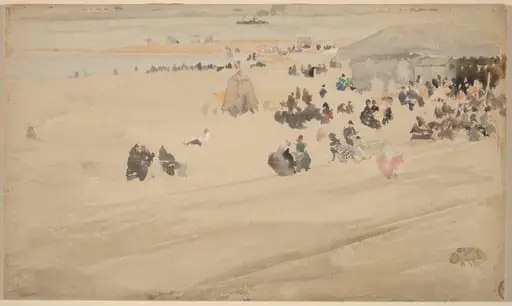
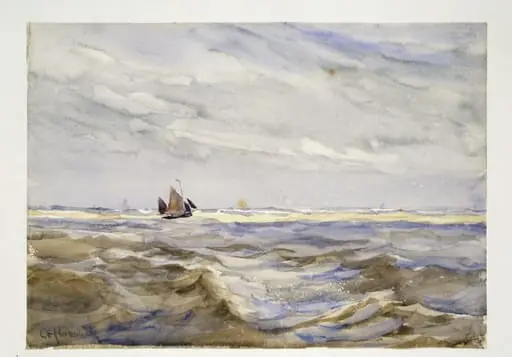
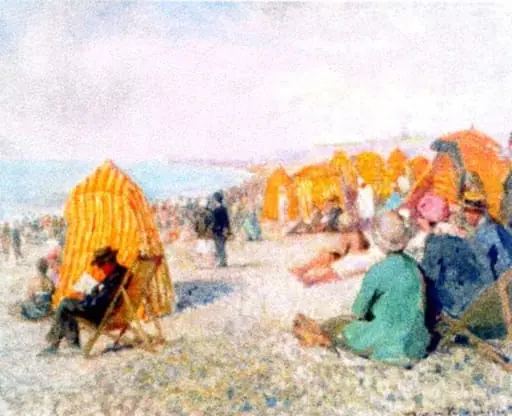
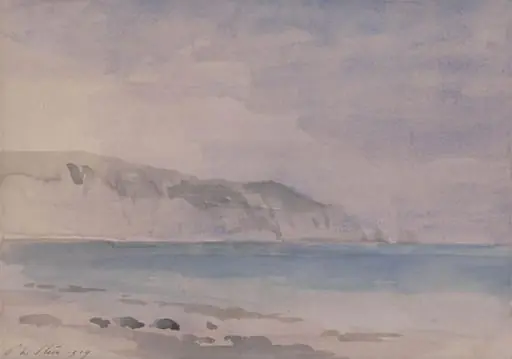
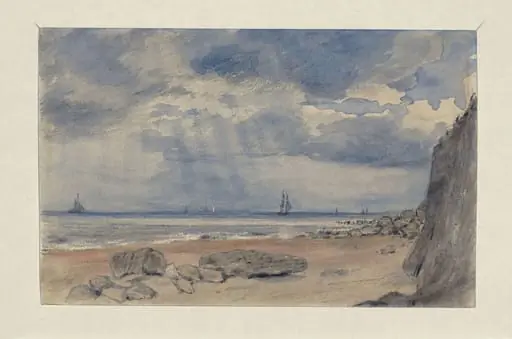
Children Paddling, Brighton is a watercolor work on paper by the Impressionist artist Ker-Xavier Roussel. It dates from 1860 and is held in the collection of the Victoria and Albert Museum. A watercolour painting captures a moment of children playing along the shore at Brighton.
About this work
Overview
A watercolour painting captures a moment of children playing along the shore at Brighton. The scene is rendered with loose, rapid brushwork that suggests spontaneity, as if observed in passing. The palette is restrained—light brown sand, pale blue-gray water—emphasizing atmosphere over detail. Birds dot the shoreline, adding quiet motion to the stillness of the tide.
Subject & Meaning
The children are engaged in simple, unstructured play: wading, standing, and one seated with a bucket. Their actions reflect ordinary seaside leisure, devoid of narrative or symbolism. The focus is on the transient nature of childhood activity, framed by the rhythmic presence of the sea and the open sky, evoking a sense of fleeting, unguarded moments.
Technique & Style
The artist employs quick, fluid brushstrokes that avoid fine definition, creating a sketchlike quality. Watercolour’s transparency allows underlying tones to show through, enhancing the sense of light and movement. The lack of detail in figures and landscape aligns with a direct, observational approach, prioritizing impression over precision.
History & Provenance
The work originates from the mid-to-late 19th century, likely created during a period when seaside resorts like Brighton became popular for leisure. Its modest scale and medium suggest it was made as a personal study or travel sketch rather than a commissioned piece. No documented ownership history is widely recorded.
Context
Painted during a time when artists increasingly turned to everyday life and outdoor scenes, the work reflects broader trends in British watercolour practice. It shares affinities with early Impressionist approaches, though rooted in the British tradition of plein air sketching, where immediacy and natural light were valued over studio refinement.
Legacy
Though not widely exhibited or reproduced, the painting exemplifies a quiet strand of 19th-century British art that privileged observation over grandeur. Its unpretentious subject and technique resonate with later documentary and informal approaches to painting, influencing how everyday moments came to be seen as worthy of artistic attention.
Own this work as a print
Artist & collection