Artwork
Korkeavuorenkatu 39, pihanäkymä
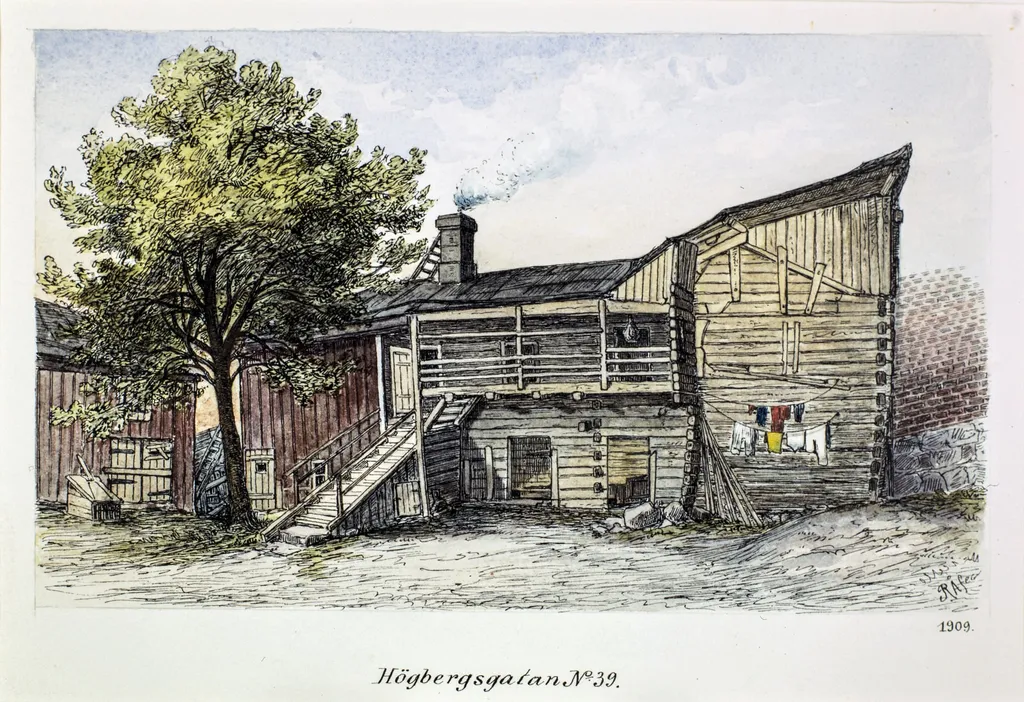
Korkeavuorenkatu 39, pihanäkymä is a drawing by Rudolf Åkerblom. It dates from 1897 and is held in the collection of the Helsinki City Museum.
About this work
Overview
A clothesline stretches between buildings, bearing hung laundry, while a tree and secondary outbuilding frame the space.
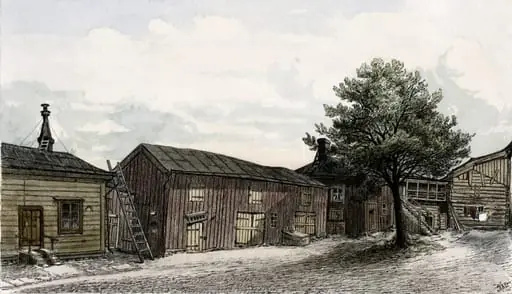
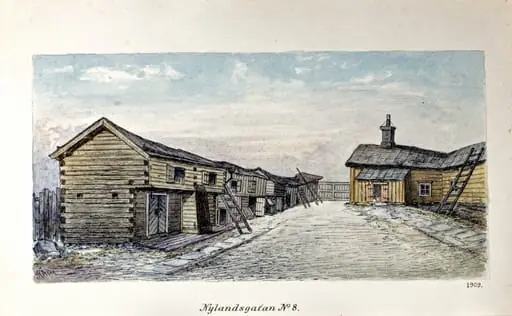
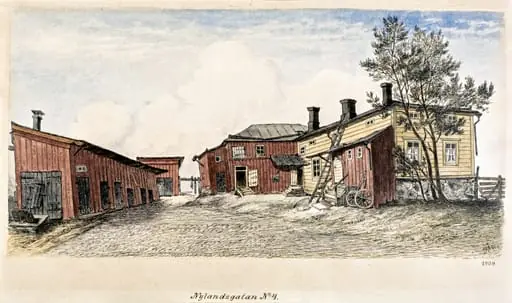
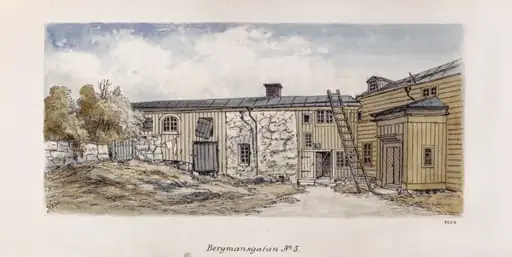
Rudolf Åkerblom painted this scene around 1897, capturing a modest courtyard view at Korkeavuorenkatu 39 in Helsinki. The composition centers on a weathered wooden structure with a visible chimney and an external staircase. A clothesline stretches between buildings, bearing hung laundry, while a tree and secondary outbuilding frame the space. The work presents an unembellished glimpse into urban domestic life during the late 19th century.
Subject & Meaning
The painting documents ordinary domestic activity—laundry drying in the open air, smoke rising from a hearth—without narrative or symbolism. It reflects the rhythms of everyday existence in a working-class neighborhood. The absence of human figures emphasizes the quiet persistence of routine, suggesting a sense of stillness and continuity rather than drama or event.
Technique & Style
Åkerblom rendered the scene with careful attention to material textures: the grain of aged wood, the drape of fabric on the line, the roughness of brick and plaster. Brushwork is precise but not overly polished, favoring observational accuracy over idealization. The palette is muted, dominated by earth tones and soft grays, reinforcing the subdued, unremarkable character of the setting.
History & Provenance
The painting originates from Åkerblom’s series documenting Helsinki’s urban architecture in the 1890s. It was likely created as part of a personal or documentary project, not commissioned. Its provenance traces through Finnish collections, with no record of public exhibition during the artist’s lifetime. The work remained in private hands until acquired by a public institution in the mid-20th century.
Context
In late 19th-century Helsinki, rapid urbanization transformed older wooden neighborhoods. Åkerblom’s painting captures a vanishing vernacular architecture before modernization erased such courtyards. His focus on modest dwellings aligns with broader Nordic trends of realism, where artists turned to everyday environments as subjects worthy of attention, countering grand historical or romantic themes.
Legacy
Though not widely known outside Finland, the painting contributes to a regional archive of urban life at the turn of the century. It stands as a quiet record of domestic space and material culture, valued today for its unvarnished depiction of ordinary environments. Åkerblom’s work, including this piece, informs historical studies of Finnish urban development and social history.
Artist & collection