Artwork
Wladimirinkatu 41 (Kalevankatu)
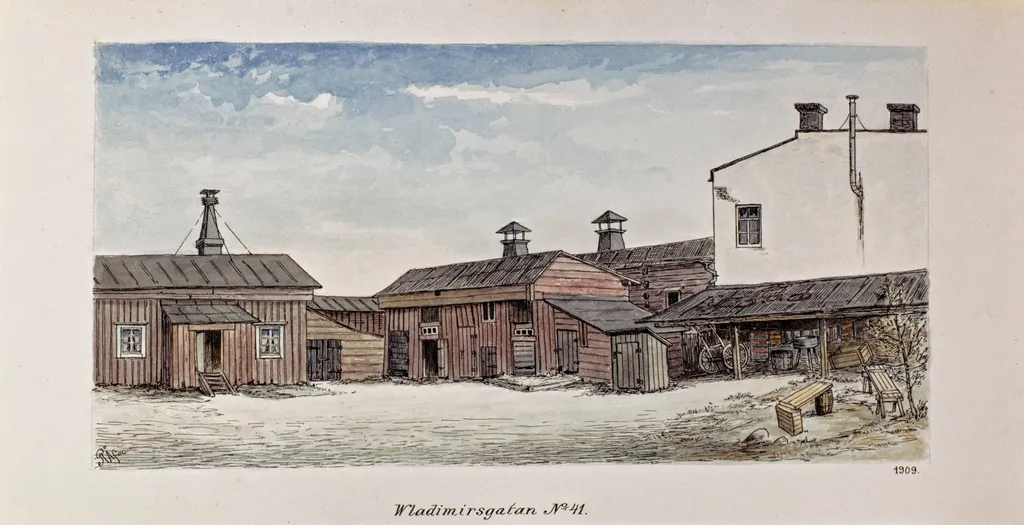
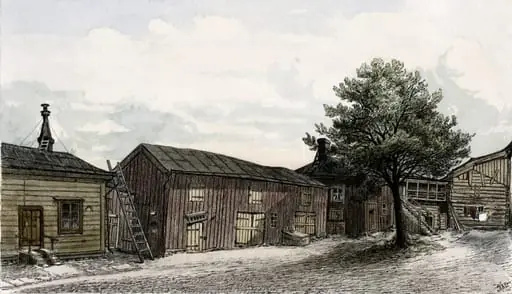
Wladimirinkatu 41 (Kalevankatu) is a drawing by Rudolf Åkerblom. It dates from 1897 and is held in the collection of the Helsinki City Museum.
About this work
Overview
The composition emphasizes the quiet endurance of the buildings and their integration with the surrounding environment.
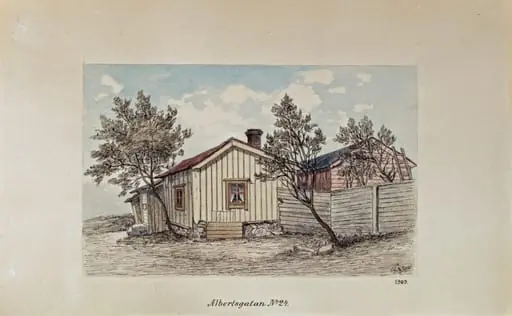
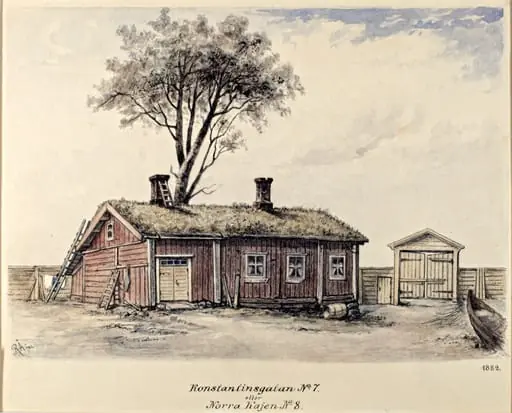
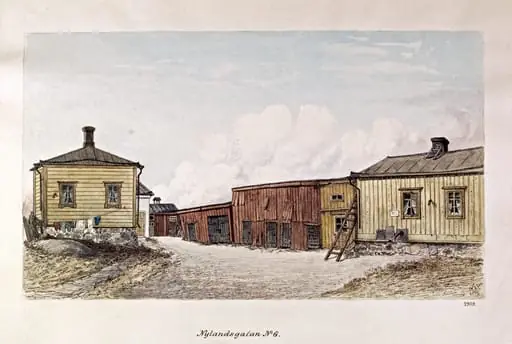
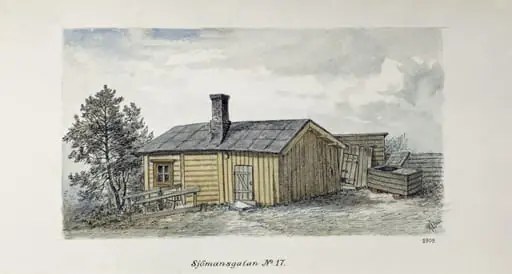
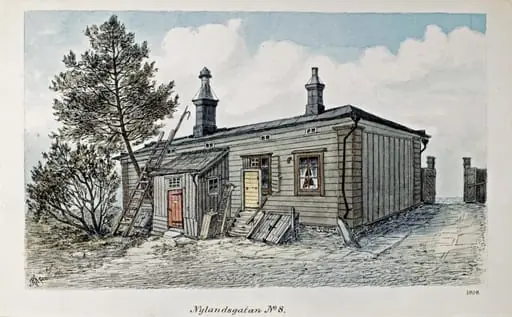
Created around 1897 by Finnish artist Rudolf Åkerblom, this drawing depicts a modest waterfront row of wooden structures in what was then known as Wladimirinkatu, later renamed Kalevankatu. Rendered in quiet, observational tones, the scene captures everyday urban architecture with minimal embellishment. The composition emphasizes the quiet endurance of the buildings and their integration with the surrounding environment.
Subject & Meaning
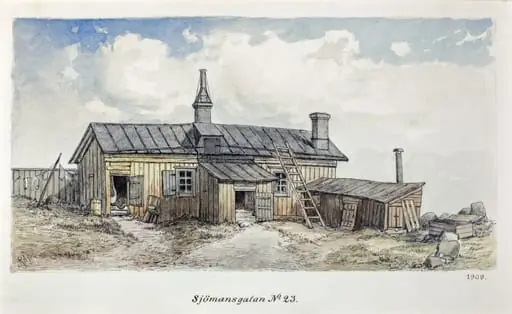
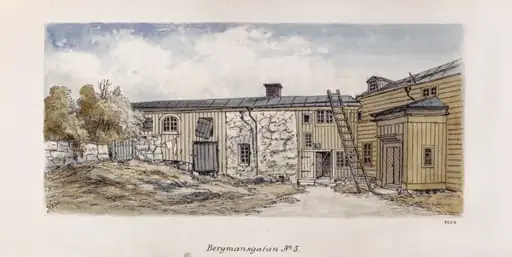
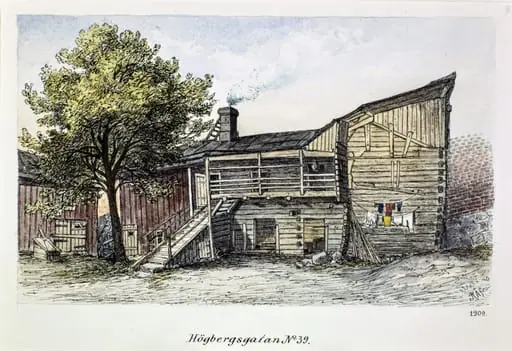
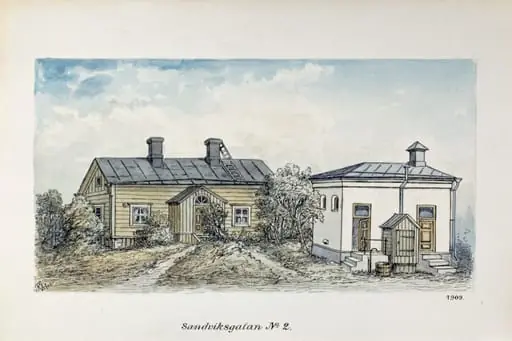
The drawing portrays a functional, working-class streetscape near the water’s edge, where modest dwellings and storage buildings coexist with utilitarian objects like crates and a wheelbarrow. There is no human presence, yet the traces of daily life are evident. The leaning structures suggest age and resilience, conveying a sense of quiet continuity rather than grandeur or decay.
Technique & Style
Åkerblom employed a restrained linear approach with soft, muted washes to define form and atmosphere. The buildings are simplified into basic geometric shapes, their textures suggested rather than detailed. The sky and water are rendered with light, even tones, enhancing the calm, uneventful mood. The lack of sharp contrast and the gentle asymmetry reinforce the scene’s unpretentious realism.
History & Provenance
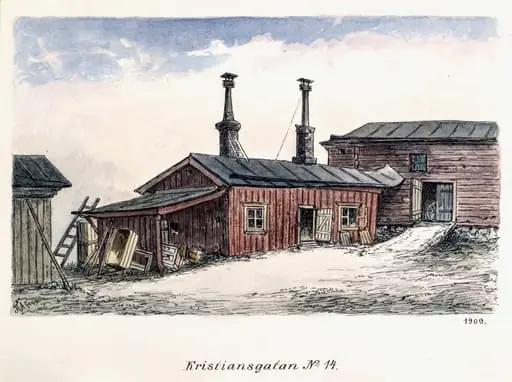
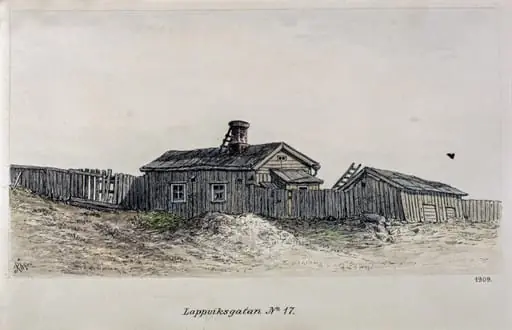
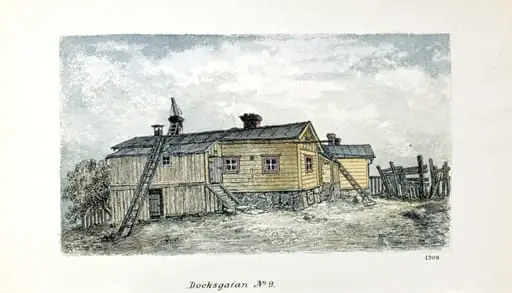
The drawing originates from Åkerblom’s series documenting Helsinki’s changing urban landscape in the late 19th century. It likely served as a personal record of neighborhoods undergoing modernization. While its early ownership is undocumented, it is now held in public collections as part of Finland’s architectural heritage, reflecting a period of transition in the capital’s development.
Context
In the 1890s, Helsinki was expanding rapidly, and older wooden districts like Wladimirinkatu were increasingly at risk of demolition. Åkerblom’s work captures a vanishing vernacular architecture, common in Nordic port towns but rarely preserved in official records. His focus on ordinary structures aligns with broader European trends of documenting everyday life amid industrial change.
Legacy
Though not widely exhibited during his lifetime, Åkerblom’s drawings like this one are now recognized for their historical value in preserving the visual character of Helsinki’s pre-modern waterfront. They offer a quiet counterpoint to more dramatic depictions of urban life, providing insight into the textures of ordinary existence in late 19th-century Finland.
Artist & collection