Artwork
Telakkakatu 9
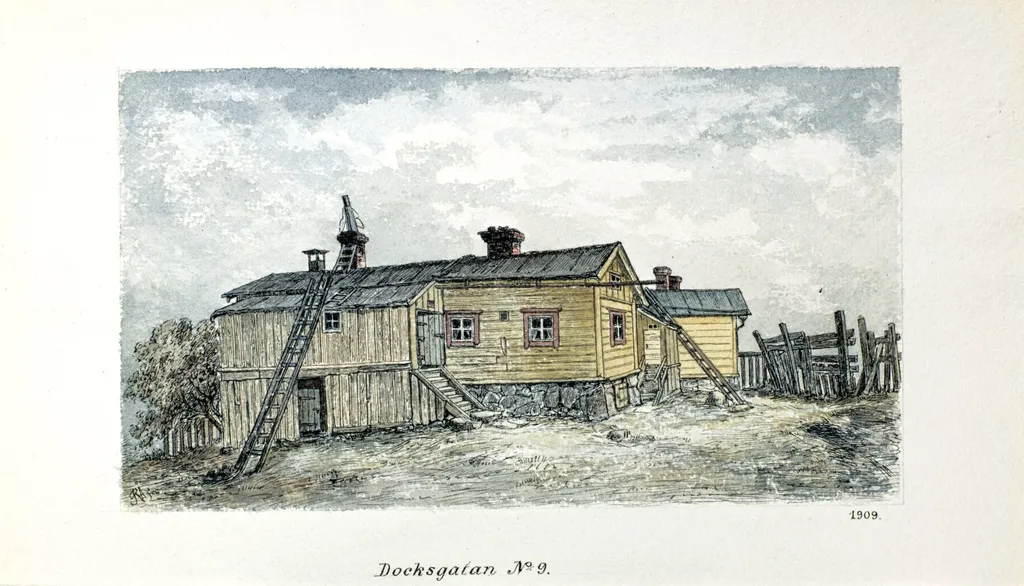
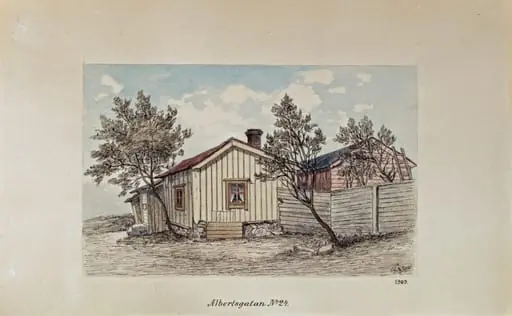
Telakkakatu 9 is a drawing by Rudolf Åkerblom. It dates from 1897 and is held in the collection of the Helsinki City Museum.
About this work
Overview
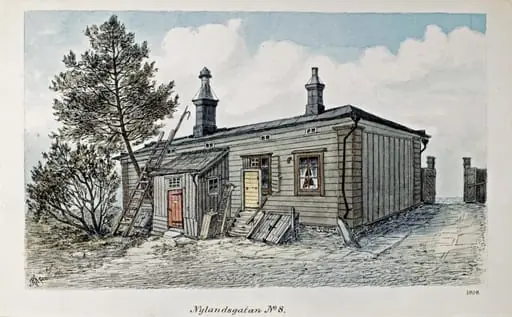
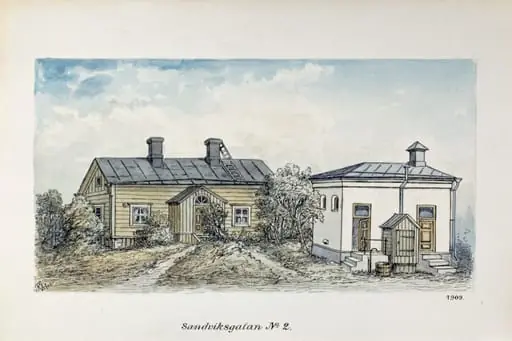
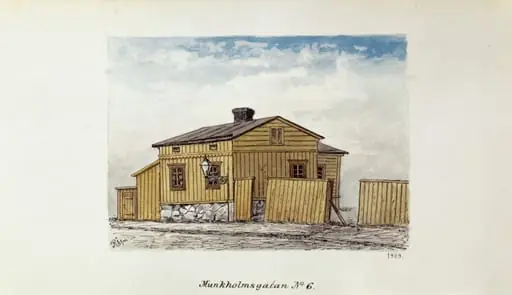
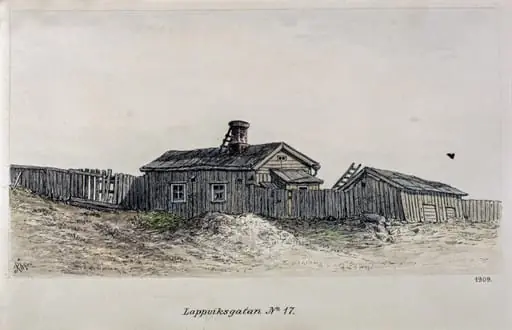
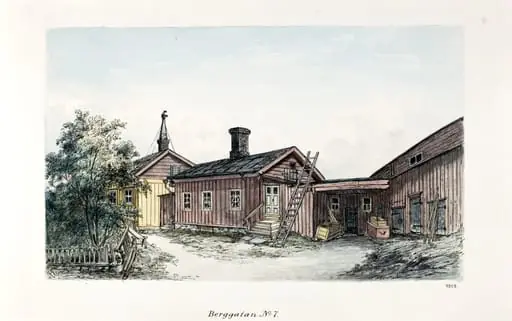
Rendered in ink with cross-hatching, it depicts a modest wooden dwelling situated within a fenced yard.
Telakkakatu 9 is a late 19th-century drawing by Finnish artist Rudolf Åkerblom, dated around 1897. Rendered in ink with cross-hatching, it depicts a modest wooden dwelling situated within a fenced yard. The composition focuses on architectural simplicity, emphasizing structure over narrative. The work is part of the collection at the Museum of Ethnography in Helsinki, where it is preserved as a record of domestic architecture in Finland during a period of social transition.
Subject & Meaning
The subject is a humble rural home, likely a worker’s residence, characterized by its plain form and functional details: two windows, a door, a chimney, and a leaning ladder. These elements suggest everyday life and labor, without romanticization. The absence of figures directs attention to the building itself, implying the quiet dignity of ordinary dwellings. The image functions as a documentary observation rather than a symbolic statement.
Technique & Style
Åkerblom employed fine ink lines and dense cross-hatching to model form and suggest texture in wood, shingles, and fencing. The tonal gradations create subtle depth without color, relying on contrast and line weight. The style is precise and restrained, reflecting a topographical approach common in ethnographic documentation of the time. There is no embellishment; the technique serves clarity and observational accuracy.
History & Provenance
Created around 1897, the drawing was likely made during Åkerblom’s fieldwork for ethnographic studies. It entered the collection of the Museum of Ethnography in Helsinki, where it remains today. Its preservation suggests it was valued as a record of vernacular architecture rather than as fine art. No earlier ownership records are known, and its origin appears tied directly to the museum’s documentation efforts in late 19th-century Finland.
Context
In the 1890s, Finland was undergoing rapid urbanization, prompting scholars to document traditional rural life before it disappeared. Åkerblom’s work aligns with this movement, capturing modest dwellings that reflected the living conditions of the working class. The drawing is one of many such records compiled by ethnographers seeking to preserve cultural heritage through visual detail rather than idealized representation.
Legacy
Telakkakatu 9 endures as a quiet example of ethnographic artistry, valued for its factual clarity and unembellished observation. It contributes to a broader archive of Finnish domestic architecture from the late 19th century. Though not widely exhibited, it remains a reference point for historians studying vernacular building practices and the role of visual documentation in cultural preservation.
Artist & collection