Artwork
Bahadur Khan
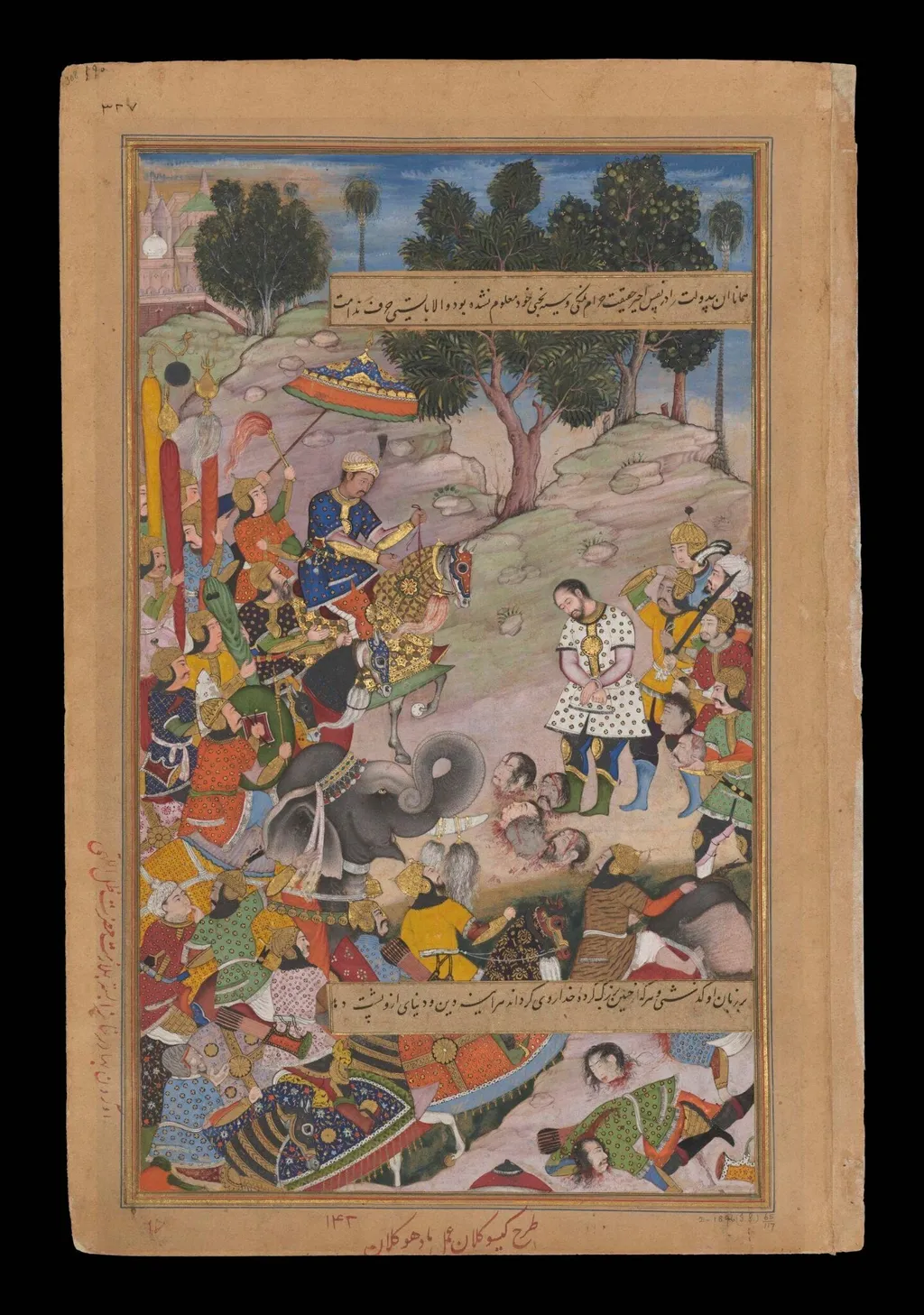
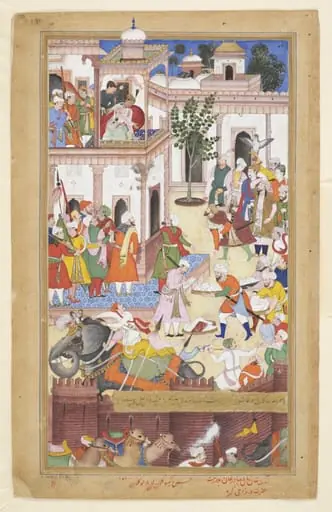
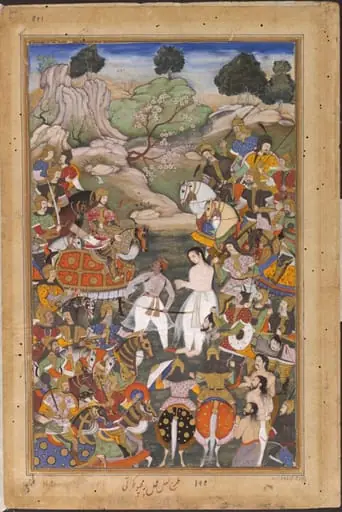
Bahadur Khan is a paint painting by the Mughal Painting artist Kesav Kalan. It dates from 1592 and is held in the collection of the Victoria and Albert Museum.
About this work
Overview
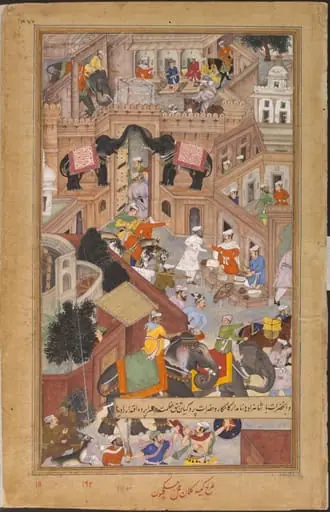
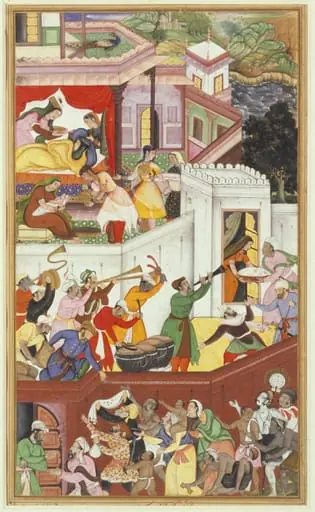
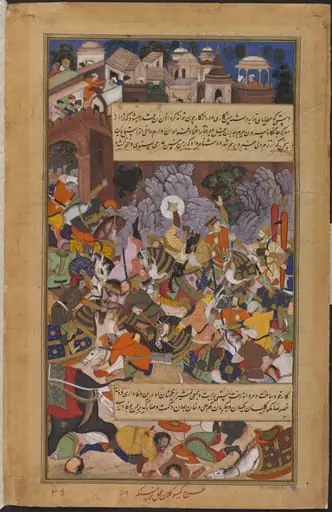
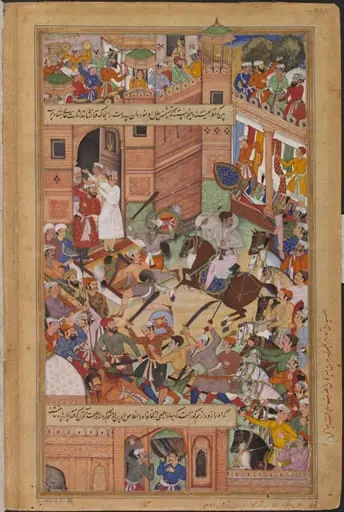
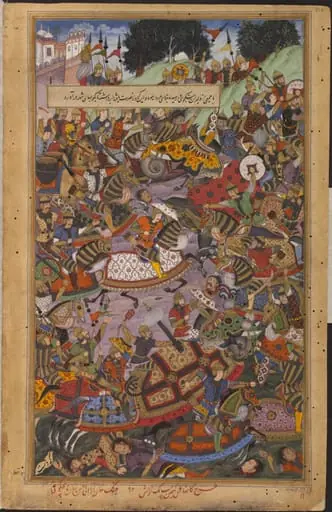
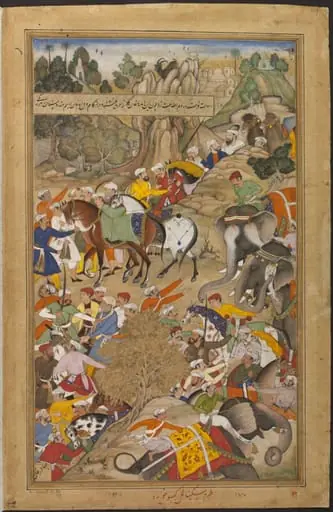
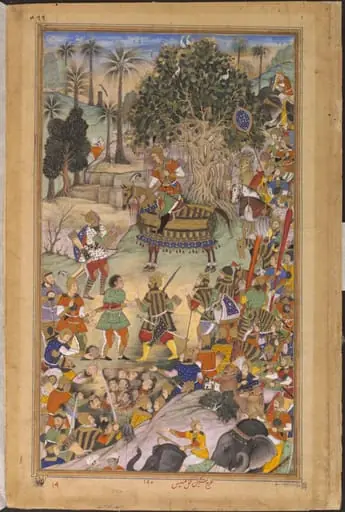
This painting, from the illustrated manuscript Akbarnama, portrays a pivotal moment in the reign of Mughal Emperor Akbar, depicting the captured rebel Bahadur Khan before the emperor.
Subject & Meaning
The scene conveys the assertion of imperial authority over rebellion, with Bahadur Khan, hands bound, standing before Akbar, who sits on horseback under a royal parasol, symbolizing his power and status.
Technique & Style
Attributed to Mughal court artists Kesav Kalan and Madhav Kalan, the work reflects the refined, detailed, and narrative-driven style characteristic of Akbarnama illustrations, blending Persian and Indian artistic influences.
History & Provenance
Commissioned by Akbar, this early illustrated version (c. 1592–1595) was part of the royal collection, passing through his successors Jahangir and Shah Jahan, before being acquired by the V&A in 1896 from Major General John Clarke’s widow.
Context
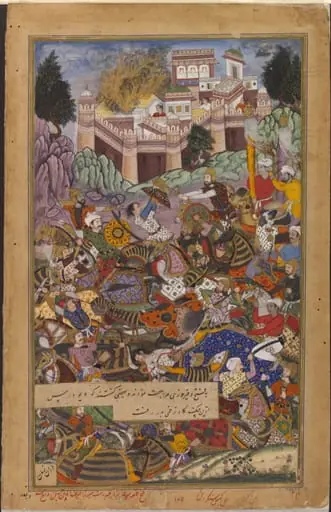
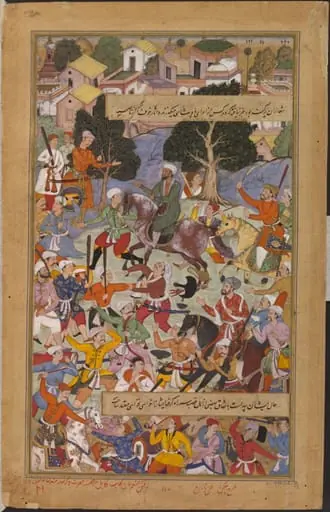
Created as part of Akbar’s official chronicle, the painting is one of many illustrations in the Akbarnama, which was written by Abu’l Fazl between 1590 and 1596, showcasing the empire’s historical events through art.
Legacy
As one of the earliest and most royal of Akbarnama illustrations, it provides valuable insight into Mughal artistic practices, imperial iconography, and the historical narrative of Akbar’s reign.
Artist & collection
Artist
Painted around 1590–95, these delicate Mughal portraits show Emperor Akbar and his court in full color and gold leaf.