Artwork
Half-length Portrait of Two Courtesans
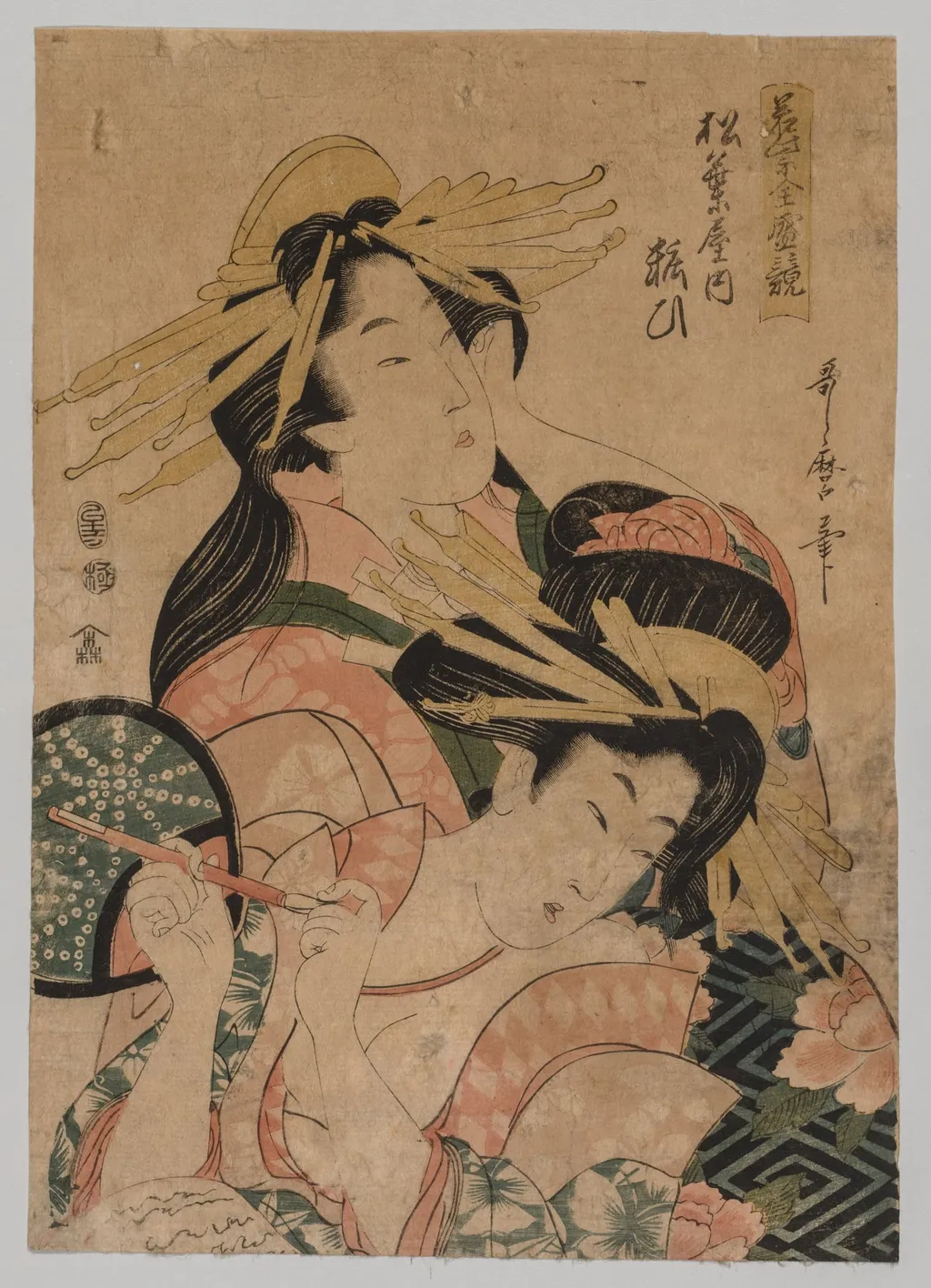
Half-length Portrait of Two Courtesans is a print by the Romanticist artist Kitagawa Utamaro. It dates from 1780 and is held in the collection of the Cleveland Museum of Art.
About this work
Overview
The work is part of the collection at The Cleveland Museum of Art, where it exemplifies Utamaro’s early exploration of female portraiture.
This woodblock print by Kitagawa Utamaro, dated around 1780, depicts two courtesans in a quiet, intimate moment. Rendered in the ukiyo-e tradition, the composition focuses on their upper bodies, framed against a minimal background. The figures are captured mid-gesture, suggesting a private exchange. The work is part of the collection at The Cleveland Museum of Art, where it exemplifies Utamaro’s early exploration of female portraiture.
Subject & Meaning
The two women, identified as courtesans, are shown in a moment of informal closeness, their proximity and subtle expressions hinting at familiarity rather than formal display. The fan adorned with white flowers and the basket suggest domestic or seasonal motifs, possibly alluding to transient beauty. Their relaxed demeanor contrasts with the expected decorum of their social role, offering a glimpse into private life beyond public performance.
Technique & Style
Utamaro employs the characteristic ukiyo-e techniques of bold, clean outlines and flat, unmodulated color fields. The robes are rendered in soft pinks and greens, with subtle tonal variations achieved through layered printing. Hair is rendered with precise, elegant lines, and the background features minimal detail—a faint suggestion of foliage and patterned fabric—to direct focus to the figures. The composition avoids perspective, emphasizing surface decoration and emotional nuance.
History & Provenance
Created during Utamaro’s formative years as a printmaker, this work reflects his growing reputation for intimate portrayals of women in Edo’s pleasure quarters. It entered the Cleveland Museum of Art’s collection in the 20th century, likely through early Western acquisitions of Japanese prints. Its preservation offers insight into the circulation and reception of ukiyo-e outside Japan during the Meiji period and beyond.
Context
In late 18th-century Edo, courtesans were both cultural icons and commercial figures, frequently depicted in prints for a rising urban clientele. Utamaro distinguished himself by focusing on individual expression rather than idealized types. This print aligns with a broader trend in ukiyo-e toward psychological depth and everyday moments, moving beyond theatrical or mythological subjects toward the quiet realism of daily life in the pleasure districts.
Legacy
Utamaro’s focus on the inner life of women influenced later generations of printmakers and Western artists alike. This early work demonstrates his emerging sensitivity to gesture and expression, laying groundwork for his later, more celebrated series. Though not among his most widely reproduced prints, it remains a key example of how ukiyo-e evolved to capture nuanced human interaction within a rigid social framework.
Artist & collection


 Untitled
 Untitled
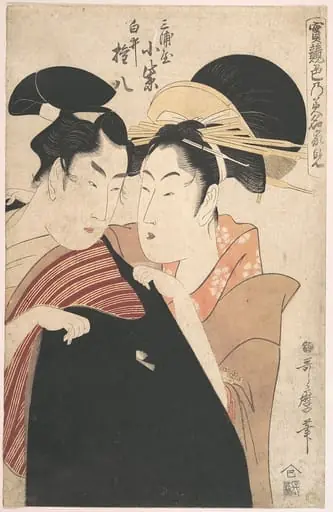 実競色乃美名家見 三浦屋小紫 白井権八|The Lovers Miura-ya Komurasaki and Shirai Gonpachi.
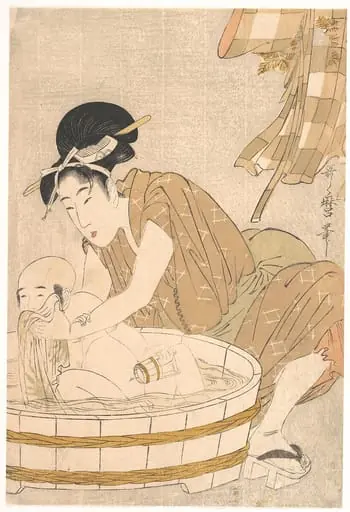 行水|Bathtime (Gyōzui)
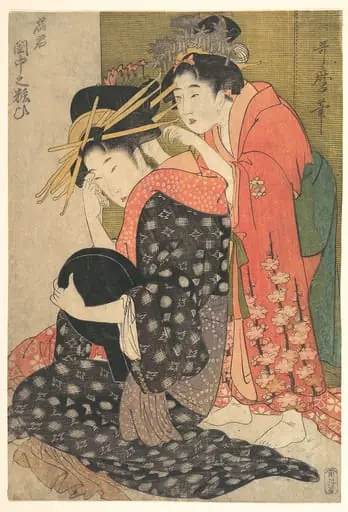 名君 閨中の粧ひ|The Oiran Yoso-oi Seated at Her Toilet
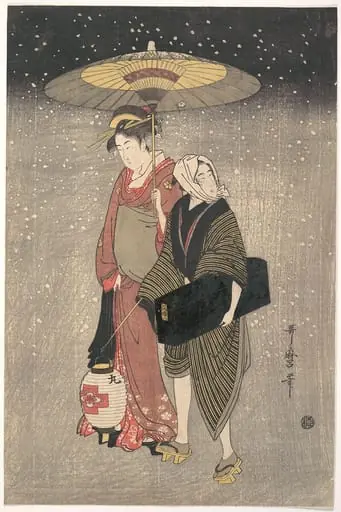 Untitled
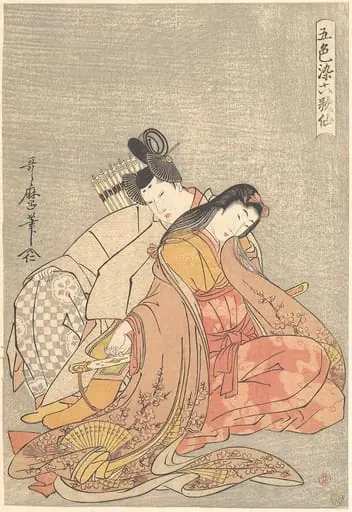 『五色染六歌仙』 在原業平と小野小町|“The Poet Ariwara no Narihira (825–880) and Ono no Komachi,” from the series Five Colors of Love for the Six Poetic Immortals (Goshiki-zome rokkasen)
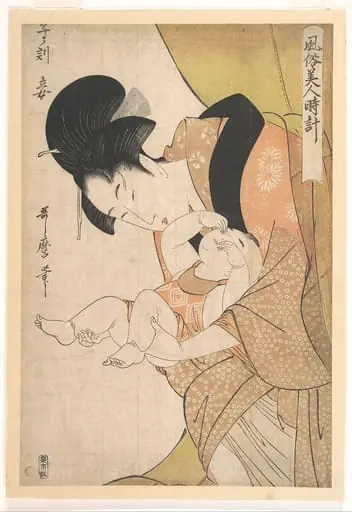 風俗美人時計 子ノ刻 妾|Midnight: Mother and Sleepy Child
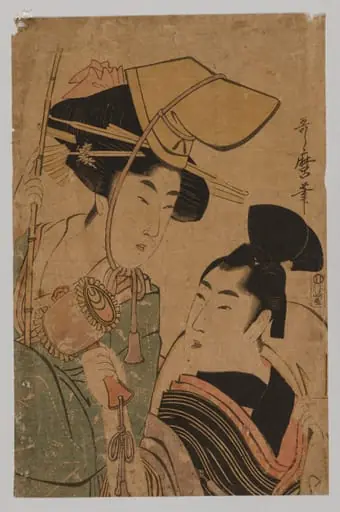 Woman Representing Good Fortune
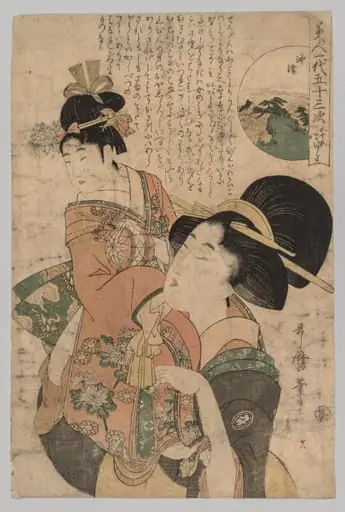 Nakatsu, from the series Fifty-three Stations in the Life of a Beauty
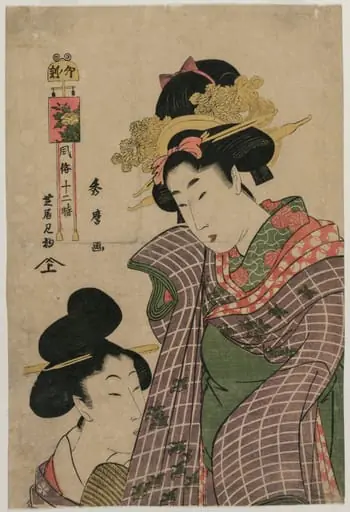 Going to the Kabuki Theater in the Hour of the Hare (From the Series The Twelve Hours with Daily Events)
 Untitled
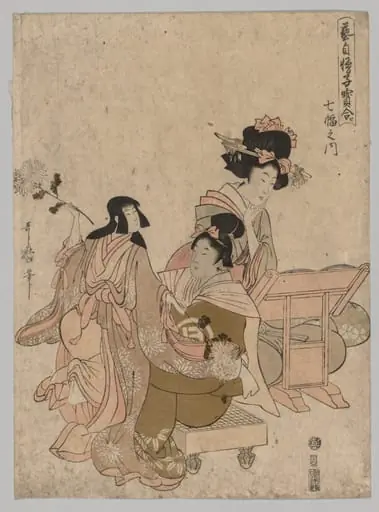 Bunraku Puppetry from the series Competition of Precious Children Proud of their Arts, Among Seven Scrolls
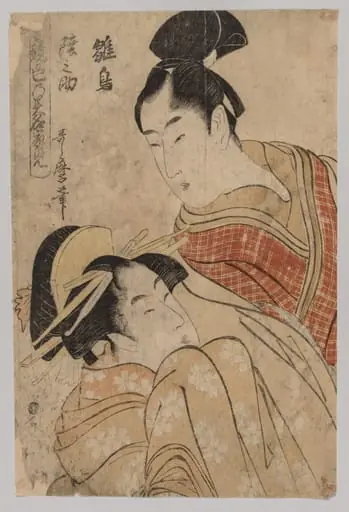 Making Love
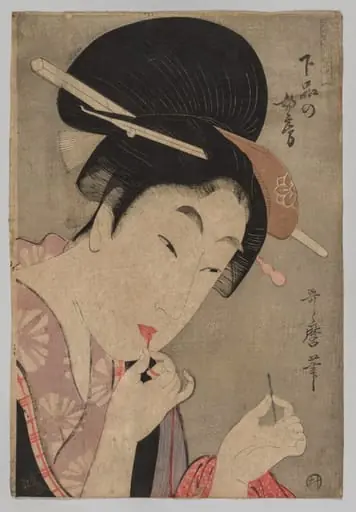 A Wife of the Lower Rank (Gebon no nyōbō), from the series A Guide to Women's Contemporary Styles (Tōsei onna fūzoku tsū)