Artwork
Tanabata, from the series Fashionable Children of the Five Festivals (Fūryū kodomo gosekku)
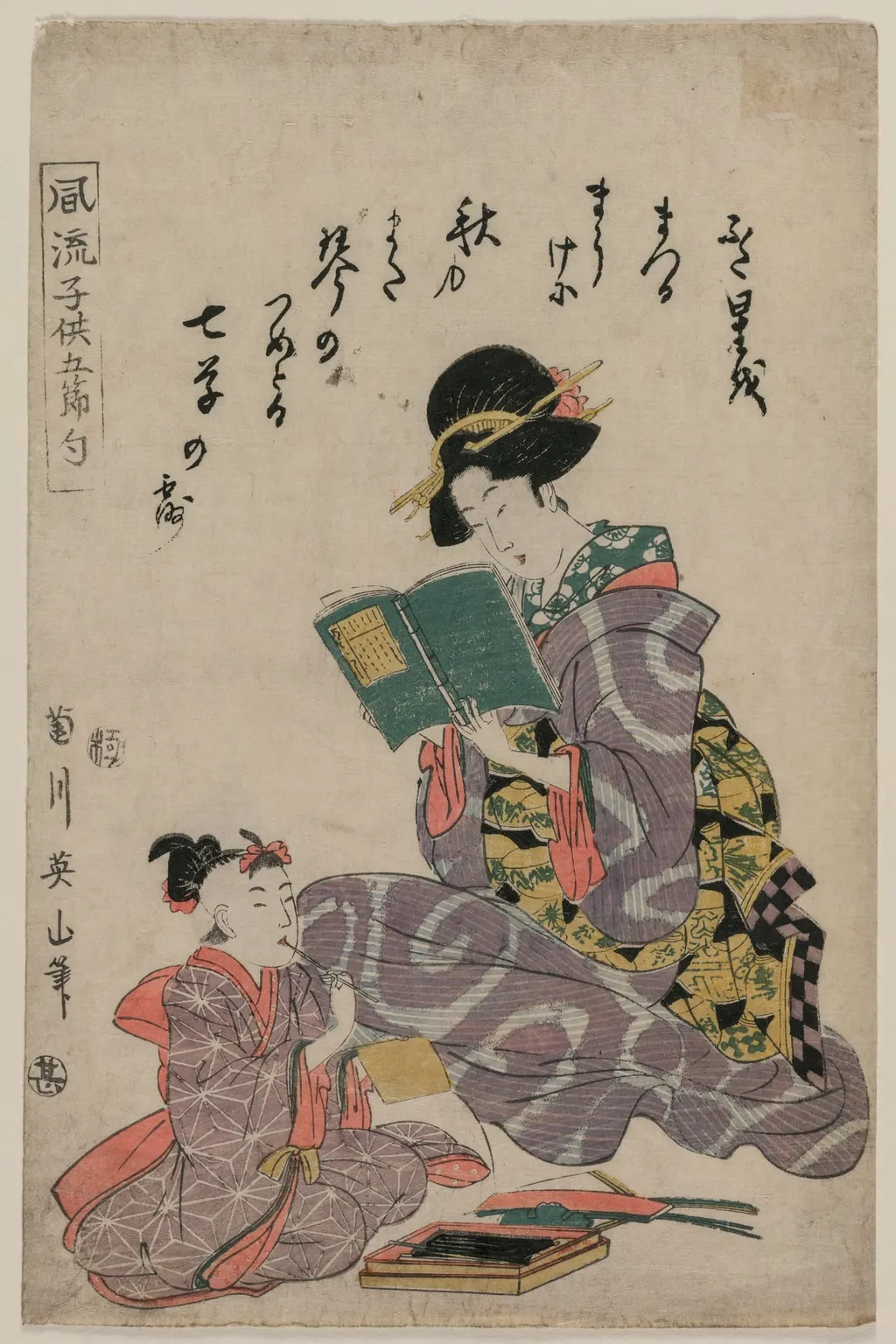
Tanabata, from the series Fashionable Children of the Five Festivals (Fūryū kodomo gosekku) is a print by the Romanticist artist Kikukawa Eizan. It dates from 1819 and is held in the collection of the Cleveland Museum of Art.
About this work
Overview
Created around 1819 by Kikukawa Eizan, this woodblock print is part of a series depicting children engaged in Japan’s five seasonal festivals.
Created around 1819 by Kikukawa Eizan, this woodblock print is part of a series depicting children engaged in Japan’s five seasonal festivals. The work captures a moment from Tanabata, a midsummer observance rooted in celestial legend. Rendered in the ukiyo-e tradition, it reflects the Edo period’s fascination with everyday rituals and youthful participation in cultural customs, preserved today in The Cleveland Museum of Art’s collection.
Subject & Meaning
The scene portrays children participating in Tanabata, a festival tied to the meeting of the deities Orihime and Hikoboshi across the Milky Way. Participants write wishes on tanzaku paper and hang them on bamboo branches, a practice shown here with care and detail. The children’s attire and actions emphasize the ritual’s personal and communal significance, transforming a myth into an intimate, lived experience within Edo society.
Technique & Style
Eizan employed delicate line work and soft, layered colors typical of late Edo-period bijin-ga. The figures are rendered with graceful contours and subtle shading, while the background remains minimal to focus attention on the children’s gestures and costumes. The print’s refined composition and attention to textile patterns reflect the artist’s skill in blending elegance with narrative clarity, characteristic of his mature style.
History & Provenance
The print was produced during a period when ukiyo-e prints celebrating seasonal festivals gained popularity among urban merchants and artisans. Eizan’s series, including this Tanabata scene, was likely issued by a Tokyo-based publisher seeking to capitalize on public interest in domestic rituals. It entered The Cleveland Museum of Art’s collection through documented acquisitions in the 20th century, contributing to Western understanding of Edo-era visual culture.
Context
During the Edo period, the five seasonal festivals became occasions for social display and familial bonding, especially among the rising merchant class. Tanabata, though originating in Chinese tradition, was adapted into a distinctly Japanese custom centered on children and domestic rituals. Eizan’s depiction aligns with broader trends in ukiyo-e that elevated everyday life into art, reinforcing cultural identity through visual storytelling.
Legacy
Eizan’s series helped codify the visual language of seasonal festivals in Japanese printmaking. While not widely replicated, his attention to children’s roles in ritual influenced later artists documenting domestic life. Today, the print remains a key reference for scholars studying Edo-period customs, offering insight into how cultural traditions were visually preserved and transmitted through mass-produced imagery.
Artist & collection

Artist
Kikukawa Eizan was a designer of ukiyo-e style Japanese woodblock prints. He first studied with his father, Eiji, a minor painter of the Kanō school, and subsequently with Suzuki Nanrei (1775–1844), of the Shijō…

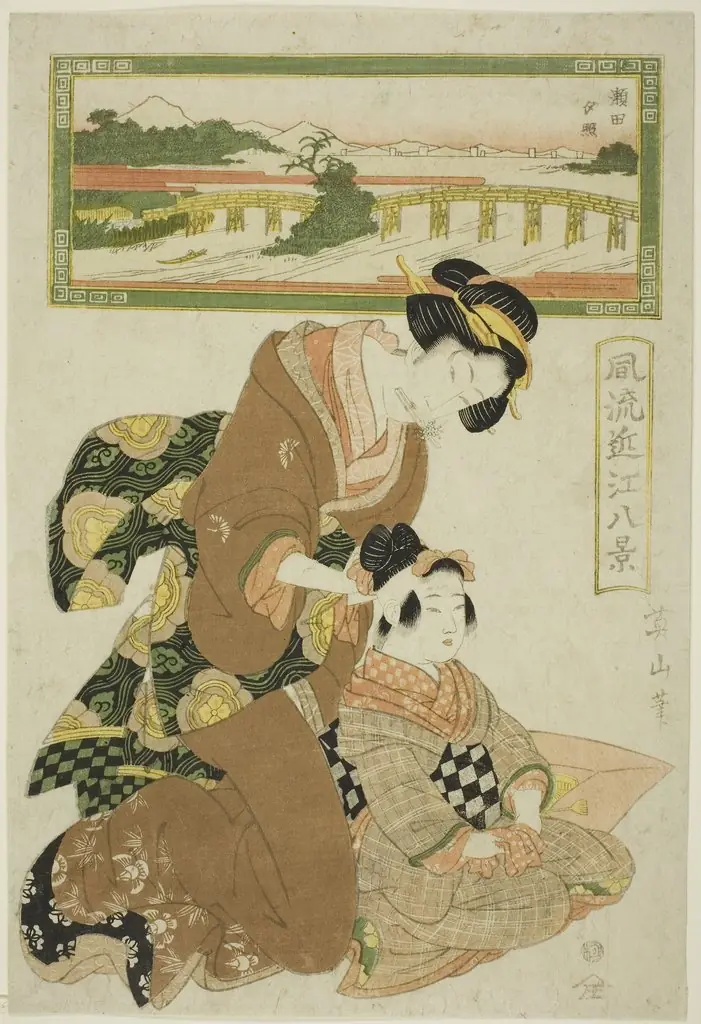 Evening Glow at Seta (Seta sekisho), from the series "Fashionable Eight Views of Omi (Furyu Omi hakkei)"
 Untitled
 Untitled
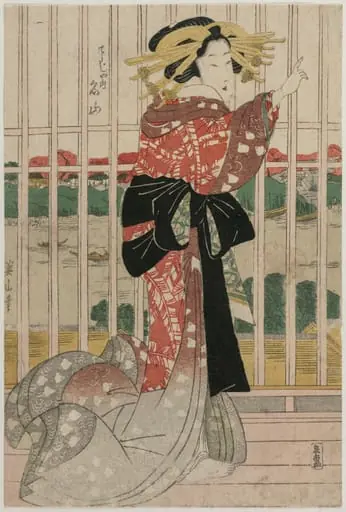 The Courtesan Meizan of the Chojiya on a Balcony Overlooking the Sumida River
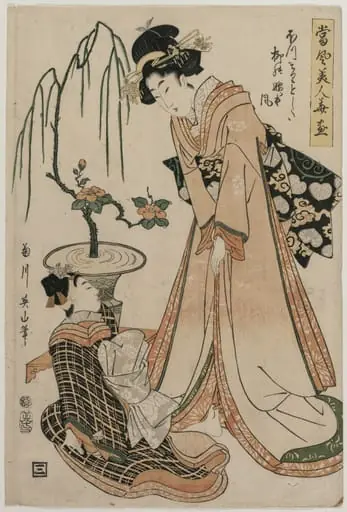 A Lady-in-Waiting with Waist as Slender as a Willow from the series Flowers and Modern Beauties
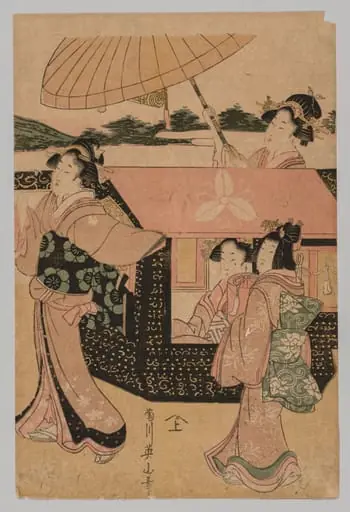 No Title
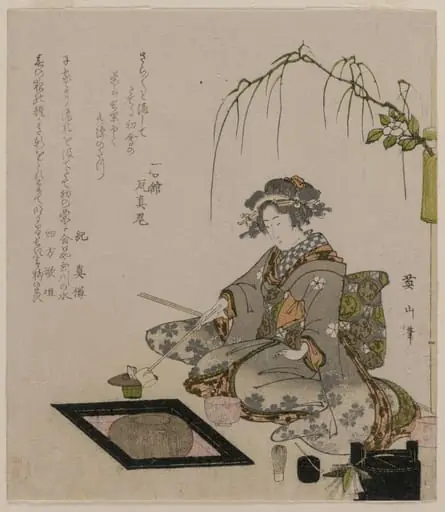 Woman Performing the Tea Ceremony
 A Picture of the Viewing in the Pleasure Quarters
 The Courtesan Takihime and Attendants (from the series New Patterns of Young Greens)
 The Courtesan Karauta of Chojiya Reading a Book (from the series Six Authors of the Green Houses)
 Woman Reading a Letter (from the series Seven Episodes in the Life of Komachi in the Floating World)
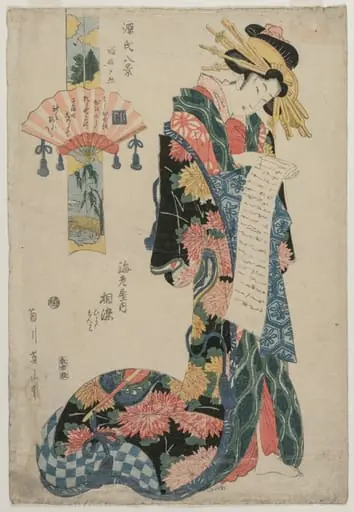 The Courtesan Aizome of the Ebiya (From the series Eight Views of the Tale of Genji)
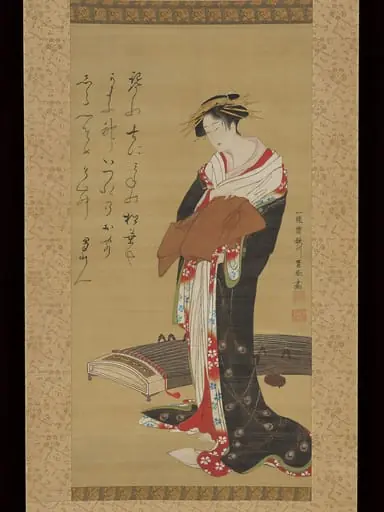 歌川豊春筆 蜀山人(大田 南畝)賛 琴に立美人図|Female Entertainer with a Koto
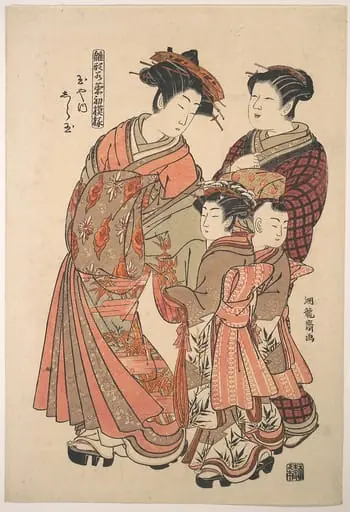 『雛形若菜初模様 玉や内 しら玉』|The Courtesan Shiratama of the Tamaya Brothel, from the series “A Pat-tern Book of the Year’s First Designs, Fresh as Spring Herbs” (“Hinagata wakana hatsu moyō”)
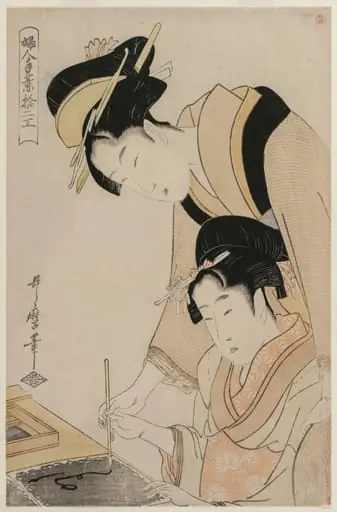 Mother Teaching her Daughter Calligraphy, from the series, Twelve Occupations of Women
 The Courtesan (From A Collection of Beautiful Women of the Yoshiwara)
 Untitled
 Female Entertainer with a Koto