Artwork
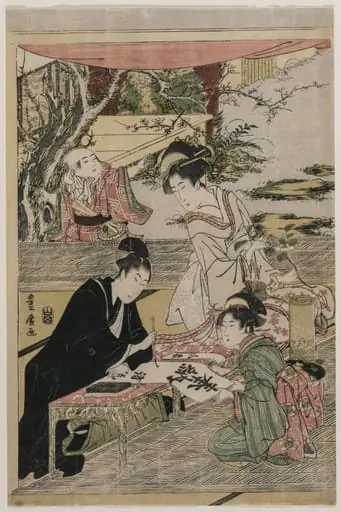
Mother Teaching her Daughter Calligraphy, from the series, Twelve Occupations of Women
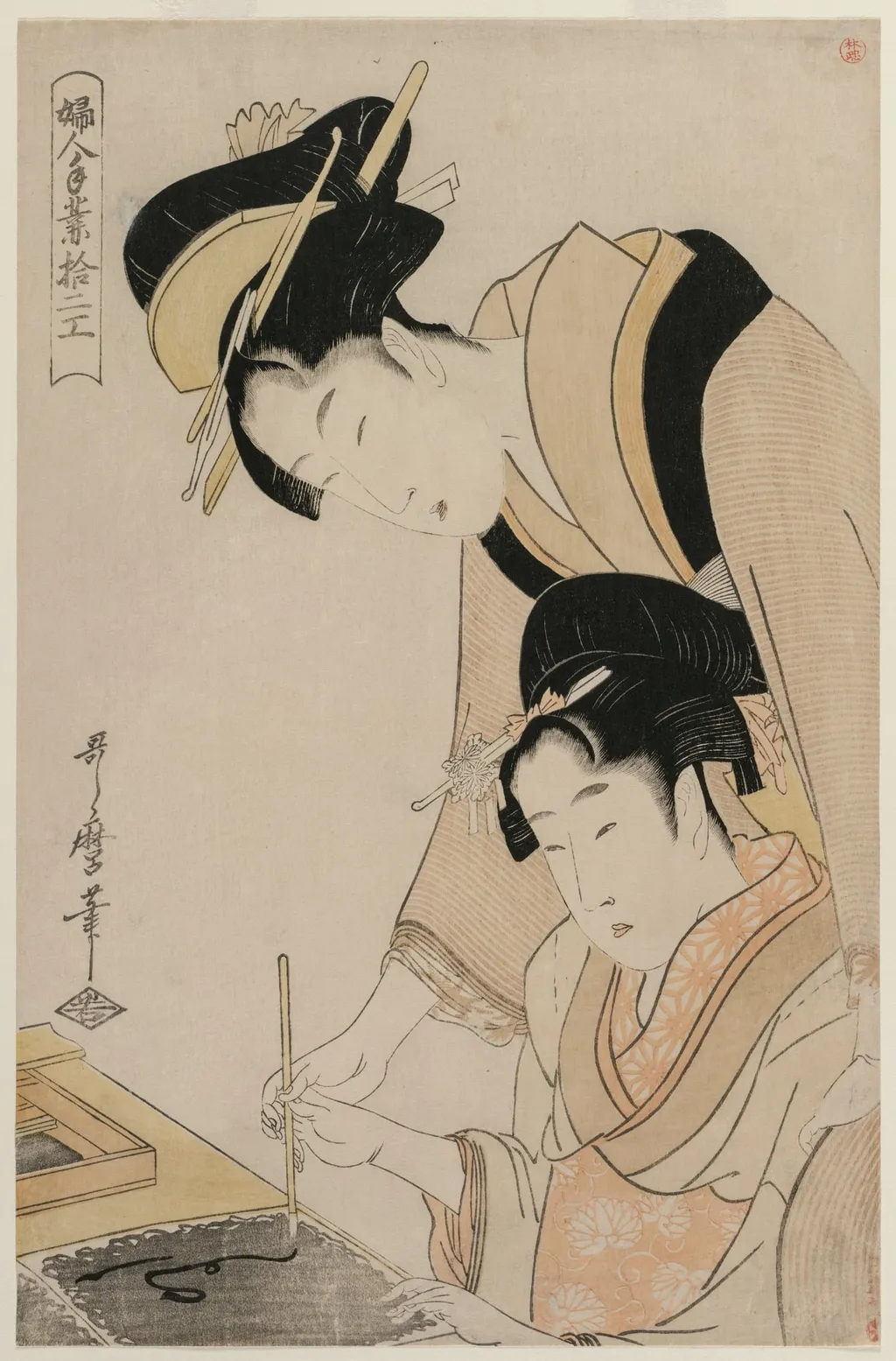
Mother Teaching her Daughter Calligraphy, from the series, Twelve Occupations of Women is a print by the Romanticist artist Kitagawa Utamaro. It dates from 1798 and is held in the collection of the Cleveland Museum of Art.
About this work
Overview
Created around 1798 by Kitagawa Utamaro, this woodblock print is part of the series Twelve Occupations of Women, which depicts everyday domestic life.
Created around 1798 by Kitagawa Utamaro, this woodblock print is part of the series Twelve Occupations of Women, which depicts everyday domestic life. The scene captures a quiet intergenerational moment between a mother and daughter engaged in the practice of calligraphy. Rendered in soft, muted tones, the composition emphasizes intimacy over ornamentation, with minimal background detail to concentrate attention on the figures and their gestures.
Subject & Meaning
The print illustrates the transmission of cultural skill through familial bonds. The mother, guiding the daughter’s hand, embodies the role of educator in a private, domestic sphere. Calligraphy, a refined art tied to literacy and social grace, is presented not as performance but as a gentle, habitual act. The focus on their synchronized movement suggests continuity, discipline, and the quiet dignity of women’s labor within Edo-period households.
Technique & Style
Utamaro employs delicate linework and restrained color palettes—soft pinks, creams, and grays—to convey subtlety and restraint. The figures are rendered with smooth contours and minimal shading, characteristic of ukiyo-e portraiture. The absence of detailed background elements directs focus to the hands, faces, and the brush’s movement, reinforcing the intimacy of the moment. The flat planes of color and simplified forms reflect the aesthetic priorities of late 18th-century Japanese printmaking.
History & Provenance
The print was produced during Utamaro’s mature period, when he was renowned for his portrayals of women in daily life. It entered the collection of The Cleveland Museum of Art in the 20th century, likely through early Western acquisitions of Japanese prints. While the original series was widely circulated, surviving impressions are now rare, making this example a valuable record of Edo-period visual culture and gendered education.
Context
In late 18th-century Edo, women’s roles were often confined to the home, yet their cultural contributions—especially in literacy and the arts—were highly valued. Series like Twelve Occupations of Women reflected societal ideals of feminine virtue and refinement. Calligraphy was not merely a skill but a moral discipline, and its depiction in domestic settings reinforced the notion that education was a private, familial responsibility rather than a public pursuit.
Legacy
Utamaro’s series contributed to a broader genre of ukiyo-e that elevated ordinary female experiences to artistic subject matter. This print, like others in the series, influenced later artists and Western collectors who sought authentic portrayals of Japanese life. Its enduring presence in museum collections underscores its role as a quiet but significant document of gender, education, and aesthetic values in pre-modern Japan.
Artist & collection


 Untitled
 Untitled
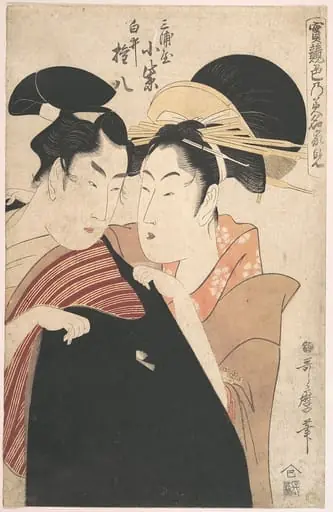 実競色乃美名家見 三浦屋小紫 白井権八|The Lovers Miura-ya Komurasaki and Shirai Gonpachi.
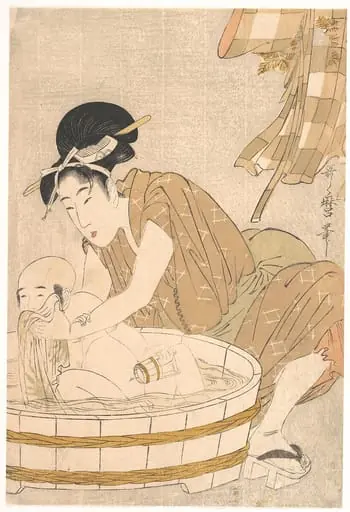 行水|Bathtime (Gyōzui)
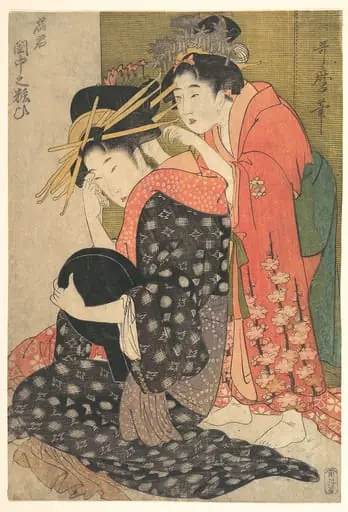 名君 閨中の粧ひ|The Oiran Yoso-oi Seated at Her Toilet
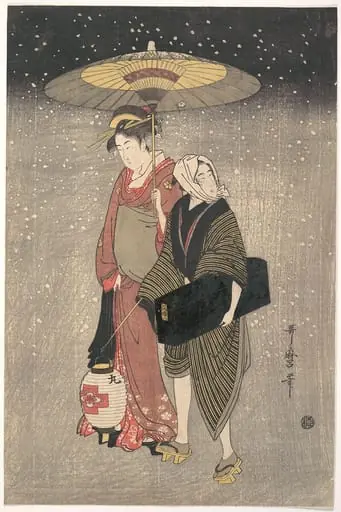 Untitled
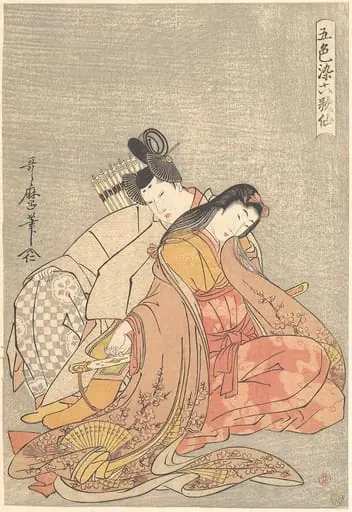 『五色染六歌仙』 在原業平と小野小町|“The Poet Ariwara no Narihira (825–880) and Ono no Komachi,” from the series Five Colors of Love for the Six Poetic Immortals (Goshiki-zome rokkasen)
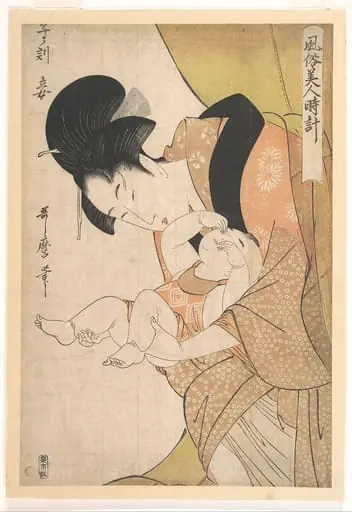 風俗美人時計 子ノ刻 妾|Midnight: Mother and Sleepy Child
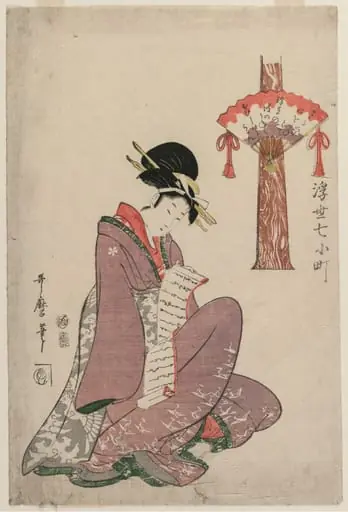 Woman Reading a Letter (from the series Seven Episodes in the Life of Komachi in the Floating World)
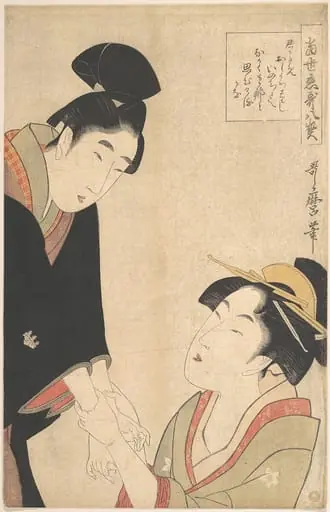 当世恋歌八契 お七と吉三郎|The Lovers Oshichi and Kichisaburo
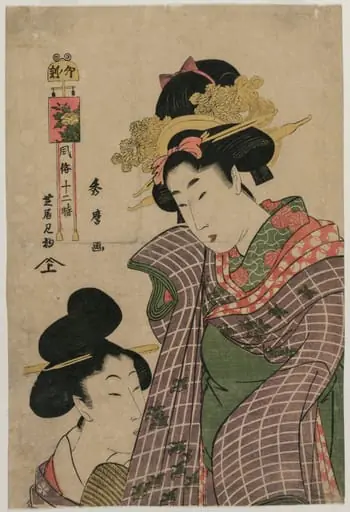 Going to the Kabuki Theater in the Hour of the Hare (From the Series The Twelve Hours with Daily Events)
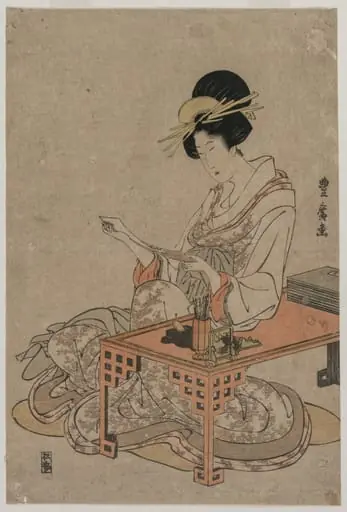 Courtesan Seated at a Writing Table
 Untitled
 Untitled
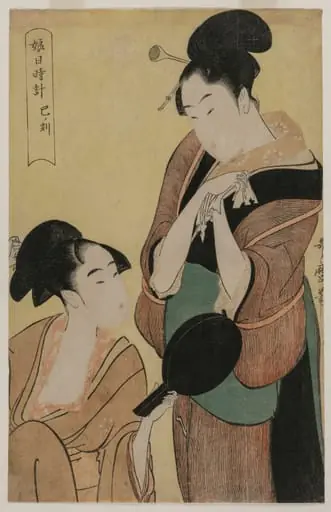 The Hour of the Snake (from the series A Clock for Young Women)
 Young Man Writing at a Table
 An Attractive Woman Who Looks Like the Actor Iwai Hanshiro V