Artwork
『五色染六歌仙』 僧正遍昭|“The Poet Sōjō Henjō (816–890) Slipping a Letter into a Woman’s Sleeve,” from the series Five Colors of Love for the Six Poetic Immortals (Goshiki-zome rokkasen)
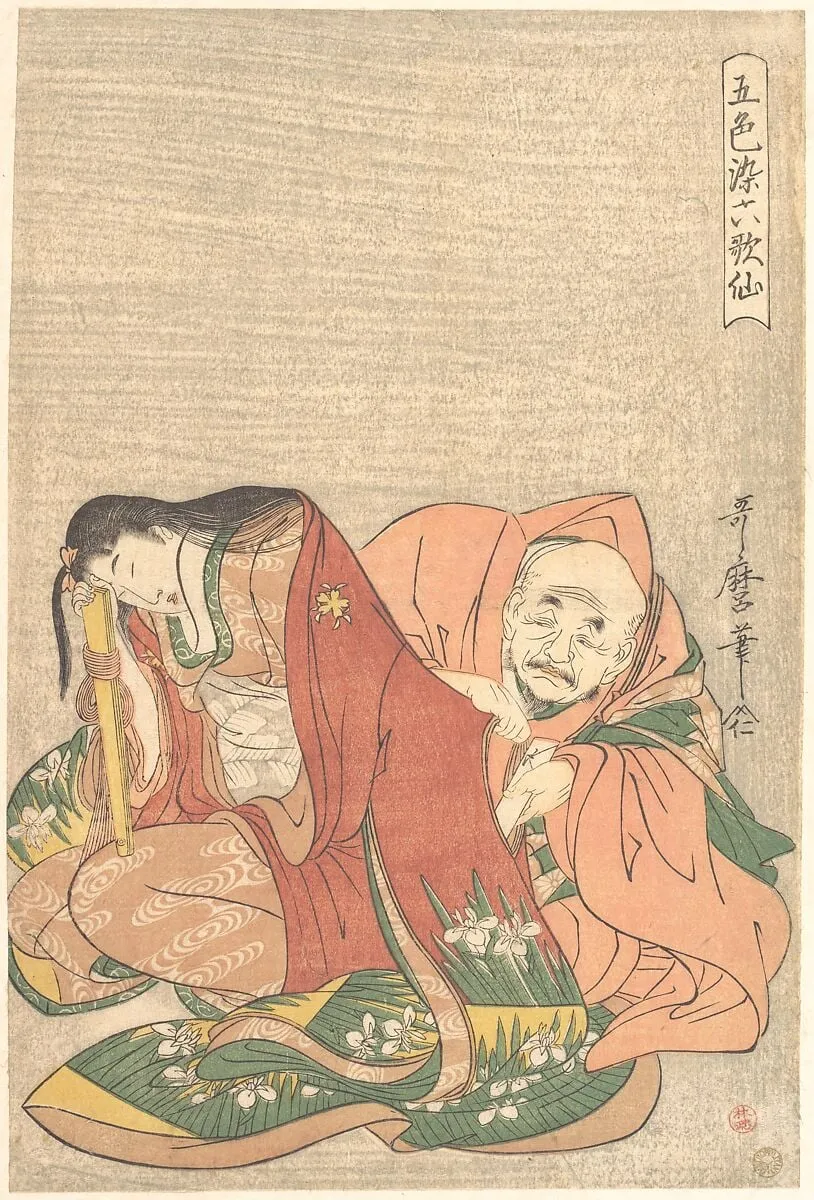
『五色染六歌仙』 僧正遍昭|“The Poet Sōjō Henjō (816–890) Slipping a Letter into a Woman’s Sleeve,” from the series Five Colors of Love for the Six Poetic Immortals (Goshiki-zome rokkasen) is an ink print by the Romanticist artist Kitagawa Utamaro. It dates from 1798 and is held in the collection of the Metropolitan Museum of Art.
About this work
Overview
This woodblock print, created around 1798 by Kitagawa Utamaro, belongs to the series titled Five Colors of Love for the Six Poetic Immortals. It portrays a moment in which the poet Sōjō Henjō, dressed in a dark robe, discreetly places a folded letter into the sleeve of a woman wearing a pale pink kimono, who looks away, partially concealed by a fan.
Subject & Meaning
The image captures a private, romantic gesture: a love letter being passed covertly between the renowned Heian‑period poet Henjō and an unnamed woman. By focusing on the subtle exchange rather than the poet’s fame, Utamaro emphasizes the universal experience of clandestine affection and the delicate social protocols governing courtship in Edo‑period Japan.
Technique & Style
Utamiro’s execution relies on fine, almost translucent line work that renders the texture of silk and the curvature of the fan with remarkable delicacy. The print employs a limited palette characteristic of the series, with the woman’s pink kimono contrasting against the man’s black robe, while the ink and color layers are applied in a manner that enhances the intimate atmosphere.
History & Provenance
The work is part of a set of six prints, each dedicated to a different poetic immortal and each dyed in a distinct hue to reflect its emotional tone. Produced in the late 18th century, the series was likely intended for a literate, cultured audience familiar with the legends of the six poets and the conventions of ukiyo‑e portraiture.
Context
During the Edo period, ukiyo‑e artists frequently depicted scenes from literature and folklore, blending narrative content with the popular genre of bijin-ga, images of beautiful women. Utamaro’s focus on a fleeting romantic encounter aligns with contemporary tastes for refined, emotionally charged moments drawn from classical poetry.
Artist & collection


 Untitled
 Untitled
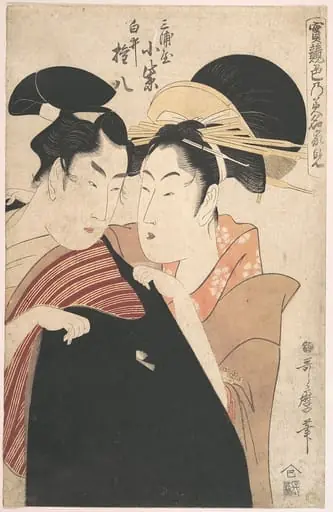 実競色乃美名家見 三浦屋小紫 白井権八|The Lovers Miura-ya Komurasaki and Shirai Gonpachi.
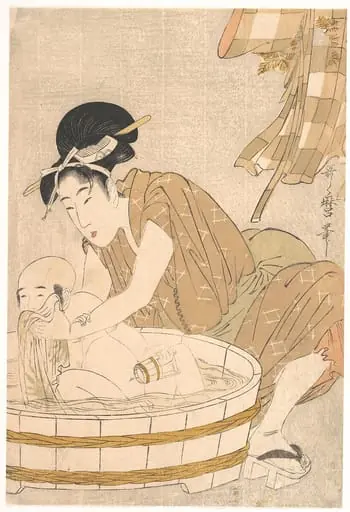 行水|Bathtime (Gyōzui)
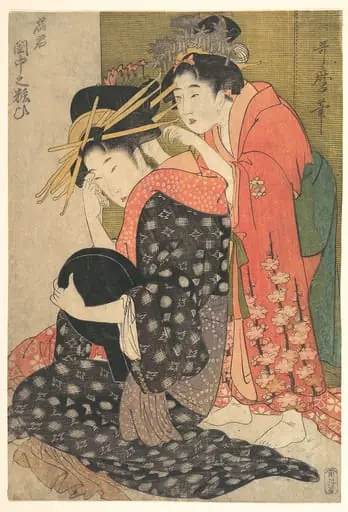 名君 閨中の粧ひ|The Oiran Yoso-oi Seated at Her Toilet
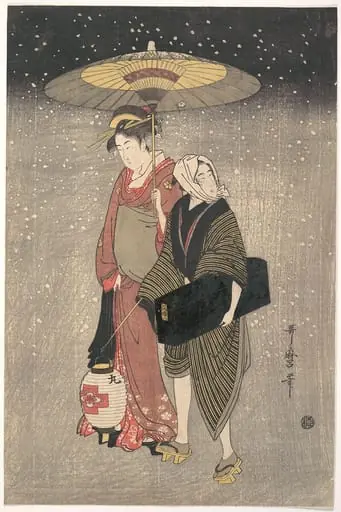 Untitled
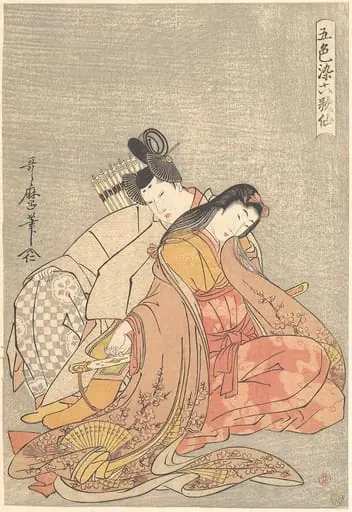 『五色染六歌仙』 在原業平と小野小町|“The Poet Ariwara no Narihira (825–880) and Ono no Komachi,” from the series Five Colors of Love for the Six Poetic Immortals (Goshiki-zome rokkasen)
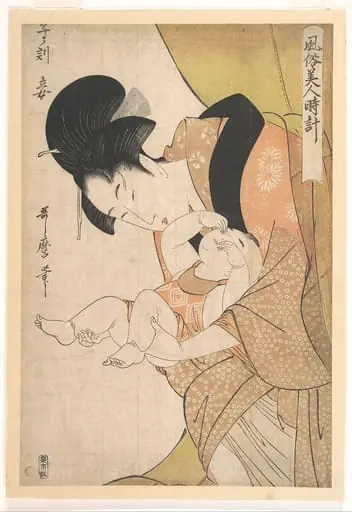 風俗美人時計 子ノ刻 妾|Midnight: Mother and Sleepy Child