Artwork
『青楼七小町』 「玉屋内花紫」|“Hanamurasaki of the Tamaya,” from the series Seven Komachi of the Pleasure Quarters (Seirō Nana Komachi)
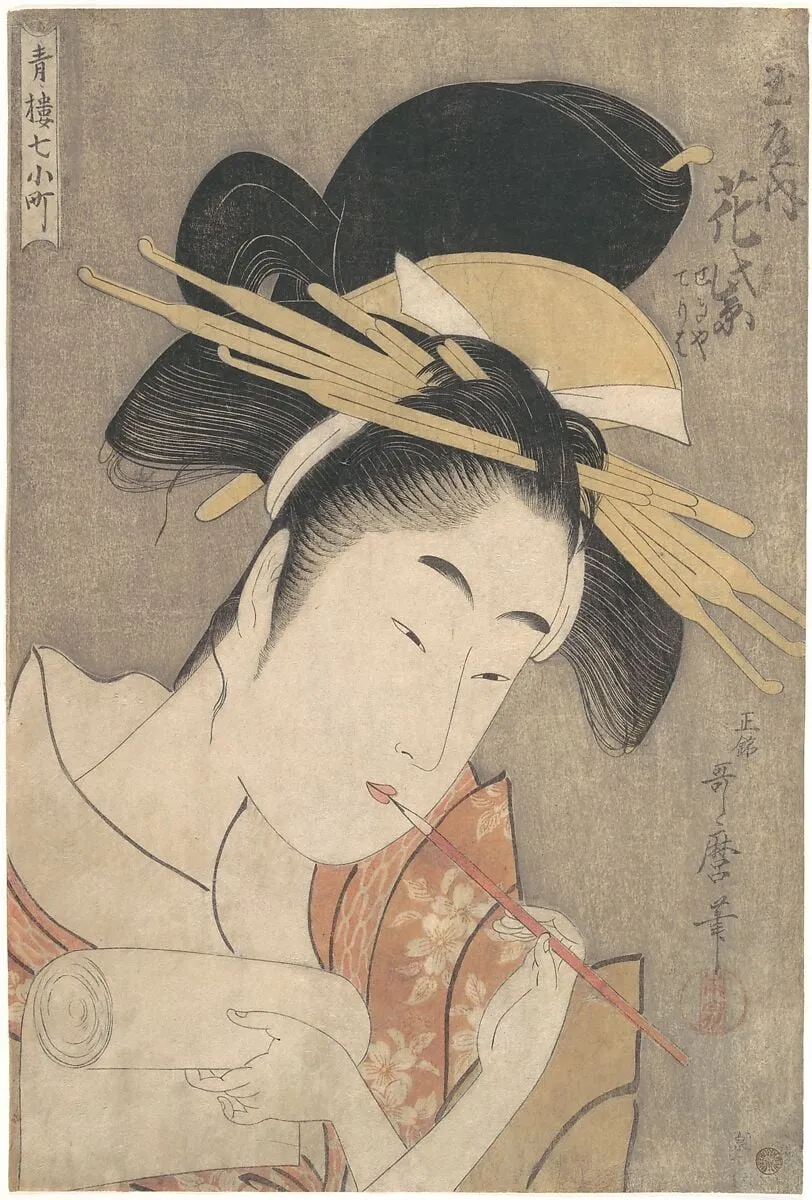
『青楼七小町』 「玉屋内花紫」|“Hanamurasaki of the Tamaya,” from the series Seven Komachi of the Pleasure Quarters (Seirō Nana Komachi) is an ink print by the Romanticist artist Kitagawa Utamaro. It dates from 1790 and is held in the collection of the Metropolitan Museum of Art. Created around 1790, this woodblock print by Kitagawa Utamara belongs to the series “Seven Komachi of the Pleasure Quarters.
About this work
Overview
Created around 1790, this woodblock print by Kitagawa Utamara belongs to the series “Seven Komachi of the Pleasure Quarters.” It portrays a single courtesan, identified as Hanamurasaki of the Tamaya, seated on a tatami mat with a brush ready over a sheet of paper, surrounded by modest furnishings.
Subject & Meaning
The image captures a moment of quiet concentration rather than the usual performance scenes associated with courtesans. The woman’s poised hand, the ink set, and the delicate hair ornament suggest a private act of writing or calligraphy, offering a glimpse into the personal interiority of a figure usually presented as an entertainer.
Technique & Style
Utamara employs clean, flowing line work and a restrained palette of soft pinks and muted tones. The woodblock’s fine carving renders the texture of the silk robe and the subtle curvature of the hands, while the limited coloration emphasizes the figure’s form and the intimate setting without decorative excess.
History & Provenance
The print was produced in Edo during the late eighteenth century, a period when ukiyo‑e artists frequently depicted celebrated courtesans. It remains part of museum collections that focus on Japanese printmaking, illustrating Utamara’s interest in individualized portraiture within the broader genre of bijin-ga.
Context
Within the “Seven Komachi” series, each work highlights a different renowned courtesan. By portraying Hanamurasaki in a contemplative pose, Utamara diverges from the series’ typical emphasis on theatricality, reflecting a shift toward more personal, psychological representation in ukiyo‑e portraiture.
Artist & collection


 Untitled
 Untitled
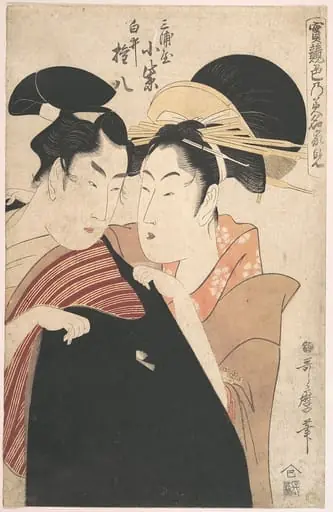 実競色乃美名家見 三浦屋小紫 白井権八|The Lovers Miura-ya Komurasaki and Shirai Gonpachi.
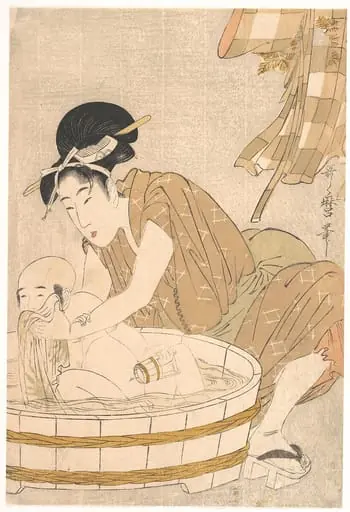 行水|Bathtime (Gyōzui)
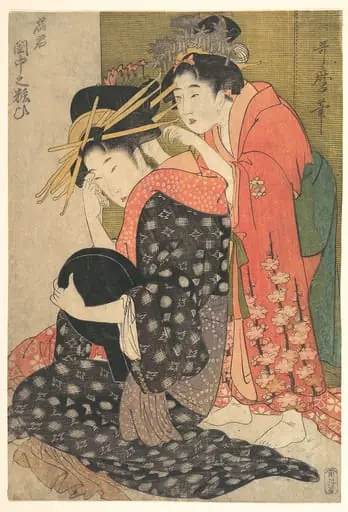 名君 閨中の粧ひ|The Oiran Yoso-oi Seated at Her Toilet
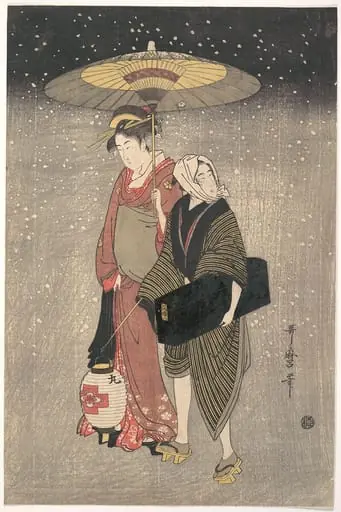 Untitled
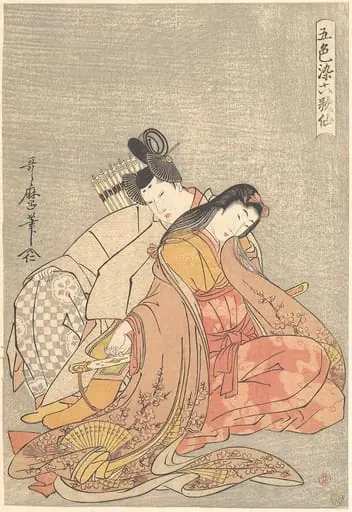 『五色染六歌仙』 在原業平と小野小町|“The Poet Ariwara no Narihira (825–880) and Ono no Komachi,” from the series Five Colors of Love for the Six Poetic Immortals (Goshiki-zome rokkasen)
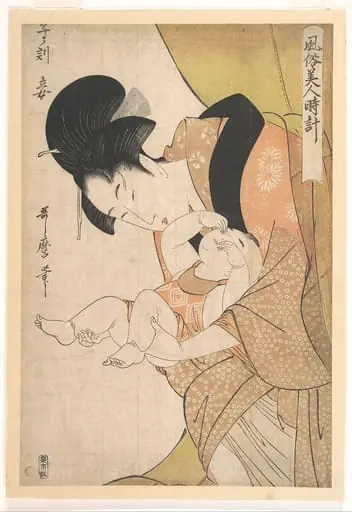 風俗美人時計 子ノ刻 妾|Midnight: Mother and Sleepy Child