Artwork
Chushingura: Act V (from the series Perspective Pictures for The Treasure House of Loyalty)
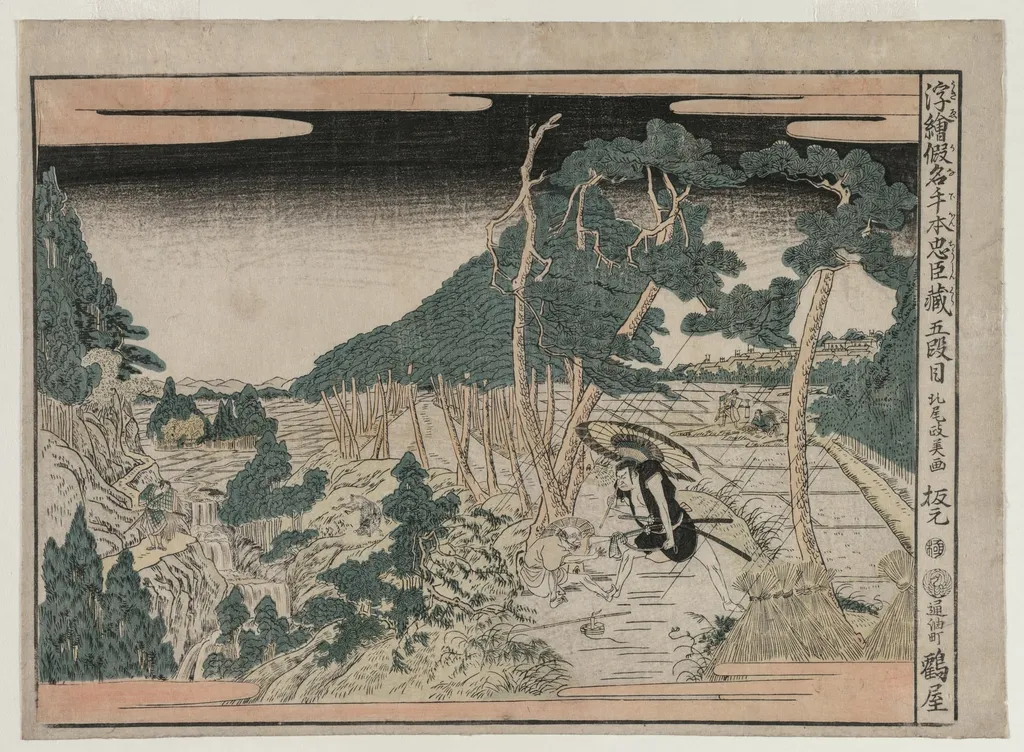
Chushingura: Act V (from the series Perspective Pictures for The Treasure House of Loyalty) is a print by the Romanticist artist Kitao Masayoshi. It dates from 1794 and is held in the collection of the Cleveland Museum of Art.
About this work
Overview
Created around 1794 by Kitao Masayoshi, this woodblock print is part of a series titled Perspective Pictures for The Treasure House of Loyalty.
Created around 1794 by Kitao Masayoshi, this woodblock print is part of a series titled Perspective Pictures for The Treasure House of Loyalty. It depicts a scene from Act V of the Chūshingura, a celebrated tale of samurai loyalty. The print is held in the collection of The Cleveland Museum of Art and exemplifies the ukiyo-e tradition’s engagement with historical narratives through landscape and figure composition.
Subject & Meaning
The scene illustrates two figures ascending a rugged path through a dense forest, their postures conveying exhaustion and determination. This moment reflects the loyal retainers’ arduous journey to avenge their lord, symbolizing endurance and moral resolve. The mist and steep terrain amplify the emotional weight of their quest, aligning the natural environment with the psychological burden of their duty.
Technique & Style
Masayoshi employs strong contrasts of light and shadow to model form and depth, a technique influenced by Western chiaroscuro but adapted to Japanese print aesthetics. The dark, inked masses of pine trees and rocks frame the narrow path, while subtle gradations suggest atmospheric perspective. Fine linework defines the figures and terrain, characteristic of late 18th-century ukiyo-e craftsmanship.
History & Provenance
The print was produced during the Kansei era, a time when ukiyo-e artists increasingly turned to historical and literary subjects. Though widely circulated in its time, few impressions survive. The Cleveland Museum of Art acquired the print in the 20th century, where it remains one of the few documented examples of Masayoshi’s narrative landscapes from this series.
Context
The Chūshingura story was immensely popular in Edo-period Japan, inspiring theater, literature, and visual art. Masayoshi’s series reimagined key moments as immersive landscapes, moving beyond theatrical portraiture. This shift reflected broader trends in printmaking, where emotional atmosphere and spatial depth became as important as character depiction.
Legacy
Masayoshi’s integration of dramatic lighting and naturalistic terrain into a historical narrative influenced later ukiyo-e artists exploring psychological depth. While not as widely known as works by Hokusai or Hiroshige, this print stands as a refined example of how loyalty themes were visually translated into meditative, landscape-centered compositions during the late Edo period.
Own this work as a print
Artist & collection

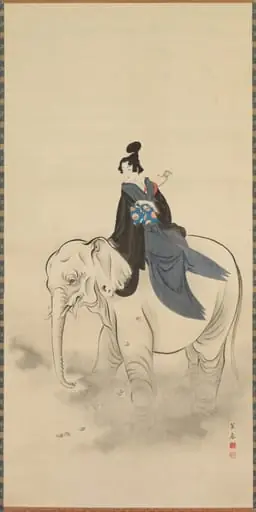 Stand-in Fugen
 Untitled
 Untitled
 Untitled
 Untitled
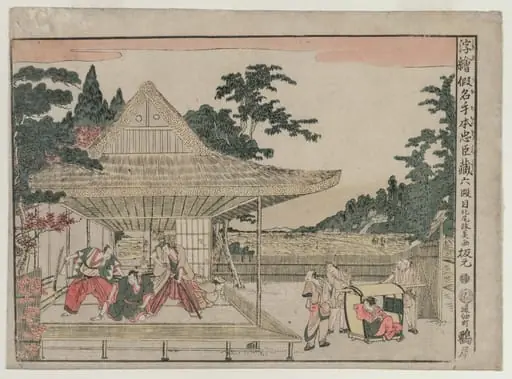 Chushingura: Act VI (from the series Perspective Pictures for The Treasure House of Loyalty)
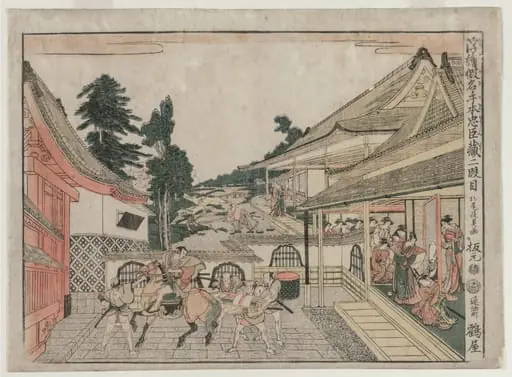 Chushingura: Act II (from the series Perspective Pictures for The Treasure House of Loyalty)
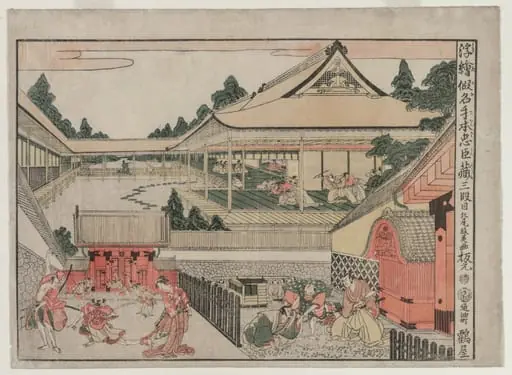 Chushingura: Act III (from the series Perspective Pictures for The Treasure House of Loyalty)
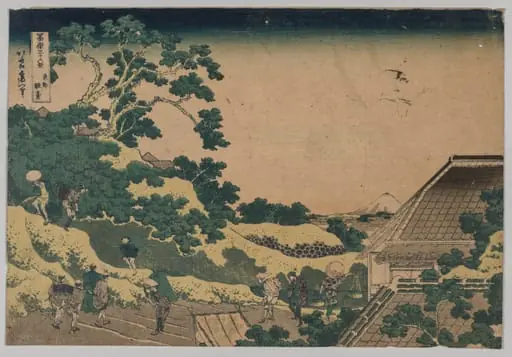 Fuji from Surugadai, in Yedo
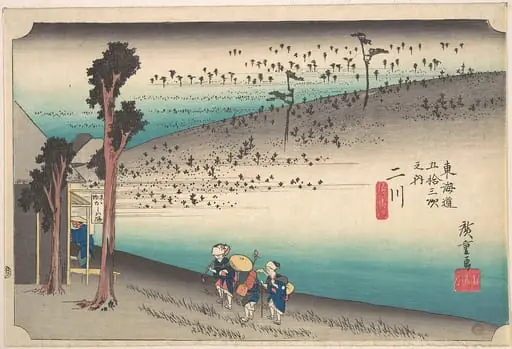 東海道五十三次之内 二川 猿ヶ馬場|Futagawa, Saru ga Baba
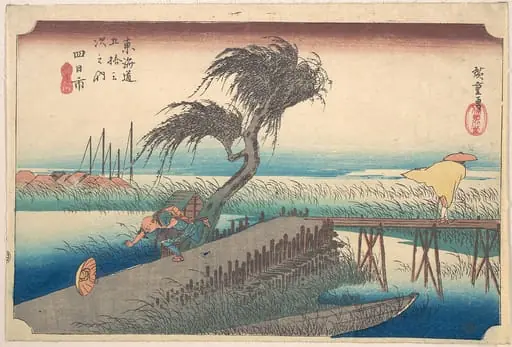 東海道五十三次之内 四日市 三重川|Yokkaichi, Sanchokawa
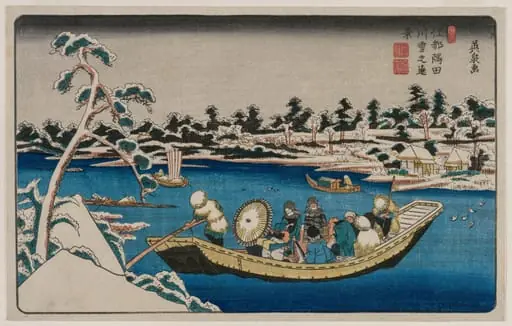 A Distant View of Snow on the Sumida River in Edo
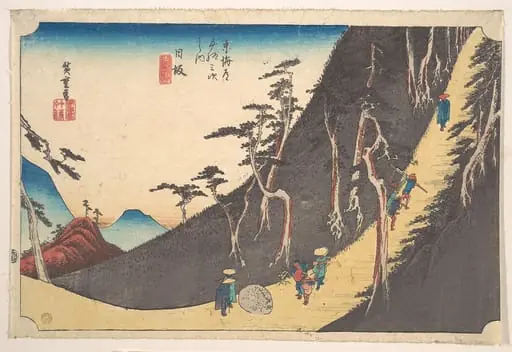 東海道五十三次之内 日坂 佐夜の中山|Nissaka, Sayo Nakayama
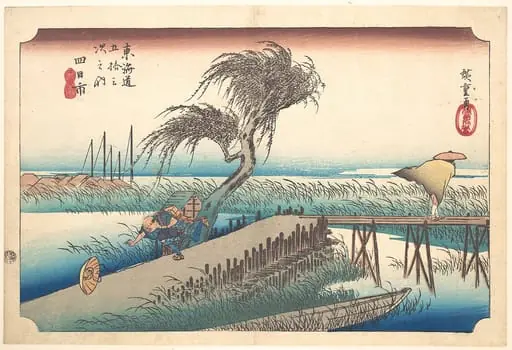 東海道五十三次之内 四日市 三重川|Mie River at Yokkaichi
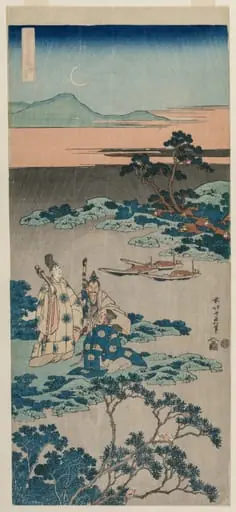 The Minister Toru Daijin Standing by a Lake Beneath a Crescent Moon, from the series A True Mirror of Chinese and Japanese Poetry
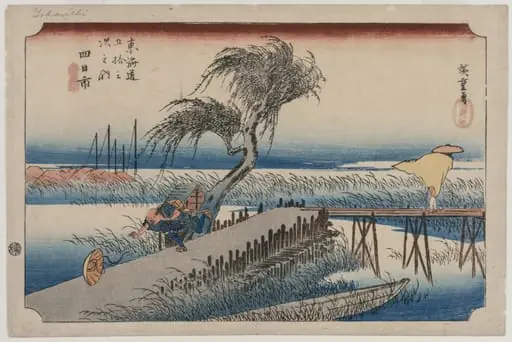 Yokkaichi: View of the Mie River, from the series The Fifty-Three Stations of the Tōkaidō