Artwork
Flora's Barrow
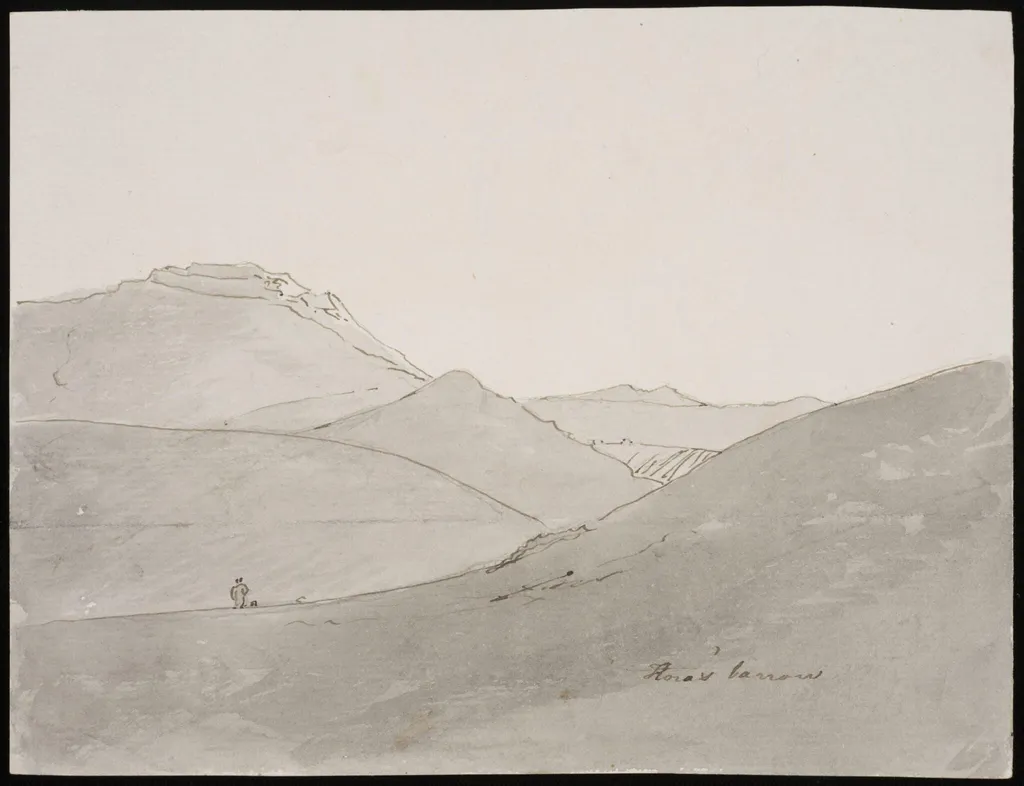
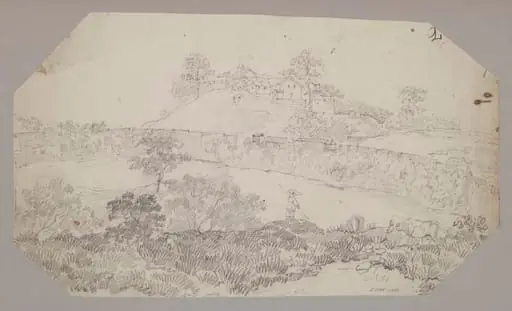
Flora's Barrow is a drawing by the Romanticist artist John Baverstock Knight. It dates from 1785 and is held in the collection of the Victoria and Albert Museum.
About this work
Overview
The work’s unfinished appearance, achieved through faint, uneven lines, suggests a moment captured in passing rather than a polished composition.
Created in 1785 by John Baverstock Knight, Flora's Barrow is a delicate pencil drawing held in the Victoria and Albert Museum’s collection. It depicts a quiet, undulating landscape with a meandering path cutting through low hills. The work’s unfinished appearance, achieved through faint, uneven lines, suggests a moment captured in passing rather than a polished composition. Its title evokes mythological reference without explicit illustration.
Subject & Meaning
The drawing’s title alludes to Flora, the Roman goddess of flowers and spring, yet the scene offers no figures or direct symbols. Instead, the rolling terrain and solitary path invite interpretation as a symbolic landscape—perhaps evoking memory, mortality, or the passage of time. The subtle, indistinct forms in the distance may hint at ruins or graves, reinforcing a contemplative, melancholic tone without narrative clarity.
Technique & Style
Knight employed light, sketchy pencil strokes to suggest form rather than define it. The lines are irregular and loosely layered, avoiding sharp contours or heavy shading. This approach creates a sense of atmospheric vagueness, where landforms emerge from minimal marks. The absence of detail in the background enhances the work’s introspective mood, prioritizing mood over topographical accuracy.
History & Provenance
The drawing entered the Victoria and Albert Museum’s collection as part of its broader holdings of British graphic art from the 18th century. Its provenance before acquisition is not well documented, but its style aligns with amateur and topographical drawings common among educated patrons of the period. It was likely made as a personal study rather than a commissioned work.
Context
In late 18th-century Britain, landscape drawing was often pursued as a genteel pastime, blending observation with poetic sentiment. Knight’s work reflects this trend, where nature was rendered not for scientific precision but for emotional resonance. The ambiguity of Flora’s Barrow mirrors contemporary literary and artistic interests in the sublime and the melancholic, particularly in rural scenes.
Legacy
Flora’s Barrow remains a quiet example of 18th-century British draftsmanship, valued for its restraint and evocative simplicity. It does not represent a major artistic innovation but offers insight into how landscape was privately contemplated during a period of growing interest in nature’s emotional dimensions. Its preservation underscores the museum’s commitment to documenting everyday artistic practice beyond the canonical.
Artist & collection
Artist
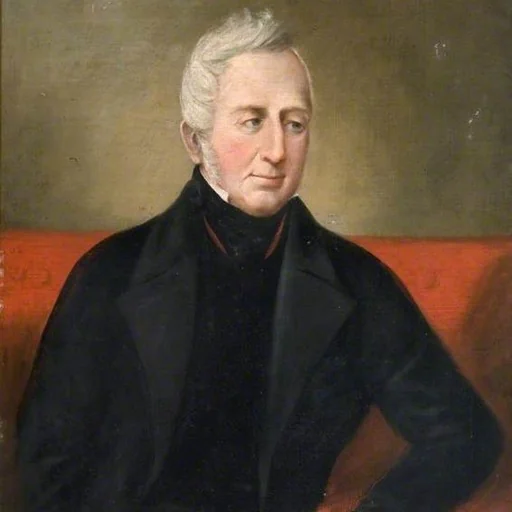
John Baverstock Knight (1785–1859) was an English land surveyor and artist, born in Langton Long Blandford.

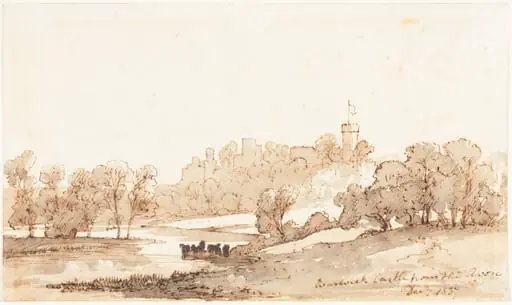
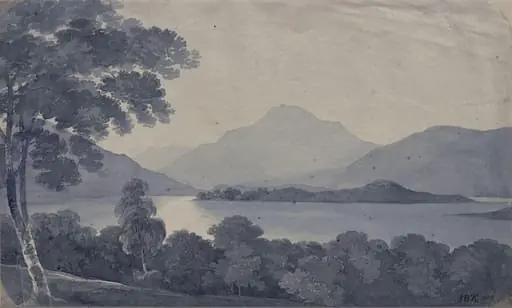
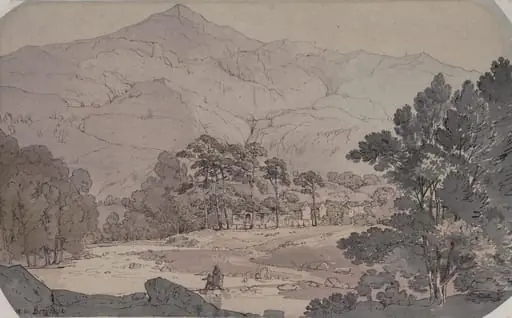
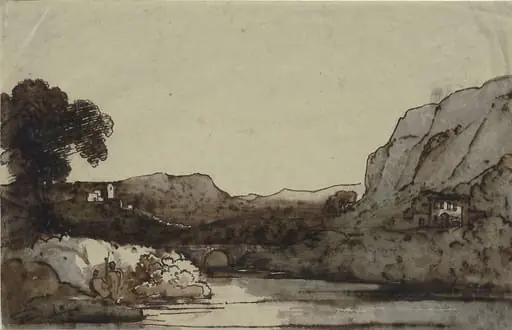
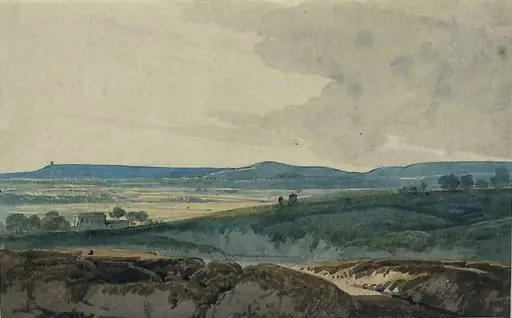
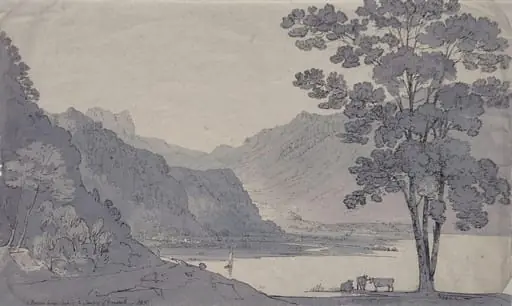
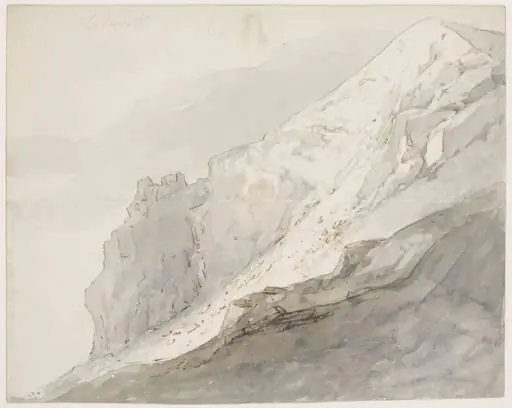
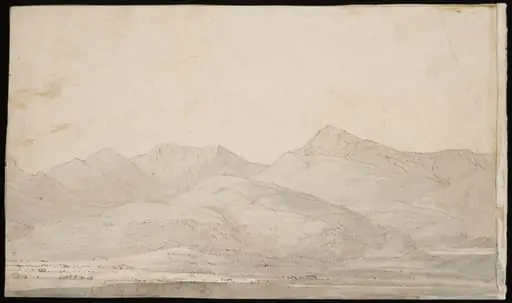
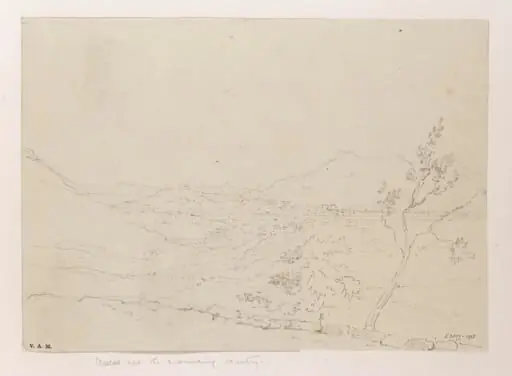 Macau, looking south-west along the peninsula
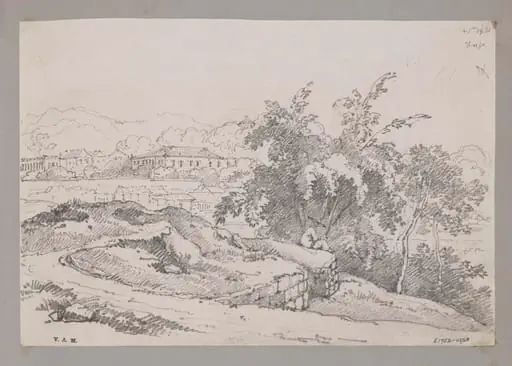 The Casa, Macao, in the gardens of which is Camoens' Cave (the residence of Lady Pereira), Macao
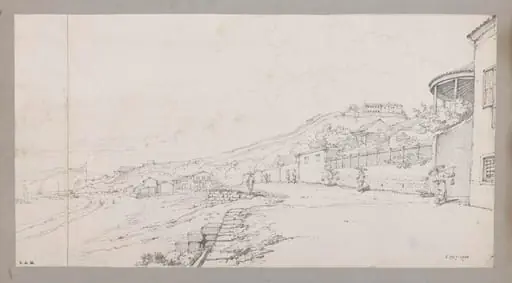 Part of Macao Bay, looking west
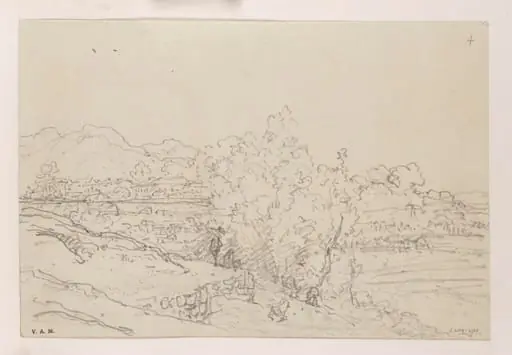 Fields and trees, with the city of Macau in the distance
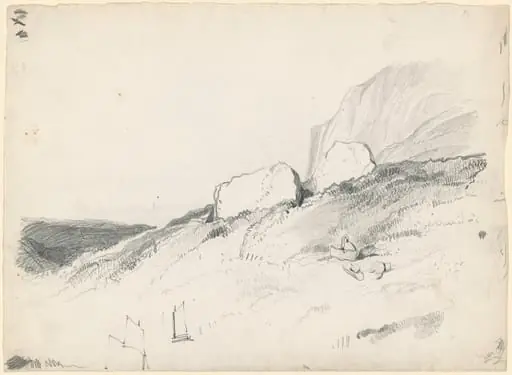 Rocky Landscape
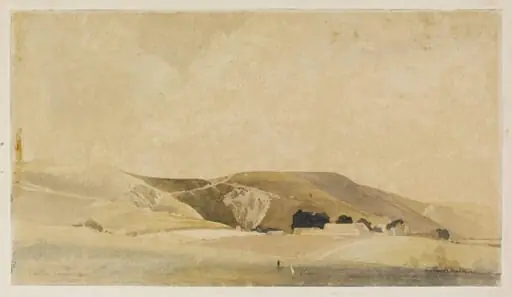 The Southdown, Underhill Road: Porching Farm from Fulking
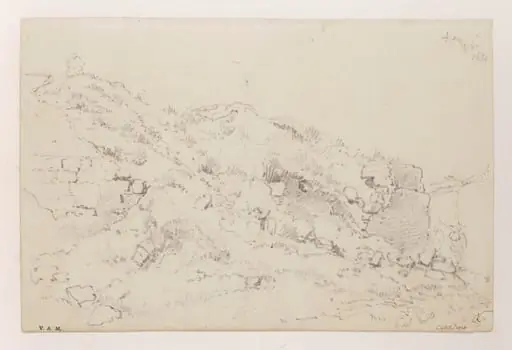 A hillside with ruined masonry
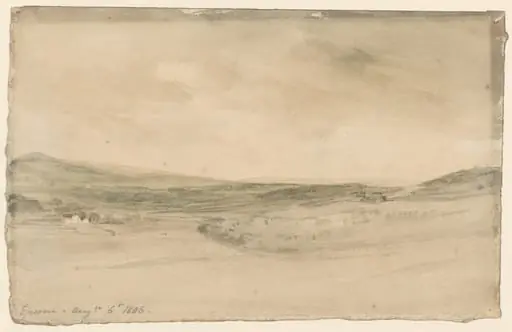 Epsom Heath
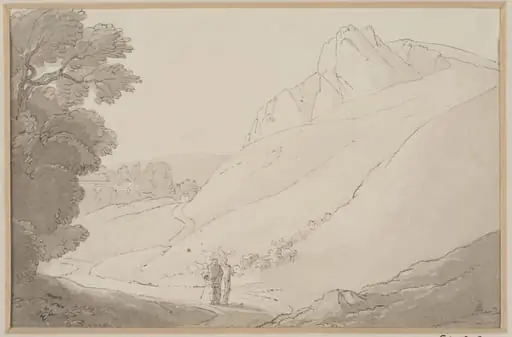 Untitled
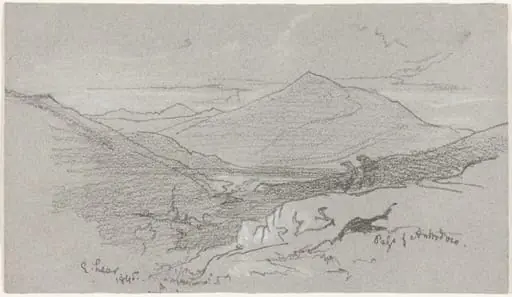 Mountainous View from Antrodoco
 Landscape with a fortified wall and a hilltop village
 Near the Travellers Rest Inn, Dolgelly