Artwork
Warwick Castle from the Avon
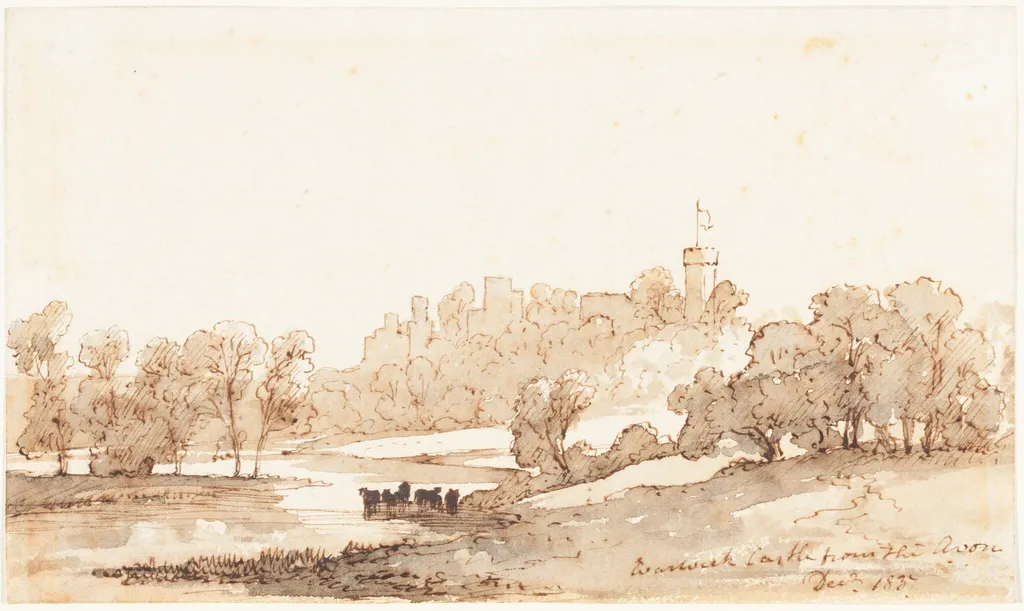
Warwick Castle from the Avon is an ink drawing by the Romanticist artist John Baverstock Knight. It dates from 1837 and is held in the collection of the National Gallery of Art.
About this work
Overview
Created in 1837 by John Baverstock Knight, this drawing captures Warwick Castle as seen from the opposite bank of the River Avon. Executed in pen and brown ink with subtle washes over graphite, it is a restrained, observational sketch on wove paper. The work conveys a momentary impression rather than a finished composition, emphasizing atmosphere over detail.
Subject & Meaning
The scene presents Warwick Castle rising modestly above the riverbank, its silhouette softened by distance and atmospheric haze. Bare trees frame the water’s edge, suggesting late autumn or early winter. The composition invites quiet contemplation, focusing on the relationship between natural landscape and architectural heritage without overt narrative or symbolism.
Technique & Style
Knight employed loose, fluid strokes to suggest the movement of water and the rustling of leafless branches. Light ink lines and diluted washes create a sense of transparency, while occasional deeper tones define structural elements like the castle’s tower. The absence of heavy cross-hatching or rigid outlines reinforces the sketch’s spontaneous, on-site character.
History & Provenance
The drawing was made during Knight’s travels in Warwickshire, likely as part of his practice of documenting historic sites. It remained in private hands after his death, eventually entering a public collection. Its modest scale and unpolished finish suggest it was a personal record rather than a commissioned work.
Context
In the 1830s, topographical drawing was a common practice among amateur and professional artists documenting Britain’s architectural heritage. Knight’s approach aligns with the era’s interest in capturing landscapes with accuracy and sensitivity, often as preparatory studies or personal mementos rather than exhibition pieces.
Legacy
This drawing exemplifies the quiet, observational tradition of 19th-century British topographical art. While not widely known, it contributes to a broader understanding of how artists engaged with historic sites through direct, intimate sketching—valuing immediacy and subtle tone over grandeur or finish.
Artist & collection
Artist
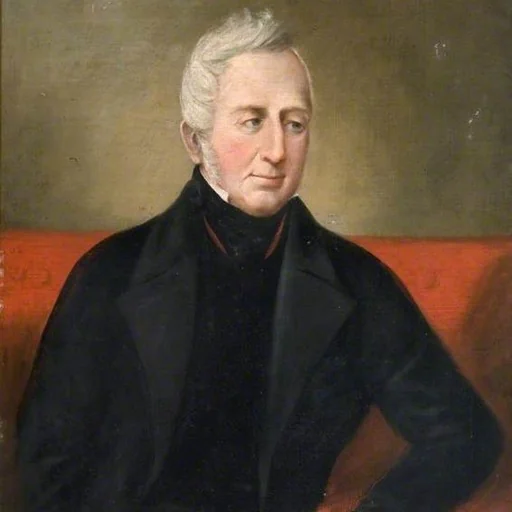
John Baverstock Knight (1785–1859) was an English land surveyor and artist, born in Langton Long Blandford.

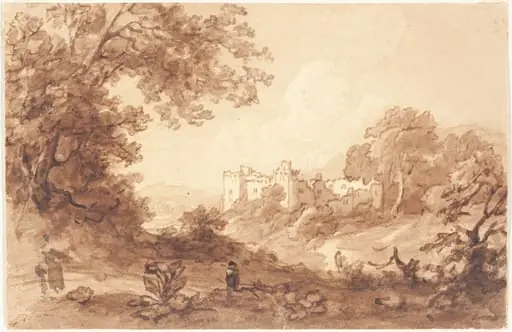 Carew Castle, Pembrokeshire
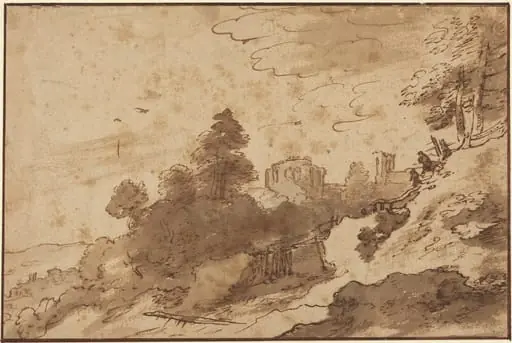 Landscape with Bridge and Ruins in Background
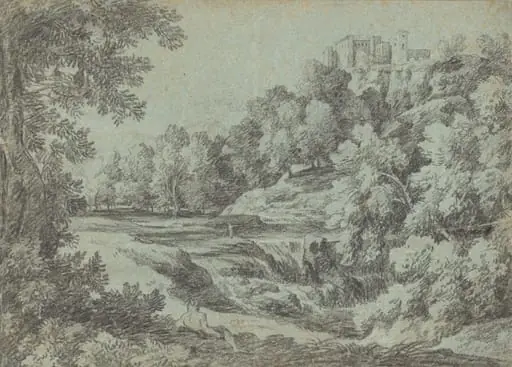 Italian Landscape with Fortifications and a Waterfall
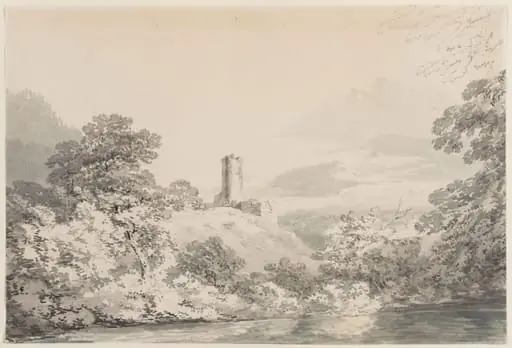 Landscape with tower on a rock
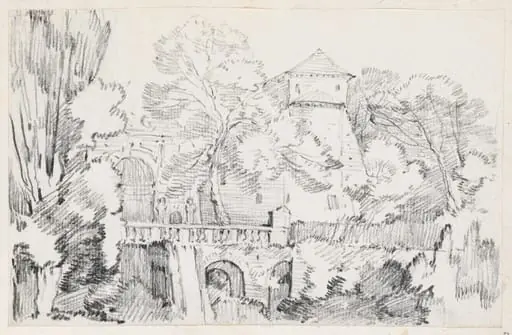 The Water Organ in the Gardens of the Villa d'Este, Tivoli
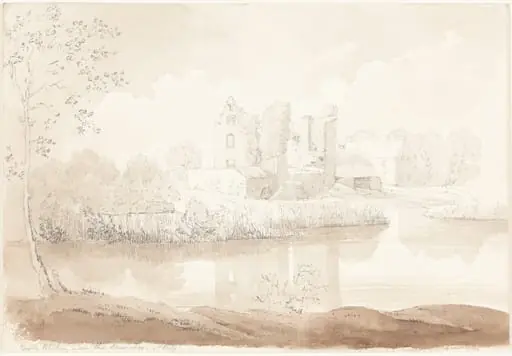 Castle Rheban on the River Barrow, Athy
 Two Cows on a Ferry
 The Castle Above the Meadows
 Landscape with Abbey by a Stream
 Boley Hill and Castle, Rochester, with the "Justice Tree"
 Landscape with lake
 Views of Warwick Castle: The Entrance of Warwick Castle from the Lower Court