Artwork
Untitled
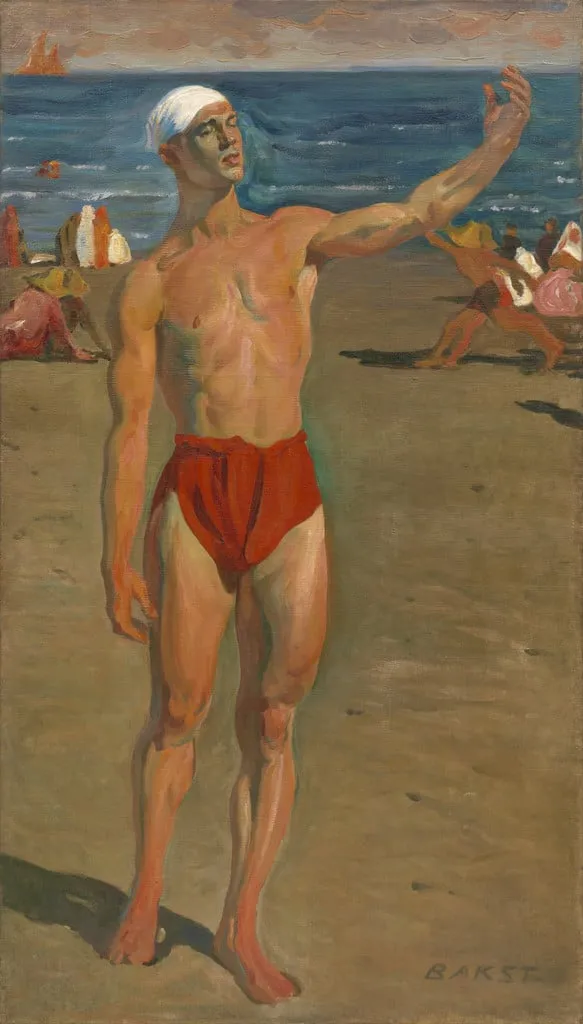
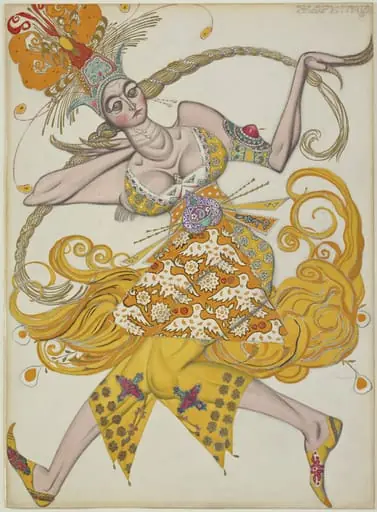
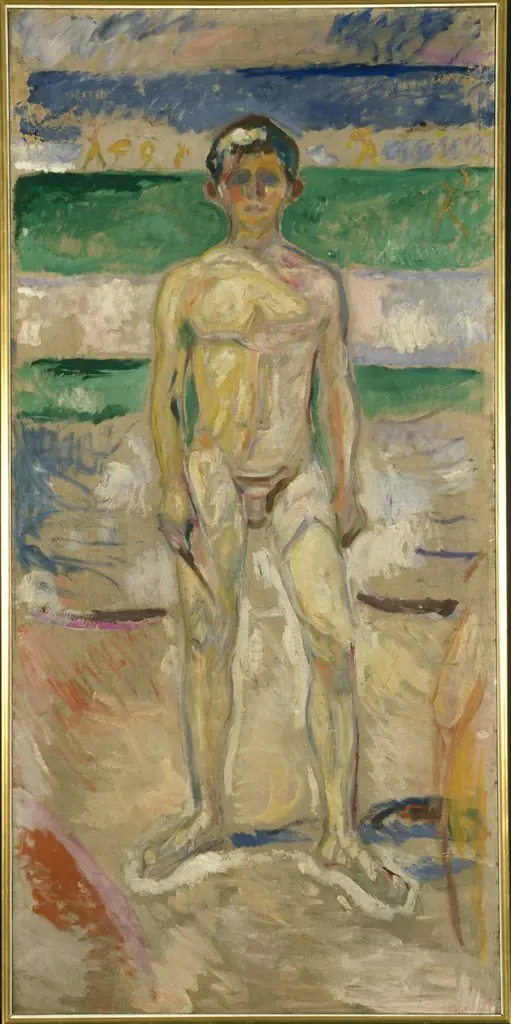
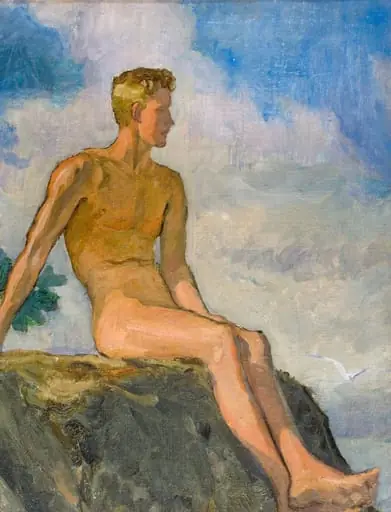
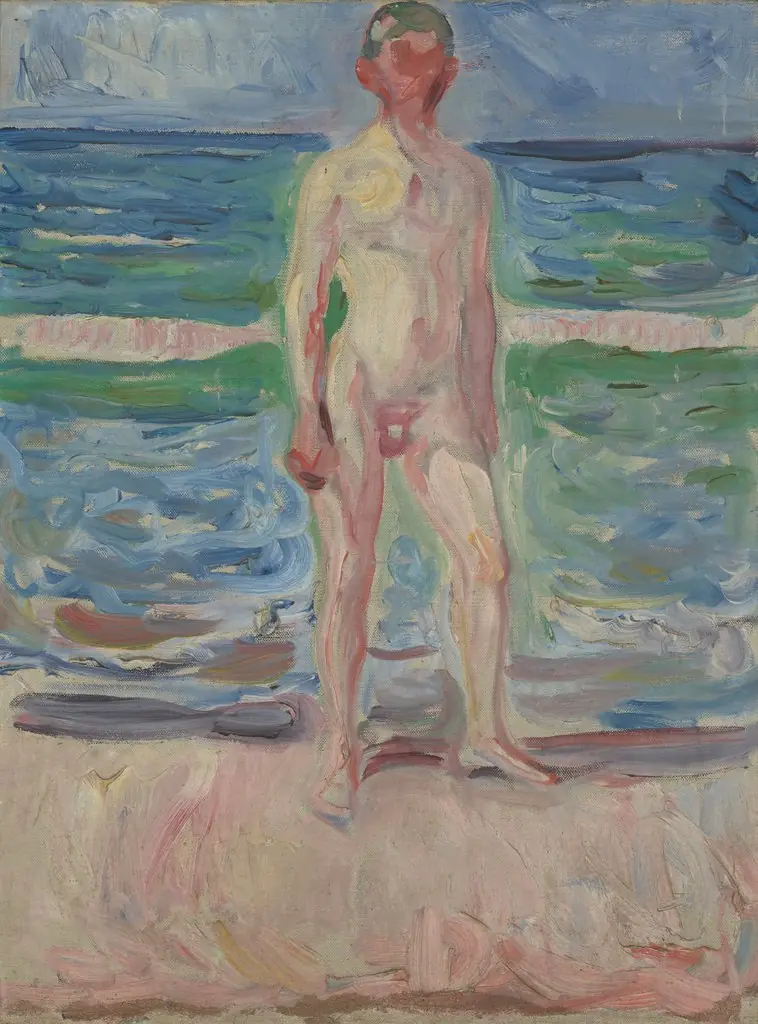
Untitled is an oil drawing by Léon Bakst. It dates from 1909 and is held in the collection of the Museum of Modern Art.
About this work
Overview
Its loose brushwork and vivid palette distinguish it from his more ornate stage work, revealing a personal exploration of the human figure in natural settings.
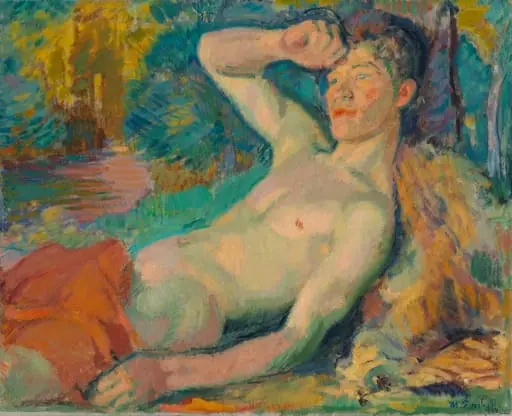
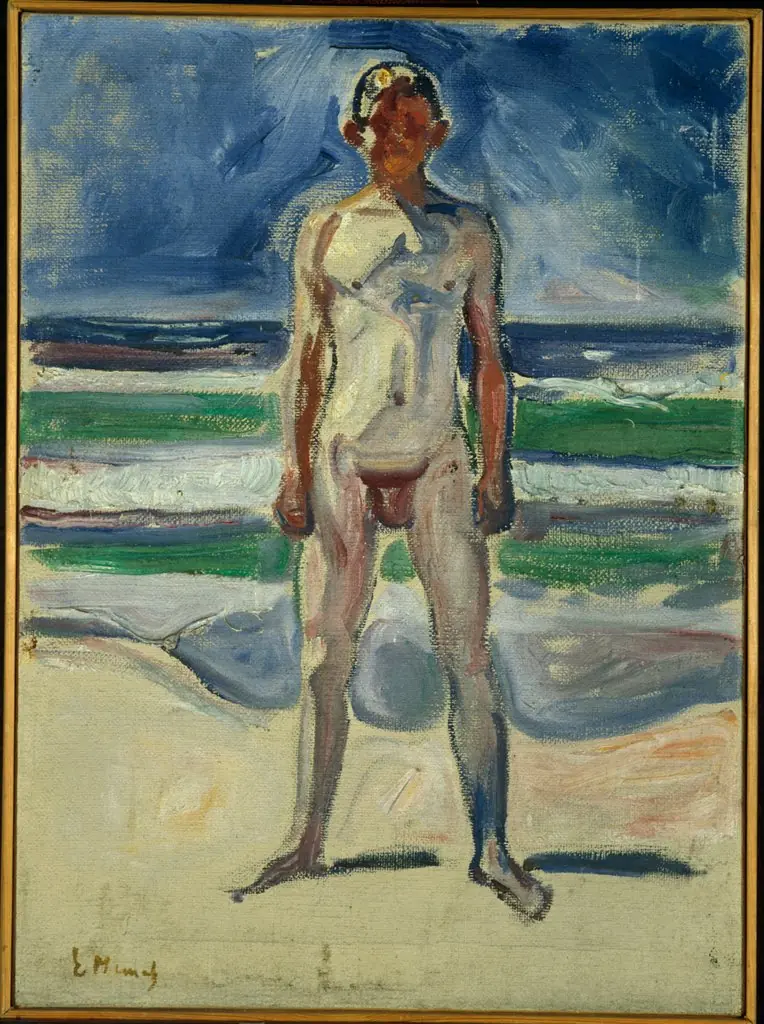
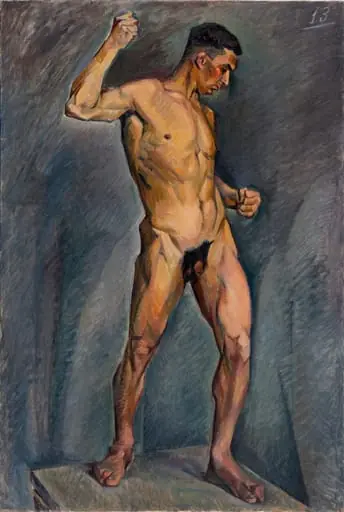
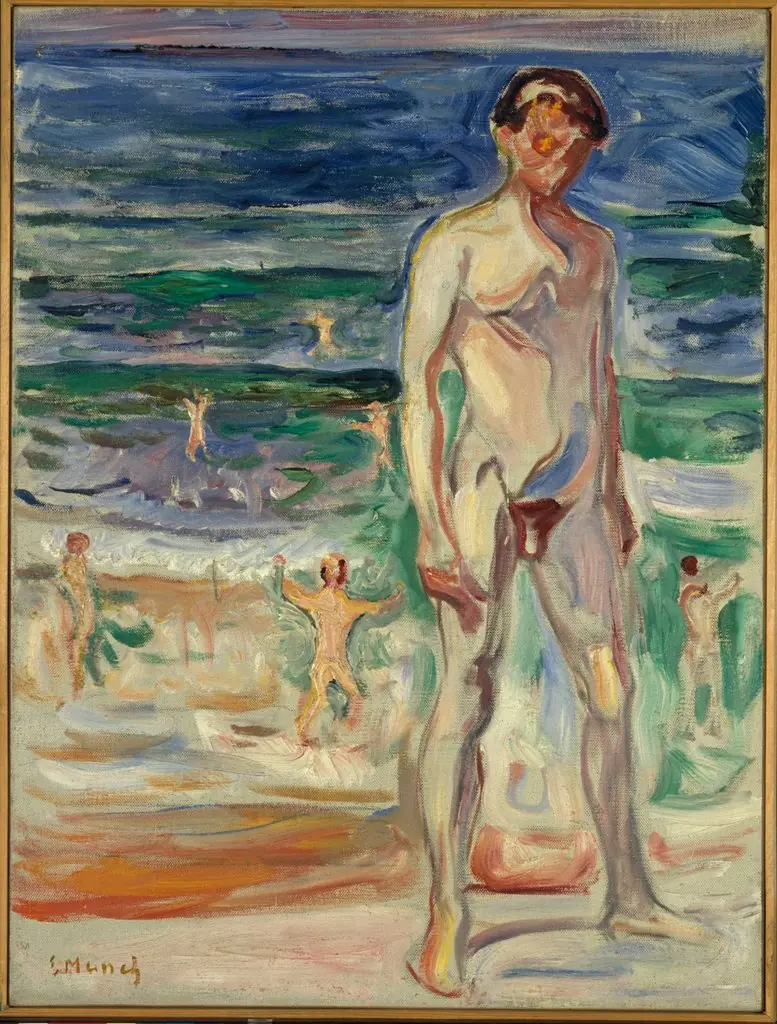
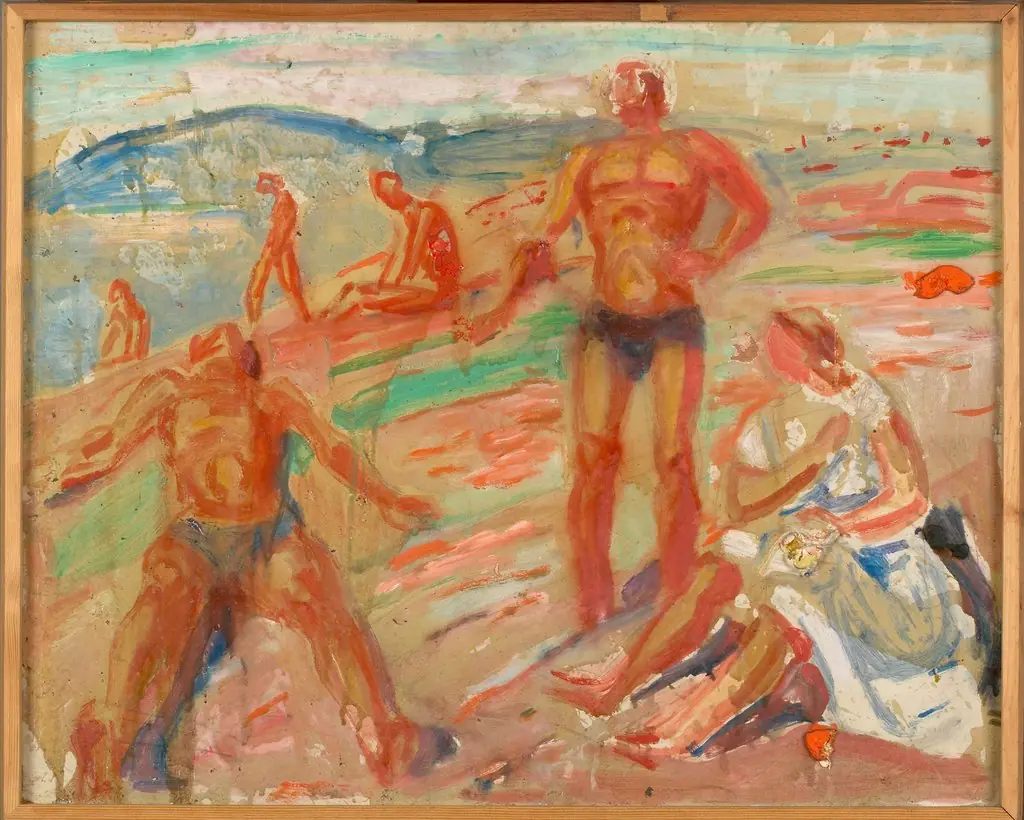
Created in 1909, this oil on canvas work by Léon Bakst captures a solitary male figure on a coastal scene. Though untitled, it reflects Bakst’s shift from theatrical design toward independent painting. The composition centers on a nude torso against a minimal landscape, emphasizing form and color over narrative. Its loose brushwork and vivid palette distinguish it from his more ornate stage work, revealing a personal exploration of the human figure in natural settings.
Subject & Meaning
The figure, shirtless and standing on a beach, adopts a poised, almost ritualistic stance—one arm raised, the other resting on the hip. The absence of context or symbolic props invites interpretation as a study of presence rather than story. The blurred figures in the distance suggest fleeting human interaction, contrasting with the central figure’s stillness. The setting evokes solitude, possibly reflecting Bakst’s own sense of displacement as an expatriate artist.
Technique & Style
Bakst applied oil paint with noticeable impasto, particularly on the figure’s skin and red shorts, creating a tactile, sculptural surface. The thick pigment catches light unevenly, enhancing the sense of volume. Background elements—sea, sky, distant figures—are rendered with looser, more fluid strokes, establishing depth without detail. This contrast between textured foreground and atmospheric background reflects his decorative sensibility adapted to easel painting.
History & Provenance
Painted in 1909, during Bakst’s peak association with the Ballets Russes, this work emerged alongside his most famous stage designs. Unlike his commissioned ballet pieces, this canvas appears to be a private experiment, not tied to performance. Its early provenance is undocumented, but it likely remained in Bakst’s possession until later acquisition by a private collector or institution, reflecting its status as a lesser-known facet of his output.
Context
In 1909, Bakst was immersed in the avant-garde circles of Paris and St. Petersburg, where exoticism and stylization dominated visual culture. While his ballet costumes drew from Orientalist tropes, this painting strips away ornamentation, focusing on the body in a natural environment. It aligns with broader early 20th-century interests in primal forms and emotional expression, yet retains his signature chromatic intensity, bridging theatrical spectacle and intimate observation.
Legacy
Though overshadowed by his theatrical achievements, this work illustrates Bakst’s versatility beyond stage design. Its emphasis on color and texture influenced later artists exploring the figure in non-narrative settings. The painting remains a quiet testament to his ability to translate decorative instincts into personal expression, offering insight into an artist navigating the boundaries between performance, identity, and the solitary act of painting.
Artist & collection
Artist
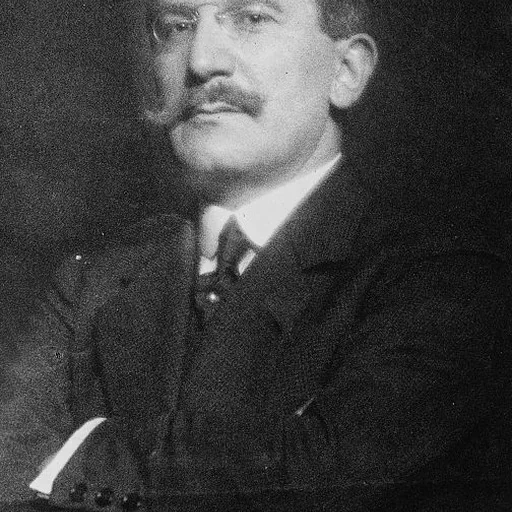
Léon (Lev) Samoylovich Bakst (Russian: Леон (Лев) Самойлович Бакст), born Leyb-Khaim Izrailevich Rosenberg (8 February 1866 – 27 December 1924), was a Russian painter and scene and costume designer of Jewish origin.