Artwork
Cathedral from Corso Francesco, Milan
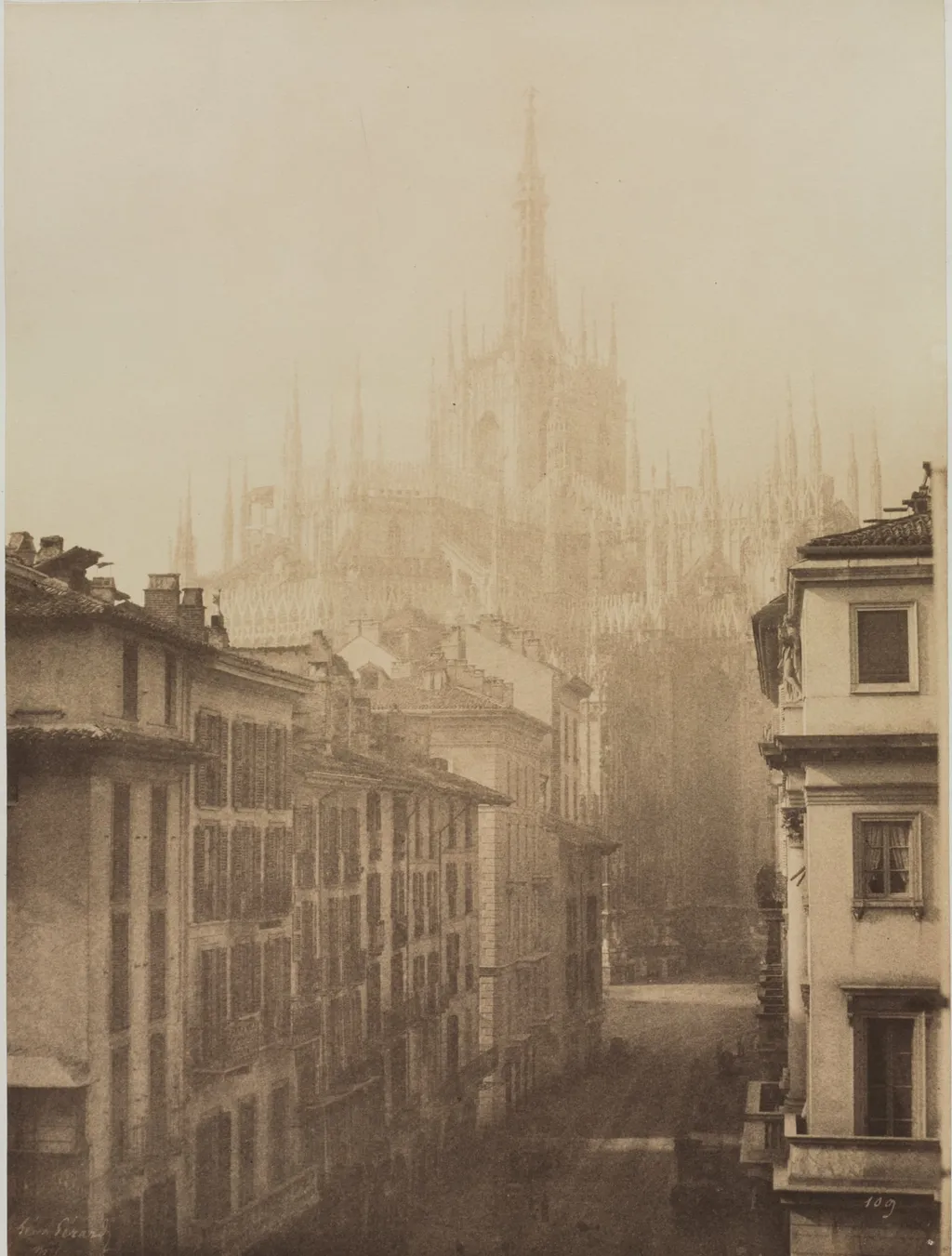
Cathedral from Corso Francesco, Milan is a photography by the Impressionist artist Léon Gérard. It dates from 1857 and is held in the collection of the Cleveland Museum of Art.
About this work
Overview
His 1857 journey included northern Italy, where he photographed Milan’s Corso Francesco leading to the cathedral.
Léon Gérard, a Parisian amateur photographer, captured urban landscapes during extensive travels in the 1850s. His 1857 journey included northern Italy, where he photographed Milan’s Corso Francesco leading to the cathedral. Using waxed paper negatives and albumen prints, he developed a soft, atmospheric style that departed from the sharp clarity typical of early photography, anticipating later pictorialist approaches.
Subject & Meaning
The photograph frames a bustling 19th-century Milanese street, alive with pedestrians, horse-drawn carriages, and shopfronts, all converging toward the towering Gothic facade of the cathedral. The building does not dominate the frame but emerges subtly, its intricate stonework blurred by atmospheric haze. This composition suggests a quiet reverence for the sacred amid the rhythms of daily life, rather than a monumentalist declaration.
Technique & Style
Gérard employed waxed paper negatives, a process that softened contrast and diffused light, yielding a muted tonal range. The resulting images exhibit a hazy, almost painterly quality—edges dissolve, shadows deepen gently, and distant forms recede into mist. This technique produced a sfumato-like effect, where clarity yields to mood, evoking a sense of quiet transience rather than documentary precision.
History & Provenance
In 1861, Gérard exhibited a series of his travel photographs in Paris, where they attracted attention from critics including Ernst Lacan. Lacan noted their harmonious balance, nuanced tonal transparency, and skillful handling of aerial perspective. Though little is documented about Gérard’s personal life, these exhibitions established his work as a distinctive voice in early photographic art, distinct from commercial or scientific uses of the medium.
Context
Mid-19th-century photography was rapidly evolving, with many practitioners prioritizing detail and technical accuracy. Gérard’s approach stood apart by embracing imperfection and atmospheric ambiguity. His images reflect a broader European fascination with the interplay of modernity and tradition, capturing cities where ancient architecture coexisted with emerging urban life, rendered not as records but as sensory experiences.
Legacy
Gérard’s work prefigured the pictorialist movement’s emphasis on mood over documentation. His use of soft focus and tonal gradation influenced later photographers seeking to elevate photography as an art form. Though his name faded from public memory, his aesthetic choices—particularly in Cathedral from Corso Francesco—remain a quiet testament to photography’s capacity to evoke atmosphere, memory, and quiet wonder.
Artist & collection

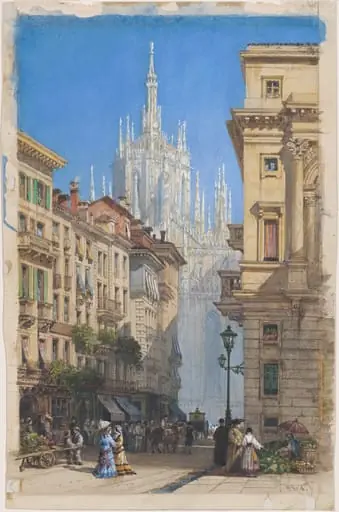 The Duomo in Milan from a Side Street
 Sketches at Home and Abroad: Lyons Church of St. Hezier, October 1832
 Venice: Saint Mark's Looking toward San Giorgio Maggiore, in Moonlight
 View of the Capitol Stairs, Rome
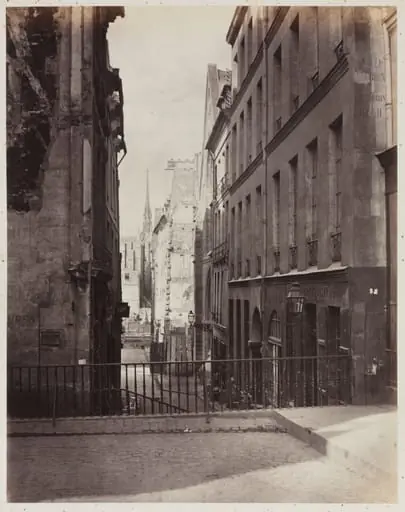 Rue Jean-de-Beauvais. Vue prise de la rue des Écoles vers la boulevard Saint-Germain, en travaux
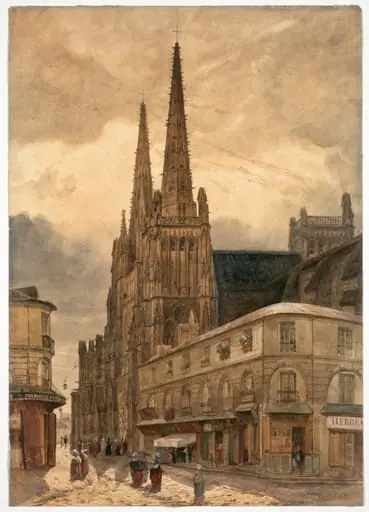 Cathédrale Sainte-André de Bordeaux
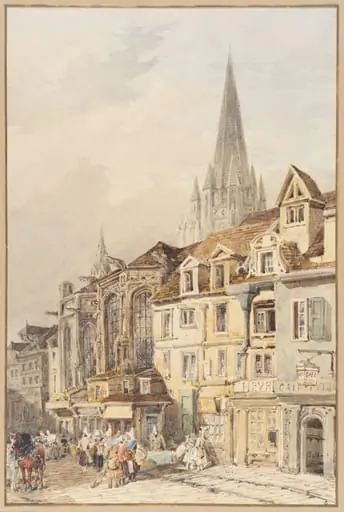 View at Caen, Normandy
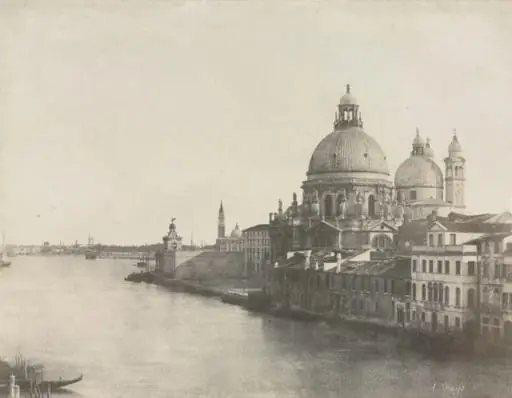 Santa Maria della Salute, View of the Grand Canal, Venice
 Panorama dalla Cupola di S. Pietro, Rome