Artwork
William Evans, Tonyrefail
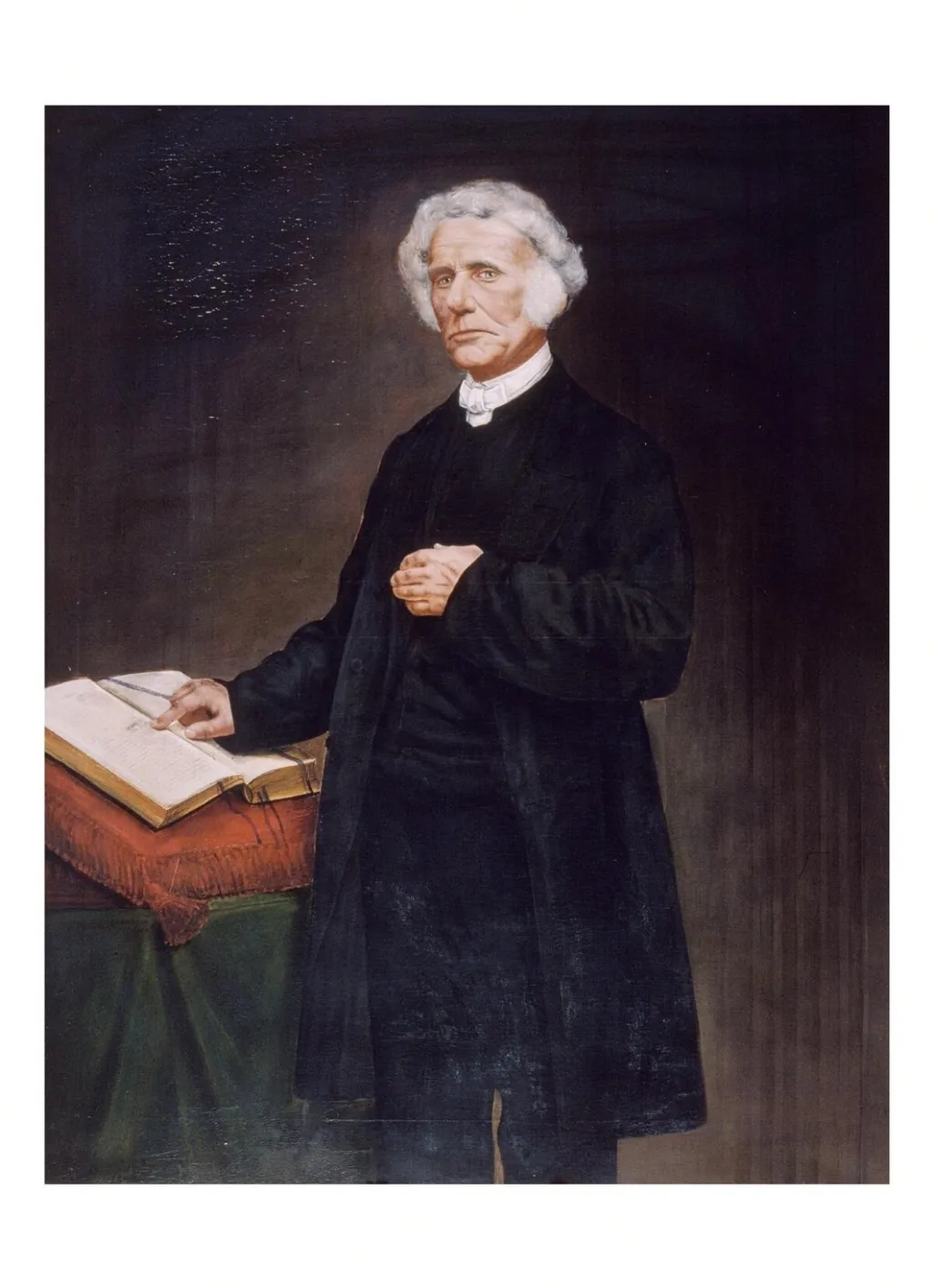
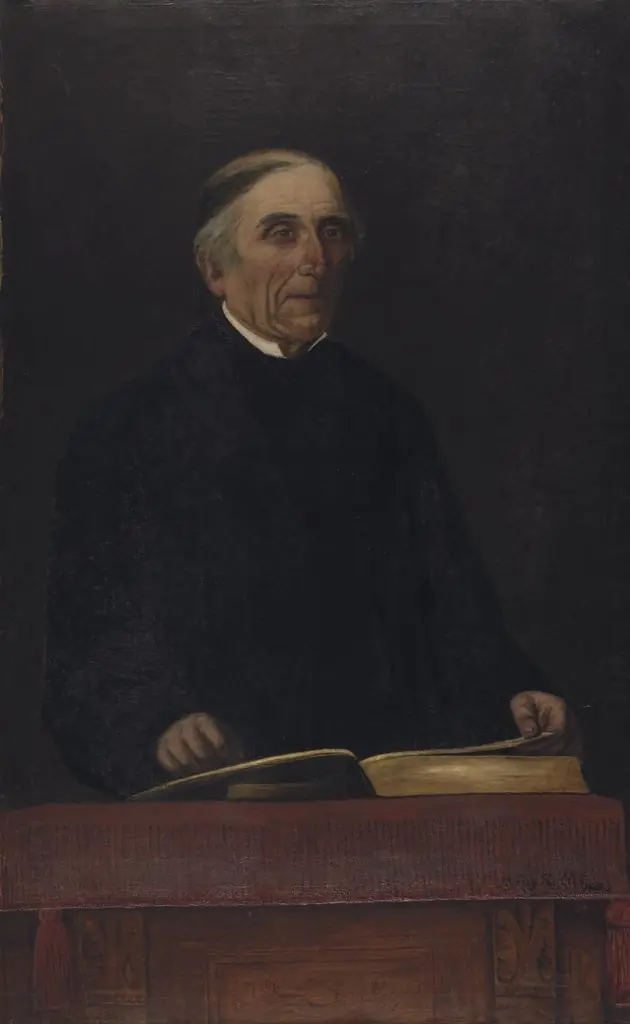
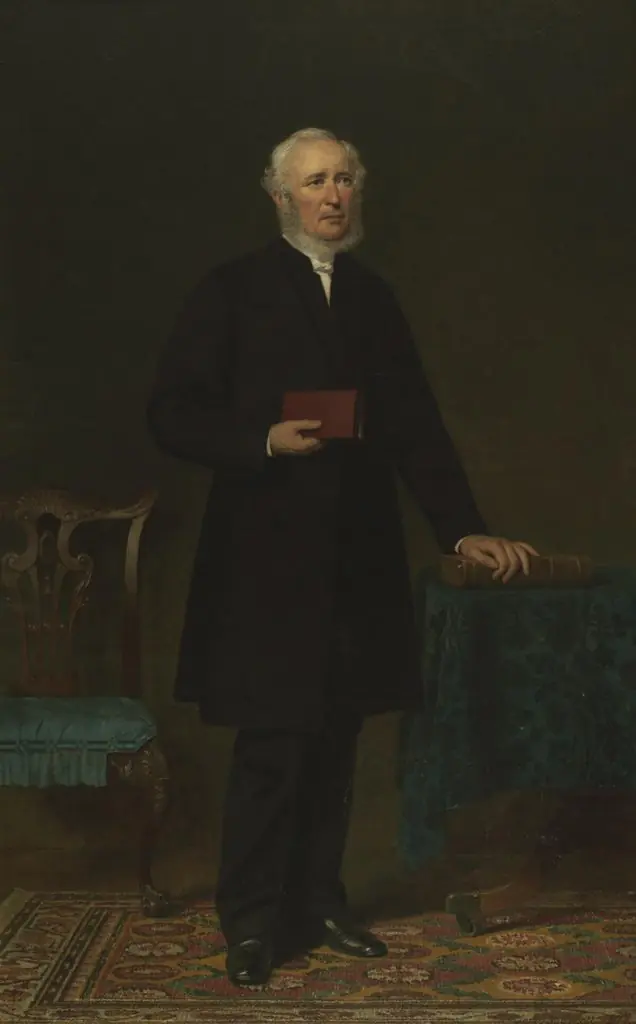
William Evans, Tonyrefail is an oil painting by the Realist artist L. Pazzi. It dates from 1868 and is held in the collection of the National Library of Wales. An oil painting from 1868, attributed to L.
About this work
Overview
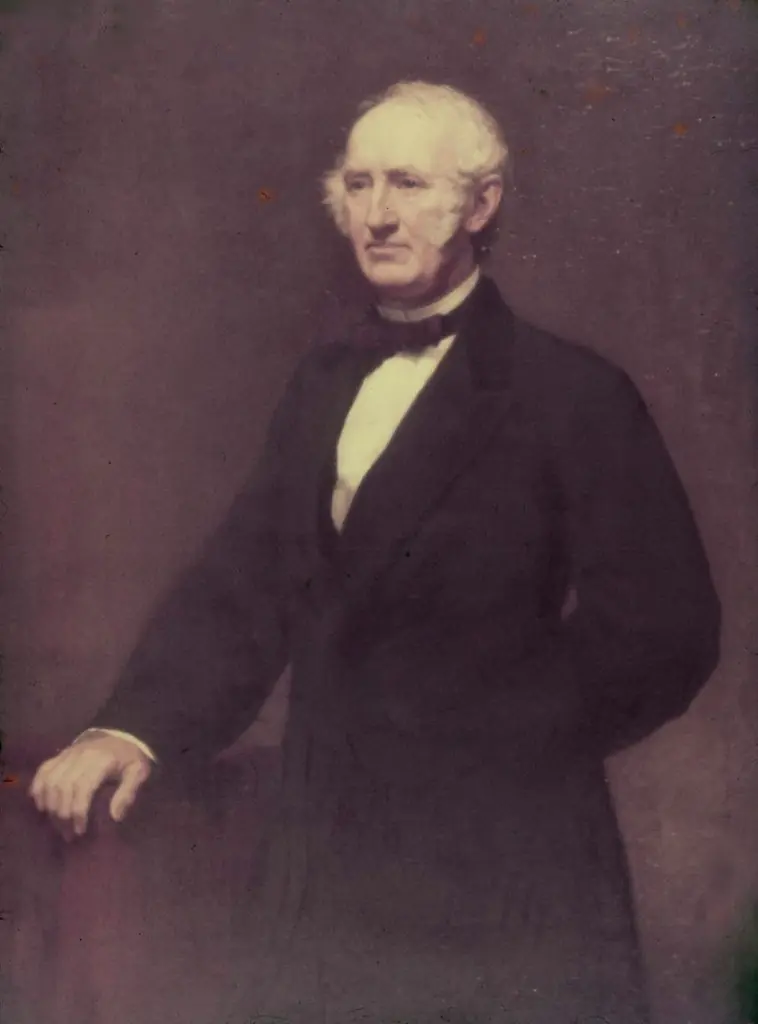
An oil painting from 1868, attributed to L. Pazzi, portrays William Evans of Tonyrefail in formal attire. The work is part of the National Library of Wales’s collection and reflects 19th-century portraiture conventions. Its composition centers on a single figure, rendered with attention to texture and quiet dignity, typical of academic styles of the period.
Subject & Meaning
The subject, William Evans, is depicted wearing a black clerical robe with a white collar, suggesting a religious or scholarly role. He holds a pen, and an open book rests before him on a table draped in red cloth. These elements imply intellectual engagement and ecclesiastical authority, conveying a sense of quiet contemplation rather than ceremonial display.
Technique & Style
Executed in oil paint, the portrait employs subtle tonal gradations to define form and fabric. Light falls gently across the figure’s face and hands, emphasizing texture in the robe and the sheen of the book’s pages. The brushwork is restrained, favoring clarity over flourish, aligning with mid-Victorian portraiture’s preference for sober realism.
History & Provenance
The painting was completed in 1868 and entered the collection of the National Library of Wales, where it remains today. Its origin as a private commission is likely, given Evans’s local prominence in Tonyrefail. No record of prior ownership or exhibition history is widely documented, suggesting it was intended for personal or institutional preservation rather than public display.
Context
In mid-19th century Wales, portraits of local clergy and educated figures were common, often commissioned to affirm social standing or community contribution. Evans’s depiction aligns with this trend, reflecting values of piety, literacy, and civic responsibility. The inclusion of a book and pen underscores the era’s reverence for learning within religious life.
Legacy
The portrait serves as a visual record of a regional figure from a time when clerical roles often intersected with education and community leadership. While L. Pazzi’s broader oeuvre remains obscure, this work contributes to the archive of Welsh cultural history, preserving the appearance and perceived character of a local individual through the medium of oil painting.
Artist & collection
Artist
This 19th-century painter captured the everyday life of Welsh coal country. Look at William Evans, Tonyrefail, an oil portrait from 1868 that centers a local miner in his working clothes. The quiet realism of the period…