Artwork
Traffic in Indulgences
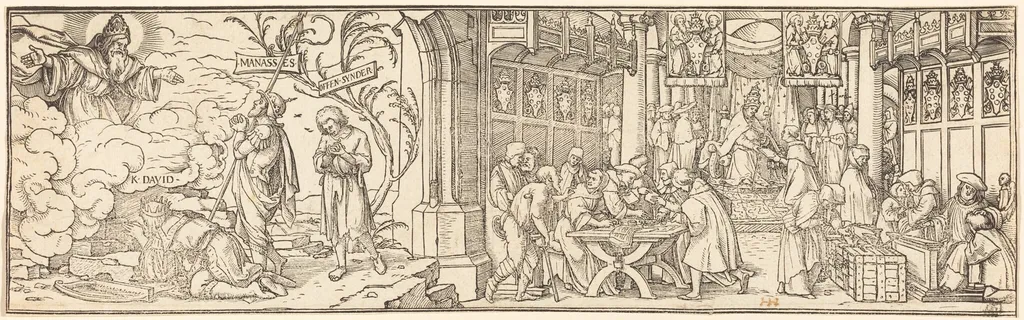
Traffic in Indulgences is an ink print by the Renaissance artist Hans Lützelburger. It dates from 1524 and is held in the collection of the National Gallery of Art.
About this work
Overview
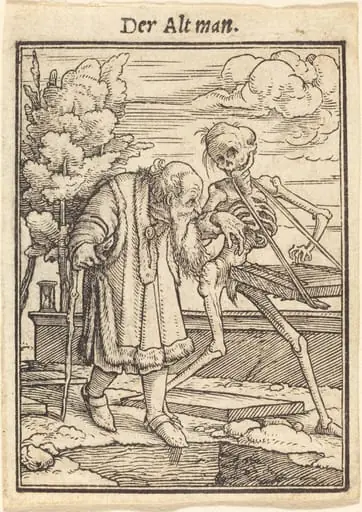
The work is part of a larger series of forty‑one woodcuts illustrating the *Dance of Death*.
Hans Lützelburger’s woodcut *Traffic in Indulgences*, dated around 1524, is a printed image on laid paper that depicts a bustling urban scene centered on the commercial sale of indulgences. The composition divides the street into two zones: a left side where a robed figure gestures toward a banner proclaiming “indulgences,” and a right side where a crowd gathers around a vendor’s table. The work is part of a larger series of forty‑one woodcuts illustrating the *Dance of Death*.
Subject & Meaning
The print visualizes the controversy surrounding the medieval practice of granting indulgences, portraying both the clerical promotion of the certificates and the lay public’s varied reactions—prayer, curiosity, confusion, and negotiation. A kneeling supplicant, a man holding a staff, and a figure writing on a board suggest the ritual of penance and the transactional nature of forgiveness that reformers would soon condemn.
Technique & Style
Executed by Lützelburger, a specialist blockcutter, the image relies on sharply incised lines that render the crowded street with energetic detail. The woodcut technique, involving the removal of wood to leave raised areas for ink transfer, allows for high contrast and fine linear texture, emphasizing the chaotic movement of figures and the textual elements such as the banner and board.
History & Provenance
Lützelburger, active in Augsburg from about 1516, worked under the publisher Jost de Negker and was renowned for his precision in cutting blocks rather than designing them. He collaborated with Hans Holbein the Younger, who supplied the designs for the *Dance of Death* series; Lützelburger’s death in 1526 left the project unfinished. The print has survived in several museum collections, reflecting its historical value as a document of early Reformation critique.
Context
Created just a few years before Martin Luther’s 1517 theses, the woodcut captures the growing public awareness of indulgence sales that fueled calls for reform. Augsburg, a major commercial hub, provided a realistic backdrop for the scene, linking the economic activity of the market with the spiritual economy of the Church.
Artist & collection

Artist
Hans Lützelburger (died June 1526), also known as Hans Franck, was a German blockcutter ("formschneider") for woodcuts, regarded as one of the finest of his day.

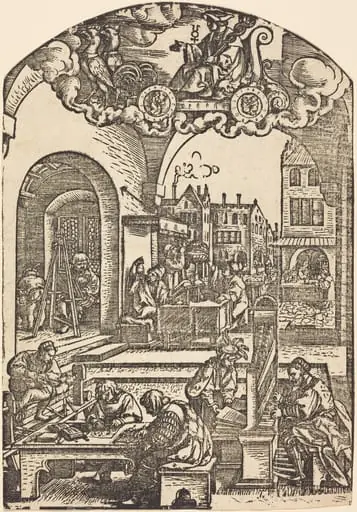 Mercury
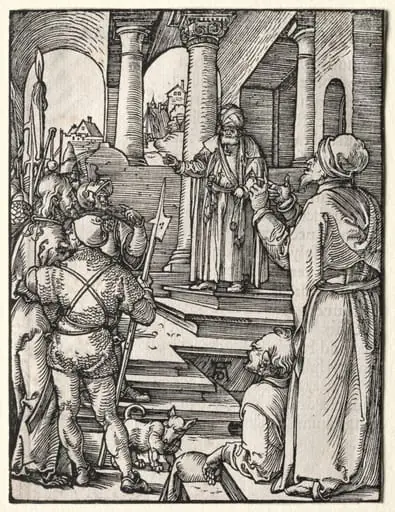 The Small Passion: Christ Before Pilate
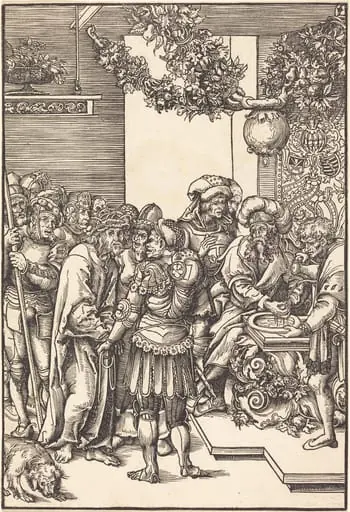 Pilate Washing His Hands
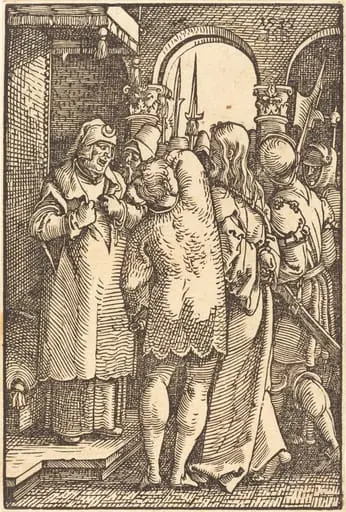 Christ before Caiaphas
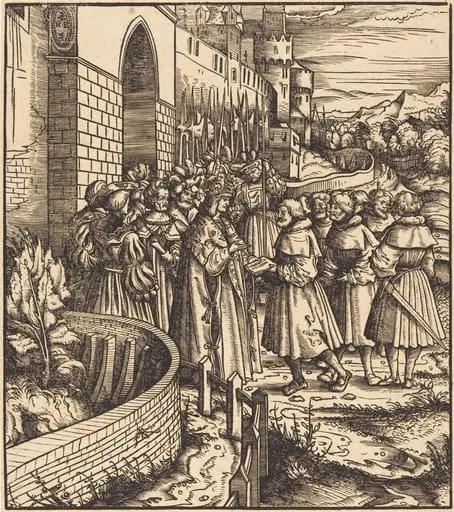 The Swiss Embassy against the Blue King
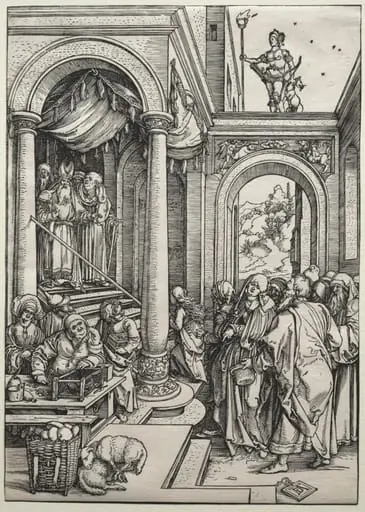 The Presentation of the Virgin in the Temple
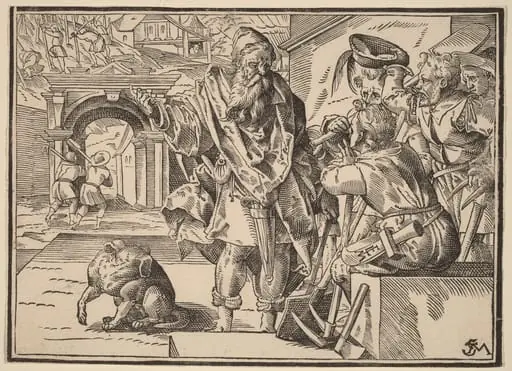 Christ Tells His Disciples of the Last Judgment
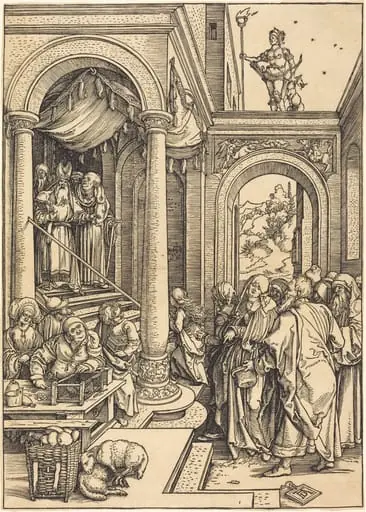 The Presentation of the Virgin in the Temple
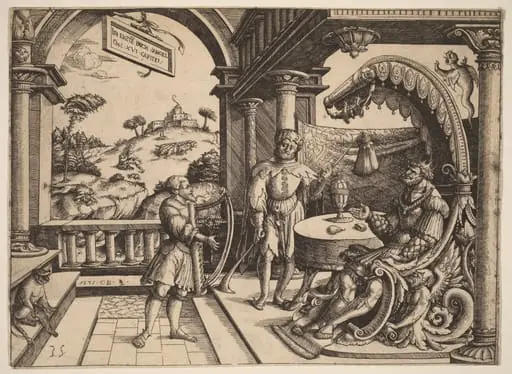 David Playing the Harp before Saul
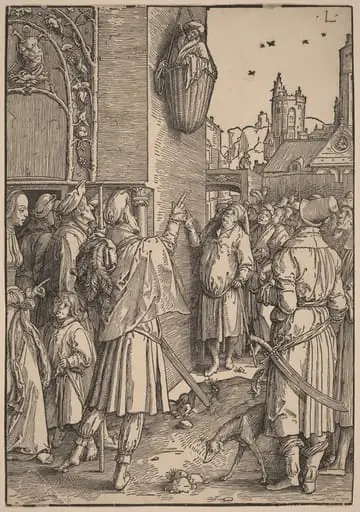 The Poet Virgil Suspended in a Basket
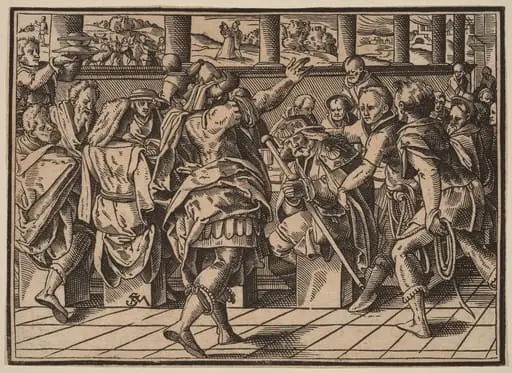 The Martyrdom of Saint James (?)
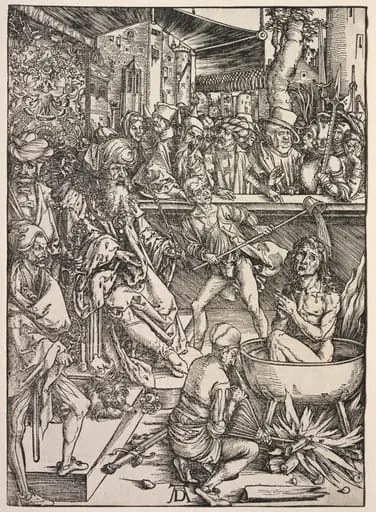 Revelation of St. John: Martyrdom of St. John