Artwork
Letter O
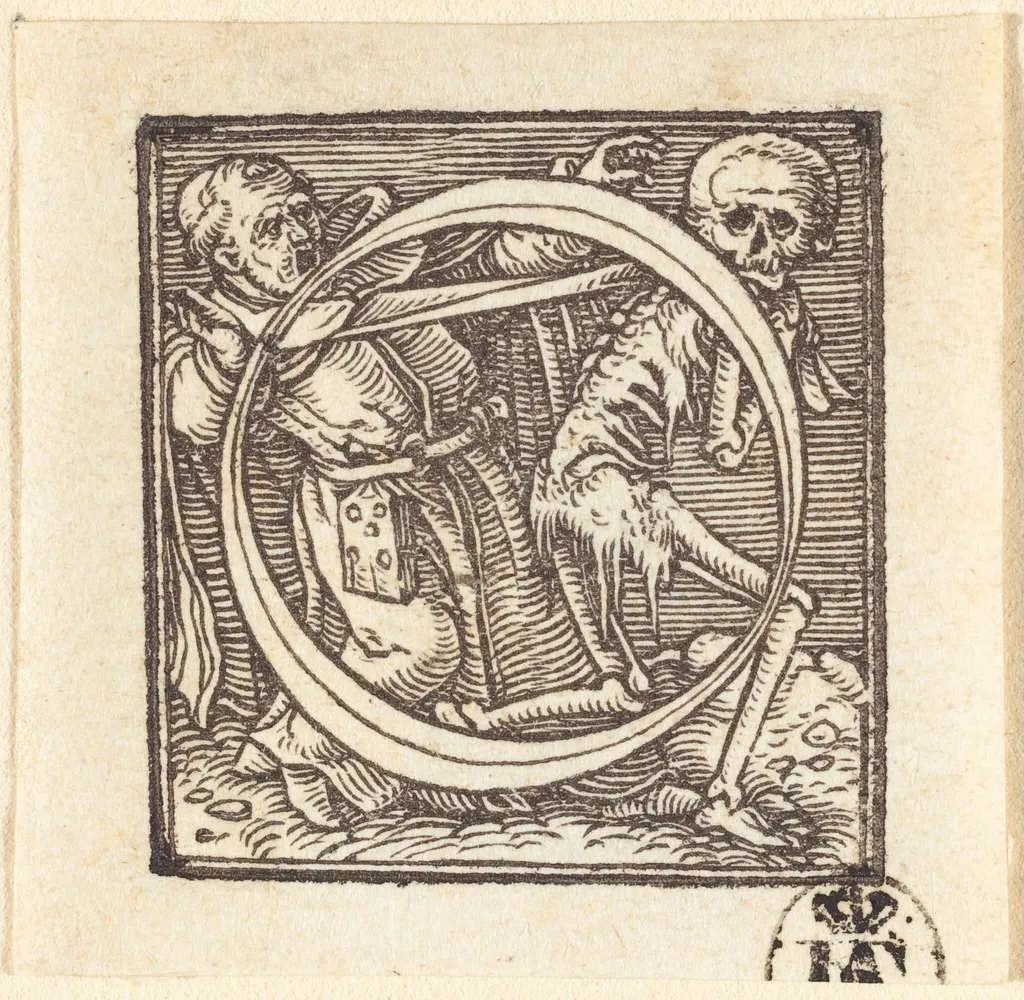
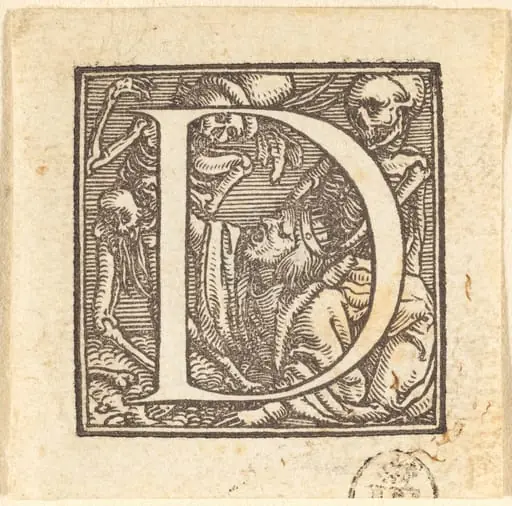
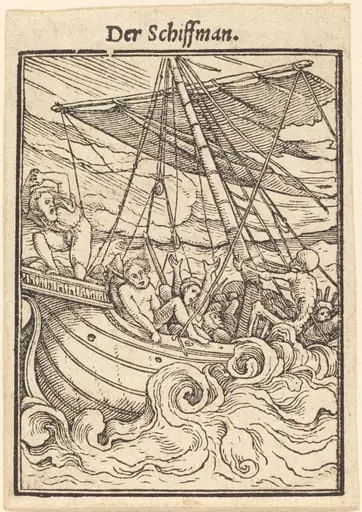
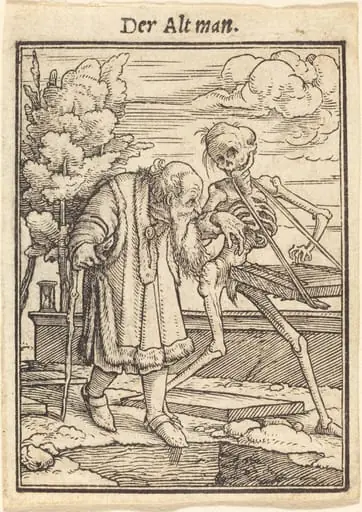
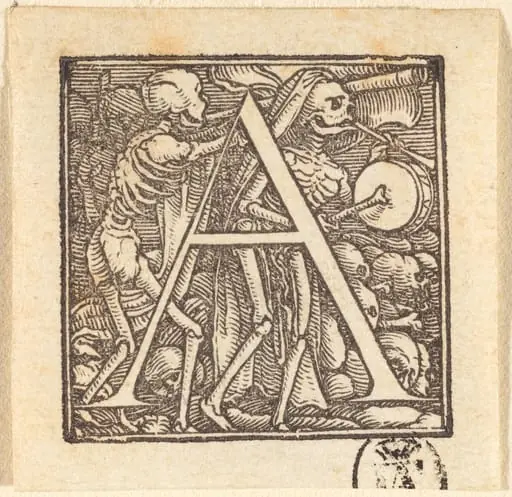
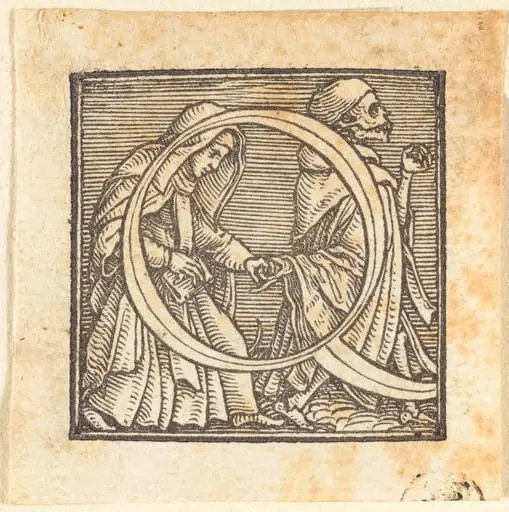
Letter O is an ink print by the Renaissance artist Hans Lützelburger. It dates from 1523 and is held in the collection of the National Gallery of Art.
About this work
Overview
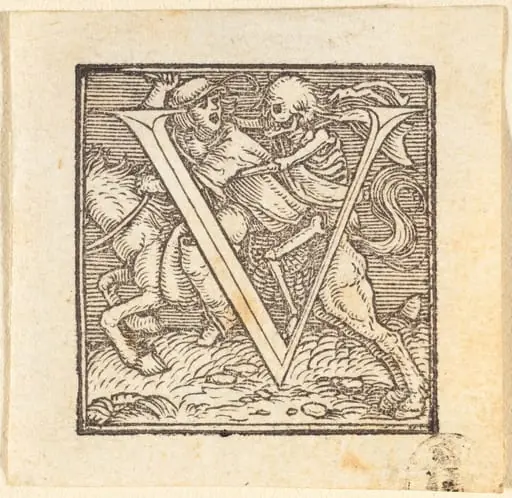
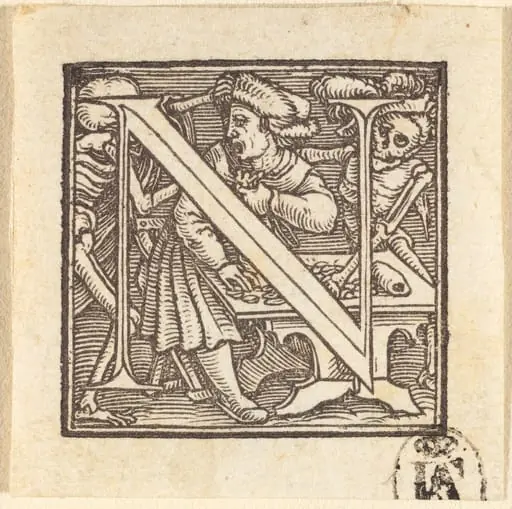
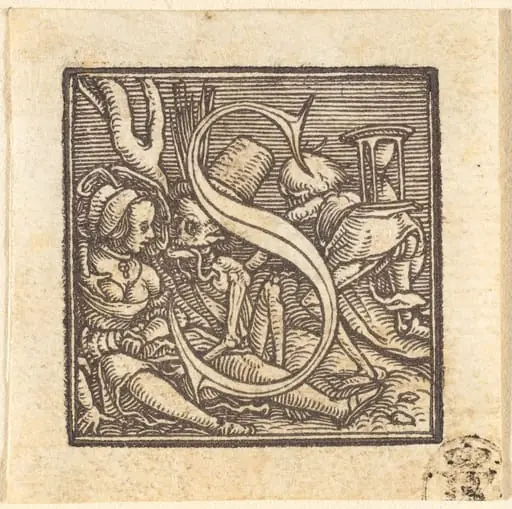
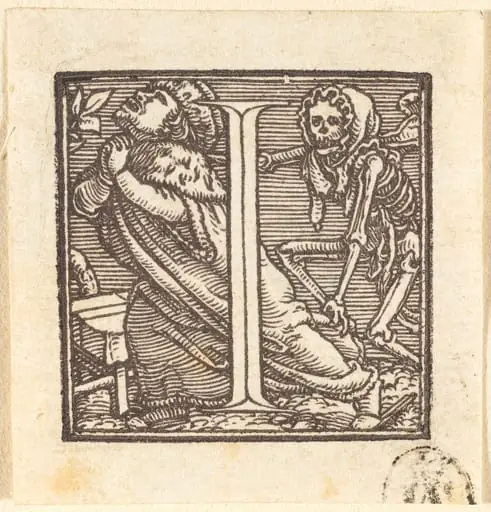
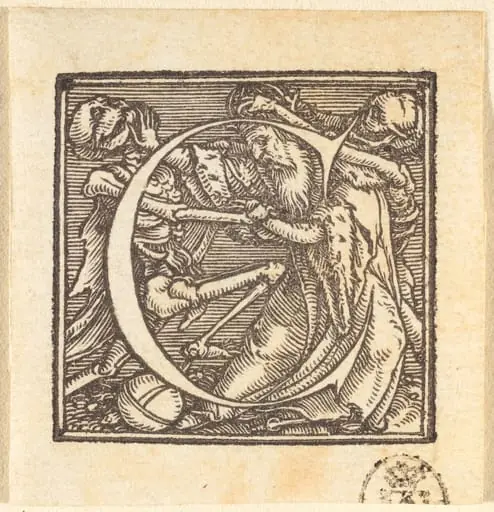
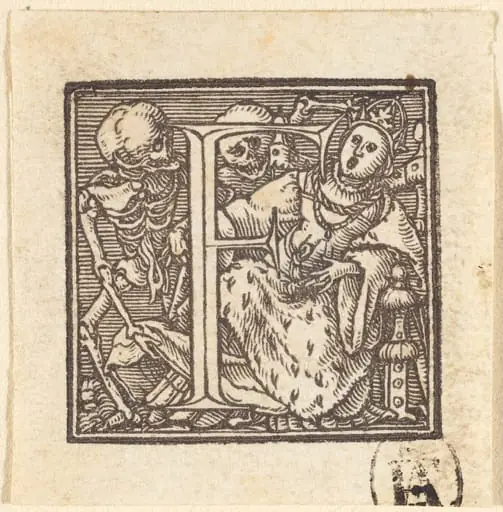
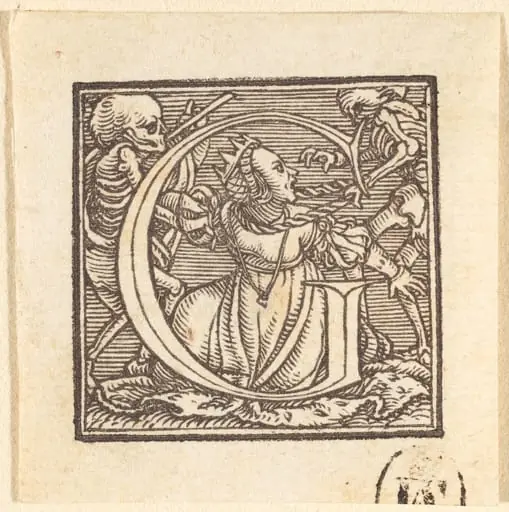
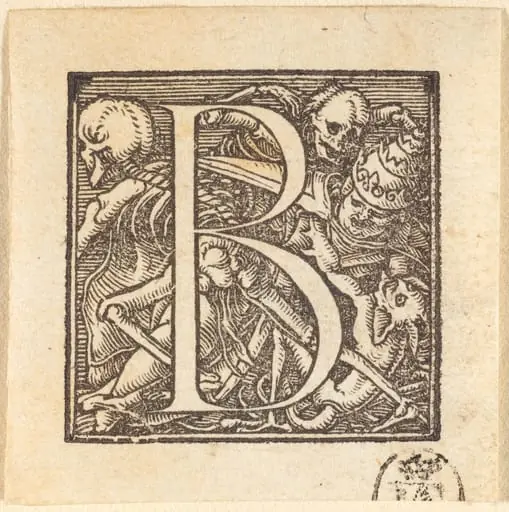
This piece belongs to a series of alphabet illustrations, each carved with meticulous detail to serve both decorative and instructional purposes.
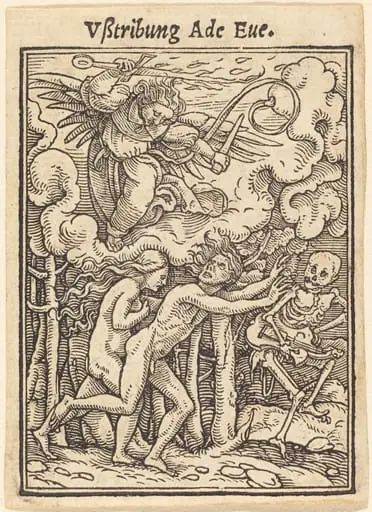
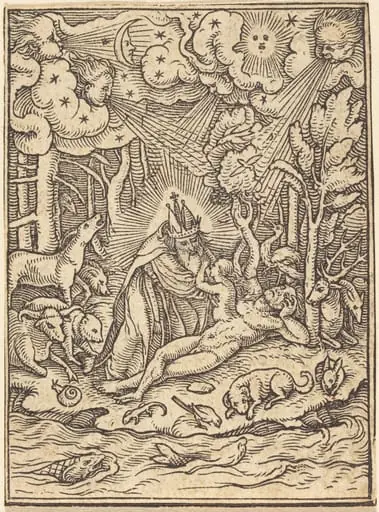
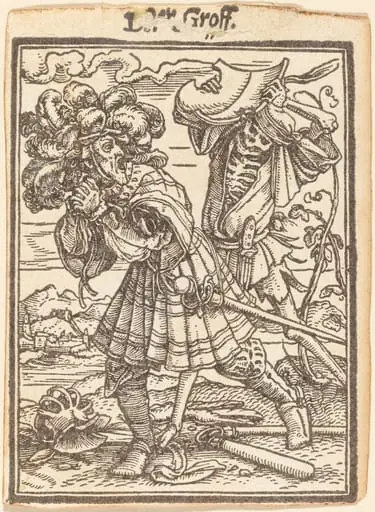
Created around 1523 by Hans Lützelburger, a German blockcutter based in Augsburg, *Letter O* is a black-and-white woodcut that exemplifies the precision of early 16th-century printmaking. Lützelburger, known for his work on Hans Holbein the Younger’s *Dance of Death*, signed his blocks on the reverse, a practice reflecting his professional identity. This piece belongs to a series of alphabet illustrations, each carved with meticulous detail to serve both decorative and instructional purposes.
Subject & Meaning
The image depicts a walled city enclosed by a circular border, within which figures in long robes and animals—including a dog and a sheep—coexist in a compact, orderly arrangement. Staff-bearing individuals suggest authority or ritual, while the presence of livestock implies domestic harmony. The scene may symbolize an idealized community or a moral allegory, possibly tied to the letter O as a symbol of wholeness or unity, common in medieval emblematic traditions.
Technique & Style
Lützelburger employed sharp, clean lines and simplified forms to achieve clarity and visual impact. The woodcut’s high contrast between inked areas and the white paper enhances legibility, typical of the medium’s functional origins. Textured sky and rough-hewn buildings in the background add depth without complicating the composition. The technique reflects mastery in negative space and controlled carving, essential for producing consistent, reproducible images in an era before mechanized printing.
History & Provenance
Lützelburger worked under the master blockcutter Jost de Negker in Augsburg, a center for high-quality print production. He carved blocks for Holbein’s *Dance of Death* but died in 1526 before finishing the series. *Letter O* likely originated as part of an educational or devotional alphabet set, common in German printing workshops. Its survival suggests it was widely circulated, though no early ownership records are documented, leaving its early reception largely inferred from stylistic context.
Context
In early 16th-century Germany, woodcuts were vital for disseminating religious, educational, and moral content. Alphabet series like this one served as teaching tools, combining literacy with visual symbolism. Lützelburger’s work emerged alongside the Reformation, when printed images gained new importance in shaping public understanding. His craftsmanship aligned with a broader trend of integrating artistic detail into functional prints, bridging artisanal skill and emerging mass communication.
Legacy
Though Lützelburger’s career was cut short, his technical influence endured through the quality of his carved blocks, many of which were reused by later printers. *Letter O* stands as a testament to the sophistication of pre-industrial printmaking, where carving skill determined image clarity and longevity. His contributions helped elevate woodcut from mere illustration to a respected medium, influencing generations of printmakers in Europe.
Artist & collection

Artist
Hans Lützelburger (died June 1526), also known as Hans Franck, was a German blockcutter ("formschneider") for woodcuts, regarded as one of the finest of his day.