Artwork
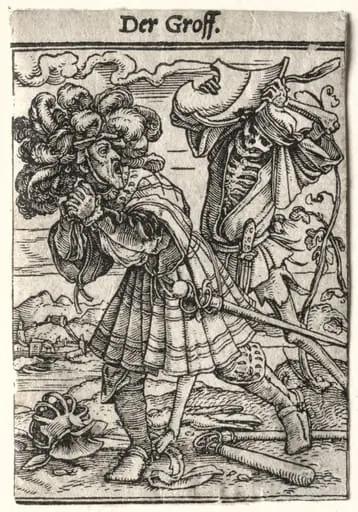
Der Groff (The Count)
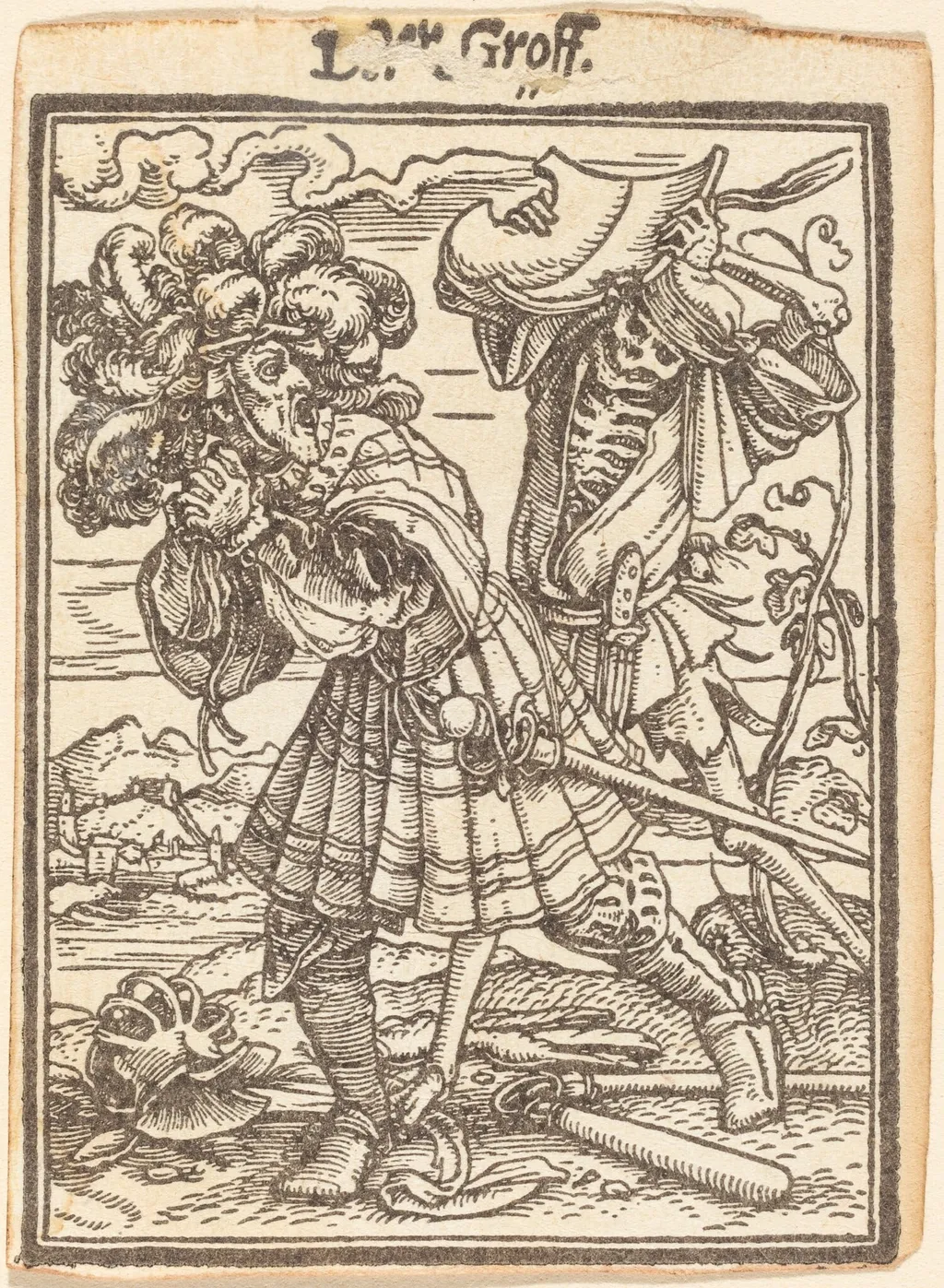
Der Groff (The Count) is an ink print by the Renaissance artist Hans Lützelburger. It dates from 1526 and is held in the collection of the National Gallery of Art.
About this work
Overview
Created around 1526, *Der Groff (The Count)* is a black-and-white woodcut by Hans Lützelburger, a master blockcutter based in Augsburg.
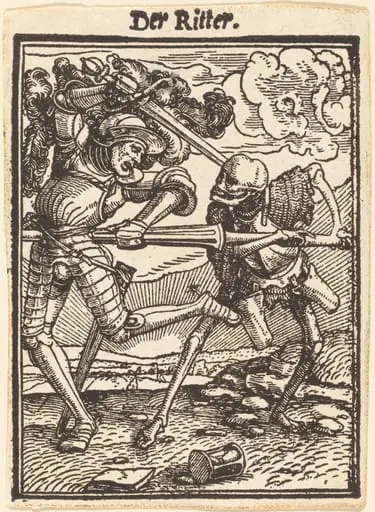
Created around 1526, *Der Groff (The Count)* is a black-and-white woodcut by Hans Lützelburger, a master blockcutter based in Augsburg. Though he did not originate the imagery, Lützelburger’s precise carving technique elevated the design into a finely detailed print. This piece belongs to a small series of works produced shortly before his death in June 1526, during which he was also completing woodcuts for Holbein’s *Dance of Death*.
Subject & Meaning
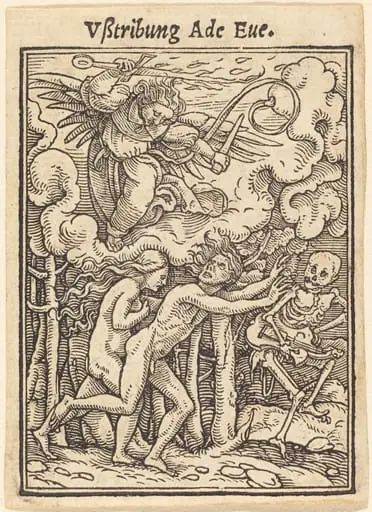
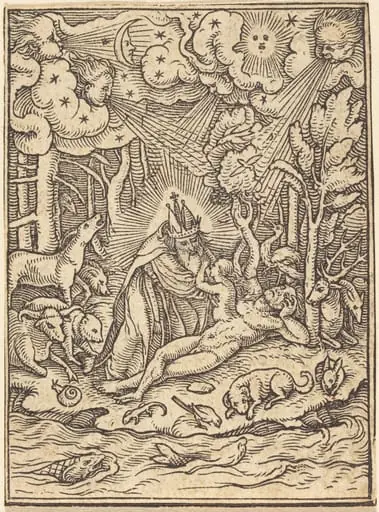
The image depicts a disordered group of figures entangled in dense, twisting vegetation, some upright, others collapsing or crawling. The title, referencing a nobleman, suggests a critique of authority or moral decay within power structures. The chaotic composition may symbolize the instability or corruption inherent in hierarchical systems, using visual disorder to convey social or ethical collapse.
Technique & Style
Lützelburger employed sharp, incised lines to create high contrast between black and white, characteristic of woodcut printing. The dense network of vines and branches is rendered with meticulous precision, demonstrating his skill in translating complex designs into carved wood. No tonal gradations or color are used; the entire effect relies on the clarity and rhythm of the carved lines to guide the viewer’s eye.
History & Provenance
The woodcut was produced in the final months of Lützelburger’s life, during which he was actively carving blocks for Holbein’s *Dance of Death*. His death in June 1526 left several projects incomplete. *Der Groff* likely originated as part of a private or limited circulation series, distinct from his more widely known collaborations, and survives as a rare example of his independent work.
Context
In early 16th-century Germany, woodcuts served as accessible vehicles for social commentary, often reflecting Reformation-era anxieties about power and morality. Lützelburger’s work emerged amid a surge in printed imagery that questioned traditional authority. His focus on disorder and entanglement aligns with broader visual themes critiquing corruption, particularly among the elite.
Legacy
Though less known than his contributions to Holbein’s *Dance of Death*, *Der Groff* exemplifies Lützelburger’s technical mastery and his role in advancing narrative woodcut as a medium for subtle critique. His ability to convey complex themes through line alone influenced later printmakers who sought to merge artistic precision with social observation.
Artist & collection

Artist
Hans Lützelburger (died June 1526), also known as Hans Franck, was a German blockcutter ("formschneider") for woodcuts, regarded as one of the finest of his day.