Artwork
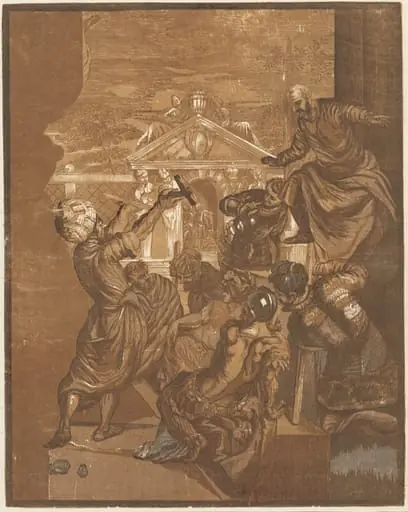
The Presentation in the Temple
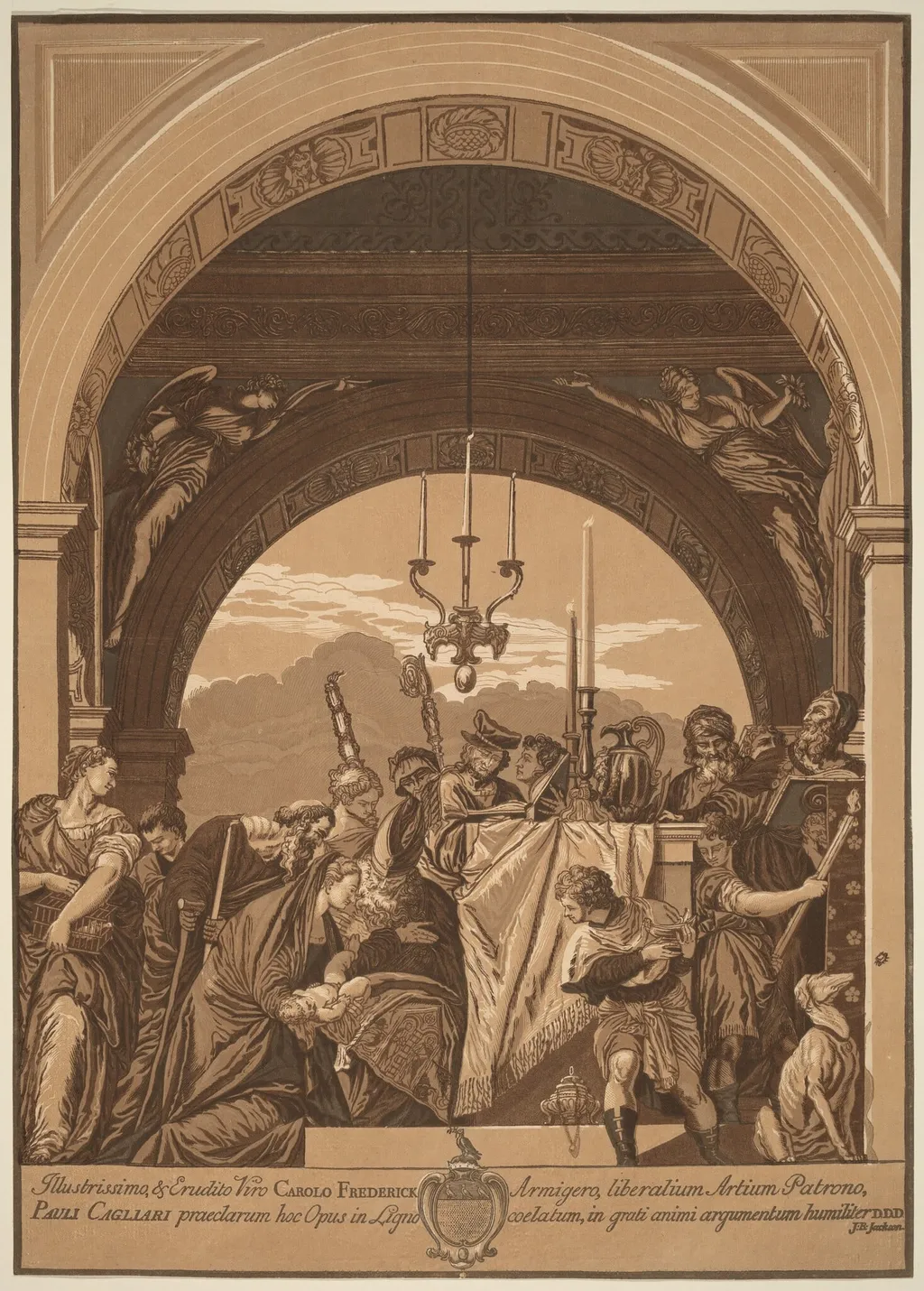
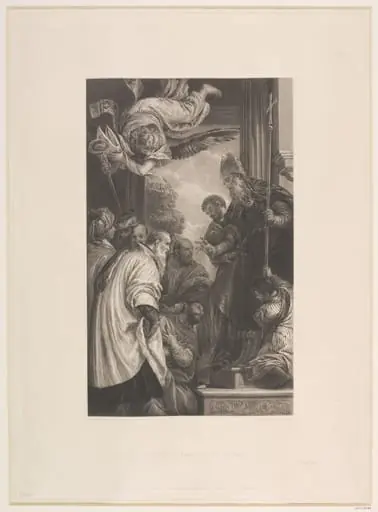
The Presentation in the Temple is an ink print by the Baroque artist John Baptist Jackson. It dates from 1739 and is held in the collection of the National Gallery of Art.
About this work
Overview
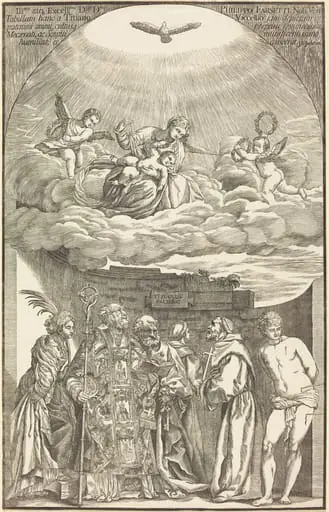
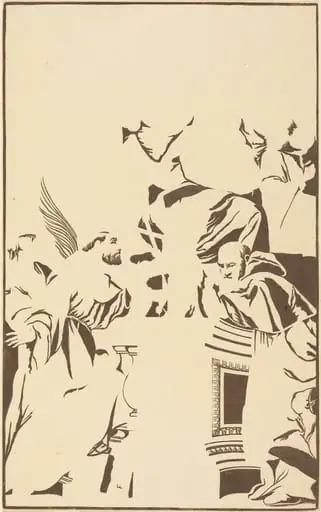
The Presentation in the Temple is a 1739 chiaroscuro woodcut by John Baptist Jackson, executed from four blocks in buff, two grays, and dark brown on laid paper, showcasing a solemn scene with nuanced color depth.
Subject & Meaning
The print depicts a pivotal religious moment: the Presentation of Jesus at the Temple, as a man holds the child while others gather around, conveying reverence through focused attention and traditional attire.
Technique & Style
Jackson's innovative use of oil-based inks allowed for subtle overprinting, expanding the color palette. The work features muted earth tones (browns, grays) characteristic of his chiaroscuro technique, though heavy embossing is not noted in this piece.
History & Provenance
Created in 1739 by Jackson, a British printmaker active in Paris and Venice, primarily reproducing paintings rather than drawings. Provenance details are not provided.
Context
While the piece reflects Baroque themes of dramatic lighting and emotional depth, Jackson's medium and technique also align with broader 18th-century European printmaking innovations.
Legacy
As part of Jackson's oeuvre, The Presentation in the Temple contributes to the history of chiaroscuro woodcuts, though its specific impact or notable exhibitions are not detailed here.
Artist & collection

Artist
John Baptist Jackson (1701–1780) was a British artist, a woodcut printmaker of the eighteenth century.

![The Marriage at Cana [left plate], by John Baptist Jackson](https://artifactworldgallery.com/img/john-baptist-jackson--the-marriage-at-cana-left-plate--22bae83d46cc40b5-w320.webp)