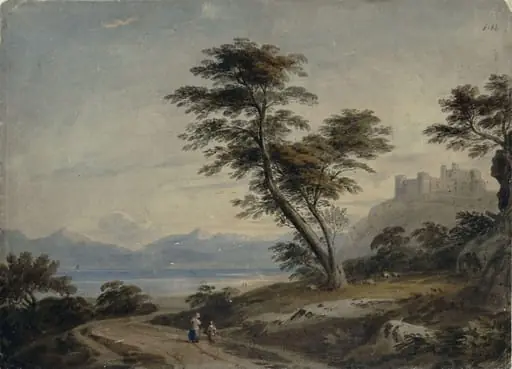
Artwork
Conwy Castle, North Wales
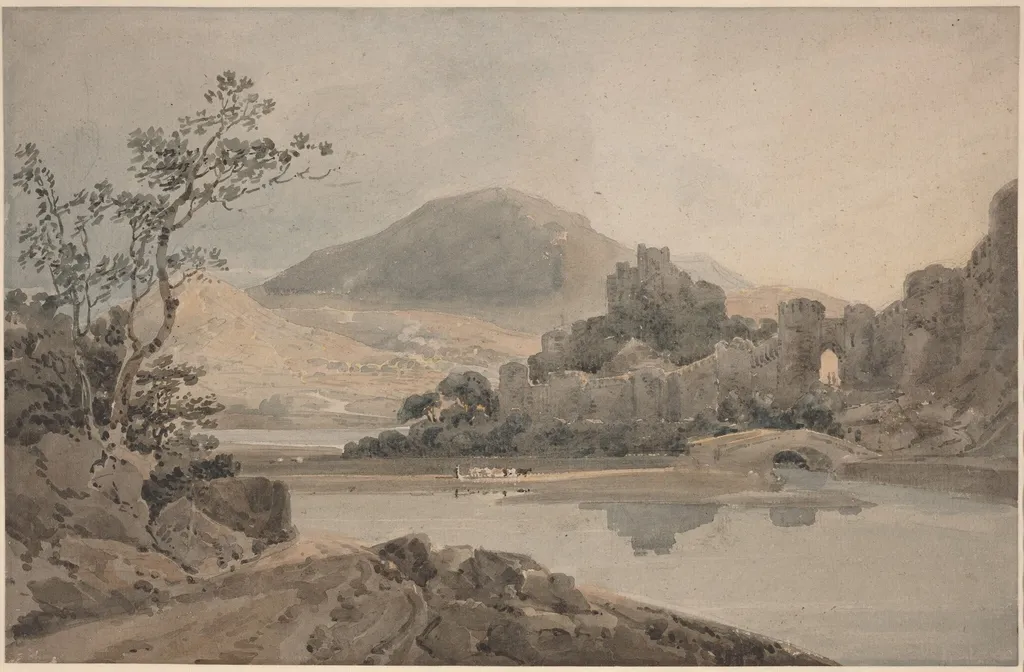
Conwy Castle, North Wales is a graphite drawing by the Romanticist artist Thomas Girtin. It dates from 1800 and is held in the collection of the National Gallery of Art.
About this work
Overview
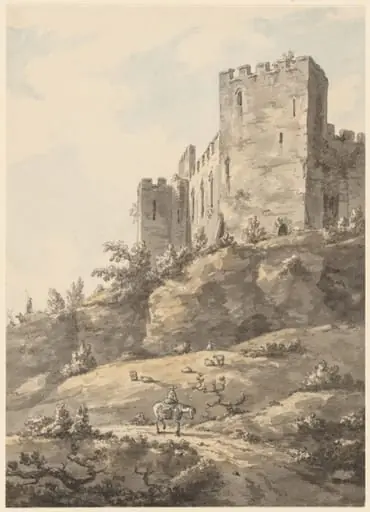
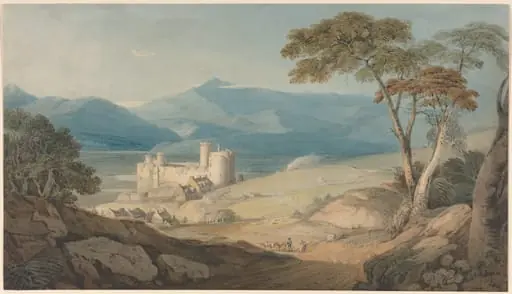
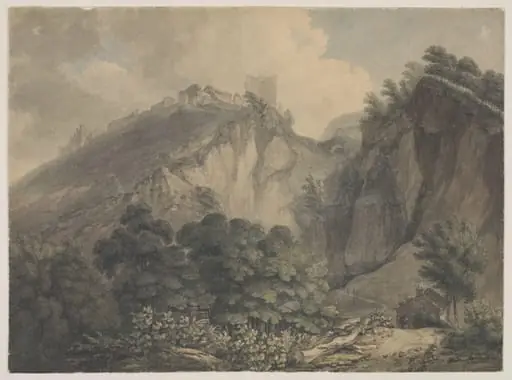
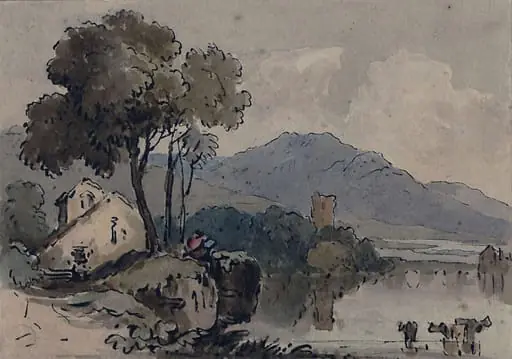
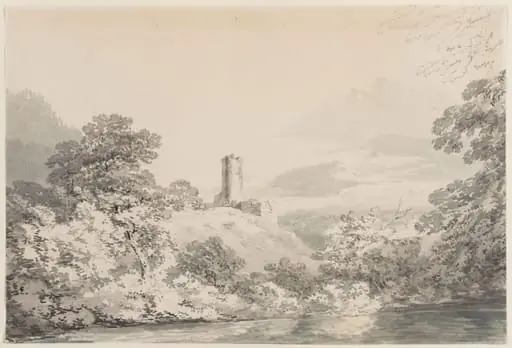
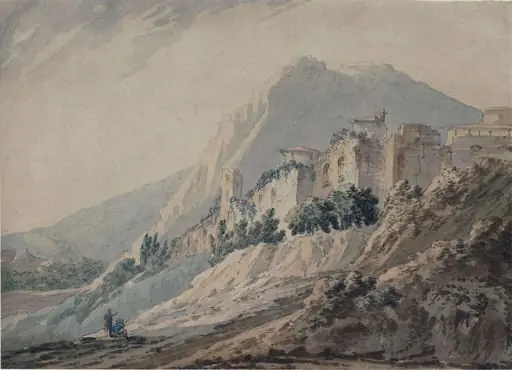
Thomas Girtin’s early‑19th‑century watercolor, executed around 1800, presents a tranquil view of Conwy Castle perched against a craggy slope in North Wales.
Thomas Girtin’s early‑19th‑century watercolor, executed around 1800, presents a tranquil view of Conwy Castle perched against a craggy slope in North Wales. Rendered on cartridge paper with an initial graphite sketch, the composition balances the fortified ruin, a winding river, a solitary tree, and a modest settlement at the water’s edge, all rendered in muted browns and greens that recede into a mist‑soft horizon.
Subject & Meaning
The drawing captures the castle as a relic integrated into the natural landscape, emphasizing its historic decay amid a peaceful environment. The presence of the river and nearby village suggests ongoing human activity, while the lone tree foreground adds a note of solitude, inviting contemplation of the passage of time and the coexistence of architecture and nature.
Technique & Style
Girtin employed watercolor washes over a graphite underdrawing, building layers of translucent pigment to model light and shadow. His glazing technique creates a hazy atmosphere on the hillsides, while delicate washes of brown and green convey the texture of stone and foliage. The restrained palette and soft edges typify his early Romantic approach to landscape rendering.
History & Provenance
Created circa 1800, the work belongs to Girtin’s prolific period of topographical studies that established his reputation as a leading British watercolourist. The drawing has remained in private collections before entering a public institution, where it serves as an early example of the artist’s interest in historic sites and the development of atmospheric landscape drawing.
Artist & collection


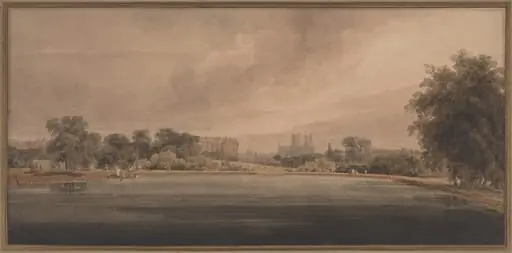 St. James' Park with a View of Westminster Abbey
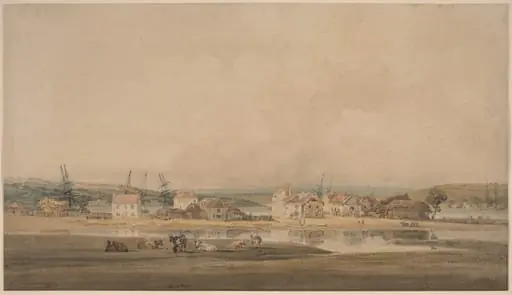 Village along a River Estuary in Devon
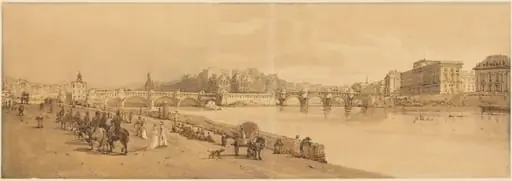 A View of the Pont Neuf, the Mint, etc.: pl.8
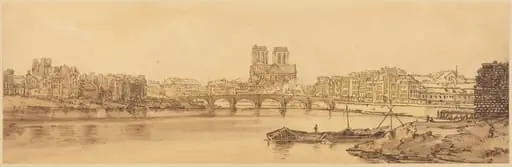 View of Pont de la Tournelle and Notre Dame Taken from the Arsnel: pl.11
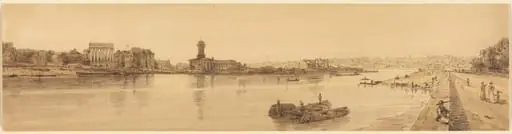 View of the Village of Chaillot from the Pont de la Concorde: pl.17
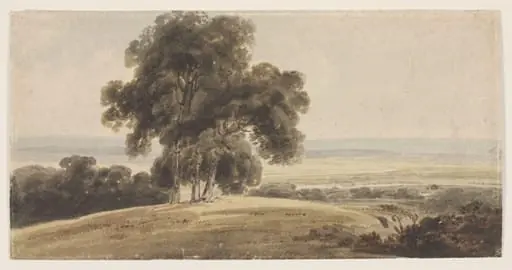 Untitled
 Street Scene, Near Paris
 Untitled