Artwork
Two Buffaloes and a Herdsman
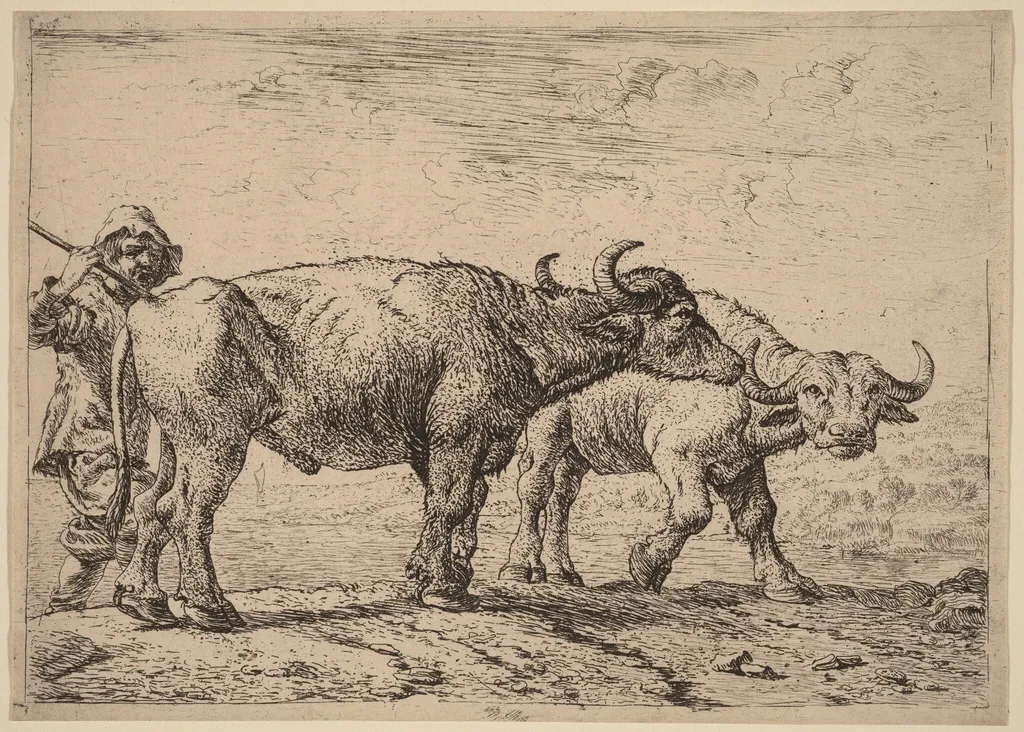
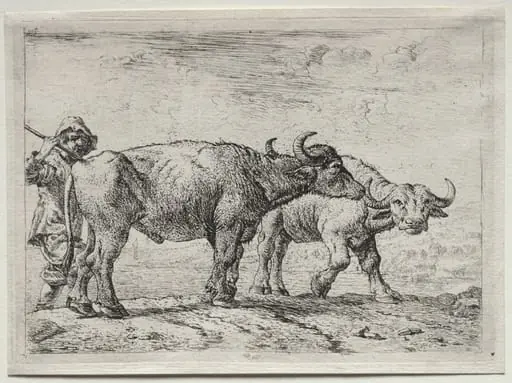
Two Buffaloes and a Herdsman is an ink print by the Renaissance artist Pieter van Laer. It is held in the collection of the Rijksmuseum.
About this work
Overview
Created around 1650 by Pieter van Laer, this print combines etching and drypoint to depict two buffaloes and a herdsman in a quiet, unposed moment. Van Laer, a Dutch artist active in Rome, was known for his focus on ordinary rural life. The work reflects his interest in animals and pastoral scenes, rendered with subtle tonal contrasts and minimal detail that emphasize stillness over action.
Subject & Meaning
The scene captures a moment of calm between animals and their keeper. The buffaloes stand side by side, their heavy forms grounded, while the herdsman holds a rope without tension—neither guiding nor restraining. There is no narrative drama, only presence. The image suggests an unremarkable pause in daily labor, valued for its quiet authenticity rather than symbolic weight.
Technique & Style
Van Laer employed drypoint to create dense, velvety shadows along the buffaloes’ hides, using fine, scratched lines that catch ink and mimic the texture of fur. Etching provided softer contours, while the untouched paper around the figures enhances the sense of space and silence. The technique avoids flourish, favoring tactile realism and atmospheric depth over decorative detail.
History & Provenance
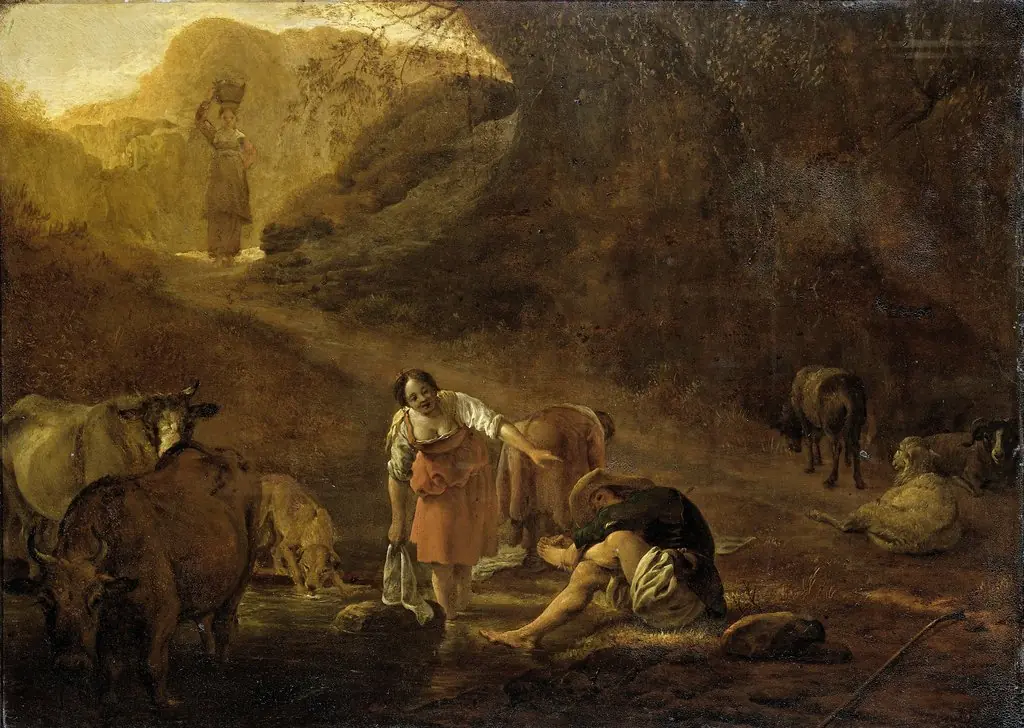
Van Laer, known in Rome as Il Bamboccio, was part of a community of Northern artists who painted low-life scenes. His prints circulated among collectors and influenced a generation of followers called the Bamboccianti. While the specific early ownership of this etching is undocumented, its style aligns with other works from his Roman period, produced during the height of his printmaking activity.
Context
His focus on humble subjects and naturalistic detail offered a counterpoint to prevailing artistic trends, resonating with those seeking realism over grandeur.
Growing up in Haarlem, Van Laer was familiar with rural livestock markets and the physicality of working animals. In Rome, he translated these observations into intimate, unsentimental scenes that contrasted with idealized classical subjects. His focus on humble subjects and naturalistic detail offered a counterpoint to prevailing artistic trends, resonating with those seeking realism over grandeur.
Legacy
Van Laer’s approach to everyday subjects helped shape a distinct genre in 17th-century art, inspiring artists across Northern and Italian circles to depict rural labor with unembellished observation. His prints, including this one, contributed to a broader shift toward valuing the ordinary as worthy of artistic attention, laying groundwork for later developments in genre painting and printmaking.
Own this work as a print
Artist & collection
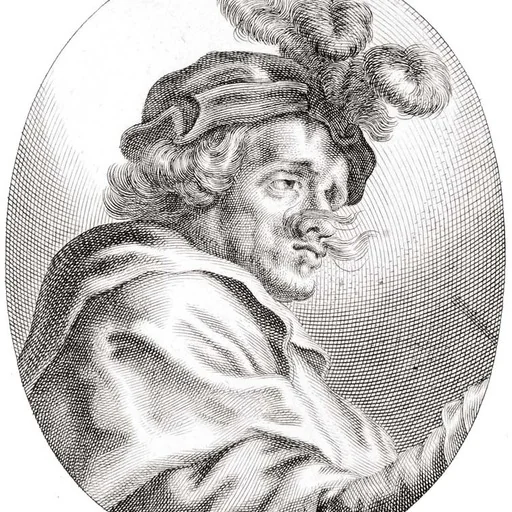
Artist
Pieter Bodding van Laer (christened 14 December 1599, in Haarlem – 1641 or later) was a Dutch painter and printmaker.