Artwork
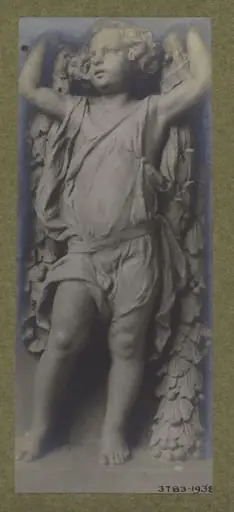
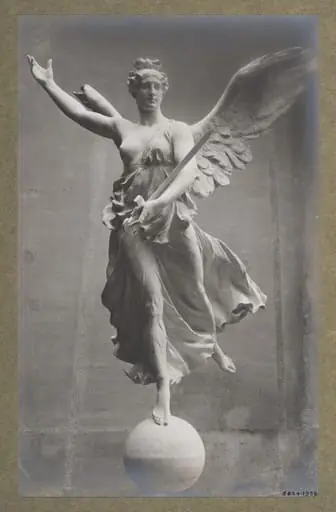
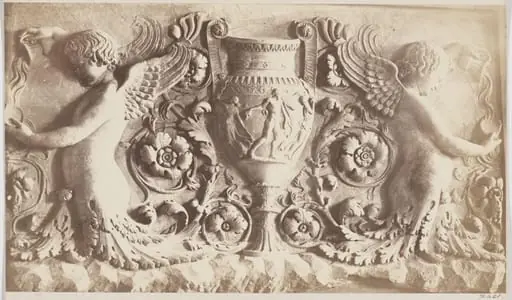
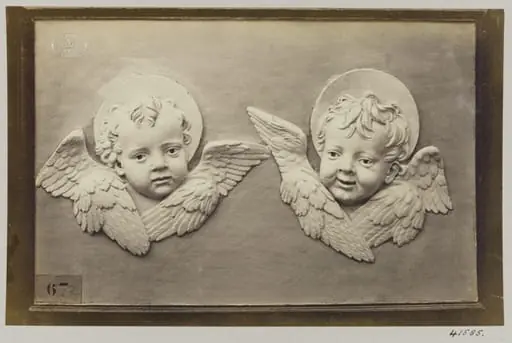
Bas-relief detail depicting an Angel drawing back a curtain in enamelled terra cotta and gilt
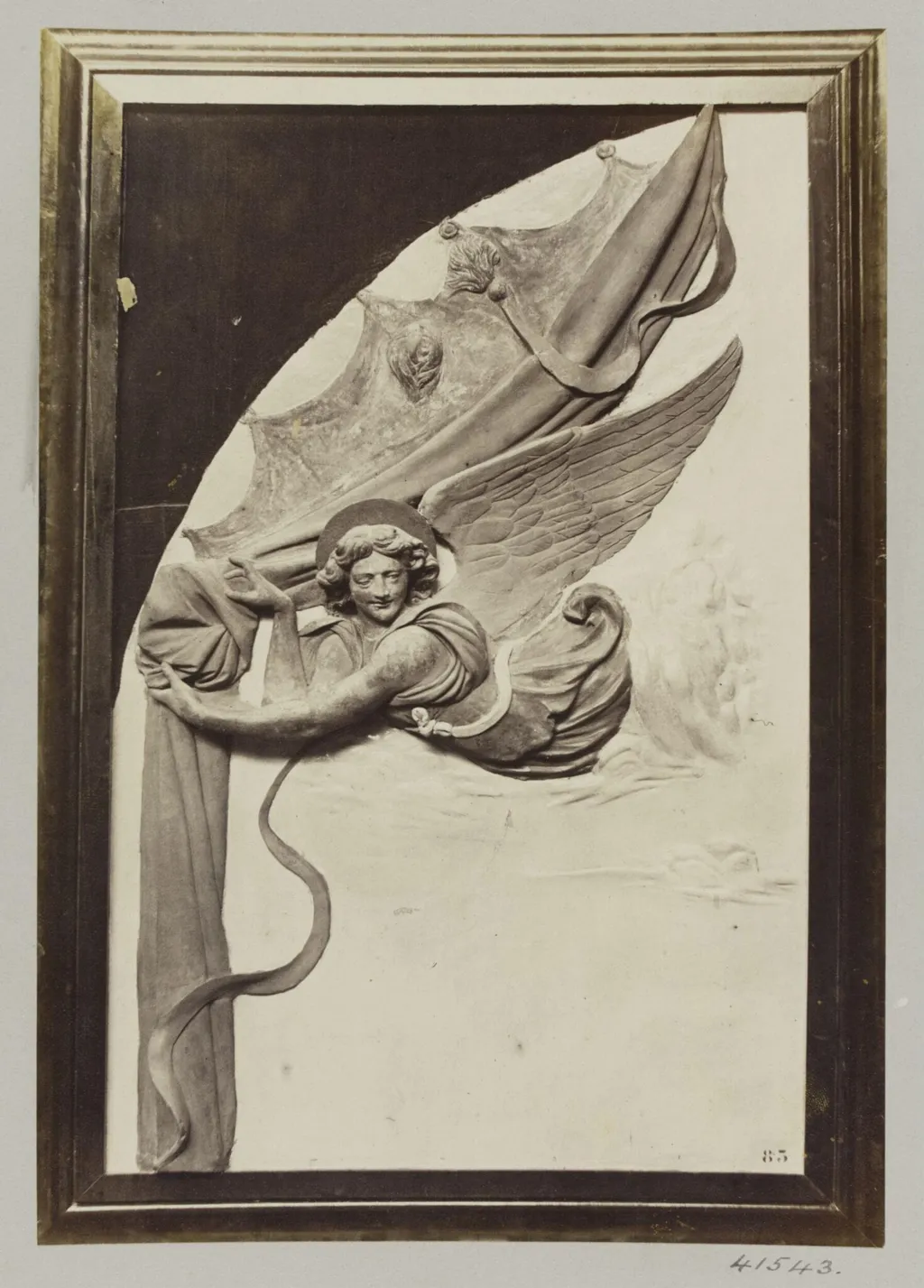
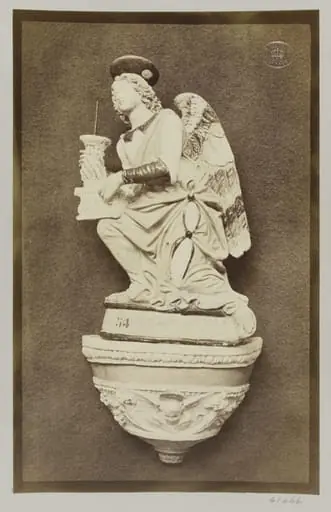
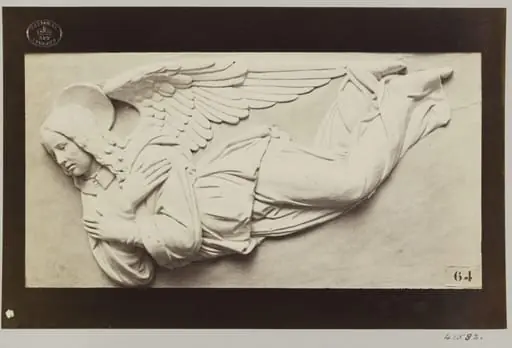
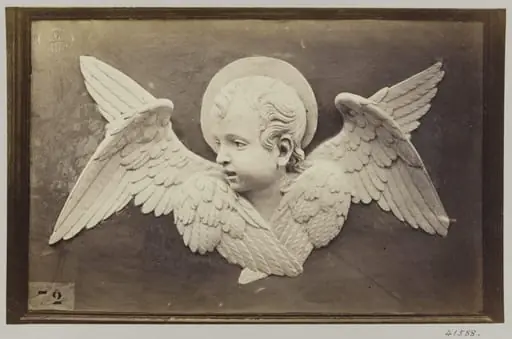
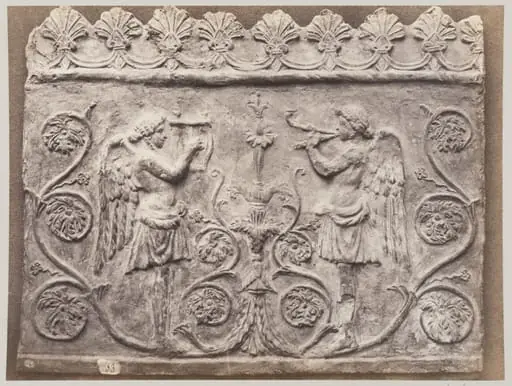
Bas-relief detail depicting an Angel drawing back a curtain in enamelled terra cotta and gilt is a photographic photography by the Impressionist artist Louise Laffon. It dates from 1864 and is held in the collection of the Victoria and Albert Museum. This photograph captures a bas-relief detail of an angel drawing back a curtain, rendered in enamelled terra cotta with gilt accents.
About this work
Overview
This photograph captures a bas-relief detail of an angel drawing back a curtain, rendered in enamelled terra cotta with gilt accents.
This photograph captures a bas-relief detail of an angel drawing back a curtain, rendered in enamelled terra cotta with gilt accents. Though the relief itself is a sculptural object, the image is a photographic record made for institutional use. Taken in the mid-19th century, it belongs to a broader effort by the Victoria and Albert Museum to document decorative arts through photography, serving academic and curatorial functions rather than artistic expression.
Subject & Meaning
The angel, depicted in the act of parting a curtain, symbolizes revelation—perhaps alluding to the unveiling of art or divine presence. The motif was common in Renaissance and Baroque decorative programs, where such figures framed sacred or elite imagery. In this context, the photograph preserves not just the object’s form but its symbolic language, reinforcing the museum’s role in transmitting cultural narratives through visual documentation.
Technique & Style
The photograph reproduces a sculptural relief with careful attention to texture and light, highlighting the enamel’s luminosity and the gold leaf’s reflective qualities. The composition is formal and centered, typical of documentary photography of the period. No embellishment or staging is evident; the focus is on accuracy, aligning with the museum’s goal of creating reliable visual references for study and comparison.
History & Provenance
The photograph was acquired by the Victoria and Albert Museum in 1864 as part of a purchase of 500 images from Louise Laffon, a French photographer and early female member of Le Société Française de la Photographie. These images documented objects from the Campana Collection in Paris, later transferred to the Louvre. The transaction was facilitated by Monsieur E. Cappe, reflecting the museum’s international network for acquiring photographic records of art.
Context
At the time, the V&A was pioneering the use of photography as an educational tool, collecting images to supplement traditional drawings and casts. Female photographers like Laffon and Isabel Agnes Cowper were integral to this effort, often overlooked in historical accounts. Their work supported administrative documentation and scholarly access, particularly for objects too fragile or distant to be viewed in person.
Legacy
This photograph exemplifies the institutional shift toward photographic archives as essential to art historical study. It preserves a detail of a now-dispersed or altered object, offering insight into 19th-century collecting practices and the role of women in early museum photography. The image remains a quiet but vital link between sculpture, documentation, and the evolving infrastructure of art education.
Artist & collection
Artist
Louise Laffon (1828–1885), was a French photographer and painter. She was one of the first female professional photographers in France. She had a studio in Paris between 1859 and 1876.

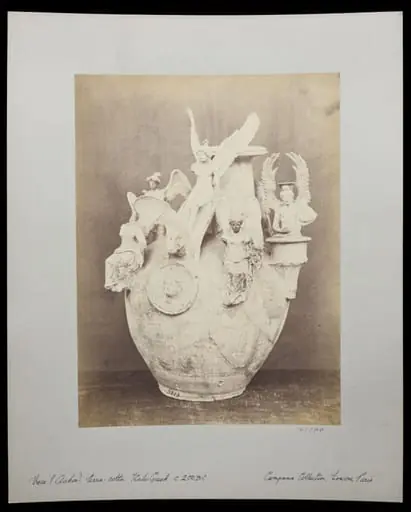 Perfume Burner in terra cotta
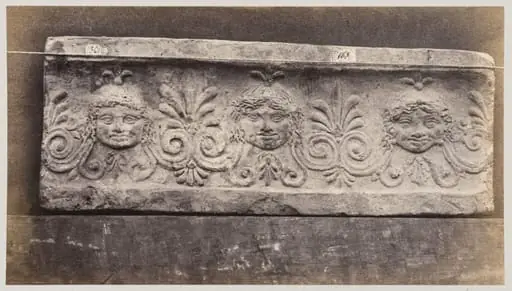 Three masques of gorgons in terra cotta
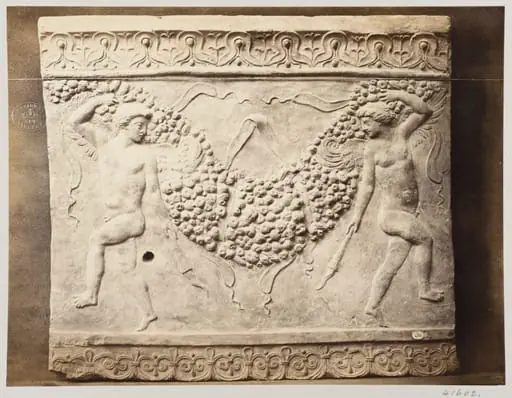 Bas-relief of portion of frieze of dancing figures with torches bearing festoon of fruit in terra cotta
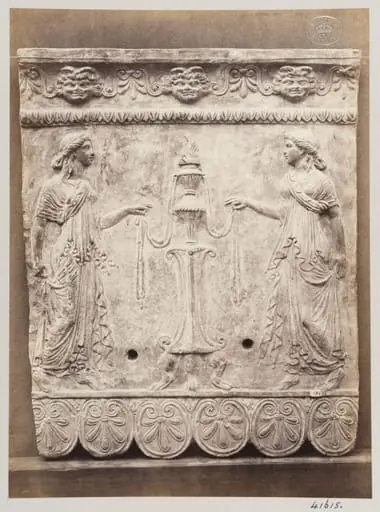 Bas-relief portion of a frieze of two draped females and an altar in terra cotta
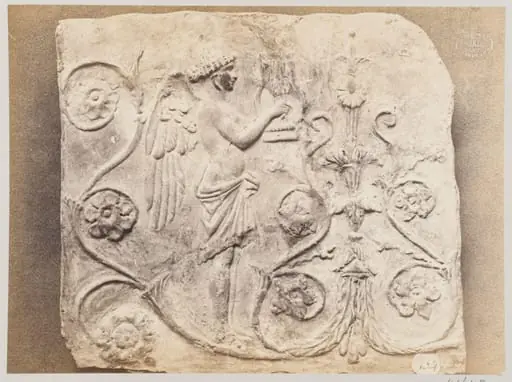 Bas-relief of a geni and a lyre in terra cotta
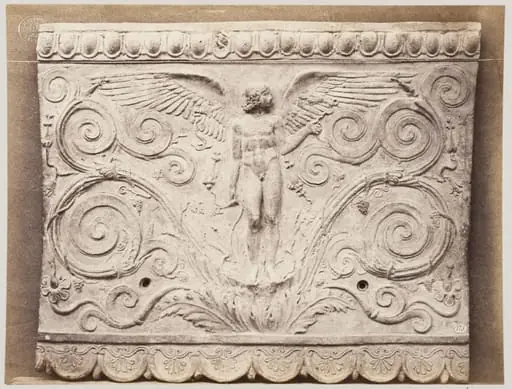 Bas-relief of a portion of frieze of Eros with scrollwork in terra cotta
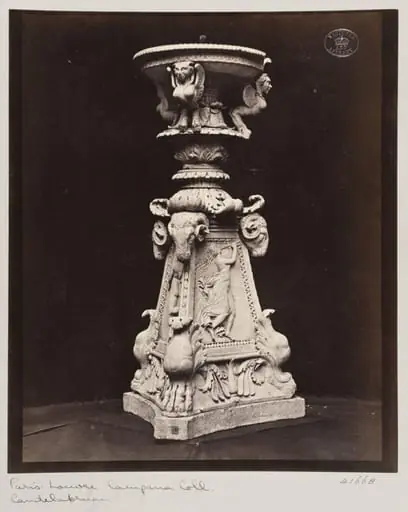 Marble sculptured fountain
 Bas-relief portion of frieze of Genii with double flutes and lyre