Artwork
Two enamelled heads of seraphines
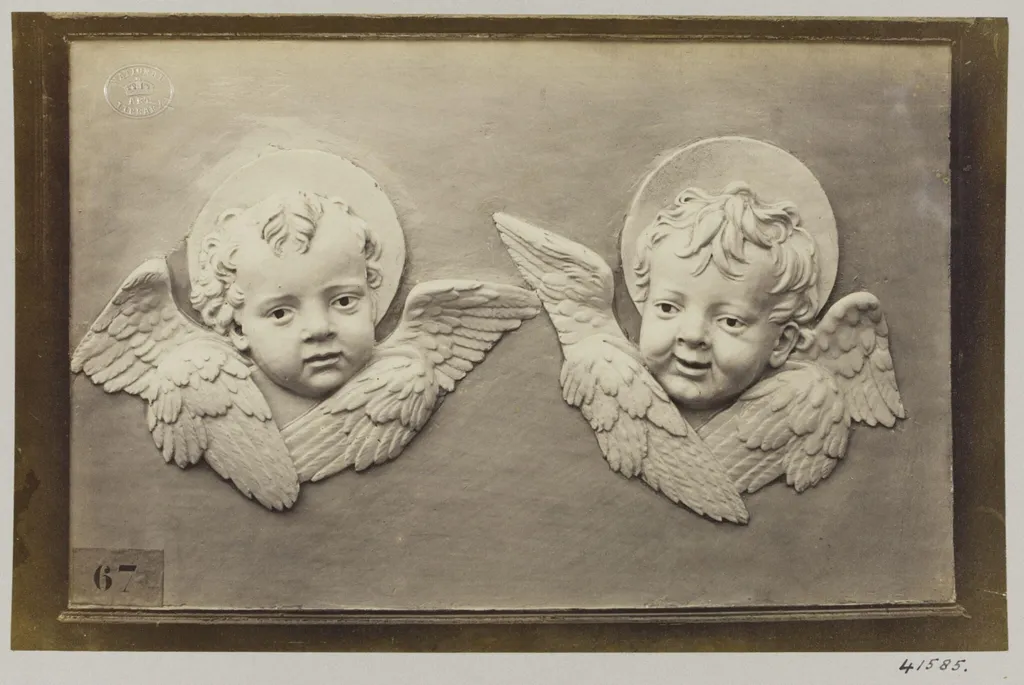
Two enamelled heads of seraphines is a photographic photography by the Impressionist artist Louise Laffon. It dates from 1864 and is held in the collection of the Victoria and Albert Museum.
About this work
Overview
The image titled “Two enamelled heads of seraphines” is a photographic record of decorative objects that entered the Victoria and Albert Museum’s collection in the mid‑nineteenth century. As part of the museum’s pioneering photographic archive, the picture documents a pair of gilt‑enamel figurines depicting angelic figures, captured to provide visual reference for scholars and craftsmen.
Subject & Meaning
The two heads portray seraphim, the highest order of angels in Christian iconography, rendered in enamel over a metal substrate. Their radiant surfaces and intricate detailing illustrate the luxury decorative arts of the period, offering insight into the aesthetic values and religious symbolism that informed European ornamental production.
Technique & Style
The photograph employs the wet‑collodion process typical of the 1860s, yielding a high‑contrast, finely detailed image that emphasizes the reflective enamel and sculptural form. The composition presents the heads side by side, allowing comparative study of their decorative motifs and craftsmanship.
History & Provenance
The picture originates from a series commissioned by the Victoria and Albert Museum in the 1860s. It was taken by Louise Laffon, a French photographer and one of the first women admitted to the Société Française de la Photographie. In 1864 the museum acquired 500 of Laffon’s photographs, including this view of the seraphine heads, through the dealer Monsieur E. Cappe.
Context
At the time, the museum’s founding director Henry Cole promoted photography as a tool for education and documentation, integrating images into the National Art Library’s resources. Laffon’s work complemented the museum’s own photographic service, expanding the visual catalogue of objects drawn from collections such as the Campana holdings at the Musée Napoléon III.
Legacy
The photograph remains a reference point for researchers examining nineteenth‑century enamel work and the early use of photography in museum practice. It also highlights the contribution of women photographers like Laffon to the development of institutional visual archives.
Artist & collection
Artist
Louise Laffon (1828–1885), was a French photographer and painter. She was one of the first female professional photographers in France. She had a studio in Paris between 1859 and 1876.

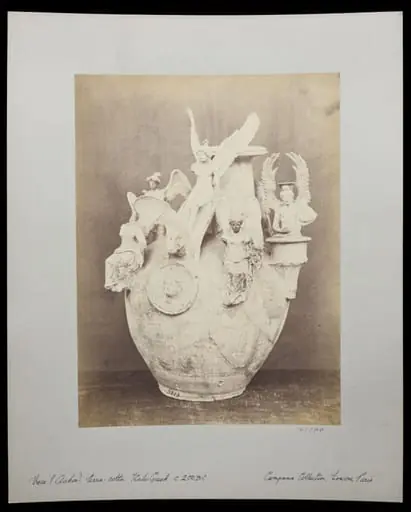 Perfume Burner in terra cotta
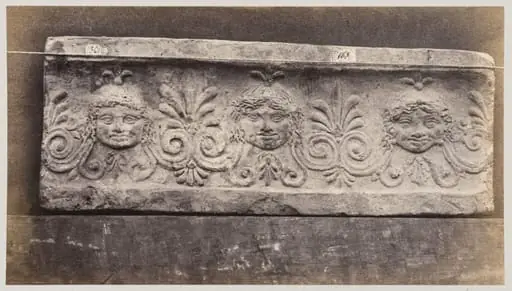 Three masques of gorgons in terra cotta
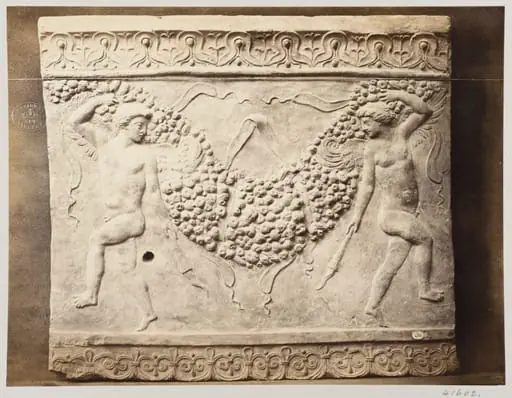 Bas-relief of portion of frieze of dancing figures with torches bearing festoon of fruit in terra cotta
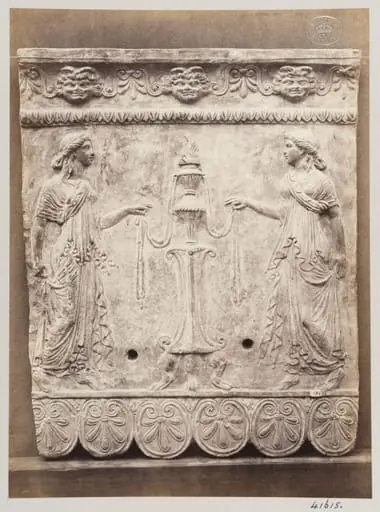 Bas-relief portion of a frieze of two draped females and an altar in terra cotta
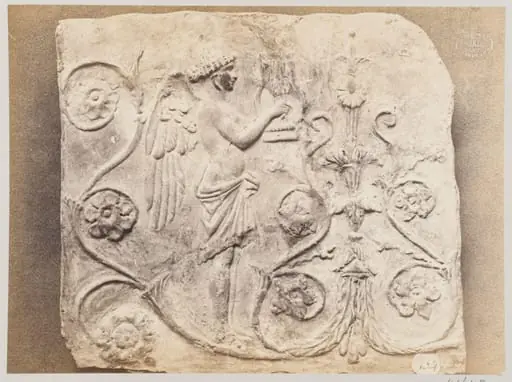 Bas-relief of a geni and a lyre in terra cotta
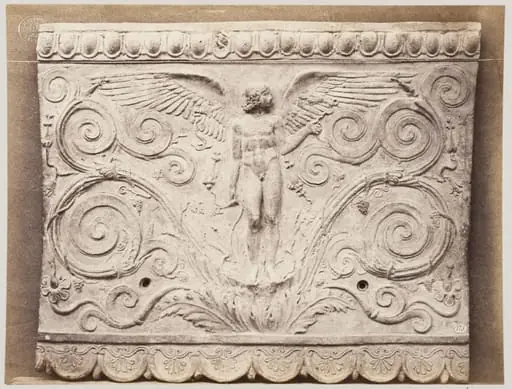 Bas-relief of a portion of frieze of Eros with scrollwork in terra cotta
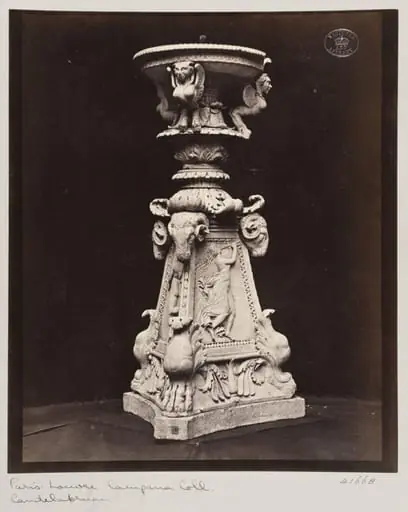 Marble sculptured fountain
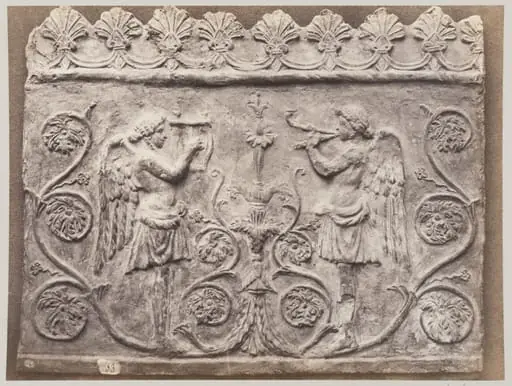 Bas-relief portion of frieze of Genii with double flutes and lyre
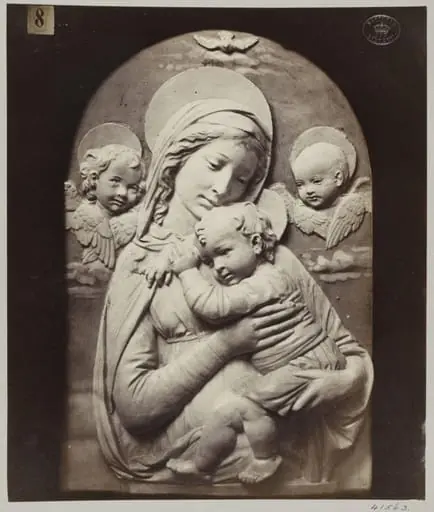 Bas-relief depicting the Virgin and Child in enamelled earthenware
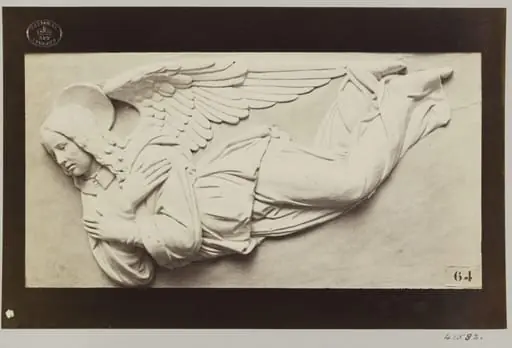 Bas-relief of enamelled flying angel
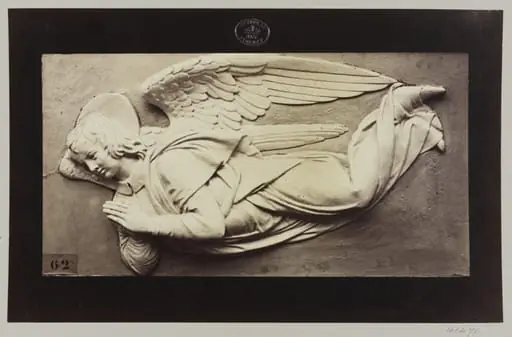 Bas-relief figure of a Flying Angel
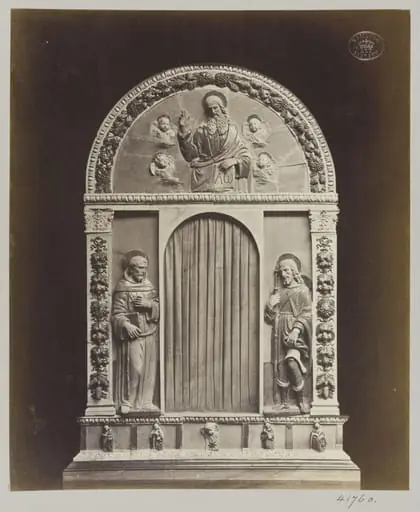 Enamelled earthenware altar piece of Christ and Saint Francis and St. Rock
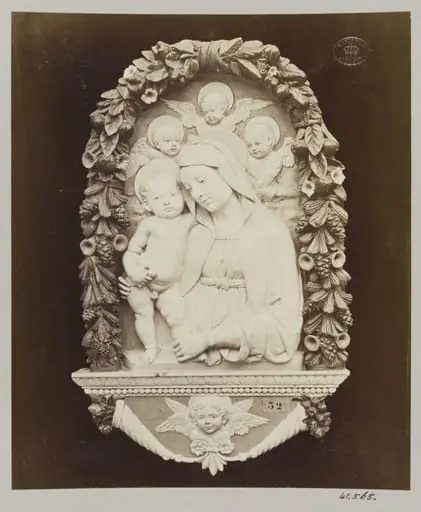 Bas-relief depicting the Virgin and Child on blue ground Luca della Robbia ware
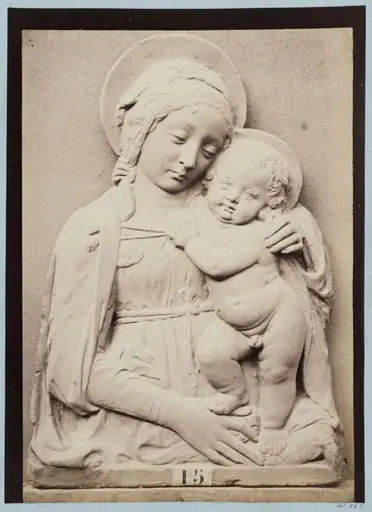 Bas-relief depicting the Virgin and Child by Donatello in red terra cotta
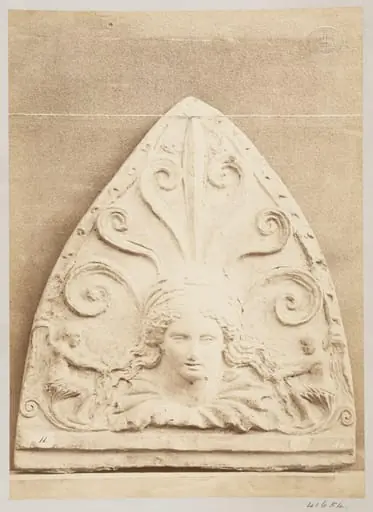 Antifixa of Venus in terra cotta
 Untitled
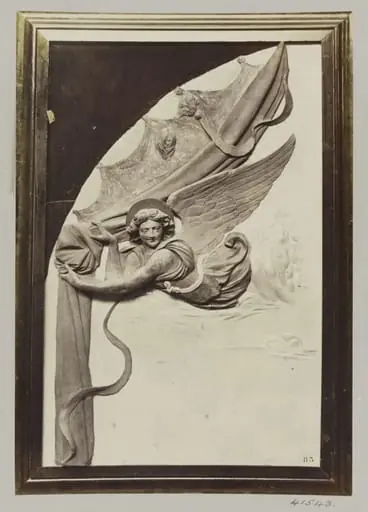 Bas-relief detail depicting an Angel drawing back a curtain in enamelled terra cotta and gilt