Artwork
Combat of Tritons, bas-relief in terra cotta
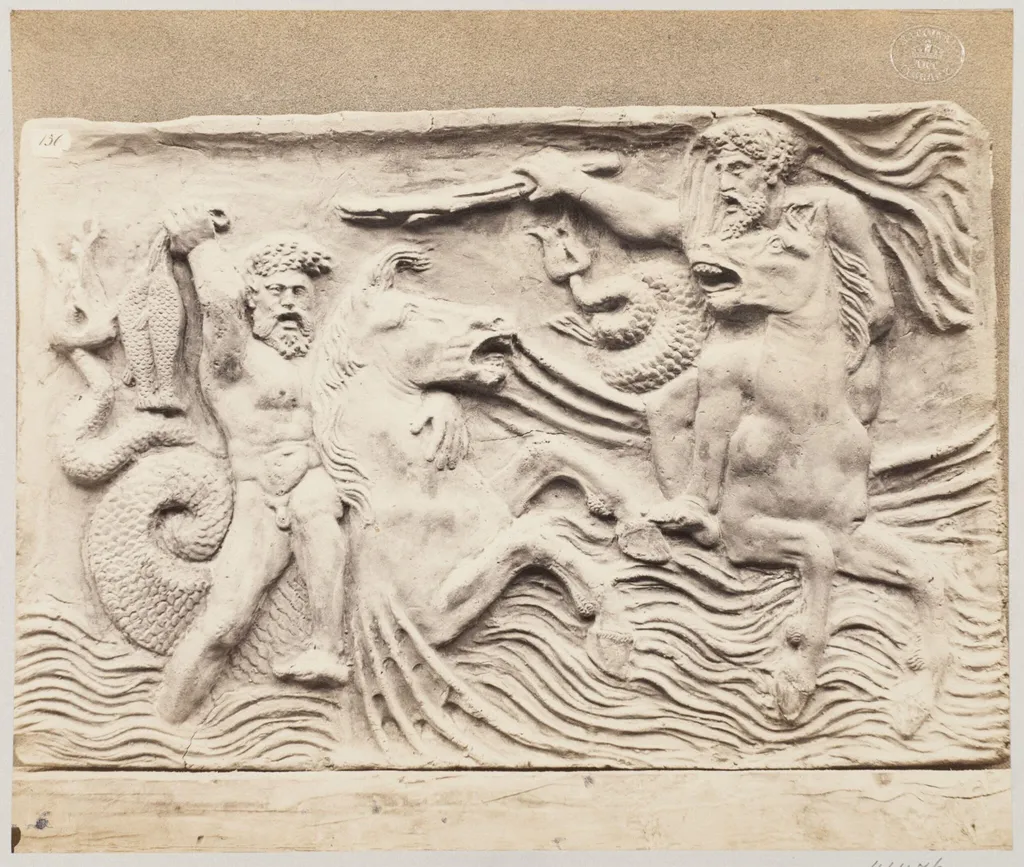
Combat of Tritons, bas-relief in terra cotta is a photographic photography by the Impressionist artist Louise Laffon. It dates from 1864 and is held in the collection of the Victoria and Albert Museum.
About this work
Louise Laffon made a terra cotta bas-relief titled *Combat of Tritons* in 1863–64.
Louise Laffon made a terra cotta bas-relief titled *Combat of Tritons* in 1863–64. It’s a photograph, not a sculpture, which is unusual for the time. The piece fits between Impressionism and Realism, two big movements of the day.
This work is one of many early photos collected by the Victoria and Albert Museum. They started buying photos in the 1850s to help artists and students study.
Look up the Victoria and Albert Museum next.
Overview
The photograph titled *Combat of Tritons* is a gelatin silver print made in 1863–64 by Louise Laffon, documenting a terra cotta bas-relief. Though the subject is a sculptural work, Laffon’s image is the surviving artifact held by the Victoria and Albert Museum. It was acquired in 1864 as part of a larger purchase of 500 photographs from Laffon’s series on the Campana Collection, reflecting the museum’s early commitment to using photography as an educational tool.
Subject & Meaning
The bas-relief depicts a dynamic struggle between two tritons, mythological sea deities often shown with human torsos and fish tails. Laffon’s photograph captures the sculptural detail and movement of the original, preserving its narrative intensity. The choice to photograph this subject suggests an interest in classical mythology as a subject for artistic study, aligning with the museum’s goal of providing visual references for design and sculpture students.
Technique & Style
Laffon employed the gelatin silver process, a relatively new technique at the time, to produce a sharp, tonally rich image. Her approach is precise and documentary, avoiding dramatic lighting or compositional embellishment. The photograph’s clarity and neutrality reflect its function as an educational resource rather than an expressive work, aligning with the museum’s utilitarian use of photography in the 1860s.
History & Provenance
The photograph was acquired by the Victoria and Albert Museum in 1864 through the Parisian agent E. Cappe, as part of a bulk purchase from Laffon’s series on the Campana Collection. Laffon, one of the earliest recognized female photographers in France, was commissioned to document antiquities for the Musée Napoléon III. The V&A’s acquisition underscores its active international network for sourcing visual materials to support artistic education.
Context
In the 1860s, photography was emerging as a tool for art education, not fine art. The V&A, under Henry Cole, led in collecting photographs to supplement drawing instruction and design studies. Laffon’s work fits within this institutional framework, where images of sculpture and decorative arts were valued for their accuracy. Her role as a woman in this field was rare but not isolated, as the museum employed several female photographers for administrative and scholarly tasks.
Legacy
This photograph exemplifies the V&A’s pioneering role in institutional photography and the quiet but vital contributions of female photographers like Laffon. While the original bas-relief remains in the Louvre, Laffon’s image preserves its form for study and continues to illustrate how photography served as a bridge between art production and pedagogy in the 19th century.
Artist & collection
Artist
Louise Laffon (1828–1885), was a French photographer and painter. She was one of the first female professional photographers in France. She had a studio in Paris between 1859 and 1876.

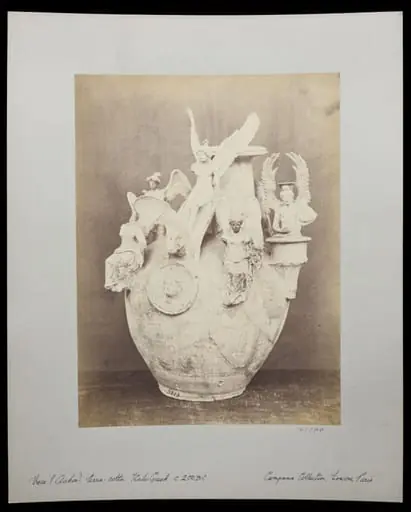 Perfume Burner in terra cotta
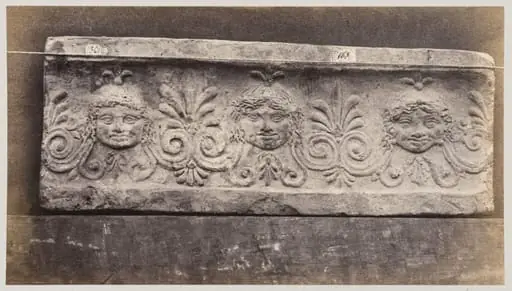 Three masques of gorgons in terra cotta
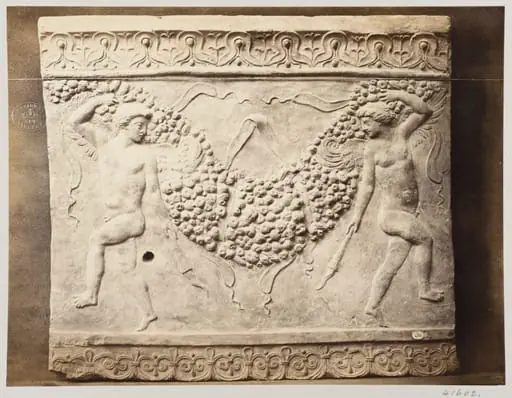 Bas-relief of portion of frieze of dancing figures with torches bearing festoon of fruit in terra cotta
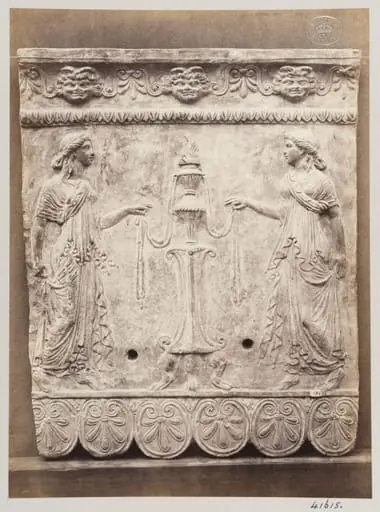 Bas-relief portion of a frieze of two draped females and an altar in terra cotta
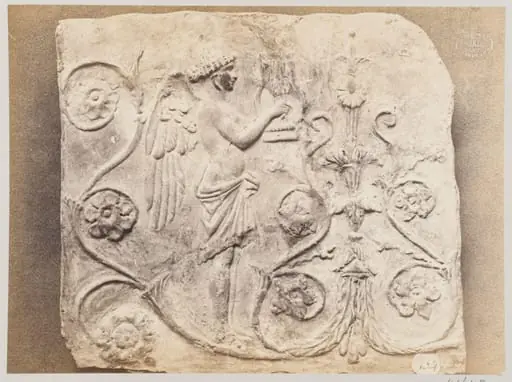 Bas-relief of a geni and a lyre in terra cotta
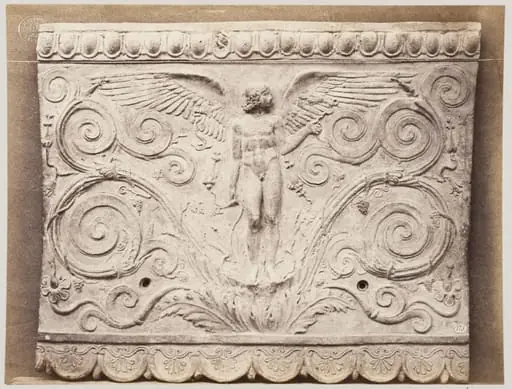 Bas-relief of a portion of frieze of Eros with scrollwork in terra cotta
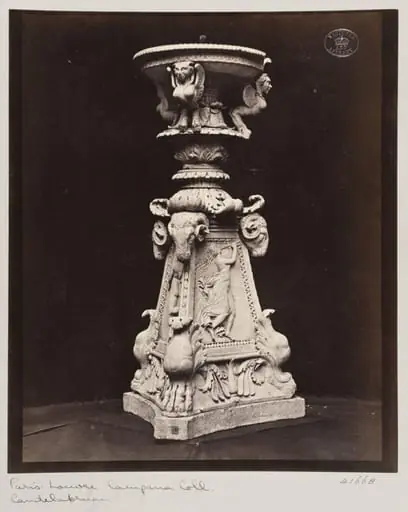 Marble sculptured fountain
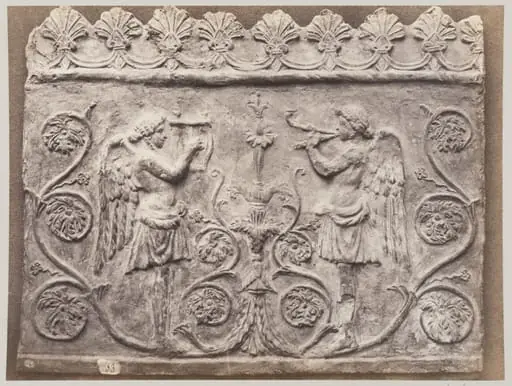 Bas-relief portion of frieze of Genii with double flutes and lyre
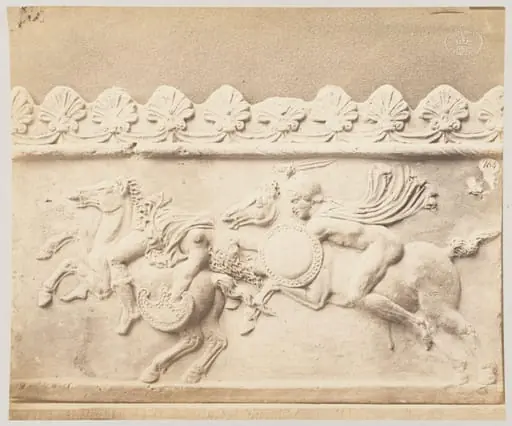 Combat between an Amazon and a Greek warrior, bas-relief in terra cotta
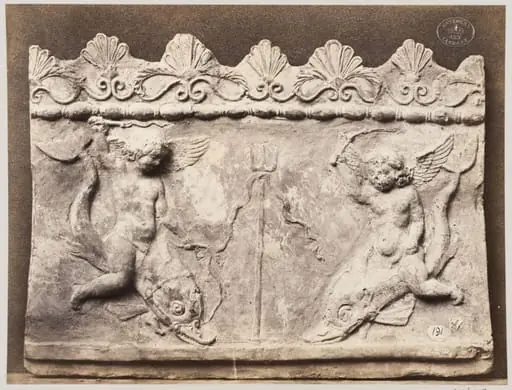 Bas-relief of two figures of Neptune in terra cotta
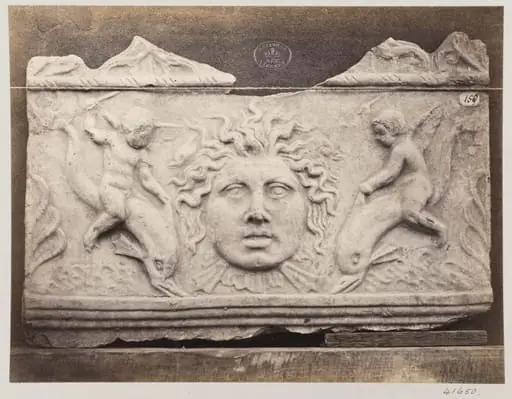 Bas-relief of two sea genies in terra cotta
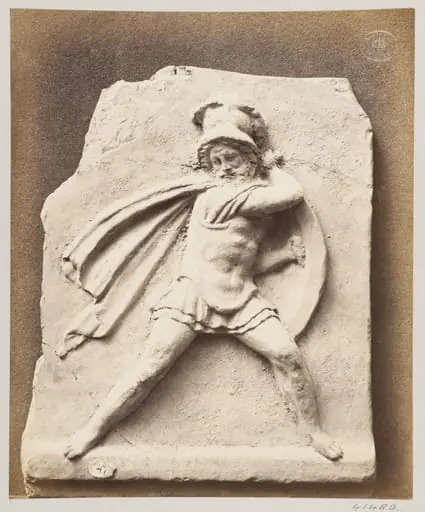 Fighting Warrior, bas-relief in terra cotta
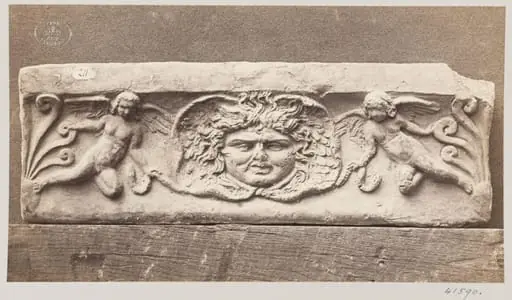 Bas-relief depicting a Gorgon Head in terra cotta
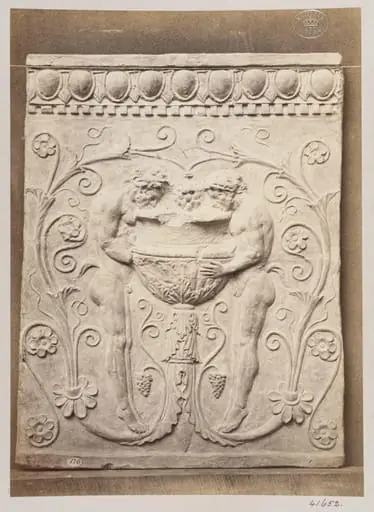 Bas-relief of a portion of a frieze showing two satyrs and a vessel in terra cotta
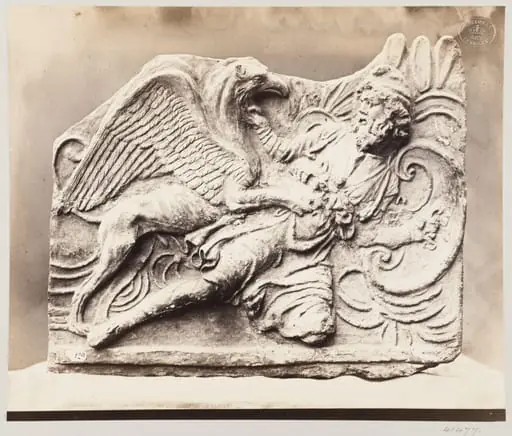 An Arimaspi combating with a Griffin, bas-relief fragment in terra cotta
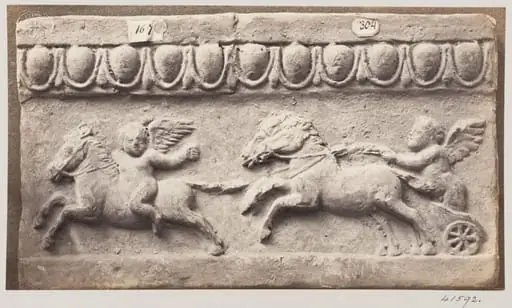 Bas-relief of a portion of a frieze in terra cotta depicting winged cupids and chariot and horses
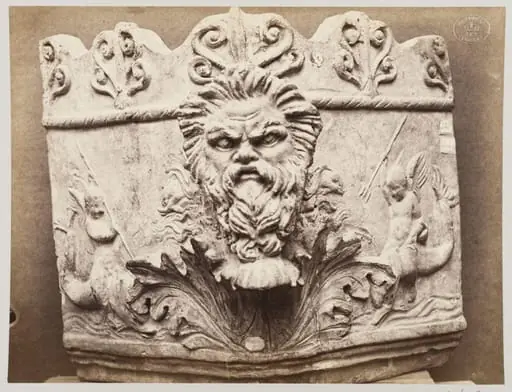 Bas-relief portion of frieze with mask of Satyr in terra cotta
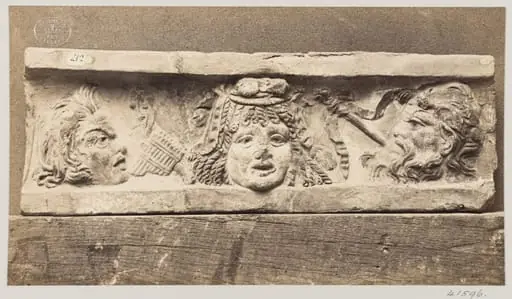 Bas-relief of three masques in terra cotta