Artwork
Circular bas-relief depicting the Nativity in enamelled earthenware
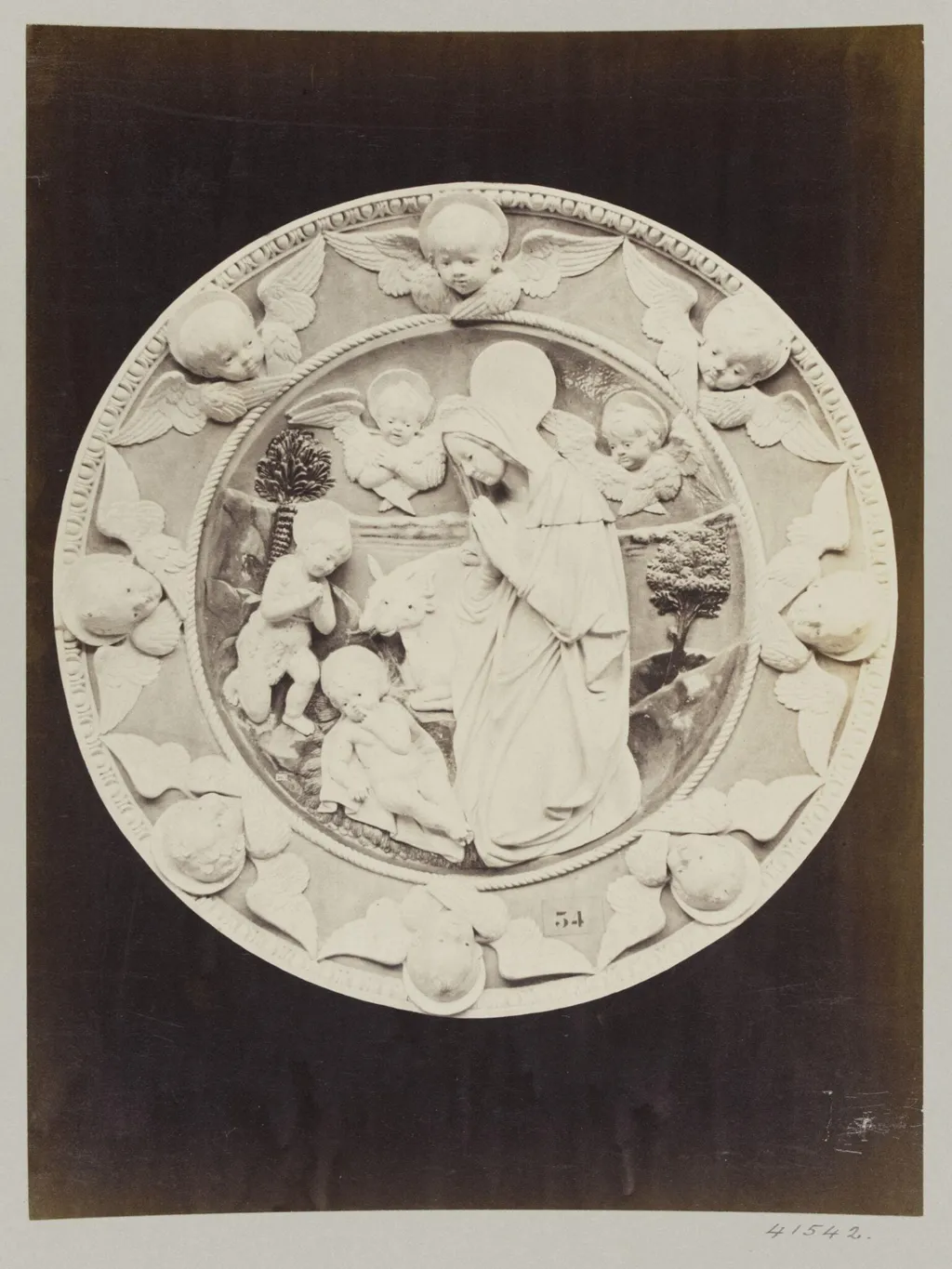
Circular bas-relief depicting the Nativity in enamelled earthenware is a photographic photography by the Impressionist artist Louise Laffon. It dates from 1864 and is held in the collection of the Victoria and Albert Museum.
About this work
In 1863–64, Louise Laffon made a circular clay relief of the Nativity scene. It’s tiny—just 18 centimeters across. Photographs in the 1800s were rare, and this one was lost until recently.
Cole ran the new South Kensington Museum. He believed photos could teach artists and students. So he started collecting them in the 1850s.
It’s an overlooked piece by a woman at the Victoria and Albert Museum.
Overview
A small circular bas-relief of the Nativity, crafted in enamelled earthenware around 1863–64, was documented by photographer Louise Laffon.
A small circular bas-relief of the Nativity, crafted in enamelled earthenware around 1863–64, was documented by photographer Louise Laffon. Measuring just 18 centimeters in diameter, the object was part of the Campana Collection in Paris. In 1864, the South Kensington Museum—later the V&A—acquired 500 photographs from Laffon’s series, including this one, through agent E. Cappe. The photograph itself, once lost, has recently resurfaced as a record of a now-rare ceramic piece.
Subject & Meaning
The bas-relief depicts the Nativity, a traditional Christian scene of the Virgin Mary, infant Jesus, and attendants, rendered in low relief on a circular earthenware plaque. Its compact form suggests devotional use, possibly for private contemplation or as a decorative religious object. The choice of subject aligns with 19th-century European tastes for sacred imagery in domestic and institutional contexts, though its specific origin and intended audience remain undocumented.
Technique & Style
The relief was formed in molded earthenware and finished with colored enamel glazes, a technique common in 19th-century French ceramic production. The circular format and shallow carving reflect influences from Renaissance tondi and medieval reliquary panels. Laffon’s photograph captures fine surface details—delicate facial features, drapery folds, and glaze variations—highlighting the object’s craftsmanship and the precision of early photographic reproduction.
History & Provenance
The ceramic relief originated in the Campana Collection, assembled by Italian antiquarian Giampietro Campana and housed in the Musée Napoléon III. Louise Laffon, a French photographer and early member of Le Société Française de la Photographie, was commissioned to photograph its contents. In 1864, the South Kensington Museum purchased 500 of her images, including this one, to support art education. The original relief’s current location is unknown.
Context
Under Director Henry Cole, the museum pioneered the use of photography as an educational tool, collecting images to supplement study collections. Laffon’s work was part of a broader effort to document European decorative arts, especially objects deemed too fragile or distant for physical acquisition. Her role as a female photographer in a male-dominated field was uncommon, yet her contributions were integral to the museum’s early visual archive.
Legacy
Laffon’s photograph preserves a ceramic object that may no longer exist in its original form. It stands as evidence of early photographic documentation practices in museums and the quiet but vital role women played in shaping institutional archives. The image’s rediscovery underscores the importance of re-examining overlooked photographic records in understanding the history of art collection and reproduction.
Artist & collection
Artist
Louise Laffon (1828–1885), was a French photographer and painter. She was one of the first female professional photographers in France. She had a studio in Paris between 1859 and 1876.

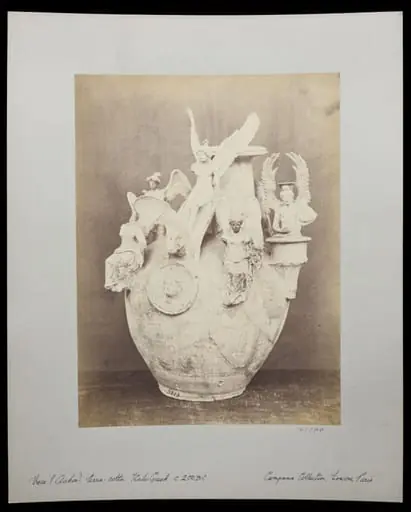 Perfume Burner in terra cotta
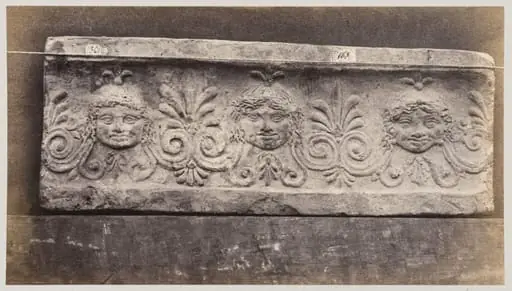 Three masques of gorgons in terra cotta
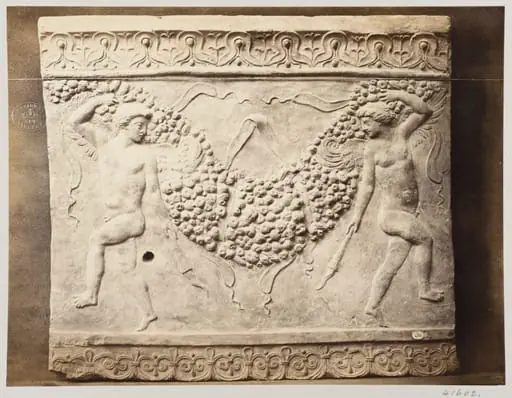 Bas-relief of portion of frieze of dancing figures with torches bearing festoon of fruit in terra cotta
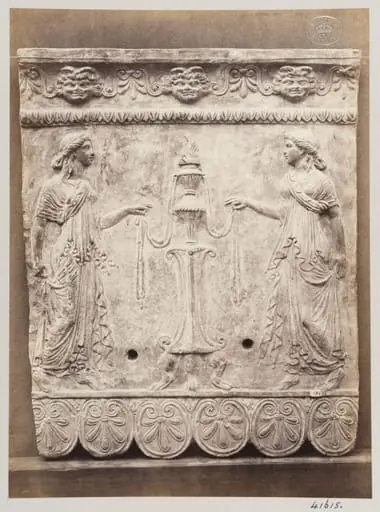 Bas-relief portion of a frieze of two draped females and an altar in terra cotta
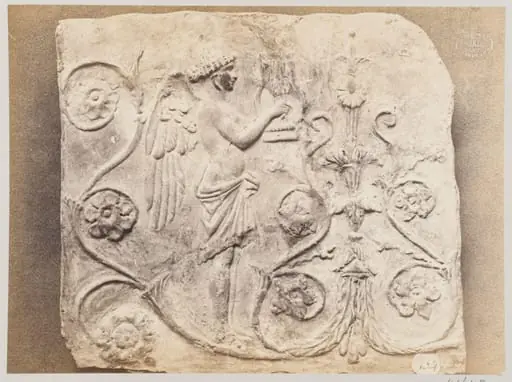 Bas-relief of a geni and a lyre in terra cotta
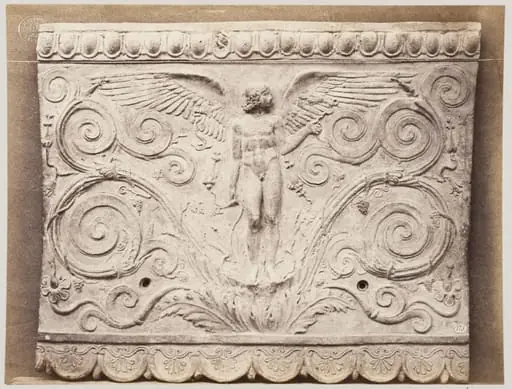 Bas-relief of a portion of frieze of Eros with scrollwork in terra cotta
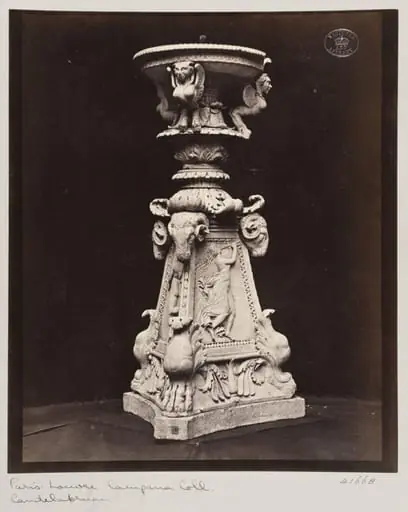 Marble sculptured fountain
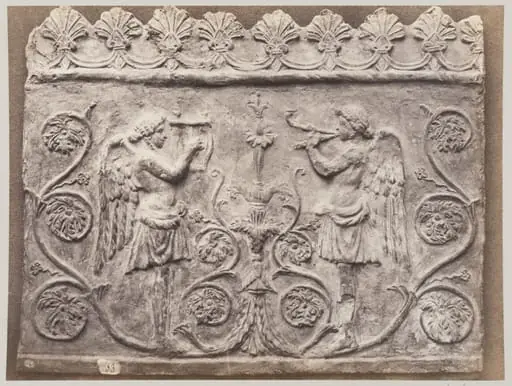 Bas-relief portion of frieze of Genii with double flutes and lyre
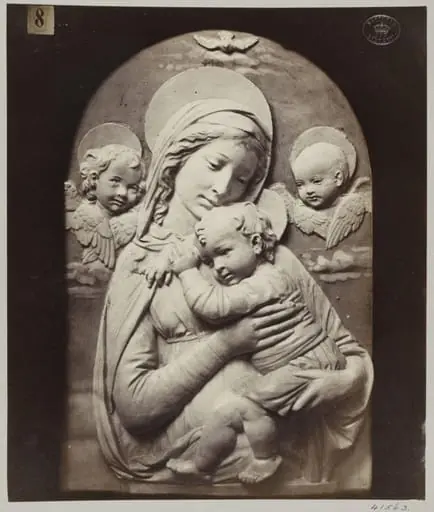 Bas-relief depicting the Virgin and Child in enamelled earthenware
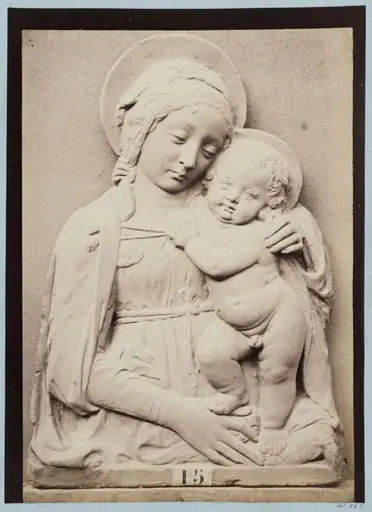 Bas-relief depicting the Virgin and Child by Donatello in red terra cotta
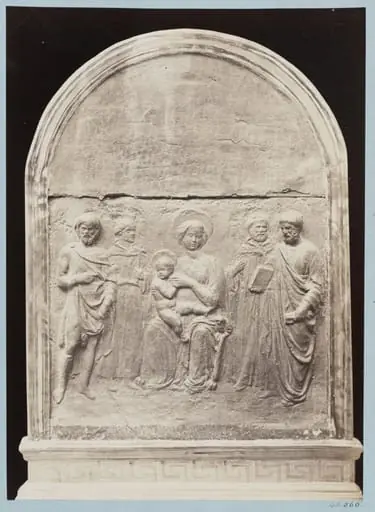 Bas-relief depicting the Virgin and Child in terra cotta
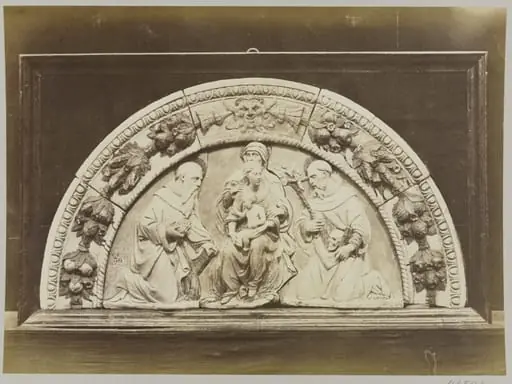 Top of an altar piece depicting the Holy Family in enamelled terra cotta
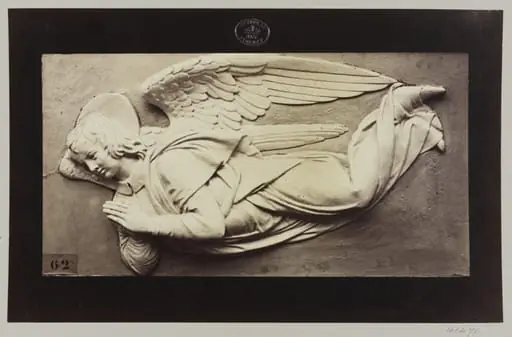 Bas-relief figure of a Flying Angel
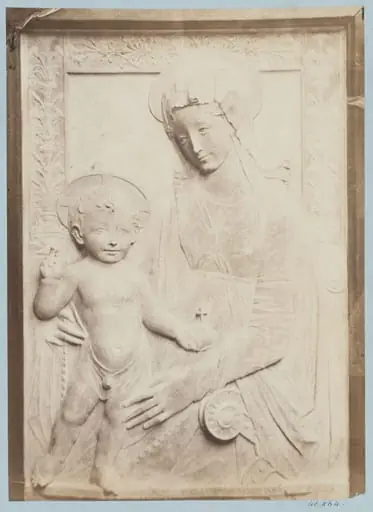 Bas-relief depicting the Virgin and Child attributed to Rosellino
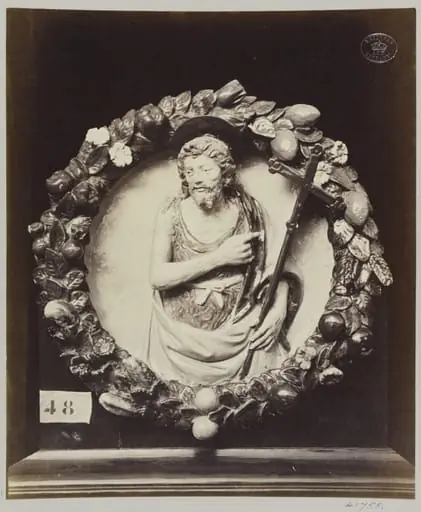 Enamelled earthenware bas-relief medallion of Saint John the Baptist