Artwork
Enamelled earthenware bas-relief medallion of Saint Augustin
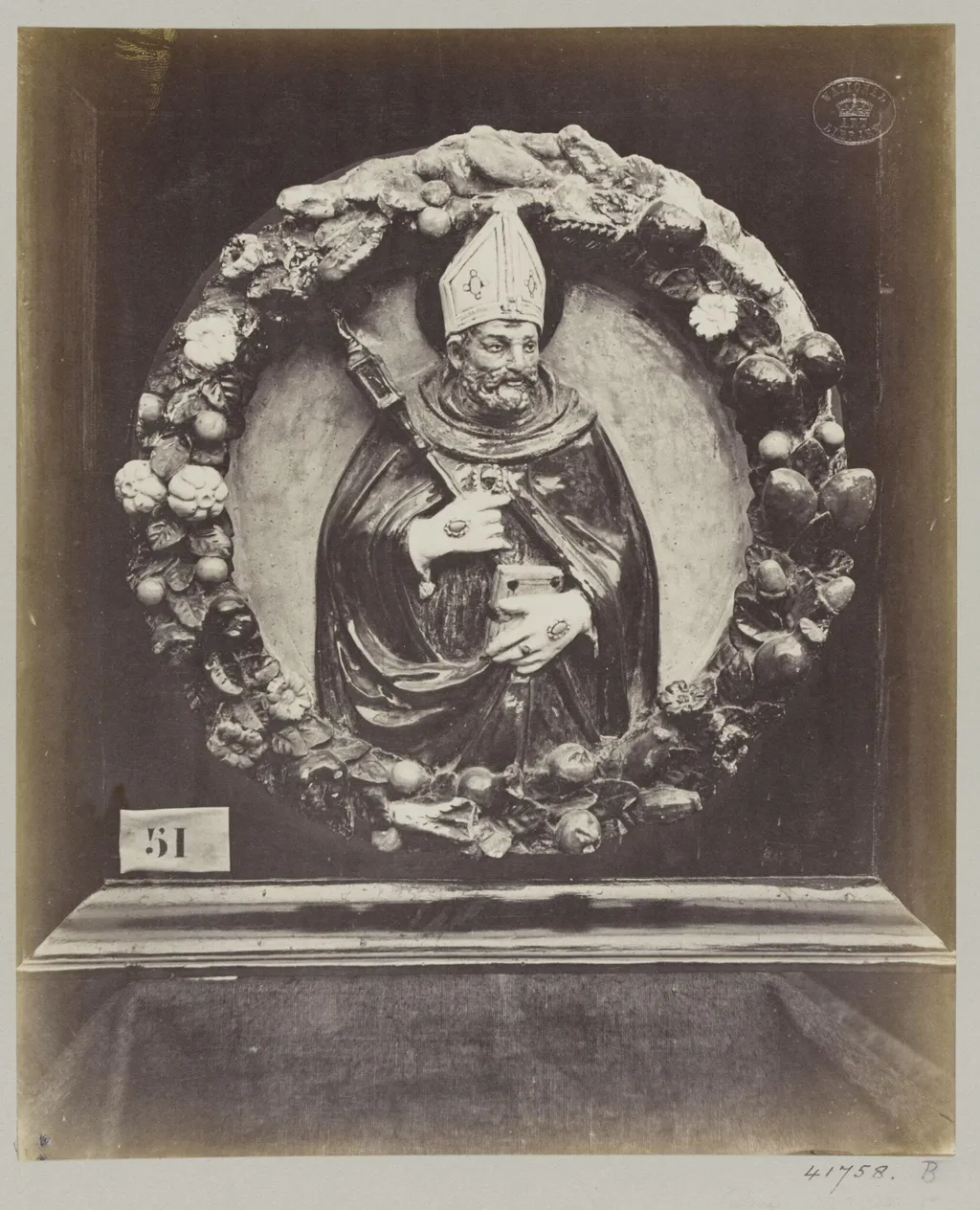
Enamelled earthenware bas-relief medallion of Saint Augustin is a photographic photography by the Impressionist artist Louise Laffon. It dates from 1864 and is held in the collection of the Victoria and Albert Museum.
About this work
The piece blends Impressionism and Realism, two movements pushing art in new directions.
This medallion shows Saint Augustin in enamel on earthenware. It’s a photograph from 1863–64 by Louise Laffon. The piece blends Impressionism and Realism, two movements pushing art in new directions.
The Victoria and Albert Museum started collecting photos in 1852. They were the first museum to do so—and even exhibit them. Henry Cole, their first director, saw how photos could help artists and students.
Want to see more early photography? Check out the Victoria and Albert Museum.
Overview
This photograph, taken by Louise Laffon in 1863–64, depicts an enamelled earthenware bas-relief medallion featuring Saint Augustin. The image is part of the Victoria and Albert Museum's collection, which began acquiring photographs in 1852.
Technique & Style
The medallion itself combines elements of different artistic movements, while Laffon's photograph showcases her skill in capturing the details of the piece.
History & Provenance
The V&A purchased 500 photographs from Laffon in 1864, including this image, as part of a series documenting objects from the Campana Collection.
Context
The museum's early adoption of photography was driven by its first director, Henry Cole, who recognized the medium's potential to support artistic education and research.
Artist & collection
Artist
Louise Laffon (1828–1885), was a French photographer and painter. She was one of the first female professional photographers in France. She had a studio in Paris between 1859 and 1876.

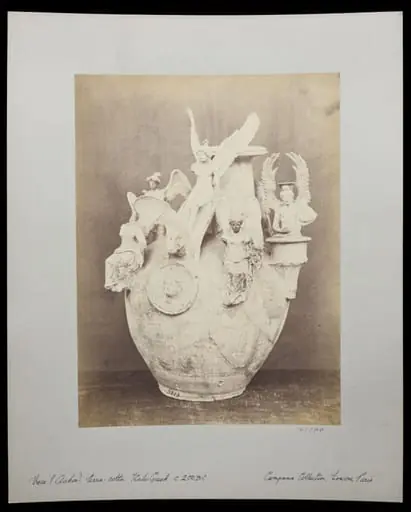 Perfume Burner in terra cotta
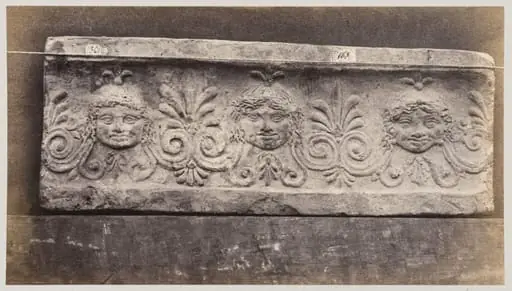 Three masques of gorgons in terra cotta
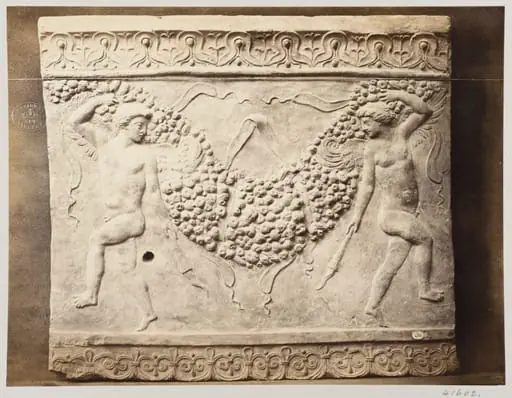 Bas-relief of portion of frieze of dancing figures with torches bearing festoon of fruit in terra cotta
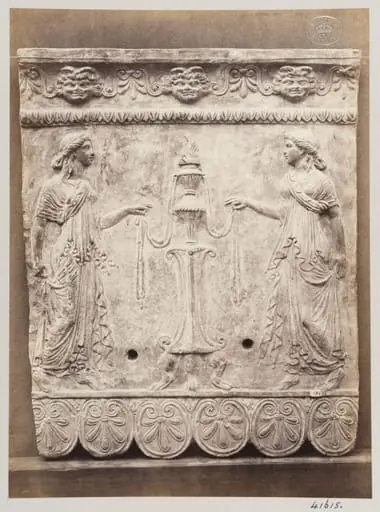 Bas-relief portion of a frieze of two draped females and an altar in terra cotta
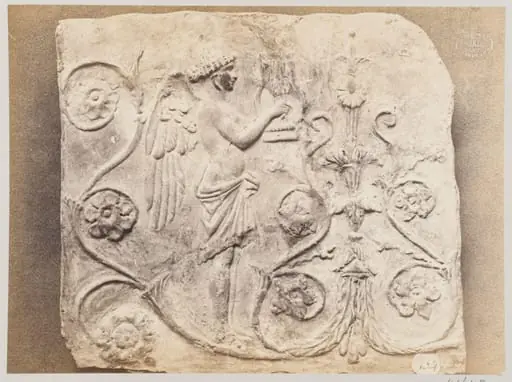 Bas-relief of a geni and a lyre in terra cotta
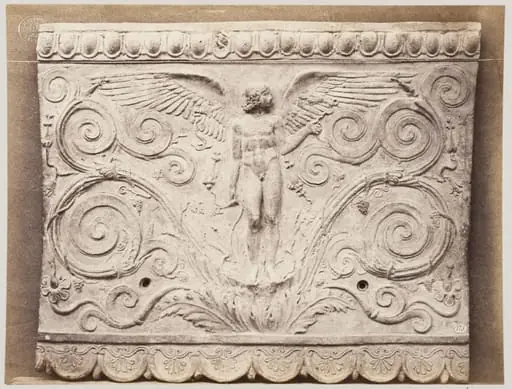 Bas-relief of a portion of frieze of Eros with scrollwork in terra cotta
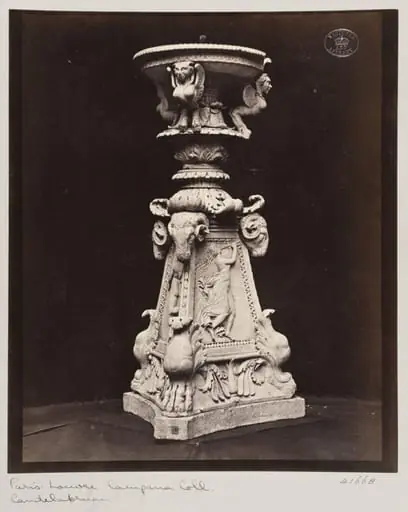 Marble sculptured fountain
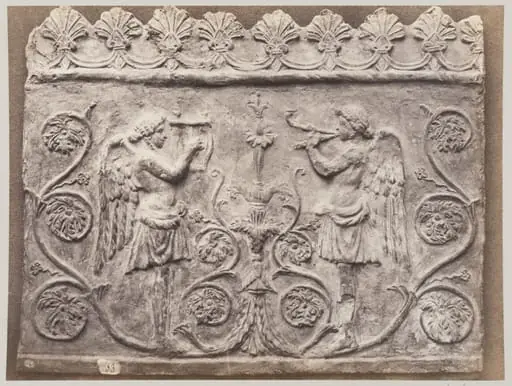 Bas-relief portion of frieze of Genii with double flutes and lyre
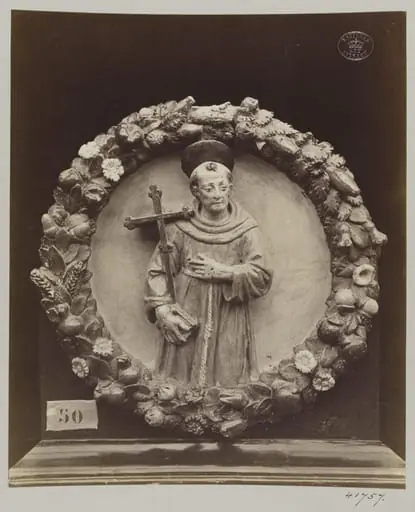 Enamelled bas-relief earthenware medallion of Saint Francis
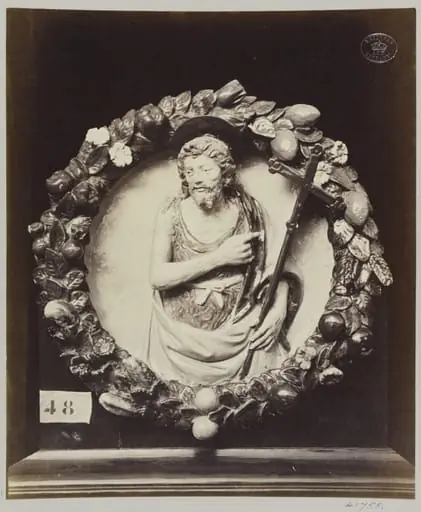 Enamelled earthenware bas-relief medallion of Saint John the Baptist
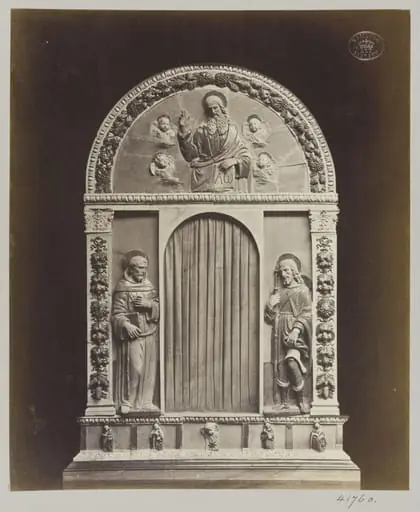 Enamelled earthenware altar piece of Christ and Saint Francis and St. Rock
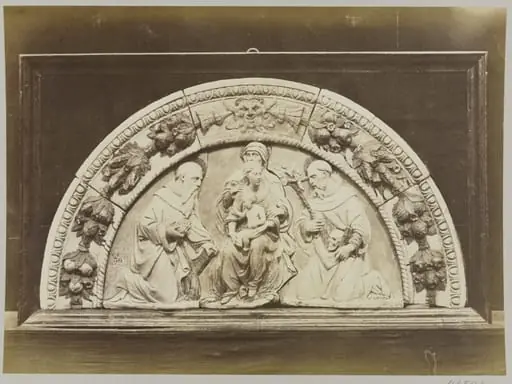 Top of an altar piece depicting the Holy Family in enamelled terra cotta
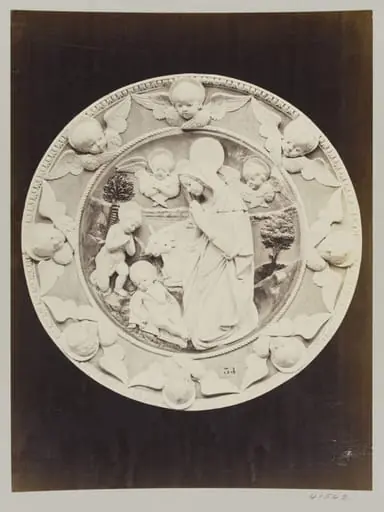 Circular bas-relief depicting the Nativity in enamelled earthenware
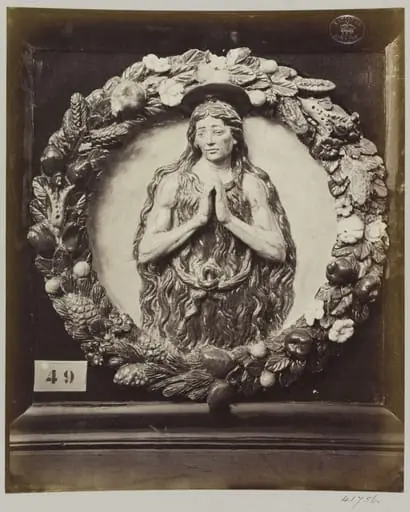 Enamelled earthenware bas-relief medallion of Saint Onofrio
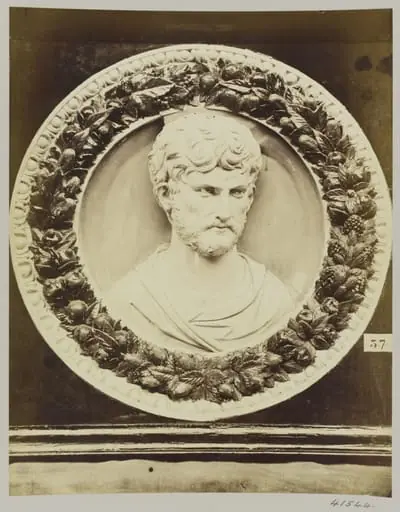 Circular bas-relief white portrait bust on blue ground surrounded by a garland of foliage and fruit in enamelled terra cotta
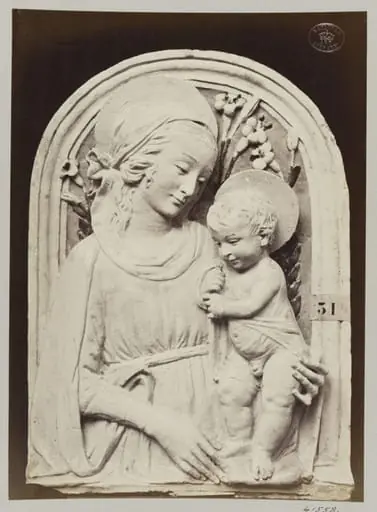 Bas-relief Virgin and Child in enamelled earthenware by Luca della Robbia