Artwork
Marble Bust of Lucilla wife of Lucius Verus
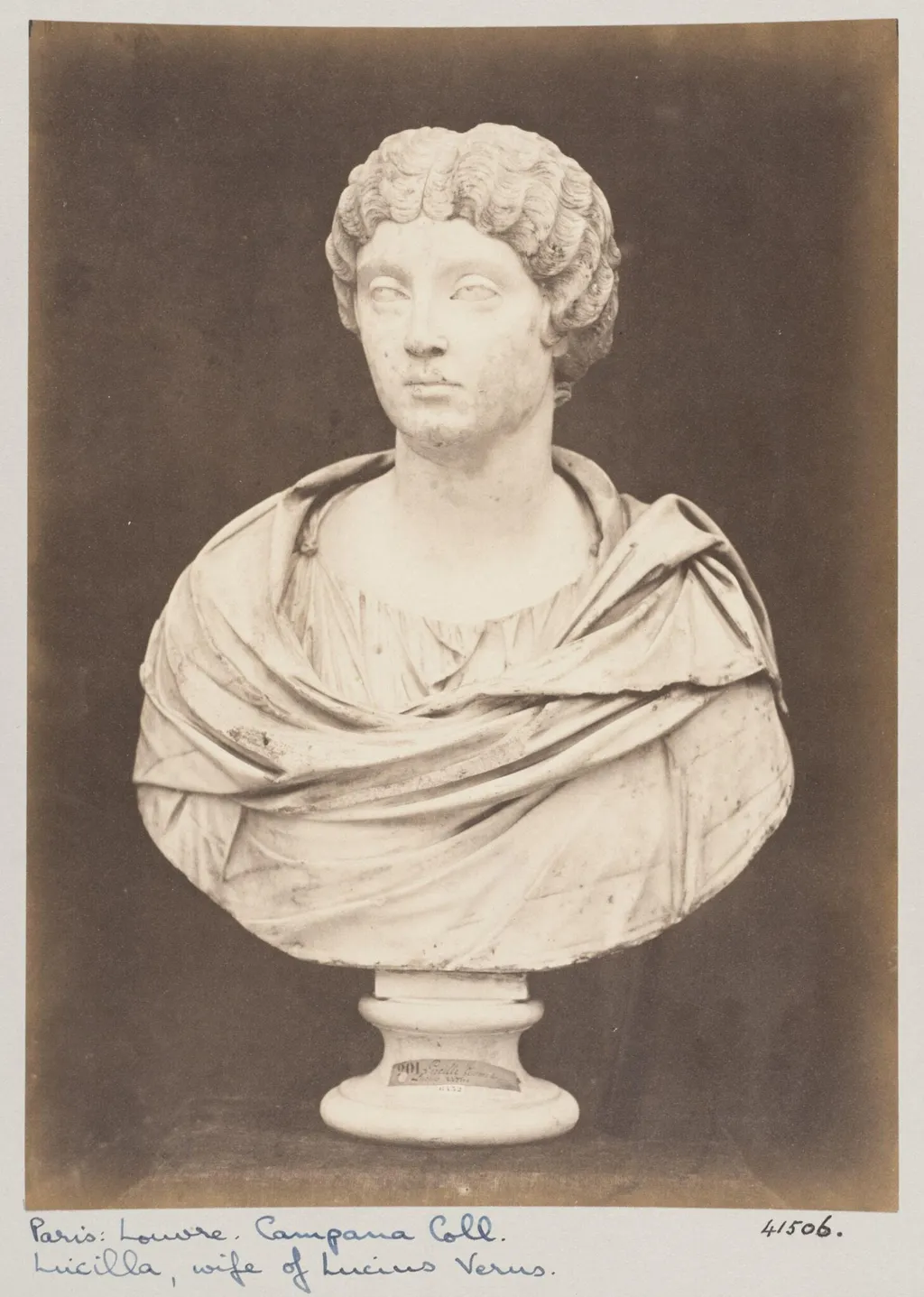
Marble Bust of Lucilla wife of Lucius Verus is a photographic photography by the Impressionist artist Louise Laffon. It dates from 1864 and is held in the collection of the Victoria and Albert Museum. The Victoria and Albert Museum began collecting photographs in 1852, making it the first museum to do so.
About this work
Louise Laffon made a photograph of a marble bust of Lucilla in 1863–64. The photo belongs to a moment when photography was new to museums. It sits in the Victoria and Albert Museum’s early collection.
The V&A started collecting photographs in 1852. Henry Cole saw how photos could help artists and students see more clearly.
Take a look at the Victoria and Albert Museum.
Overview
Among these early acquisitions was a photograph by Louise Laffon, taken between 1863 and 1864, depicting a marble bust of Lucilla.
The Victoria and Albert Museum began collecting photographs in 1852, making it the first museum to do so. Under Henry Cole’s leadership, photographs were acquired not as art but as educational tools, intended to support artists and students by expanding access to visual references. Among these early acquisitions was a photograph by Louise Laffon, taken between 1863 and 1864, depicting a marble bust of Lucilla. This image was part of a larger series documenting antiquities from the Campana Collection in Paris.
Subject & Meaning
The subject is a marble bust of Lucilla, daughter of Emperor Marcus Aurelius and wife of co-emperor Lucius Verus. As a member of the Antonine dynasty, her portrait served as a symbol of imperial lineage and Roman elite identity. Laffon’s photograph does not interpret the bust’s symbolism but preserves its form with technical precision, allowing scholars to study its features, drapery, and carving without direct access to the original object in Paris.
Technique & Style
Laffon’s photograph was made using the albumen print process, common in the mid-19th century for its fine detail and tonal range. The image is composed with even lighting and a neutral background, prioritizing clarity over aesthetic flourish. This restrained approach reflects the photograph’s functional purpose: to document an artifact accurately for study and comparison, aligning with the V&A’s mission to use photography as a scholarly resource.
History & Provenance
In 1864, the V&A acquired 500 photographs from Laffon’s series on the Campana Collection through the Parisian agent E. Cappe. These images were integrated into the National Art Library’s holdings, later forming part of the museum’s photographic archive. Laffon, one of the earliest female members of Le Société Française de la Photographie, contributed significantly to institutional documentation efforts, though her role remained largely unacknowledged until recent scholarship.
Context
During the 1860s, museums across Europe increasingly turned to photography to catalog and disseminate their collections. The V&A’s early adoption of this technology reflected its commitment to education and industrial design reform. Laffon’s work was part of a broader network of international photographic documentation, linking institutions in Paris and London through shared scholarly goals, even as photography remained a marginal medium in art historical discourse.
Legacy
Laffon’s photograph of Lucilla’s bust endures as evidence of photography’s early institutional role in art education. It represents a shift from manual copying to mechanical reproduction, enabling wider access to classical sculpture. Today, it stands as a quiet testament to the contributions of women photographers in shaping museum practices, whose work laid groundwork for modern archival systems despite limited contemporary recognition.
Artist & collection
Artist
Louise Laffon (1828–1885), was a French photographer and painter. She was one of the first female professional photographers in France. She had a studio in Paris between 1859 and 1876.

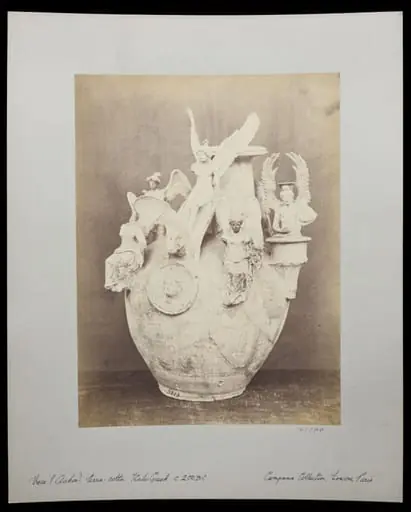 Perfume Burner in terra cotta
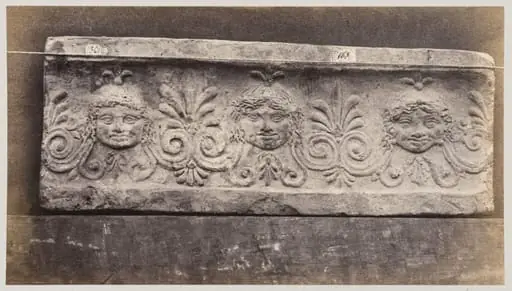 Three masques of gorgons in terra cotta
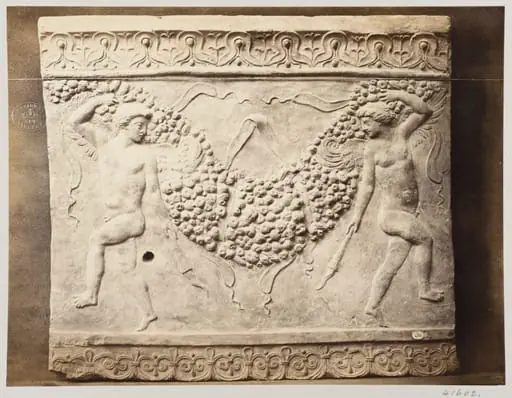 Bas-relief of portion of frieze of dancing figures with torches bearing festoon of fruit in terra cotta
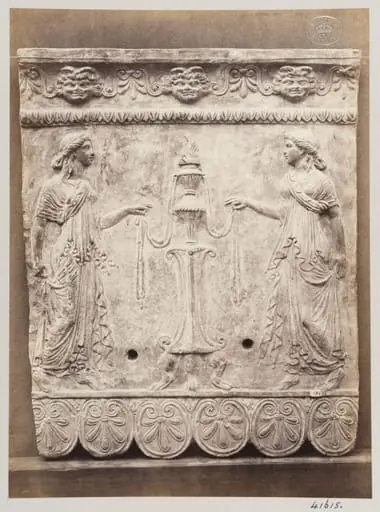 Bas-relief portion of a frieze of two draped females and an altar in terra cotta
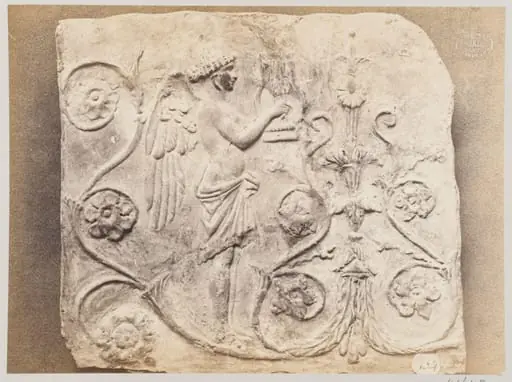 Bas-relief of a geni and a lyre in terra cotta
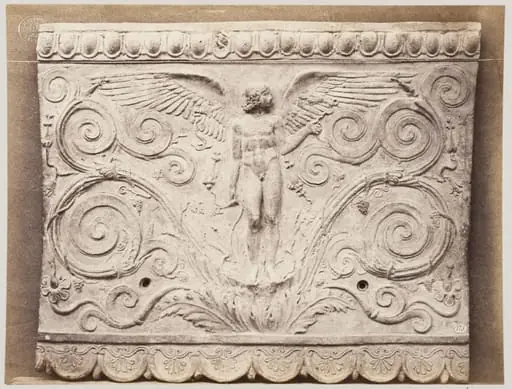 Bas-relief of a portion of frieze of Eros with scrollwork in terra cotta
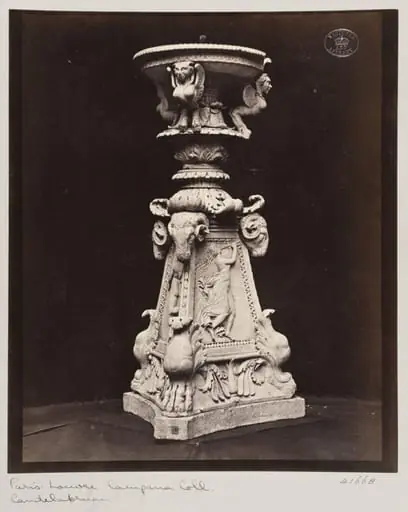 Marble sculptured fountain
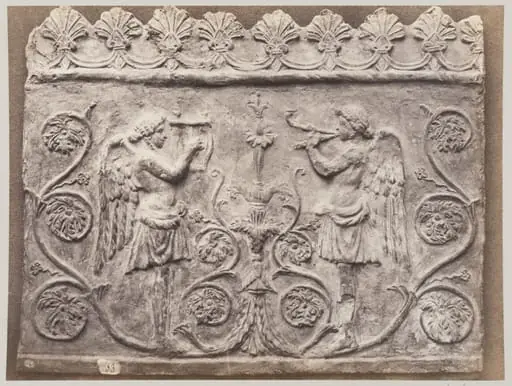 Bas-relief portion of frieze of Genii with double flutes and lyre
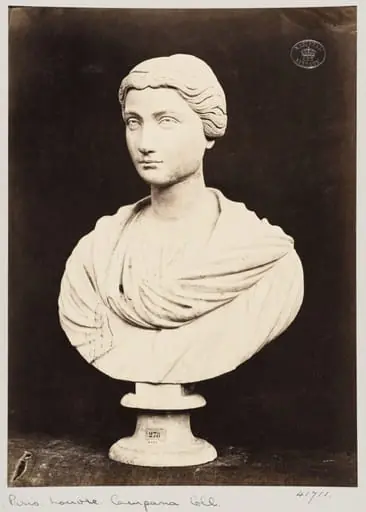 Marble bust of Julia Sabina, wife of Adrian
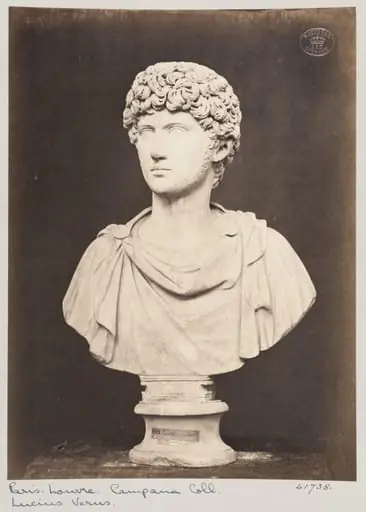 Marble bust of Lucius Verus
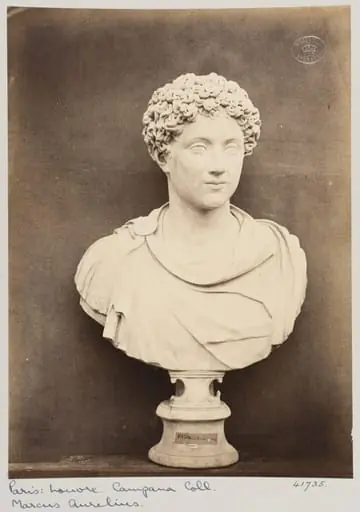 Marble bust of the Emperor Marcus Aurelius
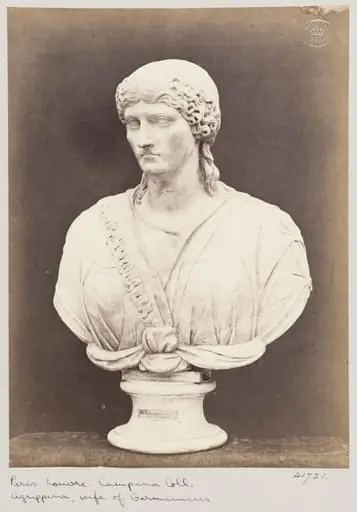 Marble bust of Agrippina, wife of Germanicus
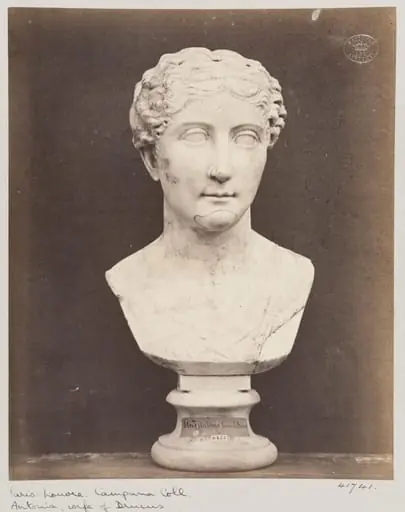 Marble bust of Antonia
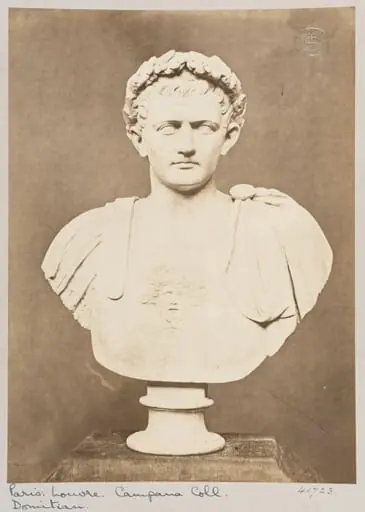 Marble bust of the Emperor Domitian
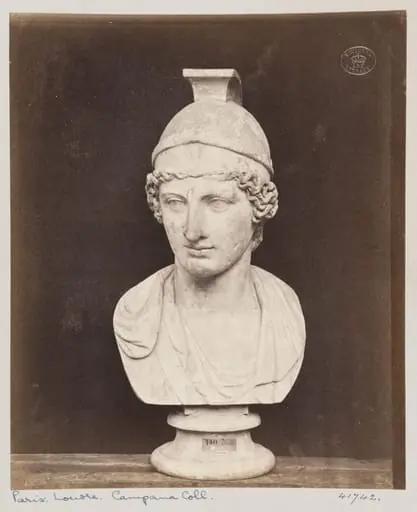 Marble bust of Rome
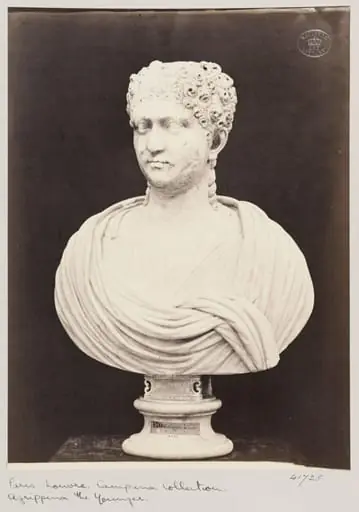 Marble bust of Agrippine the younger
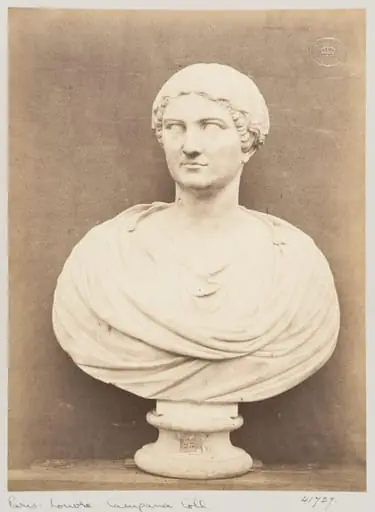 Marble bust of unnamed female
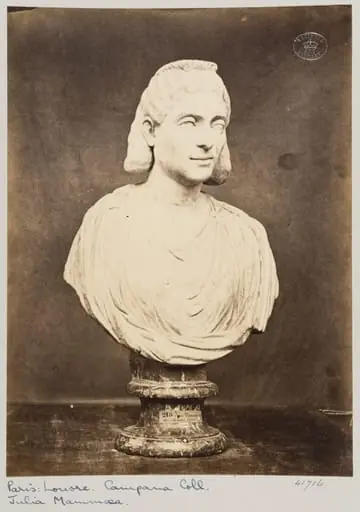 Marble bust of Julia Mammea
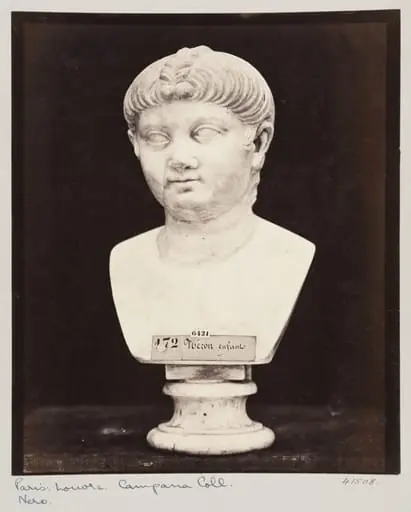 Marble Bust of the Emperor Nero when a child
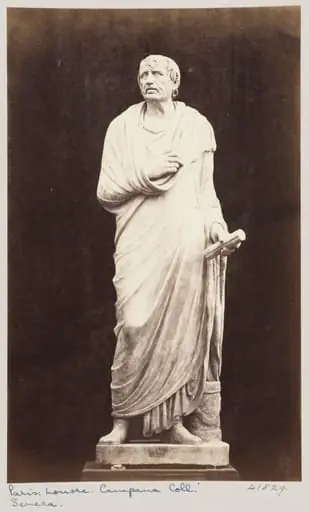 Marble Statue of Seneca