Artwork
Marble Sarcophagus showing the story of Phaedra and Hippolytus
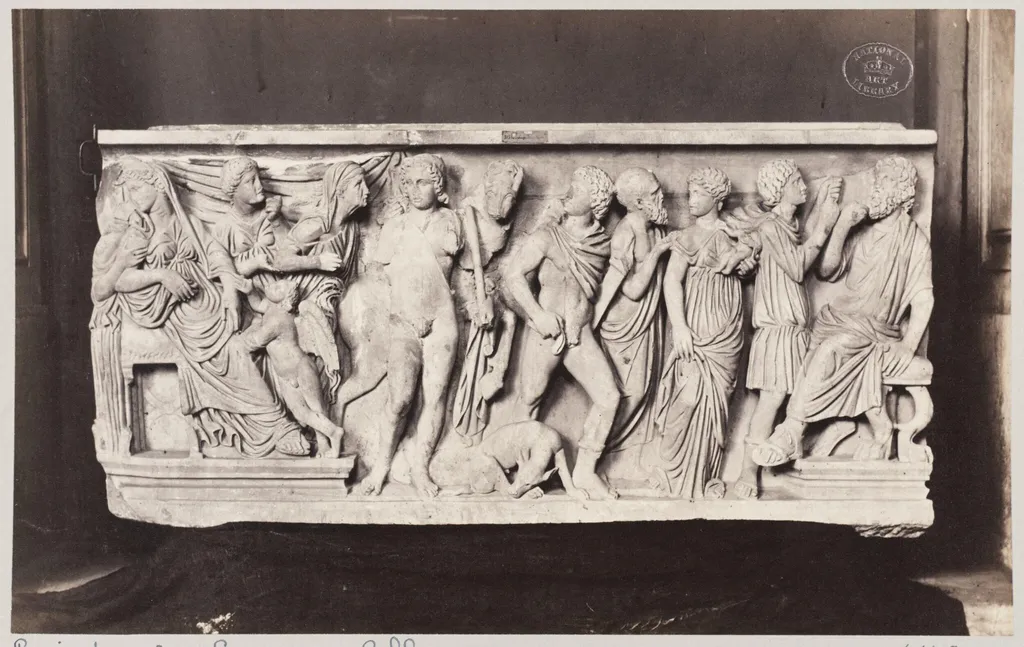
Marble Sarcophagus showing the story of Phaedra and Hippolytus is a photographic photography by the Impressionist artist Louise Laffon. It dates from 1864 and is held in the collection of the Victoria and Albert Museum.
About this work
This photo shows a marble sarcophagus carved with the myth of Phaedra and Hippolytus.
This photo shows a marble sarcophagus carved with the myth of Phaedra and Hippolytus.
Made in 1863–64, it mixes Impressionist and Realist ideas.
The museum used it to teach artists and students early on.
Louise Laffon brought a fresh eye to classical stories.
The V&A has collected photos since 1852, using them for training.
Today, her work helps us see photography’s role in art history.
Check out the Victoria and Albert Museum.
Overview
This photograph, taken by Louise Laffon, depicts a marble sarcophagus carved with a scene from classical mythology. The image was created in 1863-64 and acquired by the Victoria and Albert Museum as part of a series documenting the Campana Collection.
Subject & Meaning
The sarcophagus shows the story of Phaedra and Hippolytus, a mythological narrative. Laffon's photograph brings a new perspective to this classical tale, capturing the intricate carvings on the marble.
Technique & Style
Laffon's work from 1863-64 blends elements of Impressionist and Realist styles. Her photographic technique was innovative for its time, and her images were used by the V&A to educate artists and students.
History & Provenance
The V&A purchased 500 photographs from Laffon's series in 1864 through the agent Monsieur E. Cappe. The museum had been collecting photographs since 1852, recognizing their potential as a resource for artistic education.
Artist & collection
Artist
Louise Laffon (1828–1885), was a French photographer and painter. She was one of the first female professional photographers in France. She had a studio in Paris between 1859 and 1876.

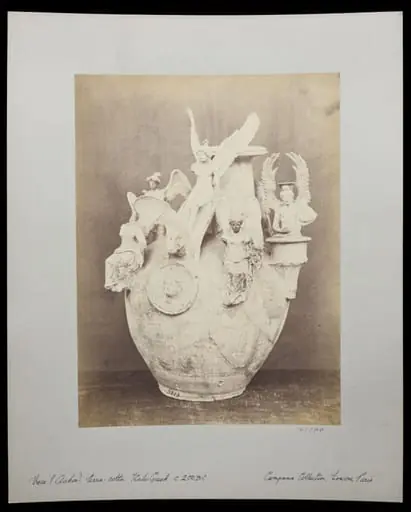 Perfume Burner in terra cotta
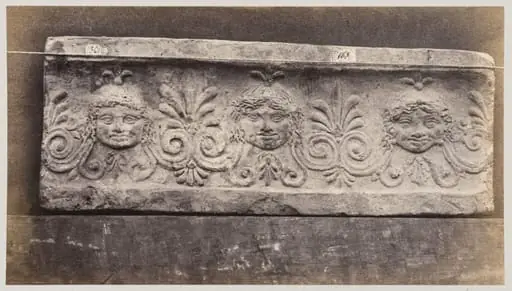 Three masques of gorgons in terra cotta
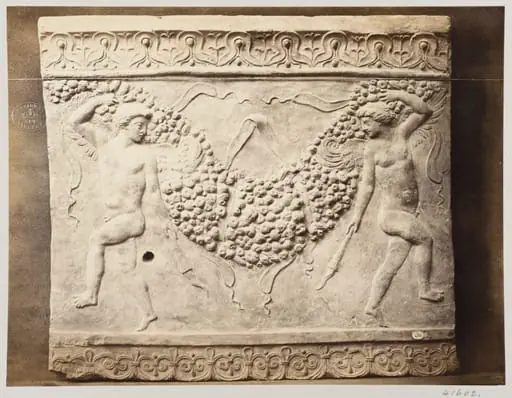 Bas-relief of portion of frieze of dancing figures with torches bearing festoon of fruit in terra cotta
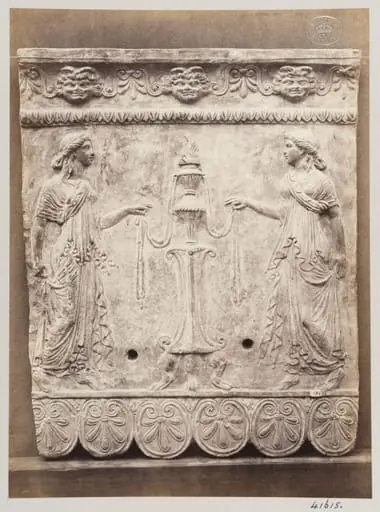 Bas-relief portion of a frieze of two draped females and an altar in terra cotta
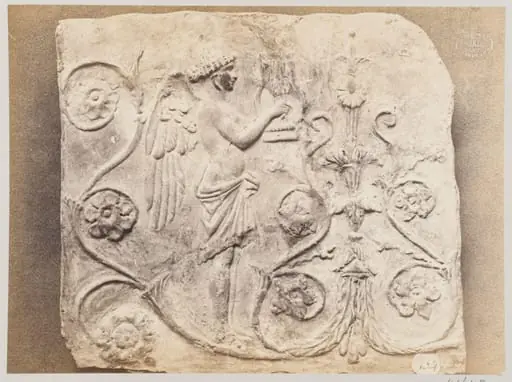 Bas-relief of a geni and a lyre in terra cotta
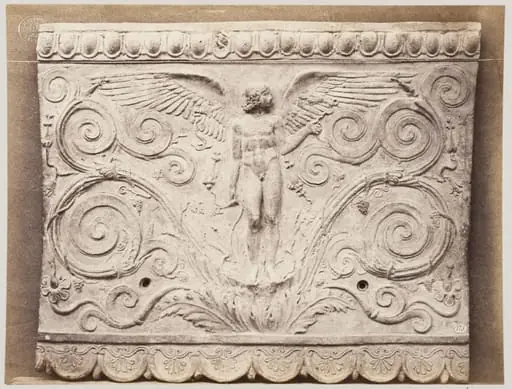 Bas-relief of a portion of frieze of Eros with scrollwork in terra cotta
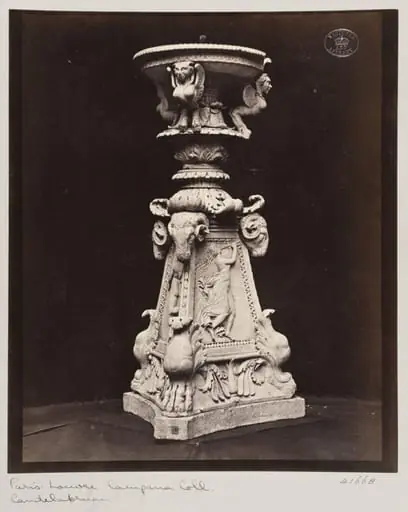 Marble sculptured fountain
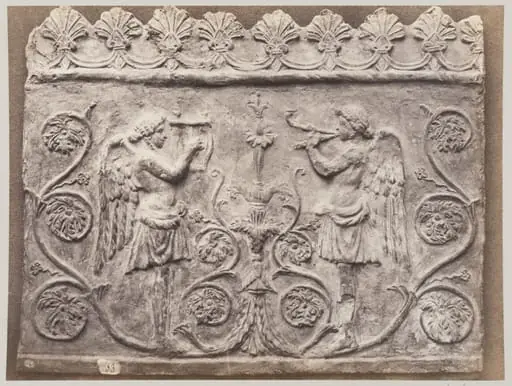 Bas-relief portion of frieze of Genii with double flutes and lyre
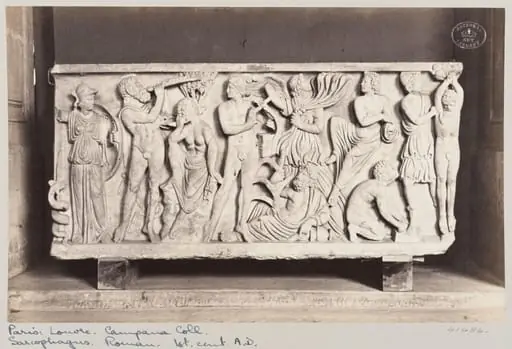 Marble Sarcophagus showing the trial of skill between Apollo and Marsyas, bas-relief
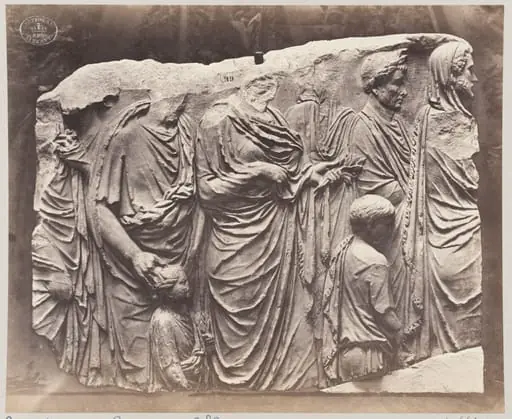 Portion of a marble sarcophagus of procession of draped figures
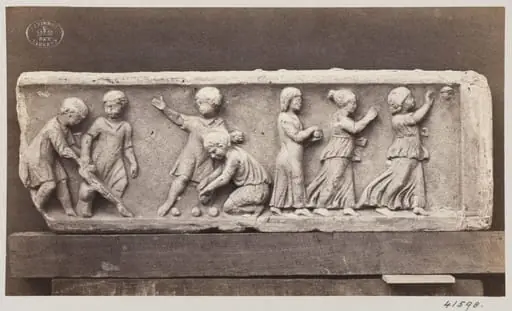 Marble bas-relief of Children playing
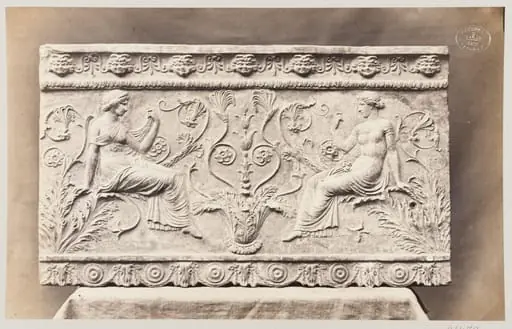 Two female figures seated on foliage ornament, bas-relief in terra cotta
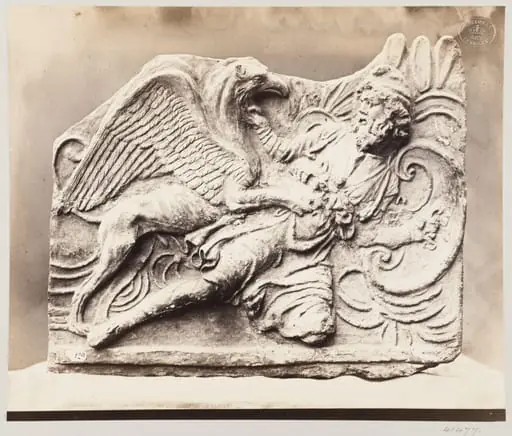 An Arimaspi combating with a Griffin, bas-relief fragment in terra cotta
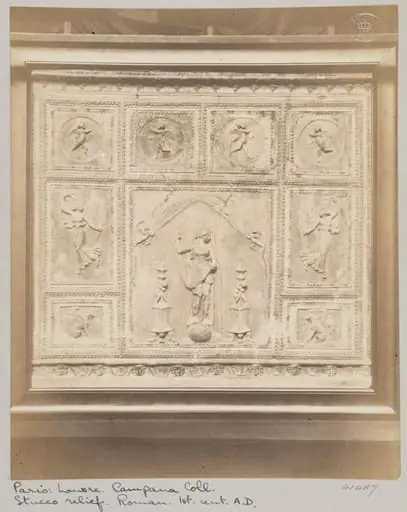 Venus standing on a ball surrounded by Ambrini, two figures of Victory and two griffins, bas-relief in coloured stucco
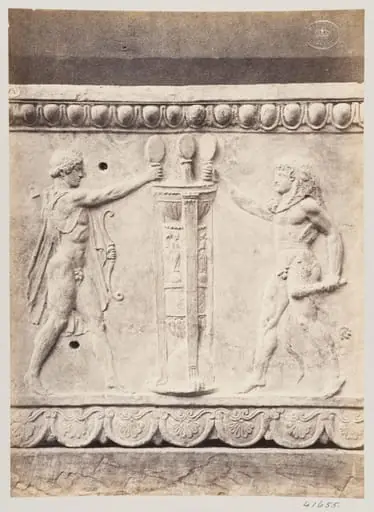 Bas-relief of a portion of a frieze with Hercules seizing the tripod of Delphi in terra cotta
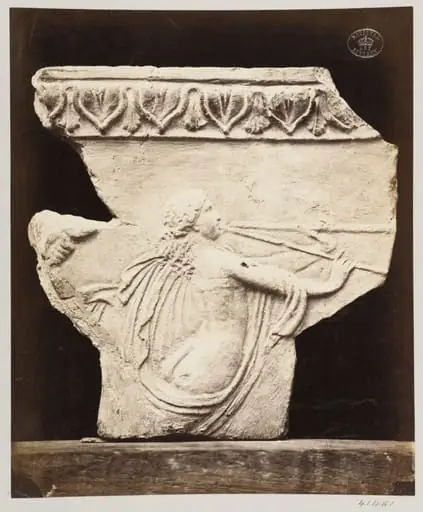 Female figure playing on pipe, bas-relief fragment in terra cotta