Artwork
Marble bas-relief of Children playing
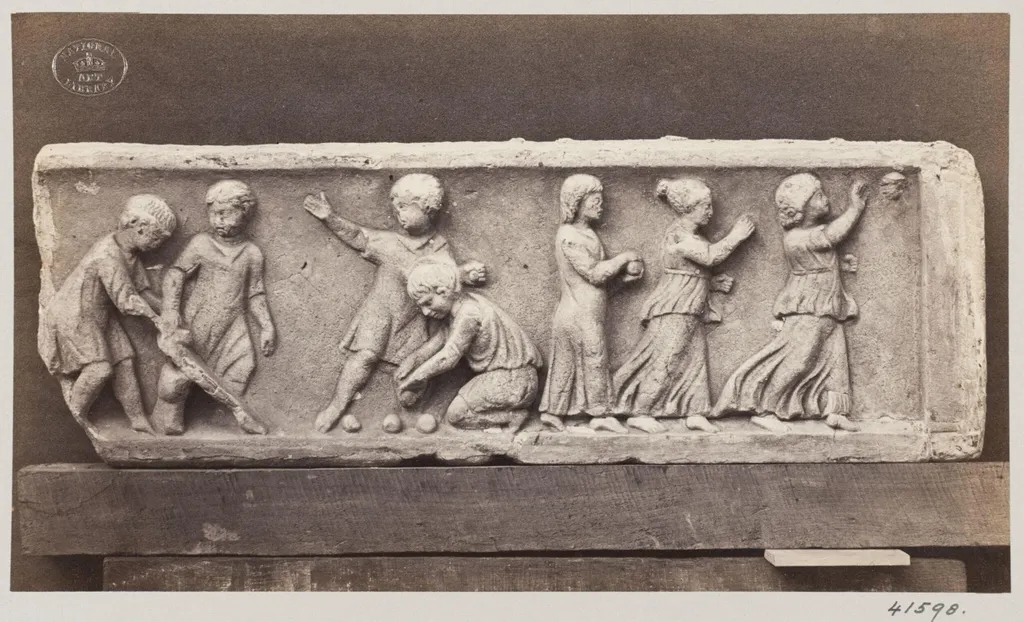
Marble bas-relief of Children playing is a photographic photography by the Impressionist artist Louise Laffon. It dates from 1864 and is held in the collection of the Victoria and Albert Museum. The Victoria and Albert Museum acquired photographs as educational tools from its earliest years, beginning in 1852.
About this work
Henry Cole, the first director, pushed to use photos as art study tools for students and artists.
This is a marble bas-relief titled *Children playing* made by Louise Laffon in 1863–64. It pushes photography’s edge by using marble and a bas-relief style, a rare mix at the time.
The Victoria and Albert Museum got its first photography collection in 1852 and built it fast. Henry Cole, the first director, pushed to use photos as art study tools for students and artists.
Look next at the Victoria and Albert Museum.
Overview
The Victoria and Albert Museum acquired photographs as educational tools from its earliest years, beginning in 1852. Among its early photographic acquisitions were works by Louise Laffon, a French photographer whose 1863–64 series of marble bas-reliefs, including *Children playing*, was purchased in 1864. Though primarily known for photographic practice, Laffon’s contribution to the V&A’s collection uniquely blended sculptural form with photographic documentation, challenging conventional boundaries of the medium.
Subject & Meaning
*Children playing* depicts a group of youths engaged in informal, lively movement, rendered in low relief on marble. The subject reflects classical themes of childhood and play, common in antiquity, but its execution through photographic reproduction and sculptural translation introduces a layered interpretation. The work bridges the immediacy of photographic observation with the permanence of carved stone, suggesting a desire to preserve fleeting moments in enduring material.
Technique & Style
Laffon’s approach combined photographic documentation with manual carving, producing a marble bas-relief based on a photographic image. This hybrid technique was unusual for the period, as photography typically replaced rather than informed sculptural practice. The relief’s shallow depth and precise detailing suggest direct translation from a photographic negative, yet the materiality of marble introduces tactile and spatial qualities absent in flat images.
History & Provenance
In 1864, the V&A acquired 500 photographs from Laffon’s series documenting the Campana Collection in Paris, purchased through agent E. Cappe. Among these was *Children playing*, created in 1863–64. Laffon, one of the earliest female members of Le Société Française de la Photographie, contributed to institutional collections at a time when women’s roles in photographic production were rarely acknowledged. Her work entered the V&A’s holdings as part of its broader effort to build a resource for design education.
Context
During the 1860s, the V&A actively sought photographic records of artworks to support teaching and conservation. While most acquisitions were direct photographs, Laffon’s bas-reliefs represented an experimental extension of this mission. Her work emerged alongside growing interest in mechanical reproduction and the study of historical sculpture, positioning photography not merely as a record, but as a medium capable of reinterpreting three-dimensional form.
Legacy
Laffon’s *Children playing* remains a rare example of photographic imagery translated into sculptural relief within a museum collection. Its presence in the V&A underscores early institutional experimentation with cross-medium practices. Though largely overlooked in art historical narratives, the work illustrates how photography’s role in education extended beyond documentation into the realm of material reinterpretation, influencing later approaches to art reproduction.
Artist & collection
Artist
Louise Laffon (1828–1885), was a French photographer and painter. She was one of the first female professional photographers in France. She had a studio in Paris between 1859 and 1876.

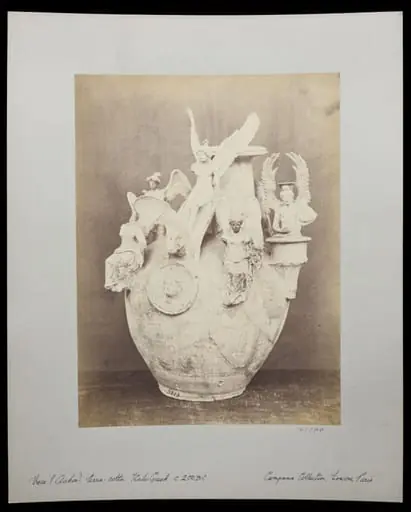 Perfume Burner in terra cotta
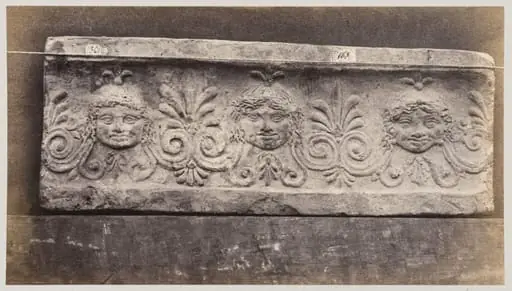 Three masques of gorgons in terra cotta
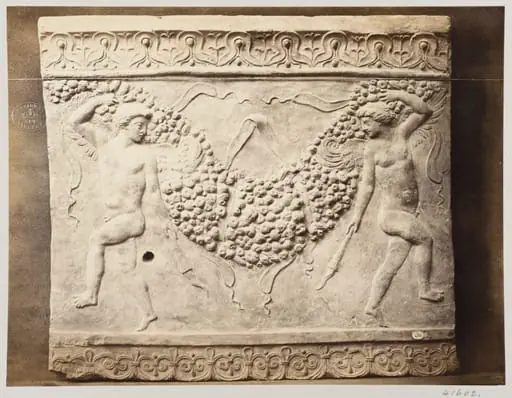 Bas-relief of portion of frieze of dancing figures with torches bearing festoon of fruit in terra cotta
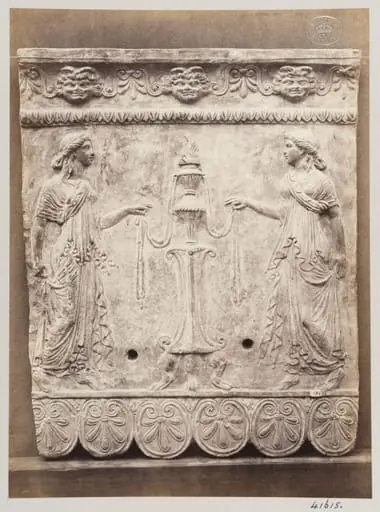 Bas-relief portion of a frieze of two draped females and an altar in terra cotta
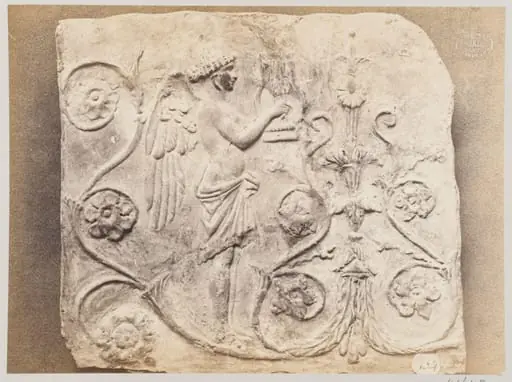 Bas-relief of a geni and a lyre in terra cotta
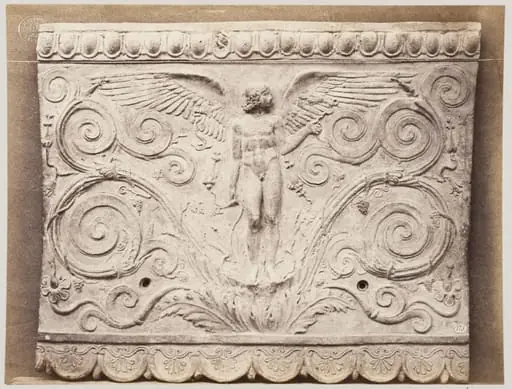 Bas-relief of a portion of frieze of Eros with scrollwork in terra cotta
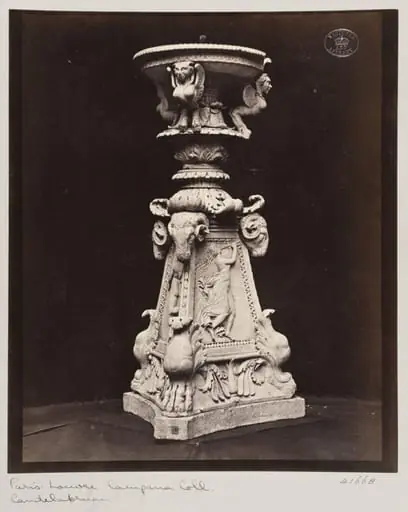 Marble sculptured fountain
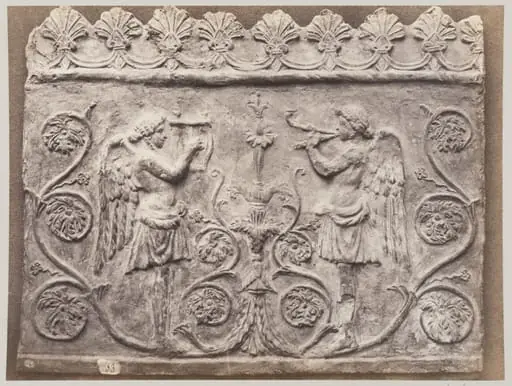 Bas-relief portion of frieze of Genii with double flutes and lyre
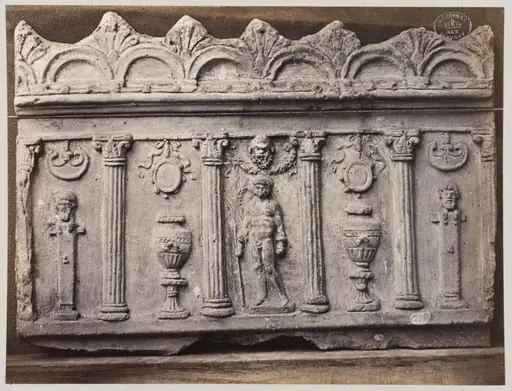 Bas-relief of a figure with bust, vessels and columns in terra cotta
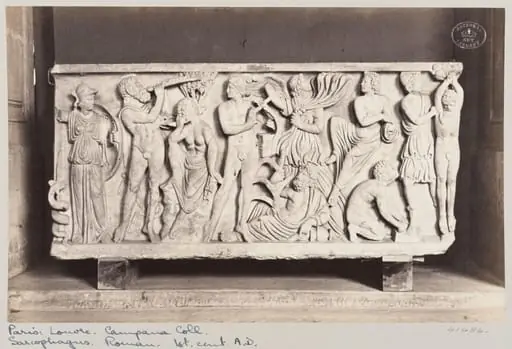 Marble Sarcophagus showing the trial of skill between Apollo and Marsyas, bas-relief
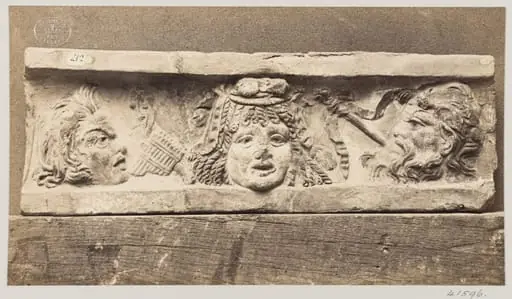 Bas-relief of three masques in terra cotta
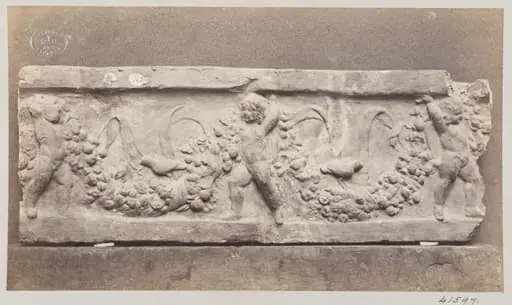 Bas-relief of Cupids with garlands in terra cotta
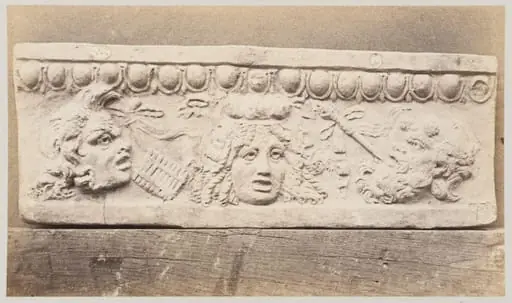 Bas-relief portion of frieze with theatrical masks in terra cotta
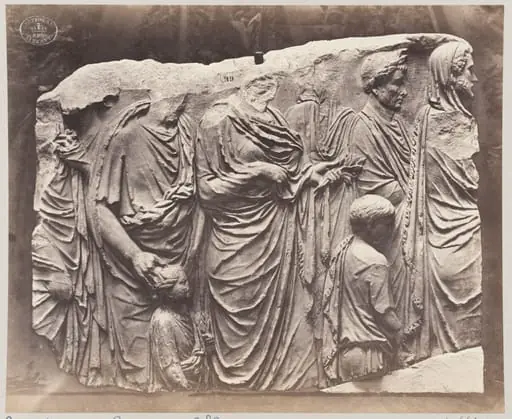 Portion of a marble sarcophagus of procession of draped figures
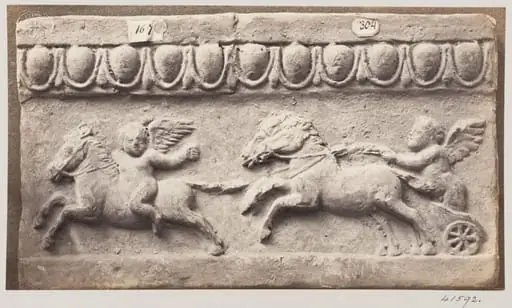 Bas-relief of a portion of a frieze in terra cotta depicting winged cupids and chariot and horses
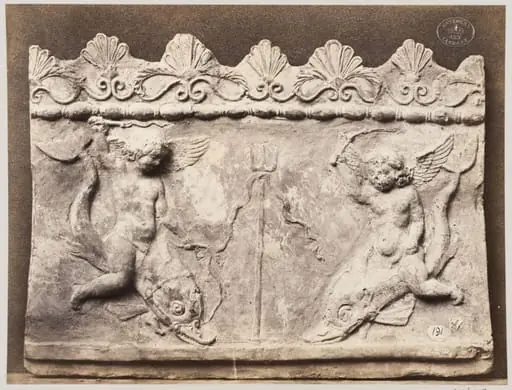 Bas-relief of two figures of Neptune in terra cotta
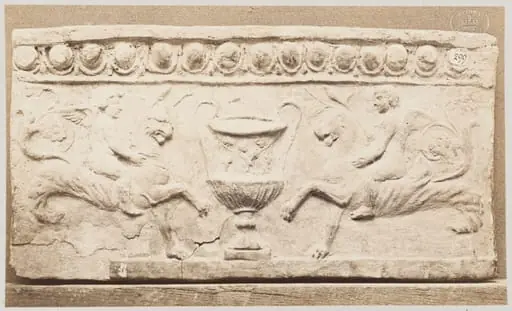 Bas-relief of a large vessel with handles and two bacanallian genies in terra cotta
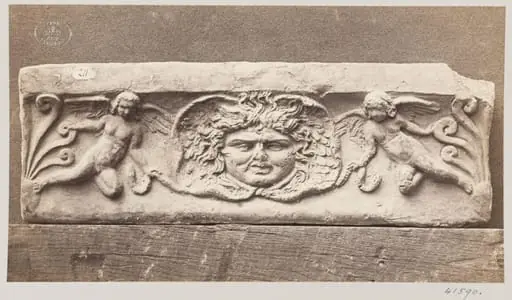 Bas-relief depicting a Gorgon Head in terra cotta
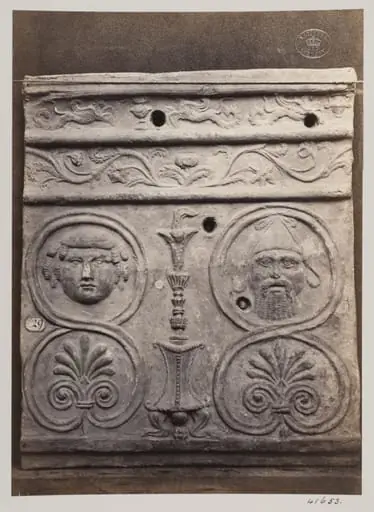 Bas-relief of a portion of a frieze of a thymiaterion and bacanallian masks in terra cotta
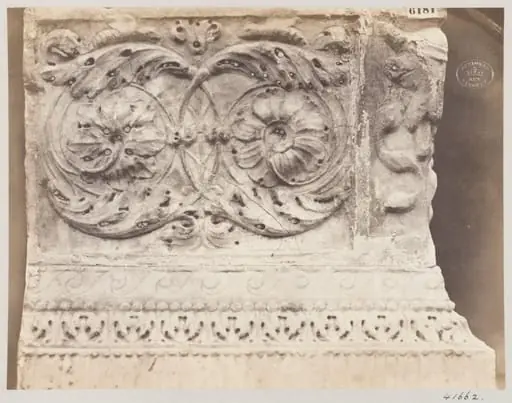 Marble portion of a sacophagus ornamented with bas-relief foliage