Artwork
Marble socle ornamented in bas-relief
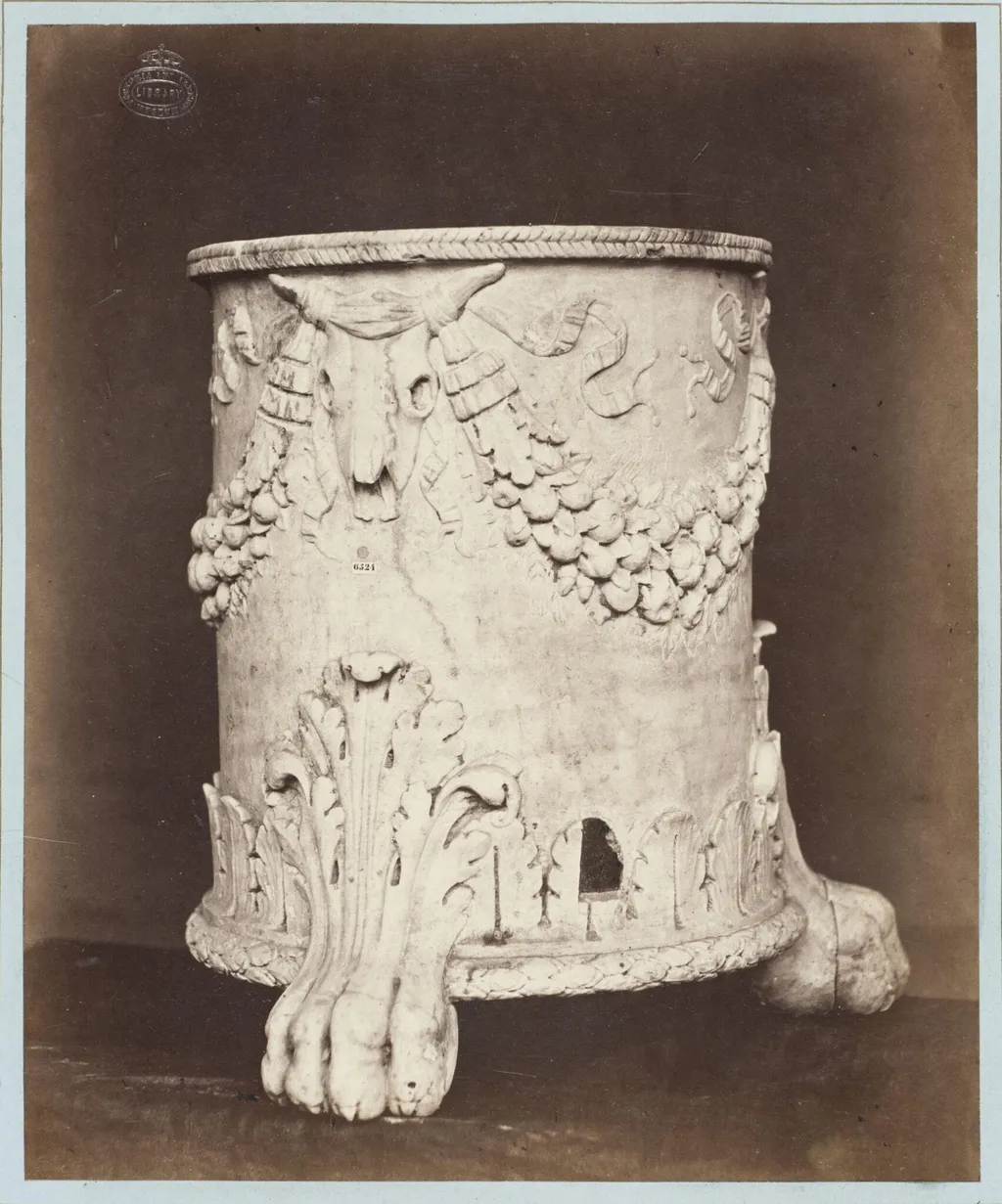
Marble socle ornamented in bas-relief is a photographic photography by the Impressionist artist Louise Laffon. It dates from 1864 and is held in the collection of the Victoria and Albert Museum.
About this work
The image fits in the overlap between Impressionism and Realism, two movements that blurred early photography with older traditions.
This is a photograph from 1863–1864 by Louise Laffon. It shows a marble socle with carved relief. The image fits in the overlap between Impressionism and Realism, two movements that blurred early photography with older traditions.
The Victoria and Albert Museum began collecting photographs in 1852. That makes this image part of a first wave—nearly as old as the museum itself.
Look up the Victoria and Albert Museum next.
Overview
This photograph, taken between 1863 and 1864 by Louise Laffon, documents a carved marble socle from the Campana Collection. Acquired by the Victoria and Albert Museum in 1864 through an agent in Paris, it belongs to an early institutional effort to use photography as a documentary and educational tool. The image is one of five hundred purchased from Laffon’s series, reflecting the museum’s commitment to building a visual archive for study and reference.
Subject & Meaning
The subject is a classical marble base adorned with low-relief ornamentation, likely part of a larger sculptural or architectural ensemble. Its depiction serves not as artistic expression but as a precise record of form and detail, intended for scholarly use. The photograph preserves the object’s surface texture and carving precision, enabling study without physical access—a practical function aligned with the museum’s educational mission.
Technique & Style
Laffon employed the wet-plate collodion process, common in the 1860s, which required careful handling and immediate development. The resulting image exhibits sharp tonal contrast and fine detail, characteristic of technical precision over aesthetic experimentation. The composition is straightforward, prioritizing clarity and fidelity to the object, aligning with documentary conventions rather than artistic movements like Impressionism or Realism.
History & Provenance
The photograph was produced as part of a systematic project to document the Campana Collection in Paris, then housed in the Musée Napoléon III. Louise Laffon, one of the earliest recognized female photographers in France, was commissioned for this work. The V&A acquired the full set of 500 images in 1864 via Monsieur E. Cappe, integrating them into its nascent photographic collection, which had been formally established in 1852.
Context
In the 1860s, museums increasingly turned to photography to expand access to art and artifacts beyond physical display. The V&A, under Henry Cole’s leadership, was among the first to treat photographs as essential educational resources. Laffon’s work exemplifies how institutions relied on skilled professionals—often women—to produce visual records that supported teaching, curation, and international scholarly exchange.
Legacy
Laffon’s photographs contributed to the V&A’s foundational archive, establishing photography as a legitimate medium for scholarly documentation. Her role, long overlooked, highlights the quiet but critical contributions of women in early institutional photography. These images remain part of the museum’s historical record, preserving both the objects they depict and the evolving practices of visual archiving in the 19th century.
Artist & collection
Artist
Louise Laffon (1828–1885), was a French photographer and painter. She was one of the first female professional photographers in France. She had a studio in Paris between 1859 and 1876.

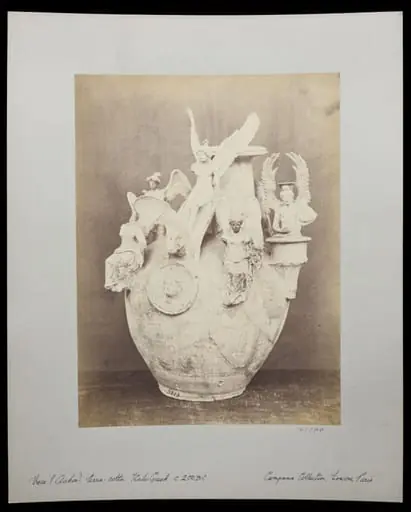 Perfume Burner in terra cotta
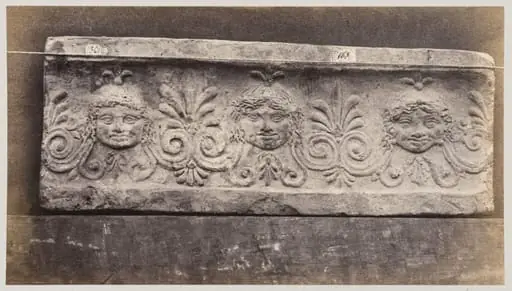 Three masques of gorgons in terra cotta
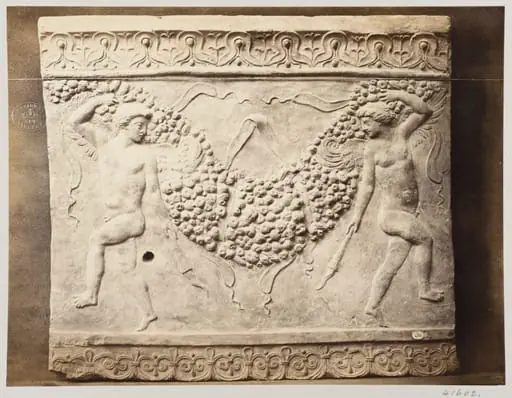 Bas-relief of portion of frieze of dancing figures with torches bearing festoon of fruit in terra cotta
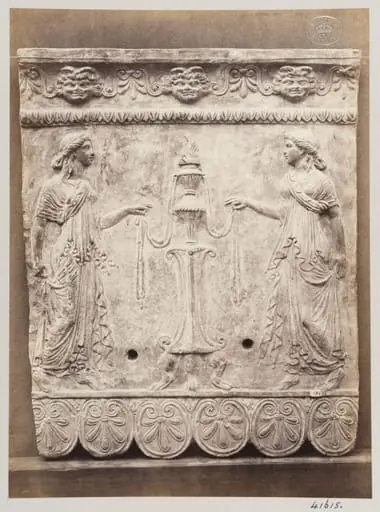 Bas-relief portion of a frieze of two draped females and an altar in terra cotta
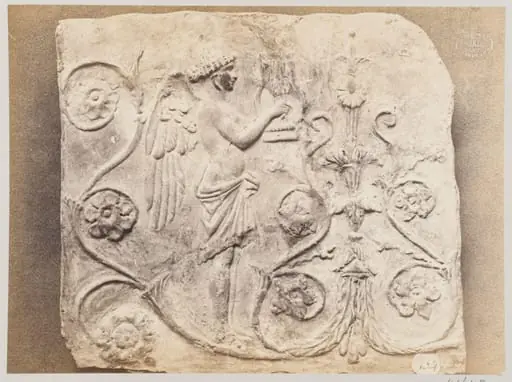 Bas-relief of a geni and a lyre in terra cotta
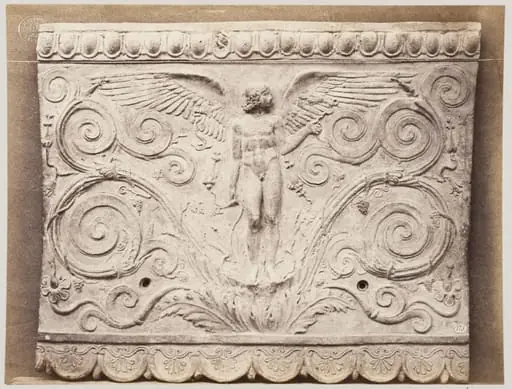 Bas-relief of a portion of frieze of Eros with scrollwork in terra cotta
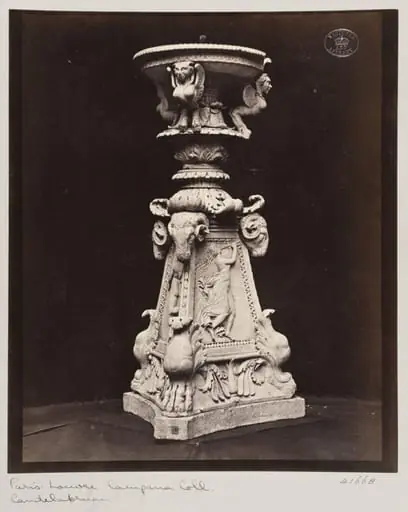 Marble sculptured fountain
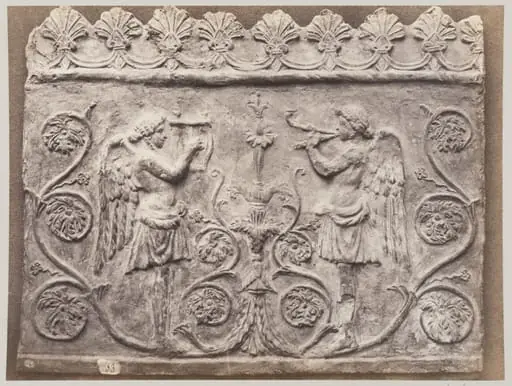 Bas-relief portion of frieze of Genii with double flutes and lyre
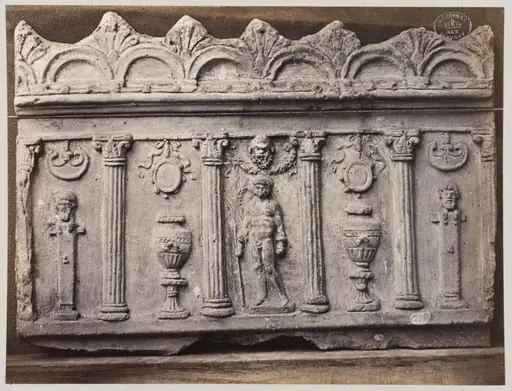 Bas-relief of a figure with bust, vessels and columns in terra cotta
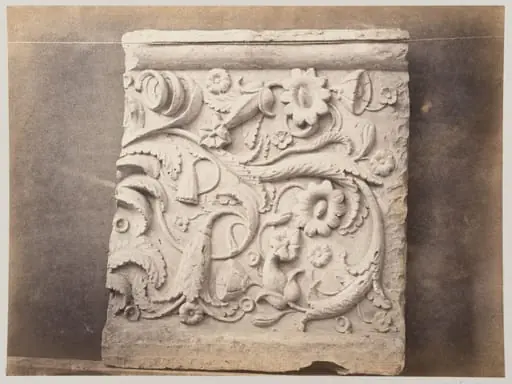 Bas-relief portion of a tomb in marble
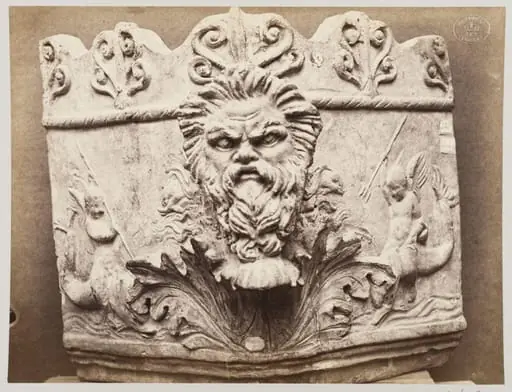 Bas-relief portion of frieze with mask of Satyr in terra cotta
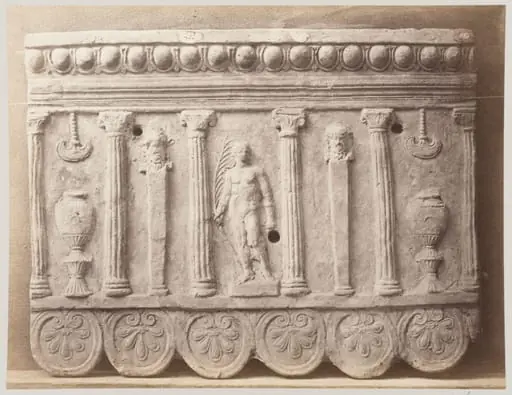 Bas-relief portion of a frieze of Cestiphore conqueror in terra cotta
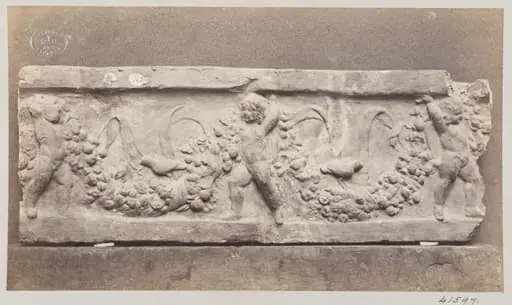 Bas-relief of Cupids with garlands in terra cotta
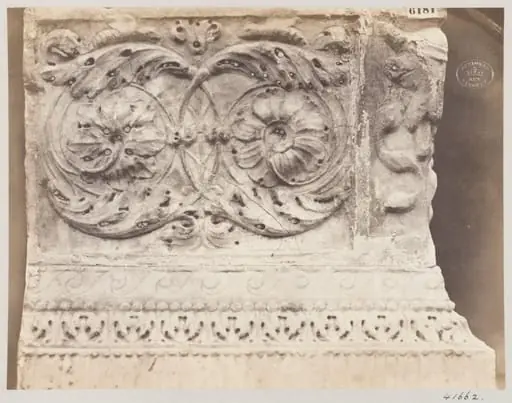 Marble portion of a sacophagus ornamented with bas-relief foliage
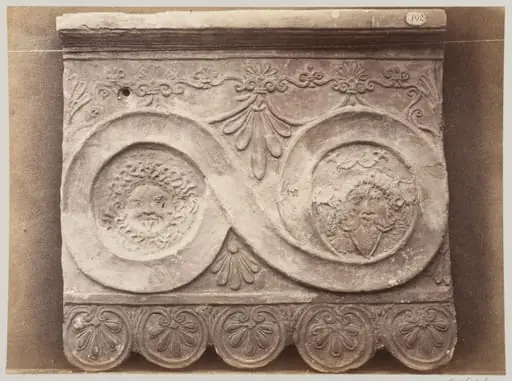 Bas-relief portion of a frieze of scrollwork with masks in terra cotta
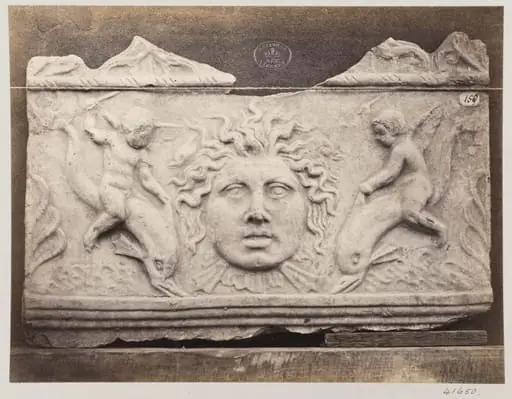 Bas-relief of two sea genies in terra cotta
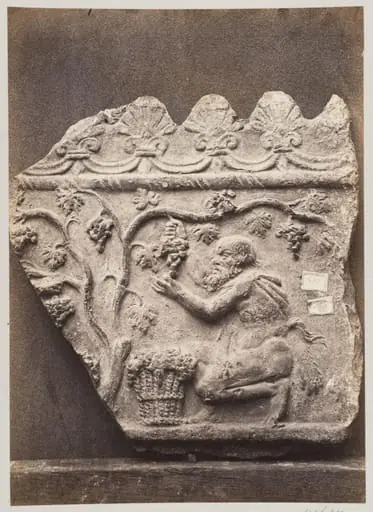 Bas-relief portion of frieze with harvesting satyr in terra cotta
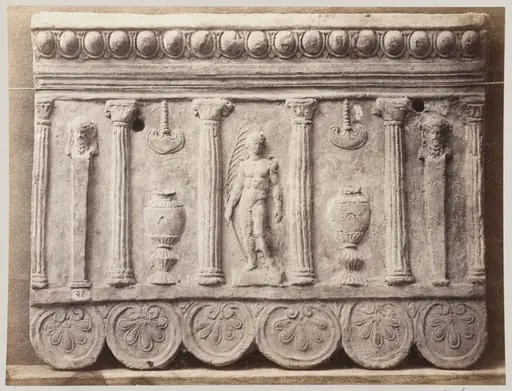 Bas-relief portion of a frieze of Hercules the conqueror in terra cotta