Artwork
Second Series
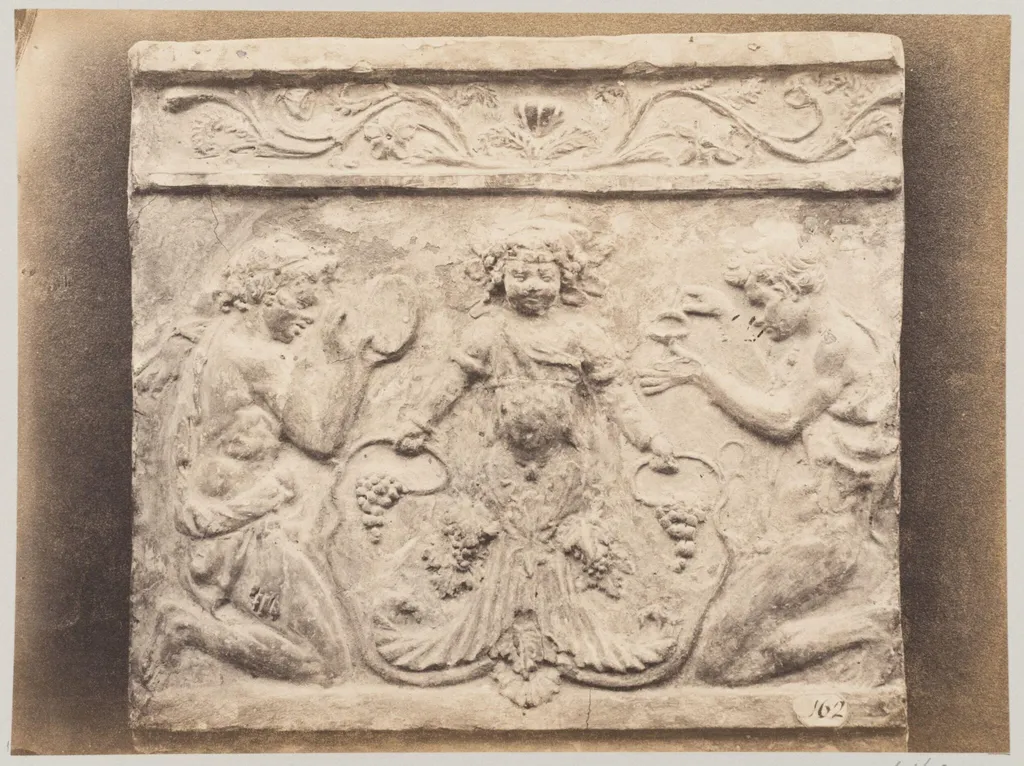
Second Series is a photographic photography by the Impressionist artist Louise Laffon. It dates from 1864 and is held in the collection of the Victoria and Albert Museum.
About this work
This is a photograph from 1863–64 by Louise Laffon. Part of the "Second Series," it comes from a time when the Victoria and Albert Museum was one of the first to collect and show photos.
The museum bought photos early to help artists and students study. Laffon’s work was overlooked for years before being rediscovered.
Look up the Victoria and Albert Museum.
Overview
This 1863–64 photograph is part of Louise Laffon's 'Second Series', acquired by the Victoria and Albert Museum during its pioneering era of photography collection and exhibition.
Subject & Meaning
The photograph depicts an object from the Campana Collection, originally housed in the Musée Napoléon III in Paris (now the Louvre), serving as a visual resource for artistic and educational purposes.
Technique & Style
Created using the gil (gilded) process, a photographic technique of the time, Laffon's work in this series showcases her contribution to early photographic documentation of art collections.
History & Provenance
Purchased by the V&A in 1864 through agent Monsieur E. Cappe, this photograph is one of 500 works from Laffon's series, highlighting her professional engagement with the museum and its global sourcing practices.
Context
Reflecting the V&A's visionary approach under Director Henry Cole, the photograph exemplifies the museum's early recognition of photography's potential in education and artistic resource provision, including the overlooked yet significant role of female photographers like Laffon.
Artist & collection
Artist
Louise Laffon (1828–1885), was a French photographer and painter. She was one of the first female professional photographers in France. She had a studio in Paris between 1859 and 1876.

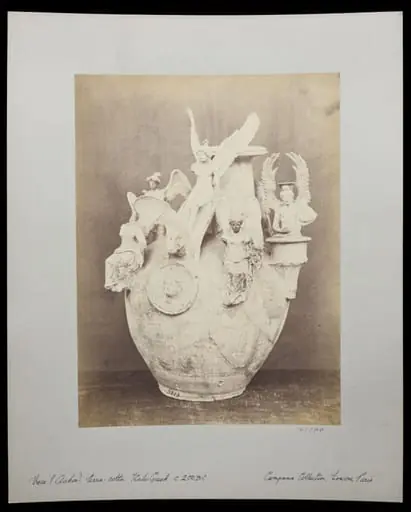 Perfume Burner in terra cotta
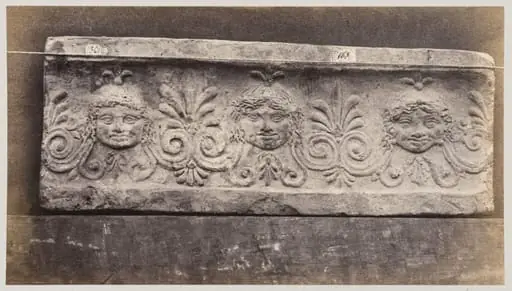 Three masques of gorgons in terra cotta
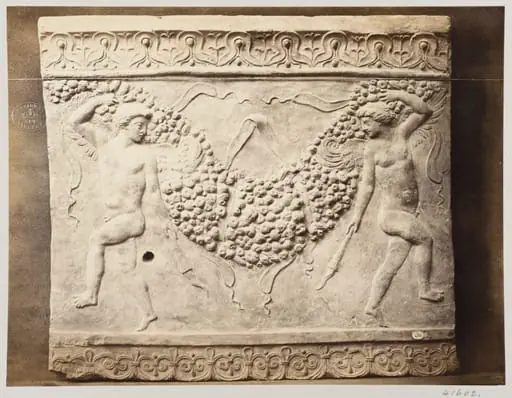 Bas-relief of portion of frieze of dancing figures with torches bearing festoon of fruit in terra cotta
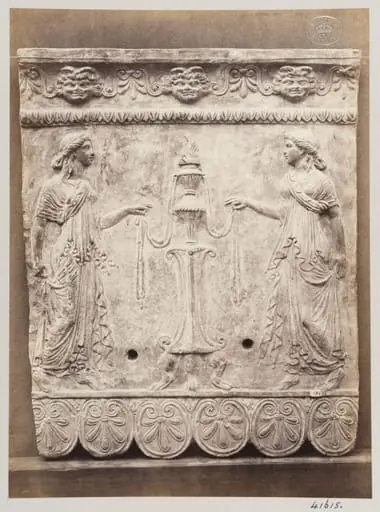 Bas-relief portion of a frieze of two draped females and an altar in terra cotta
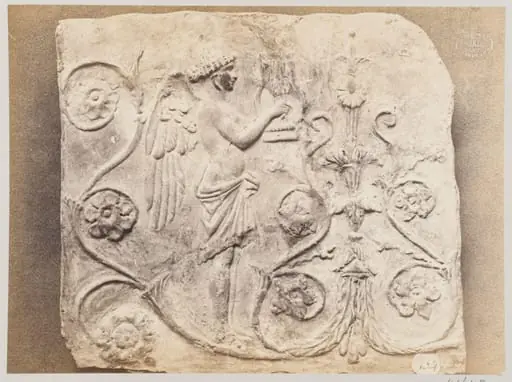 Bas-relief of a geni and a lyre in terra cotta
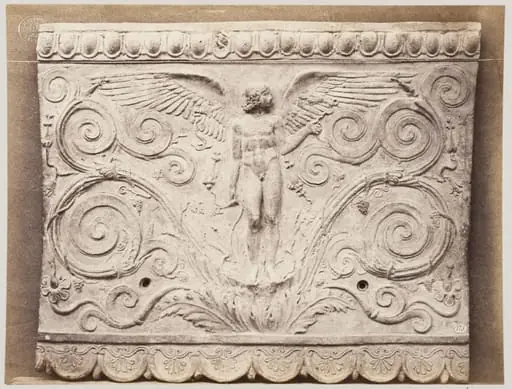 Bas-relief of a portion of frieze of Eros with scrollwork in terra cotta
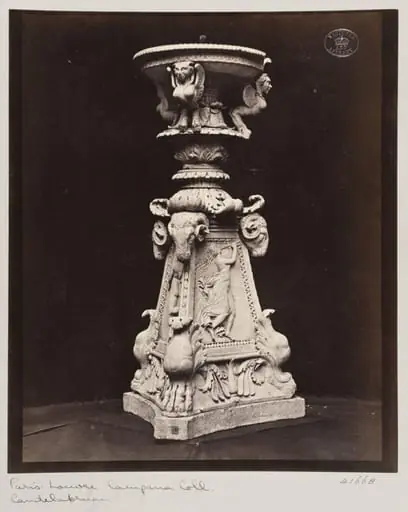 Marble sculptured fountain
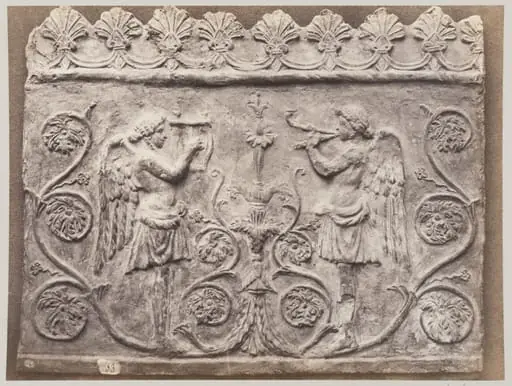 Bas-relief portion of frieze of Genii with double flutes and lyre
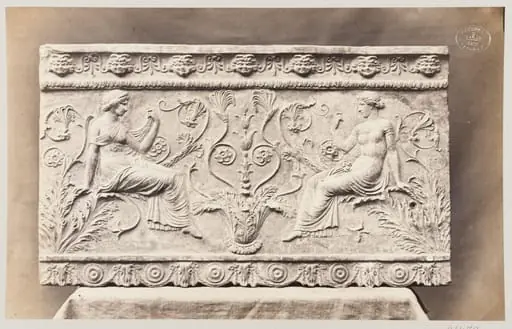 Two female figures seated on foliage ornament, bas-relief in terra cotta
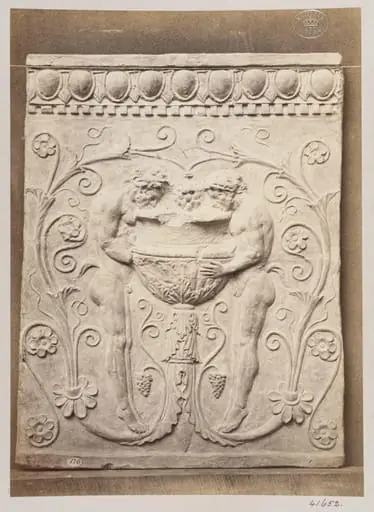 Bas-relief of a portion of a frieze showing two satyrs and a vessel in terra cotta
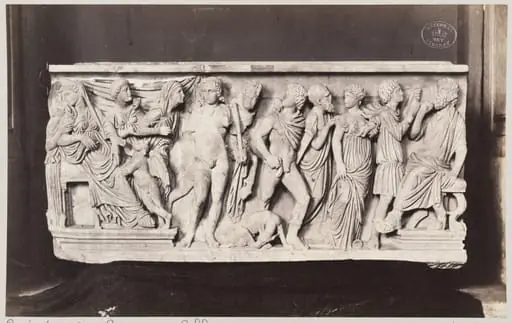 Marble Sarcophagus showing the story of Phaedra and Hippolytus
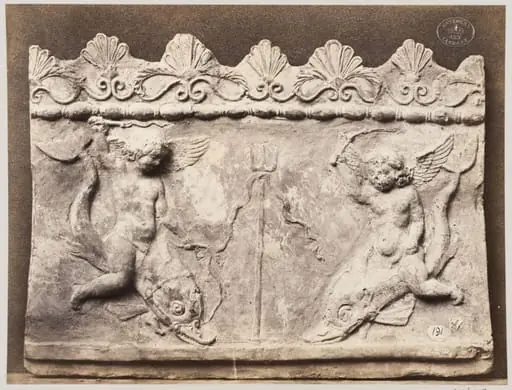 Bas-relief of two figures of Neptune in terra cotta
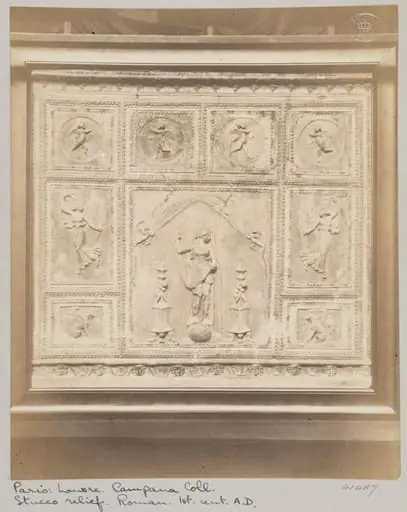 Venus standing on a ball surrounded by Ambrini, two figures of Victory and two griffins, bas-relief in coloured stucco
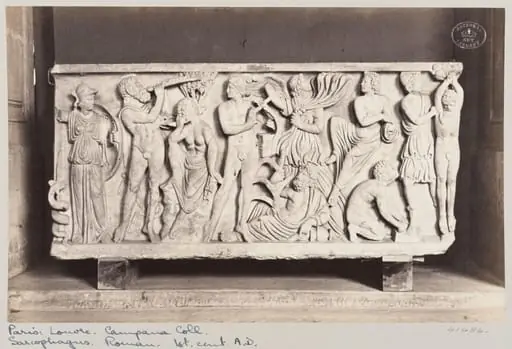 Marble Sarcophagus showing the trial of skill between Apollo and Marsyas, bas-relief
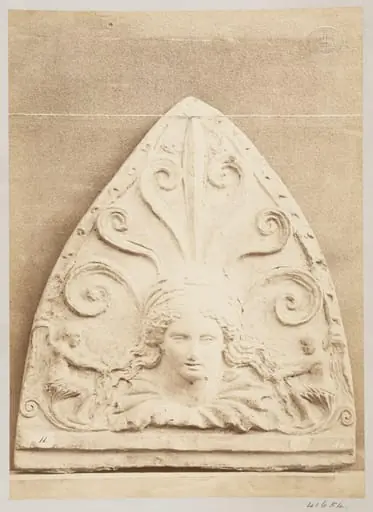 Antifixa of Venus in terra cotta