Artwork
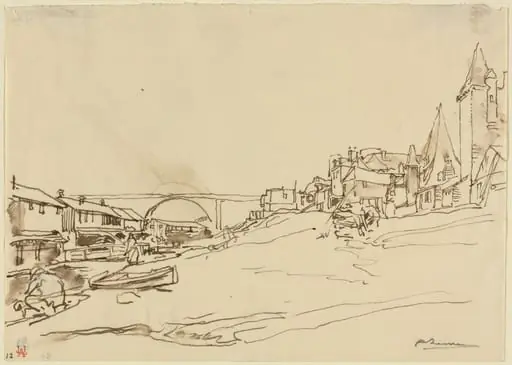
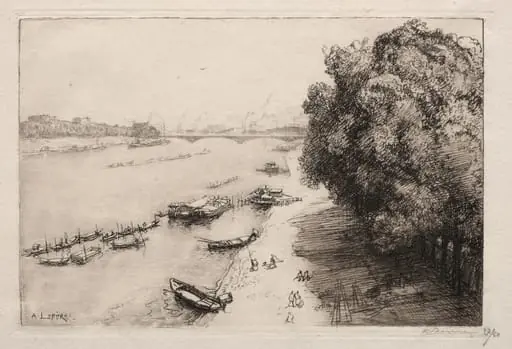
Banks of the Somme at Amiens (Bords de la Somme a Amiens)
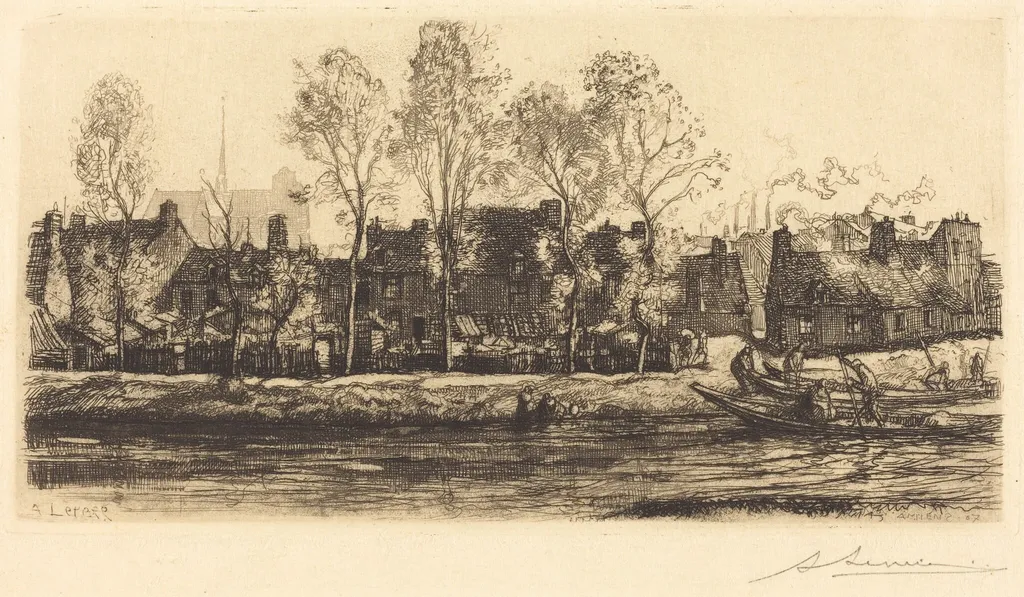
Banks of the Somme at Amiens (Bords de la Somme a Amiens) is an ink print by Auguste Lepère. It dates from 1907 and is held in the collection of the National Gallery of Art.
About this work
Overview
Created in 1907 by French artist Auguste Lepère, this print combines etching and aquatint to capture a quiet riverside scene near Amiens.
Created in 1907 by French artist Auguste Lepère, this print combines etching and aquatint to capture a quiet riverside scene near Amiens. Lepère, active in the late 19th and early 20th centuries, was deeply engaged with printmaking techniques, particularly those that allowed for nuanced tonal variation. The work belongs to a body of landscape prints that reflect his interest in everyday natural settings rendered with quiet precision.
Subject & Meaning
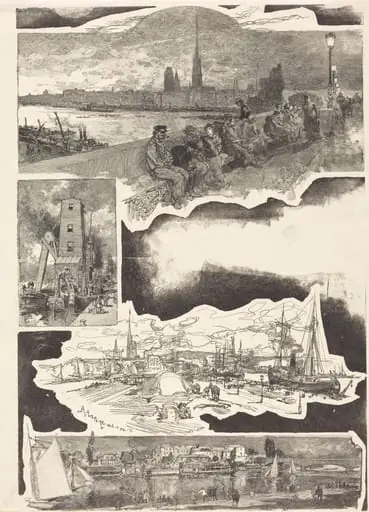
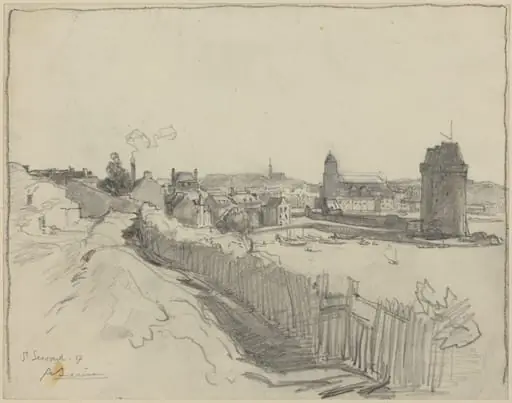
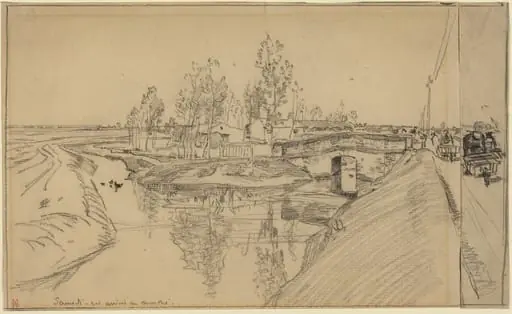
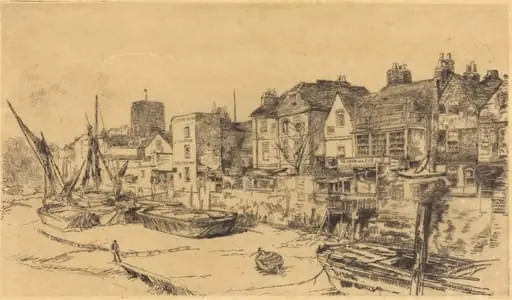
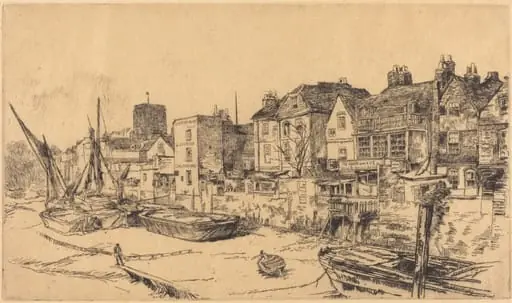
The scene portrays the Somme River at Amiens, with a moored boat, scattered figures, and a line of dwellings receding toward a distant church spire. There is no dramatic narrative; instead, the composition emphasizes stillness and routine. The presence of human activity is minimal, suggesting a rhythm of daily life rather than a moment of significance. The mood is contemplative, shaped by the subdued atmosphere and restrained detail.
Technique & Style
Lepère employed aquatint to achieve soft, graduated tones across the sky and water, while etching defined finer elements like the boat’s outline and architectural details. The technique allowed for a delicate interplay of light and shadow without harsh lines, enhancing the sense of atmospheric calm. His approach favored subtlety over contrast, aligning with the quiet realism of the scene and the tonal possibilities of the medium.
History & Provenance
The print was made during the final decade of Lepère’s life, a period when he focused increasingly on landscape etchings after earlier work in wood engraving revival. While specific ownership records are not widely documented, the work is part of a broader series of French river scenes produced in the early 20th century. It reflects the continued interest in printmaking as a serious artistic medium beyond commercial reproduction.
Context
In early 20th-century France, landscape printmaking remained a respected practice among artists seeking alternatives to painting. Lepère’s work emerged alongside a revival of interest in traditional techniques, particularly among those influenced by Japanese woodblock prints and the English etching revival. His depictions of provincial riversides like the Somme offered a counterpoint to urban modernity, valuing tranquility and local character.
Legacy
Lepère’s prints, including this one, contributed to the preservation of etching and aquatint as viable artistic methods in an era dominated by photography and industrial reproduction. Though not widely celebrated in mainstream art history, his work is recognized in print collections for its technical restraint and sensitivity to light. The Somme series remains a quiet testament to his commitment to the craft of printmaking.
Artist & collection
Artist
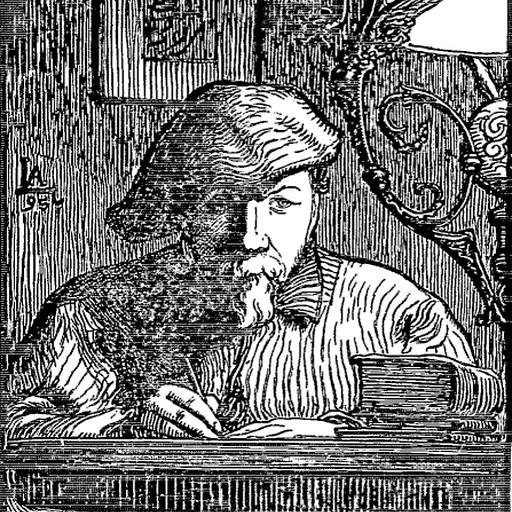
Louis-Auguste Lepère (30 November 1849 – 20 November 1918) was a French painter and etcher. Lepère is also considered a leader in the creative revival of wood engraving in Europe.