Artwork
Landscape, Evening (Returning Home)
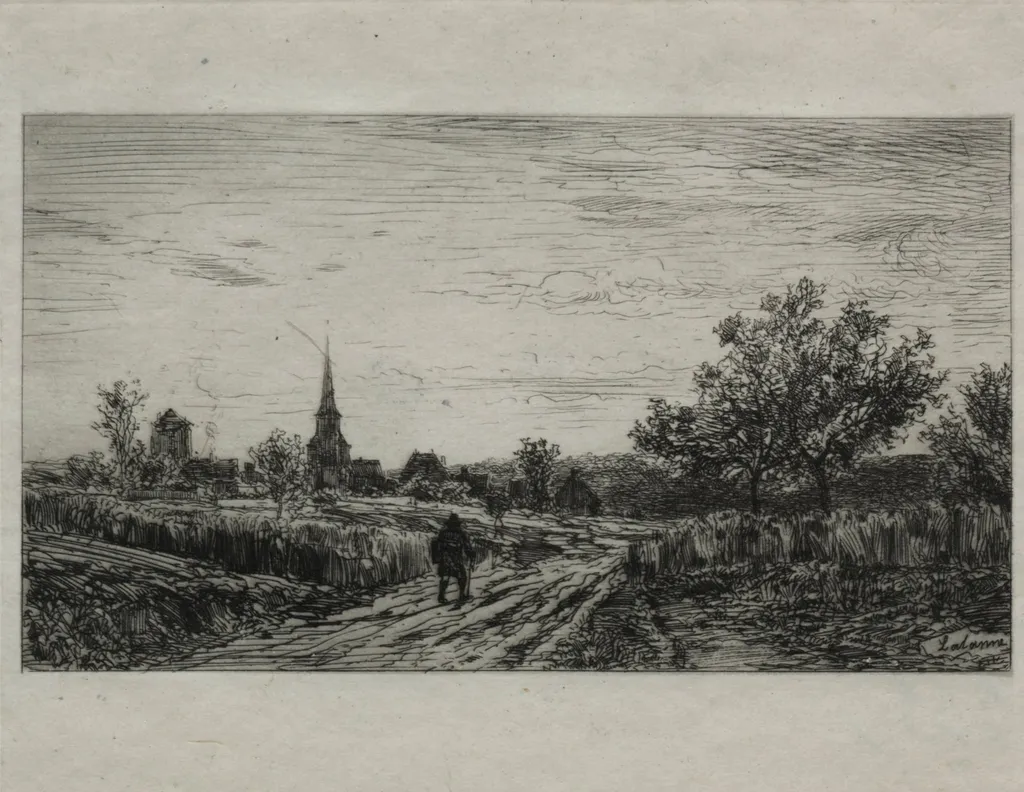
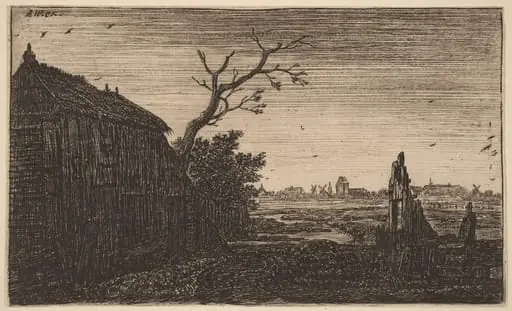
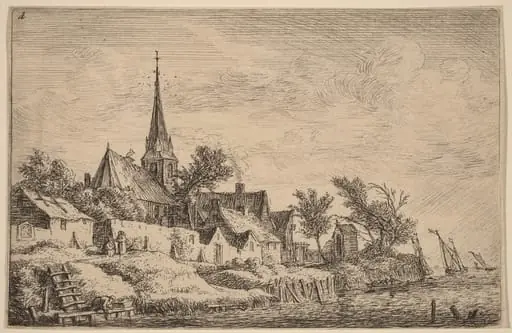
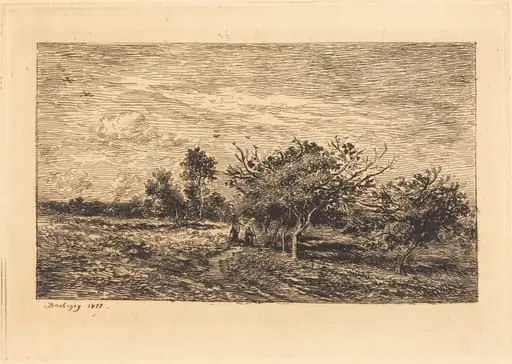
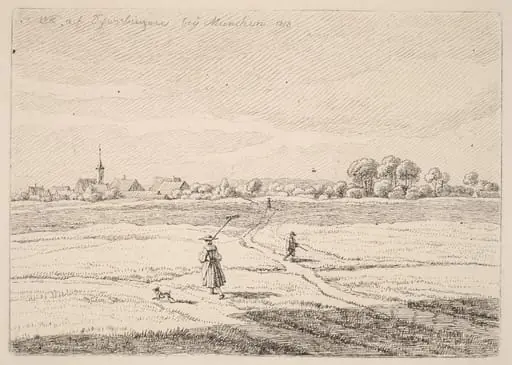
Landscape, Evening (Returning Home) is a print by the Impressionist artist Maxime Lalanne. It dates from 1866 and is held in the collection of the Cleveland Museum of Art.
About this work
Overview
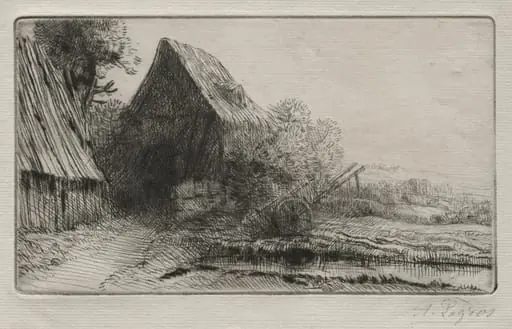
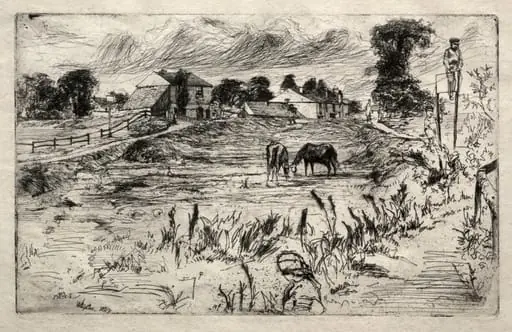
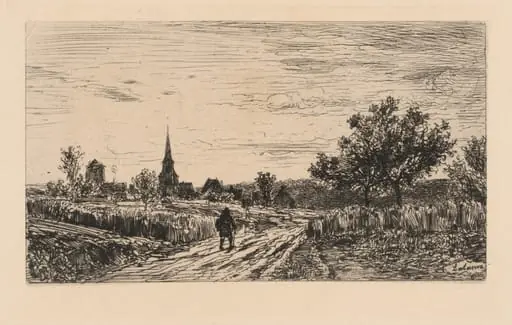
Created in 1866 by French artist Maxime Lalanne, *Landscape, Evening (Returning Home)* is an etching that captures a quiet rural scene at dusk.
Created in 1866 by French artist Maxime Lalanne, *Landscape, Evening (Returning Home)* is an etching that captures a quiet rural scene at dusk. The work resides in The Cleveland Museum of Art’s print collection. Unlike oil paintings of the period, this piece relies on the precision and tonal range of etched lines to evoke mood rather than pigment. Lalanne’s focus on everyday rural life reflects a broader 19th-century interest in the ordinary.
Subject & Meaning
A solitary figure walks along a path toward a distant church steeple, suggesting a return home at day’s end. The composition avoids dramatic action, instead emphasizing stillness and solitude. The absence of clear narrative invites contemplation of routine, time, and place. The church, faintly visible, anchors the scene in a familiar social and spiritual landscape, reinforcing themes of continuity and quiet reverence.
Technique & Style
Lalanne employed etching to achieve subtle gradations of tone, using fine lines and varied incisions to model light and shadow. The muted palette of grays and browns emerges from ink density rather than color, enhancing the evening’s hushed atmosphere. While the brushwork in the source description is inaccurate—this is a print, not a painting—the linework conveys movement through rhythmic, fluid strokes that suggest wind, distance, and the figure’s pace.
History & Provenance
The print was made in 1866 during Lalanne’s active period as a printmaker, a time when French artists were redefining etching as a serious artistic medium. It entered The Cleveland Museum of Art’s collection through documented acquisition, likely as part of a broader effort to build a representative archive of 19th-century European prints. Its preservation reflects institutional recognition of Lalanne’s contribution to the revival of etching in the post-Romantic era.
Context
Lalanne worked alongside contemporaries who sought to elevate printmaking beyond reproduction, aligning with the Barbizon School’s interest in naturalism and rural life. While often associated with realism, his work shares with Impressionism a sensitivity to atmospheric conditions and transient light. However, his medium—etching—demanded a different approach than plein air painting, emphasizing structure and tone over color and immediacy.
Legacy
Lalanne’s prints, including this one, influenced later generations of printmakers by demonstrating how etching could convey emotional nuance without reliance on color or large-scale composition. His work is studied for its technical mastery and quiet poeticism, standing as a bridge between traditional engraving and modern graphic art. Though less known than his painterly peers, his contributions remain significant in the history of print.
Artist & collection
Artist
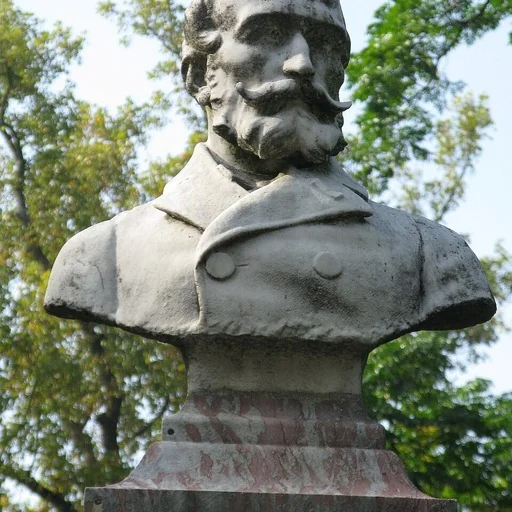
François Antoine Maxime Lalanne (November 27, 1827 – July 29, 1886) was a French artist known for his etchings and charcoal drawings (fusain).