Artwork
Vue de la Ville de Delft
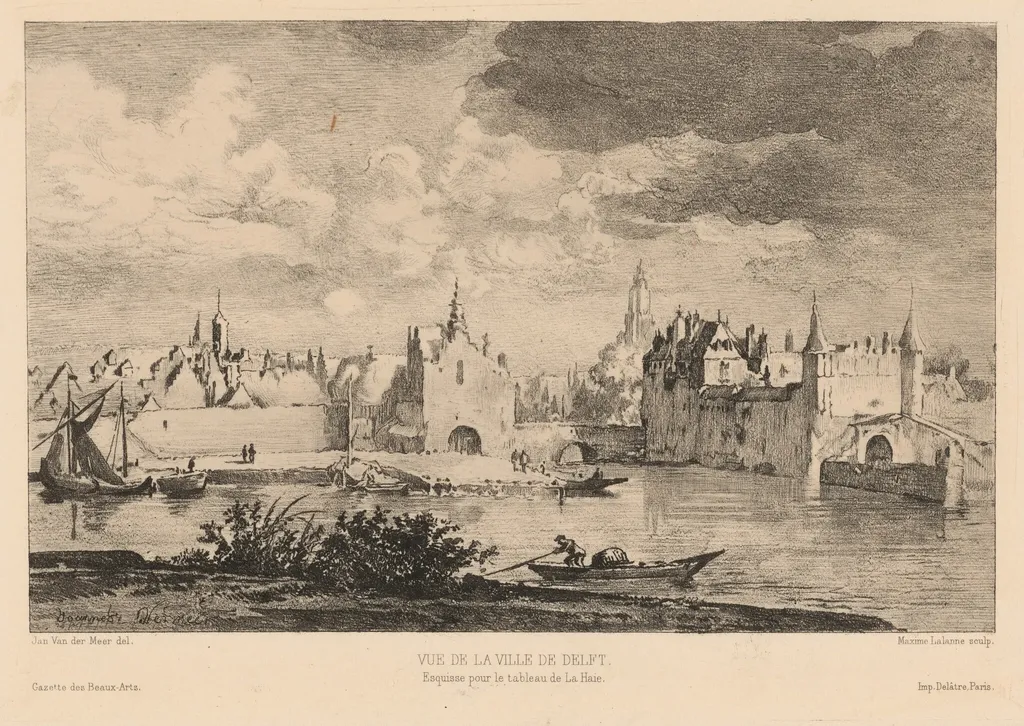
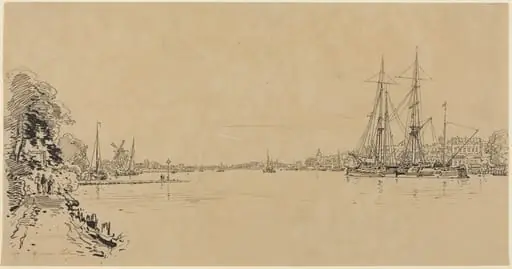
Vue de la Ville de Delft is an ink print by the Impressionist artist Maxime Lalanne. It dates from 1866 and is held in the collection of the National Gallery of Art.
About this work
Overview
Vue de la Ville de Delft, created by French artist François Antoine Maxime Lalanne in 1866, is a softground etching on laid paper. This print captures a serene river scene in Delft, featuring everyday life along the water's edge.
Subject & Meaning
The etching depicts a tranquil riverfront with boats, including a lone rowboat, set against a backdrop of town buildings with pointed roofs. The scene emphasizes ordinary daily activity rather than dramatic events, highlighting the artist's interest in mundane life.
Technique & Style
Executed in softground etching, the work showcases Lalanne's skill in capturing subtle textures and soft, swirling cloud formations. The technique allowed for expressive, almost sketch-like qualities, suiting the scene's quiet intimacy.
History & Provenance
Originally intended as a study for a larger painting, Vue de la Ville de Delft stands as a complete work in its own right. It is currently part of the National Gallery of Art's collection in Washington, D.C.
Context
Lalanne's focus on everyday life aligns with 19th-century artistic trends that valued depictions of common subjects. The use of softground etching reflects the period's experimentation with printmaking techniques to achieve nuanced, spontaneous effects.
Artist & collection
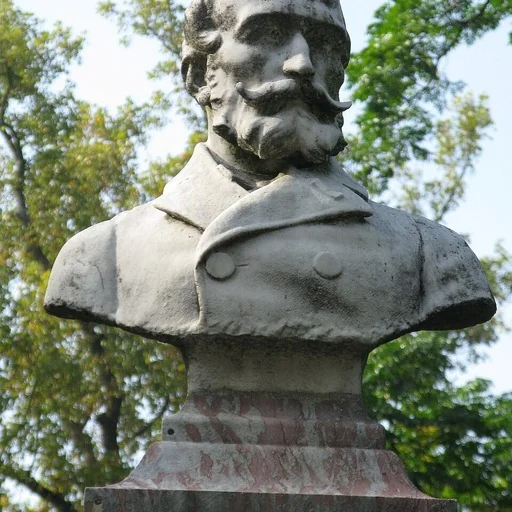
Artist
François Antoine Maxime Lalanne (November 27, 1827 – July 29, 1886) was a French artist known for his etchings and charcoal drawings (fusain).

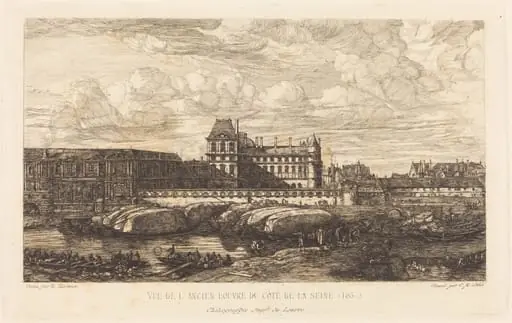 L'ancien Louvre d'après une peinture de Zeeman, 1651 (The Old Louvre, from a Painting by Zeeman, 1651)
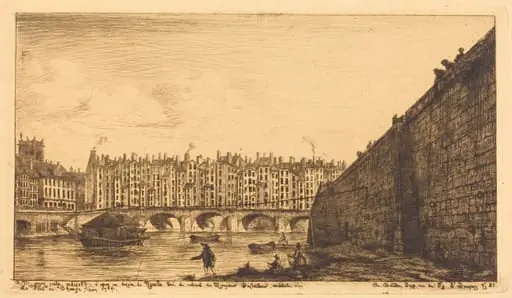 Le Pont-au-Change, Paris, vers 1784
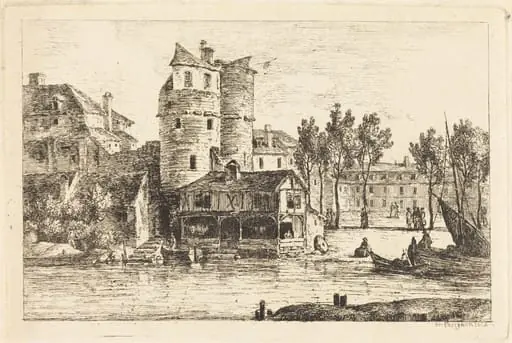 Town on a River Bank with Two Round Towers
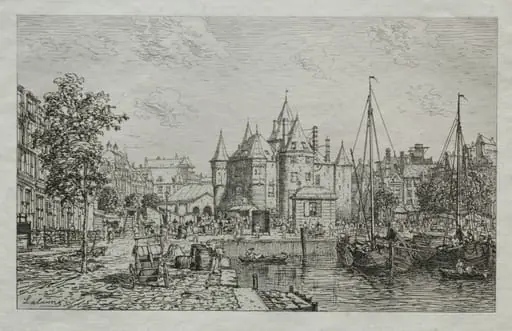 The Wagg-Poids of the City of Amsterdam
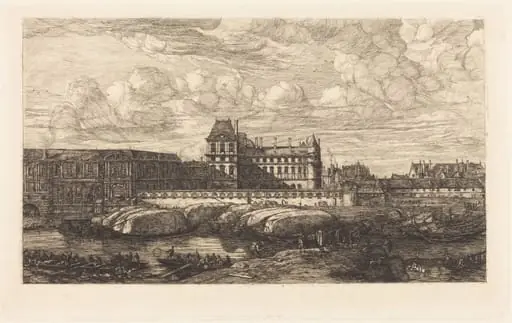 L'ancien Louvre d'après une peinture de Zeeman, 1651 (The Old Louvre, from a Painting by Zeeman, 1651)
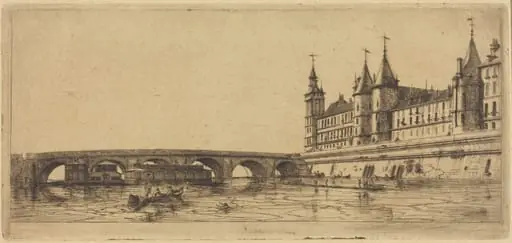 Le Pont-au-Change, Paris
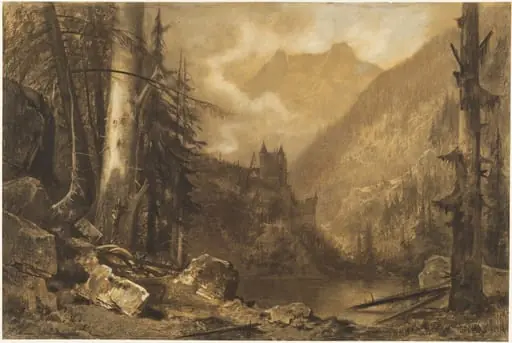
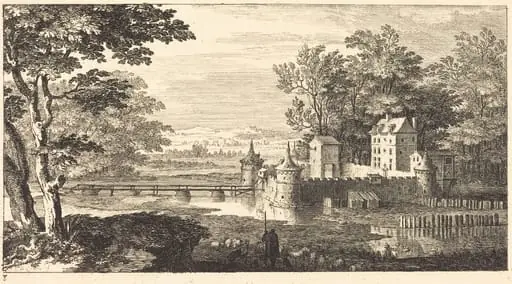 Landscape with Chateau
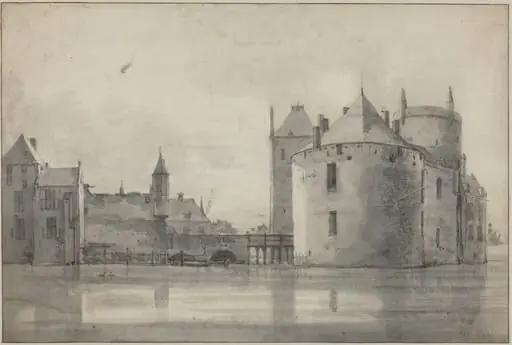 Culemborg Castle
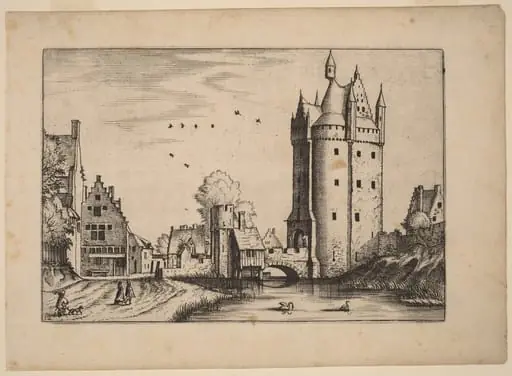 Town Gate with Country Houses
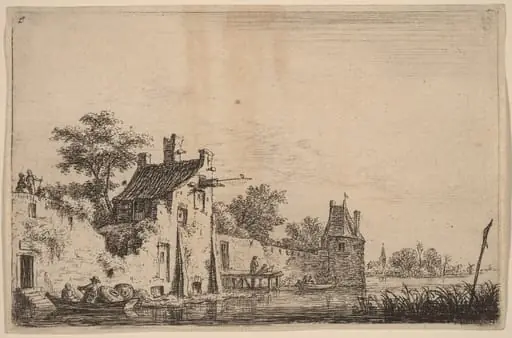 Departure of Two Fishermen
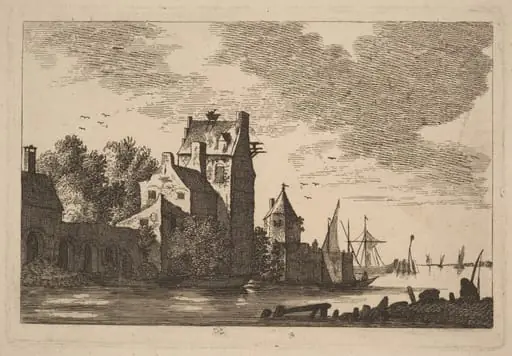 Houses on an Inlet
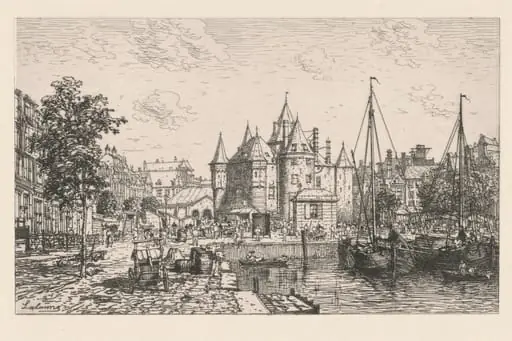 Le Wagg-Poids de la Ville d'Amsterdam