Artwork
Culemborg Castle
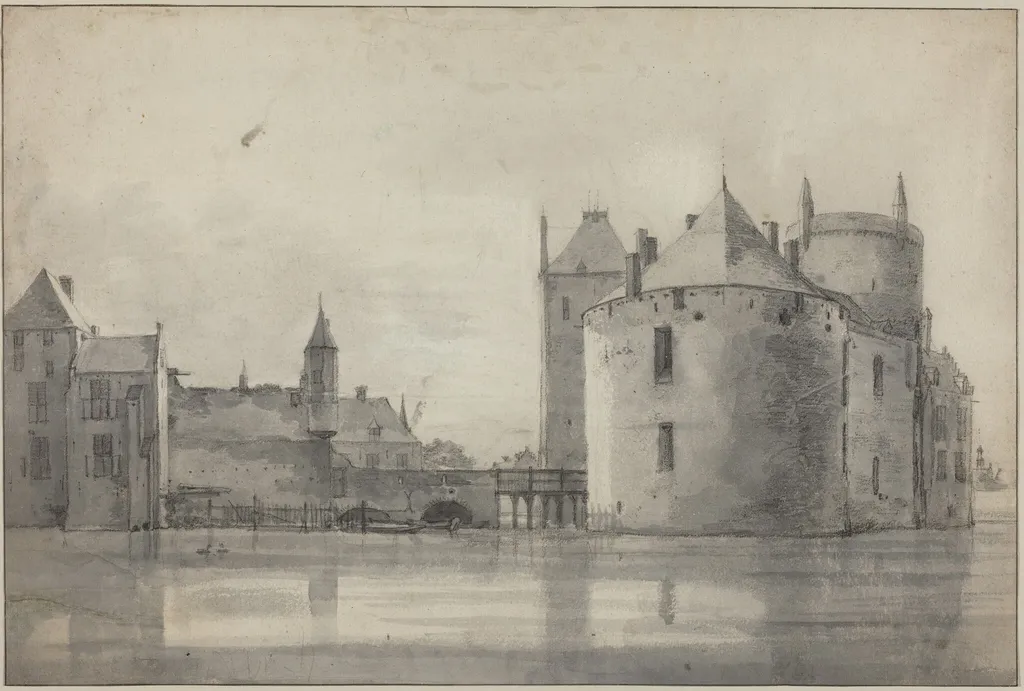
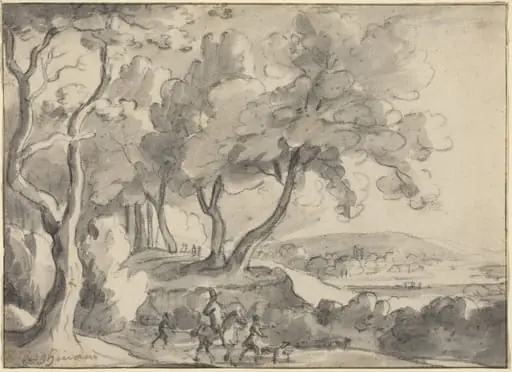
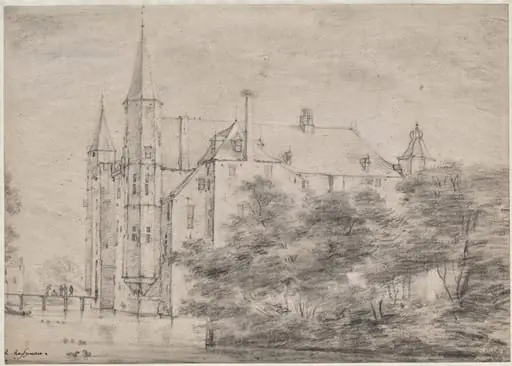
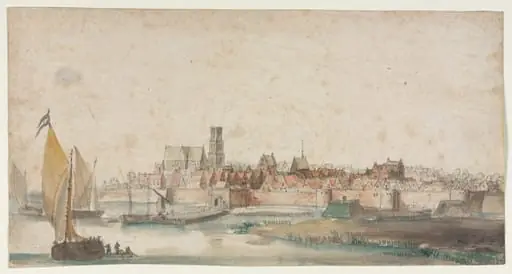
Culemborg Castle is a chalk drawing by the Baroque artist Roelant Roghman. It dates from 1647 and is held in the collection of the National Gallery of Art.
About this work
Overview
Executed in black chalk, gray wash, and graphite on laid paper, the work captures the structure with restrained tonal gradations.
Created in 1647 by Roelant Roghman, this drawing depicts Culemborg Castle as seen from the water’s edge. Executed in black chalk, gray wash, and graphite on laid paper, the work captures the structure with restrained tonal gradations. The composition emphasizes quiet stillness, with the castle’s silhouette softened by atmospheric shading and minimal detail, suggesting a moment of contemplative observation rather than topographic precision.
Subject & Meaning
The drawing presents Culemborg Castle as a tranquil, almost secluded presence beside calm water. Tall, pointed roofs and thick stone walls convey its medieval character, while the small boat in the foreground introduces a human scale without narrative intrusion. The scene avoids grandeur, instead evoking a sense of quiet endurance — the castle as a stable landmark amid the subtle rhythms of nature and time.
Technique & Style
Roghman employed black chalk for precise linear contours and gray wash to build soft, layered shadows. Graphite underdrawing guided the composition, allowing subtle adjustments. The use of chiaroscuro is restrained, with delicate transitions between light and dark creating depth without dramatic contrast. Faint, overlapping strokes suggest texture in stone and water, reinforcing a muted, introspective mood through economy of means.
History & Provenance
The drawing is one of several topographical studies Roghman made during his travels in the Dutch Republic. Likely produced on-site, it reflects his interest in documenting regional architecture with accuracy and poetic restraint. It remained in private collections until entering a public collection in the 20th century, where its significance as a record of 17th-century Dutch landscape drawing was formally recognized.
Context
In mid-17th-century Holland, detailed landscape and architectural drawings served both documentary and aesthetic purposes. Roghman’s work aligns with a broader trend among artists and cartographers to record estates and fortifications, often for noble patrons. Unlike grand historical scenes, this drawing prioritizes quiet observation, reflecting the Dutch preference for intimate, unembellished views of the familiar environment.
Legacy
Roghman’s Culemborg Castle stands as an example of the Dutch tradition of restrained topographical art. Its quiet technique influenced later generations of landscape draftsmen who valued atmospheric suggestion over ornamental detail. Though not widely exhibited, it remains a key reference for understanding how Dutch artists captured place through subtle tonal harmony and compositional calm.
Artist & collection