Artwork
Woman with Shield
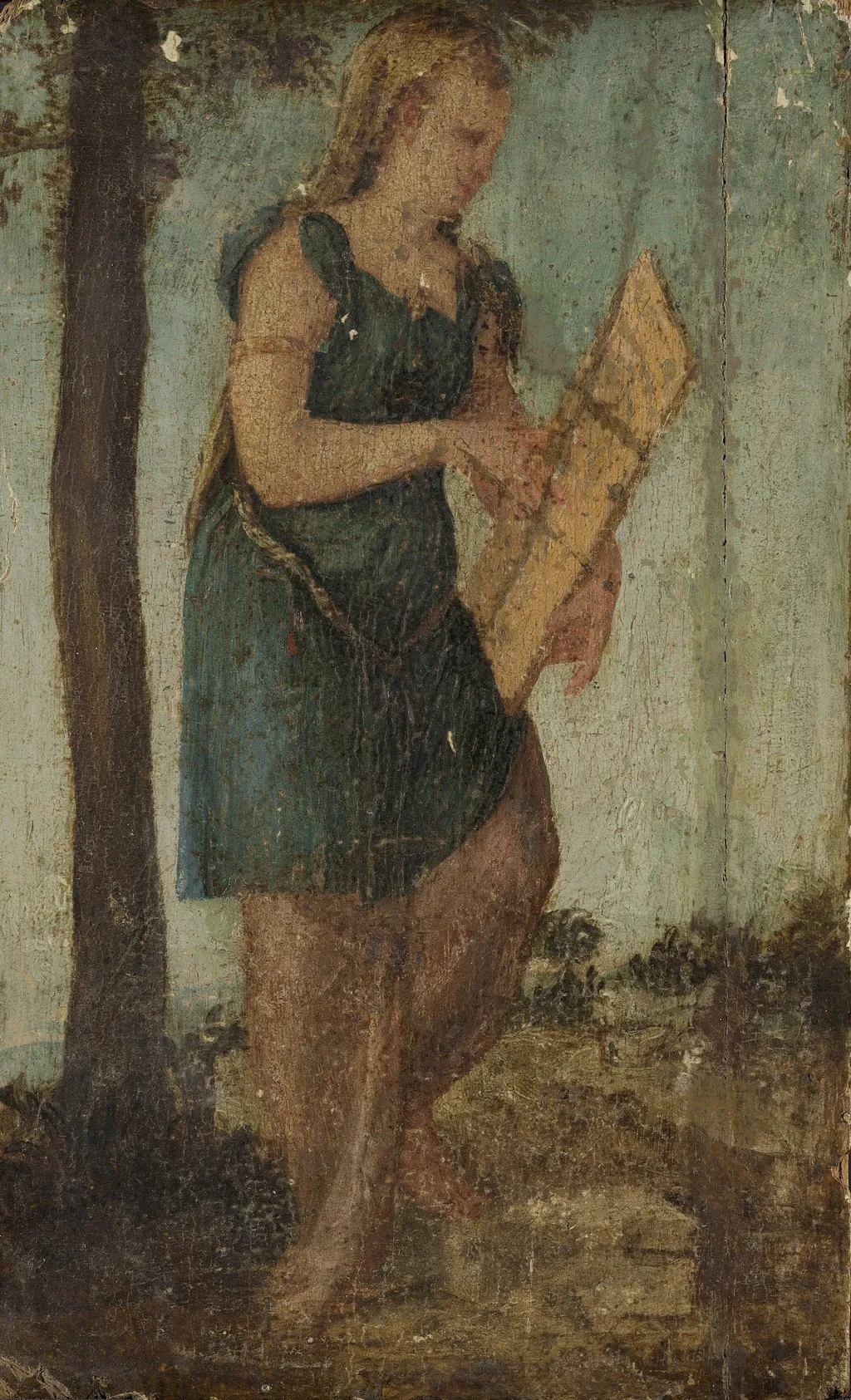
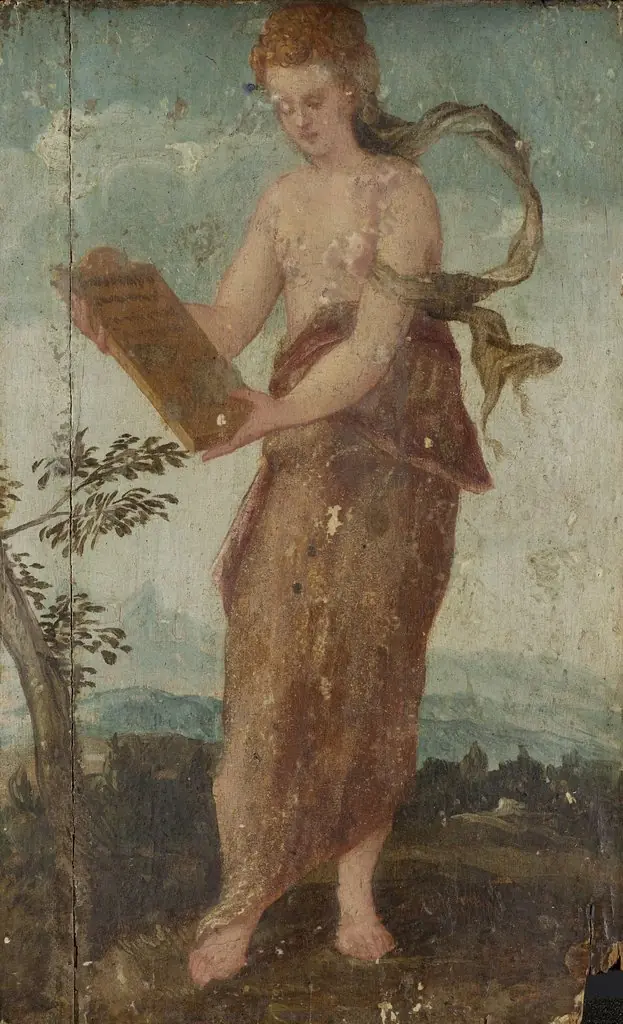
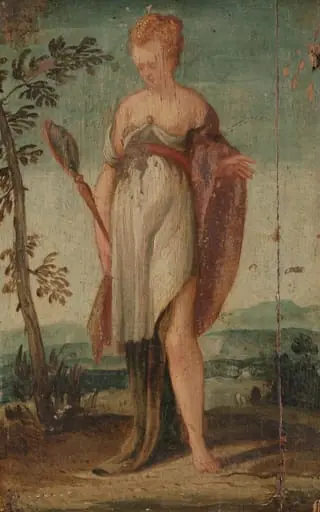
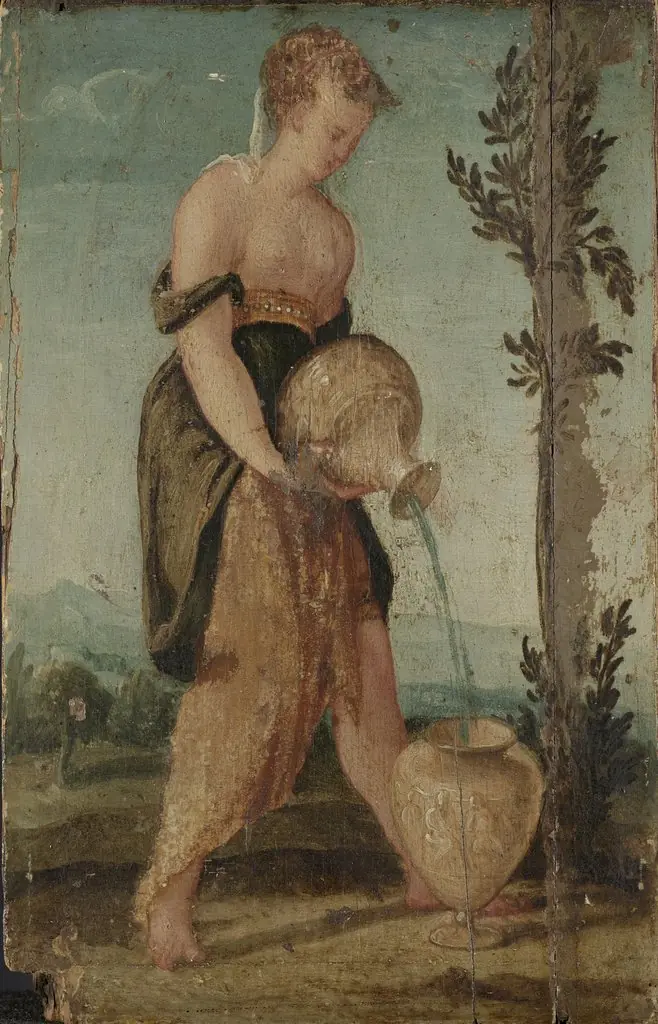
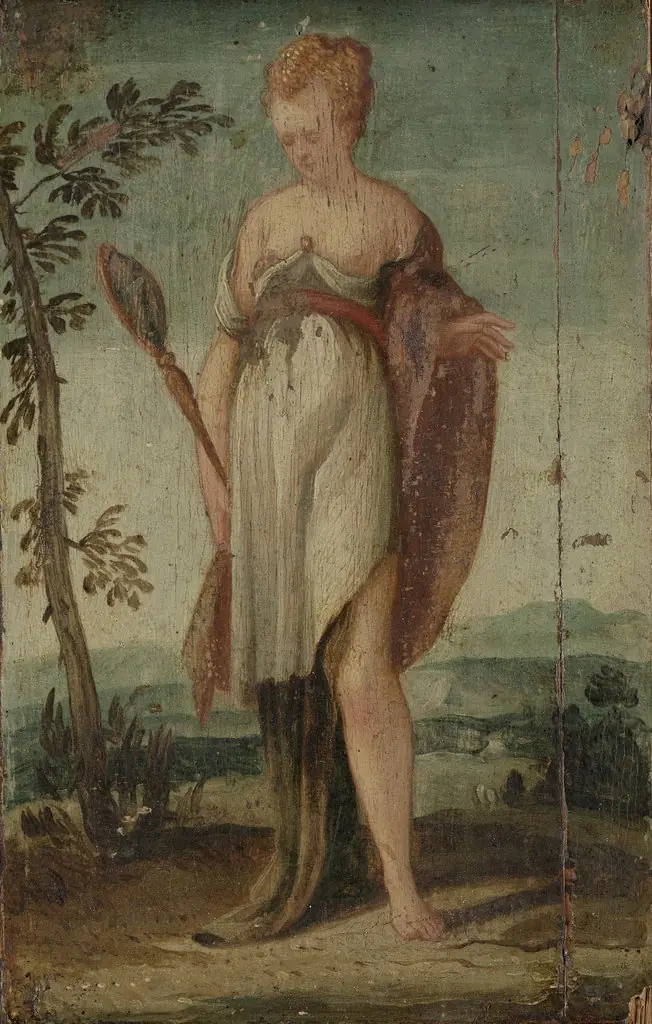
Woman with Shield is an oil painting by the Mannerist artist Lambert Sustris. It dates from 1550 and is held in the collection of the Rijksmuseum.
About this work
Overview
Known in Italy as Alberto de Olanda, he trained under Titian and absorbed Venetian colorism while integrating Northern European precision.
Lambert Sustris, a Dutch artist active in 16th-century Venice, painted *Woman with Shield* circa 1550 in oil on panel. Known in Italy as Alberto de Olanda, he trained under Titian and absorbed Venetian colorism while integrating Northern European precision. The work is held in the Rijksmuseum’s collection and exemplifies the hybrid stylistic tendencies of mid-century Venetian painting, where Mannerist elegance meets emerging naturalism.
Subject & Meaning
The figure, a woman in a dark green sleeveless gown with a gold belt, stands alone in a quiet landscape, holding a large rectangular shield. Her downcast gaze and still posture suggest introspection rather than martial readiness. The shield, devoid of heraldry or decoration, functions symbolically—possibly representing virtue, inner strength, or the contemplative life. The setting, neither mythological nor historical, invites a secular, allegorical reading rooted in Renaissance humanist ideals.
Technique & Style
Sustris employs oil paint with subtle tonal gradations to render the woman’s skin and fabric with quiet realism. The landscape behind her, rendered in soft blues and muted greens, lacks dramatic perspective but contributes to a serene, atmospheric mood. His brushwork is controlled yet fluid, showing Titian’s influence in color harmony while retaining Northern attention to detail, particularly in the texture of hair and the shield’s surface.
History & Provenance
The painting entered the Rijksmuseum’s collection in the 19th century, though its earlier ownership remains undocumented. It was likely created during Sustris’s Venetian period, following his time in Titian’s workshop and his travels to Augsburg. No contemporary records describe its original commission, suggesting it may have been a private commission or an independent allegorical study rather than a portrait for a specific patron.
Context
In mid-16th-century Venice, artists increasingly explored non-narrative figures in natural settings, moving beyond religious or mythological themes. Sustris’s work reflects this shift, aligning with a broader trend of introspective portraiture influenced by humanist literature. The absence of overt symbolism in the shield and the emphasis on mood over story place this painting within a growing vein of secular, psychologically nuanced imagery in Venetian art.
Legacy
Though not widely reproduced, *Woman with Shield* illustrates Sustris’s role as a bridge between Northern and Italian traditions. His synthesis of Venetian color and Northern detail influenced later artists in the region, even as his name faded from mainstream art history. The painting endures as a quiet example of how individual contemplation became a valid subject in Renaissance visual culture, beyond grand narratives or divine themes.
Artist & collection
Artist
Lambert Sustris (c. 1515/1520 – c. 1584) was a Dutch painter active mainly in Venice. The works Sustris completed in Italy exhibit either a Mannerist style or qualities that may be deemed proto-Baroque. He is also…

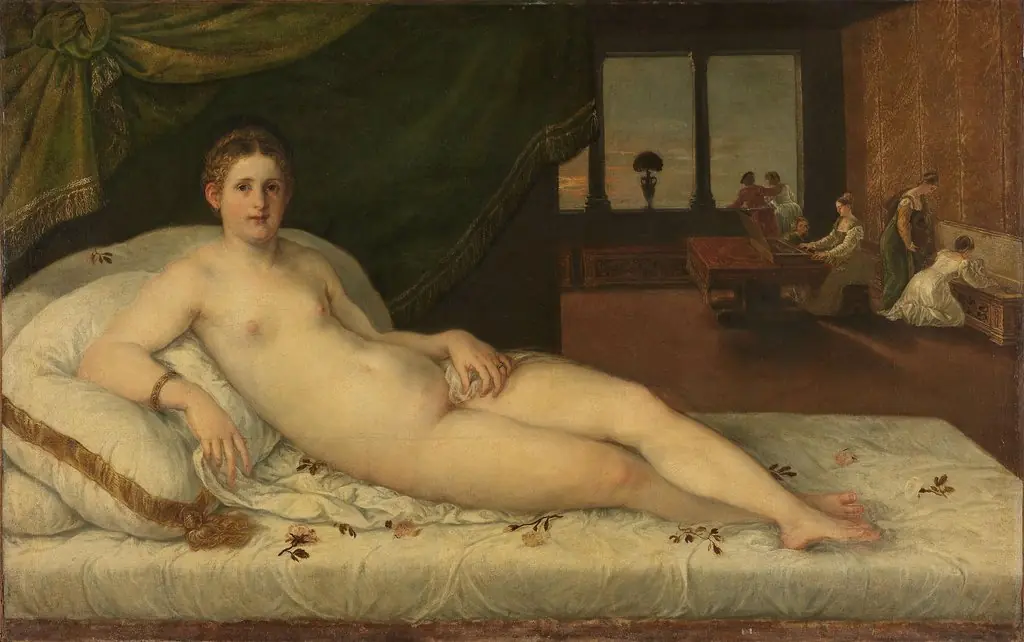 Reclining Venus
 Landscape with Jupiter and Io
 Portrait of a Man
 Nessus and Deianira
 Portrait of a Man in a Cape
 Woman with Mirror
 Bildnis des Wilhelm der Ältere, Reichserbtruchsess, Freiherr zu Waldburg, Herr zu Scheer und Trauchburg (1469-1557)
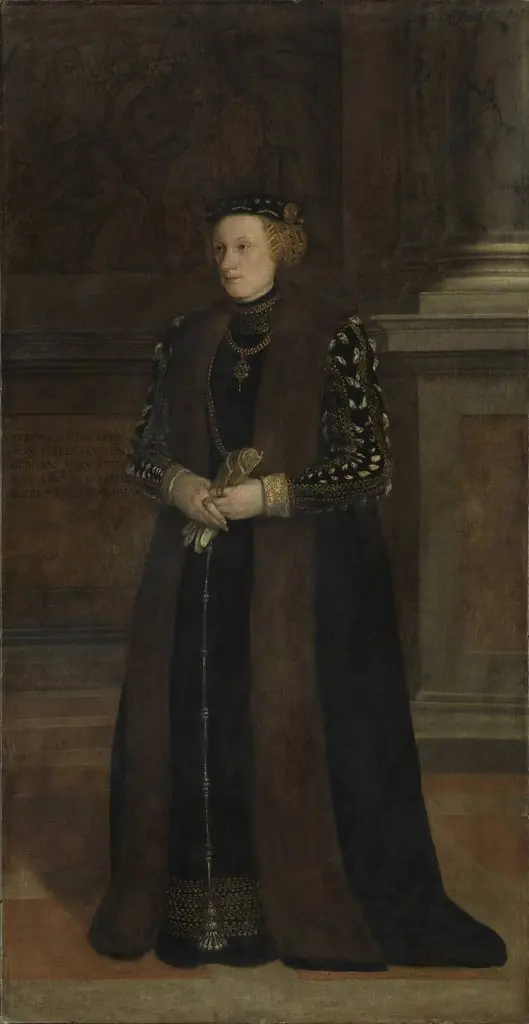 Veronika Vöhlin, geb. von Freyberg zum Eisenberg, Hallenwang und Neidlingen (1523-1582)