Artwork
Fantasy of an Antique Temple
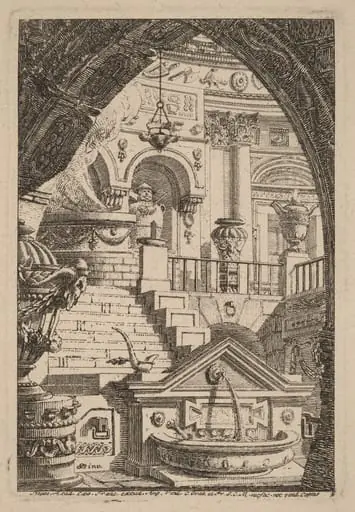
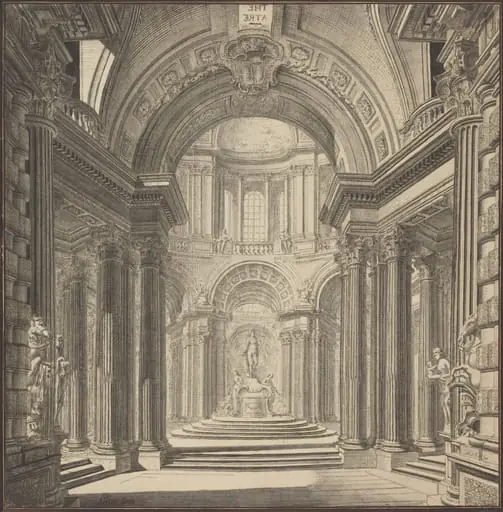
Fantasy of an Antique Temple is an ink print by the Romanticist artist Carl Schütz. It dates from 1775 and is held in the collection of the National Gallery of Art.
About this work
Overview
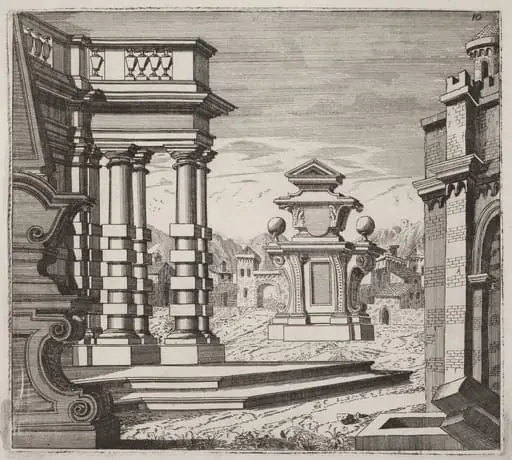
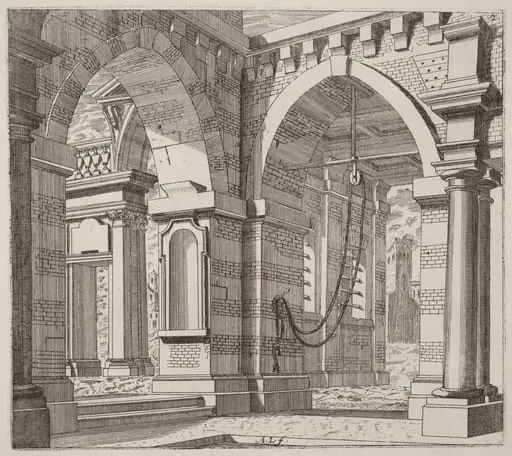
Carl Schütz’s 1775 etching, titled Fantasy of an Antique Temple, presents an imagined classical ruin rendered on laid paper.
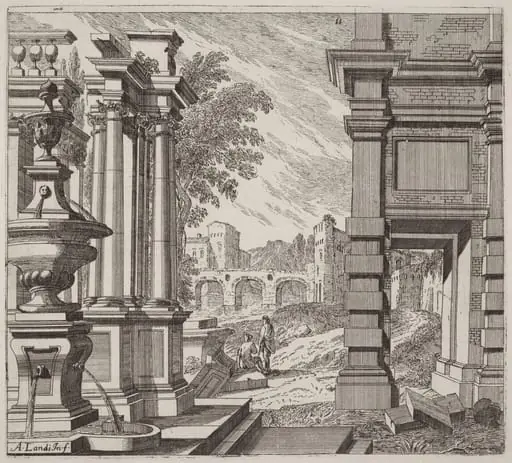
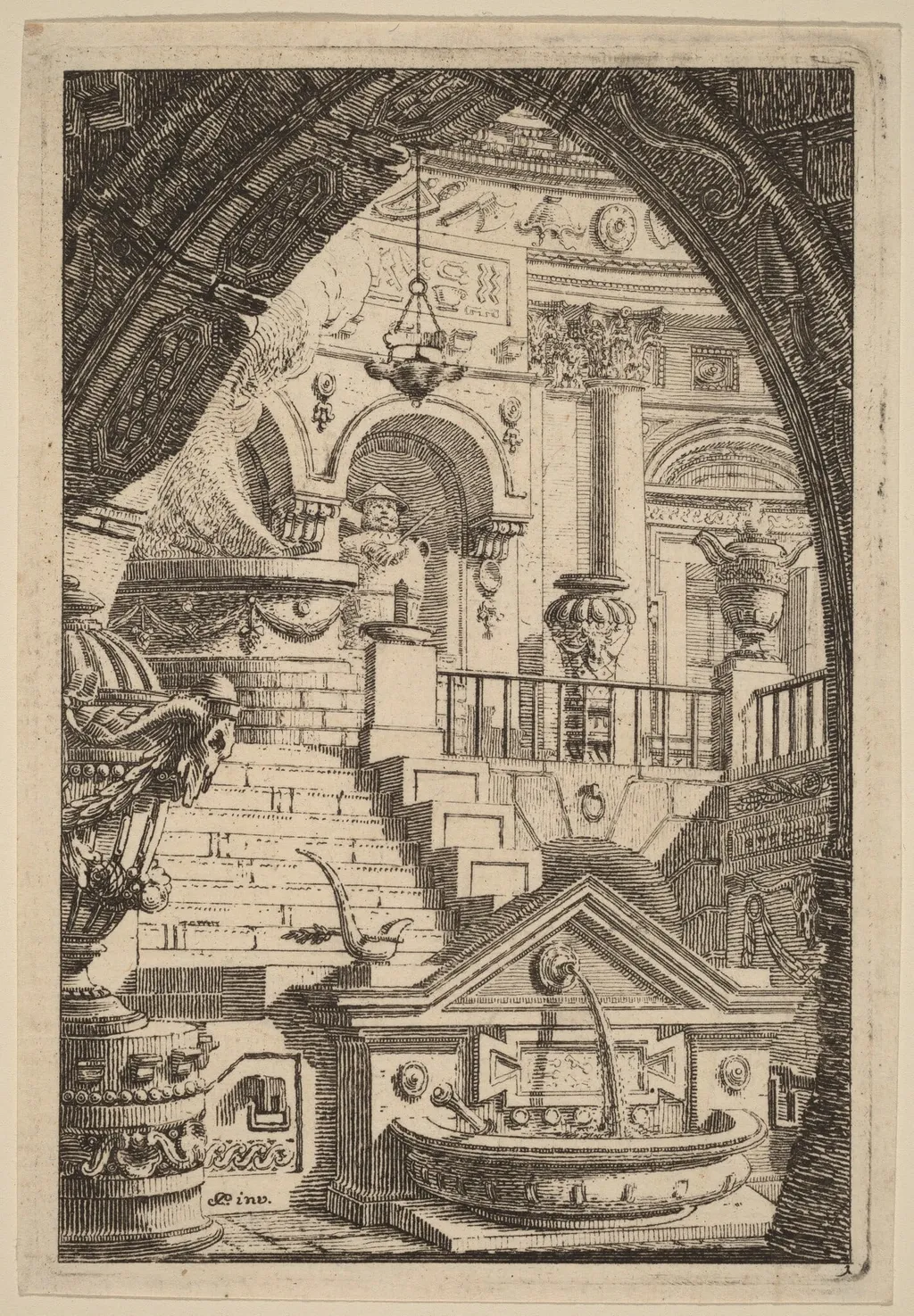
Carl Schütz’s 1775 etching, titled Fantasy of an Antique Temple, presents an imagined classical ruin rendered on laid paper. The composition is framed by a dominant archway that opens onto a monumental staircase and a central fountain, while surrounding portals and sculptural details suggest an expansive, opulent complex. The work exemplifies the Romantic fascination with antiquity and the sublime.
Subject & Meaning
The print depicts an idealized ancient temple, not based on any specific archaeological site but constructed from the artist’s imagination. By juxtaposing grand architectural elements—columns, arches, and elaborate doorways—with a tranquil fountain, Schütz evokes a sense of timeless grandeur and invites contemplation of humanity’s historic legacy and the awe inspired by monumental ruins.
Technique & Style
Executed as an etching, Schütz employed fine incised lines to model light and shadow across the stone surfaces, creating depth and texture. The contrast between illuminated arches and darker recesses guides the eye through the layered space. The meticulous detailing of ornamental carvings reflects the precision typical of late‑18th‑century printmaking, while the overall composition aligns with Romantic aesthetic principles.
History & Provenance
Created in 1775, Fantasy of an Antique Temple belongs to the period when European artists were increasingly drawn to imagined classical scenes. Though specific ownership records are scarce, the work has been catalogued among Schütz’s prints and appears in collections focusing on Romantic-era graphic art, indicating its circulation among connoisseurs of the time.
Context
The etching emerges from a broader cultural moment in which the Romantic movement celebrated the sublime and the exotic past. Schütz’s imagined temple reflects contemporary interest in archaeological discoveries and the idealization of ancient architecture, echoing similar motifs found in the works of his peers who explored ruins as symbols of transience and grandeur.
Artist & collection