Artwork
Title Page for Justus Lipsius, Opera Omnia, I
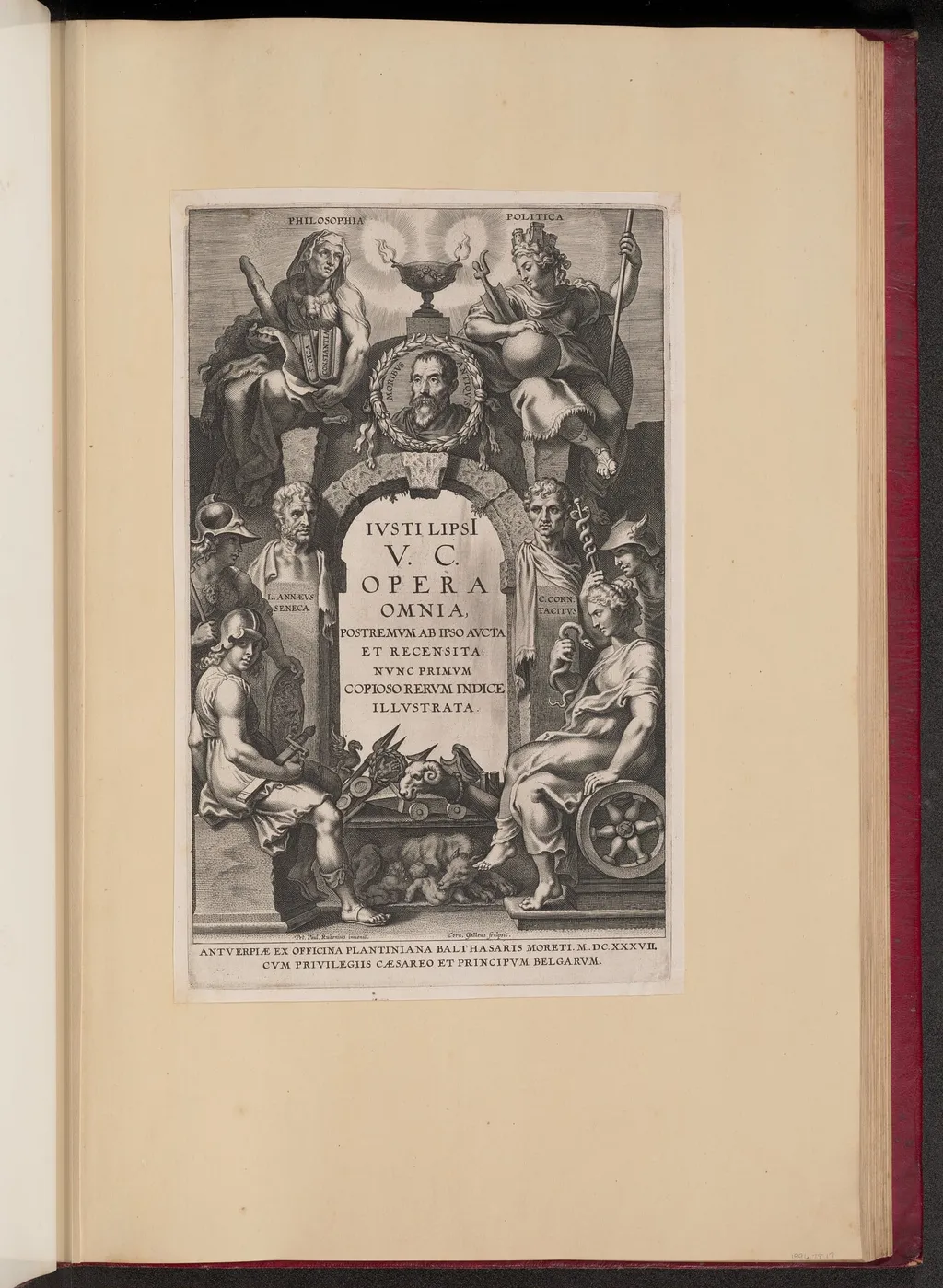
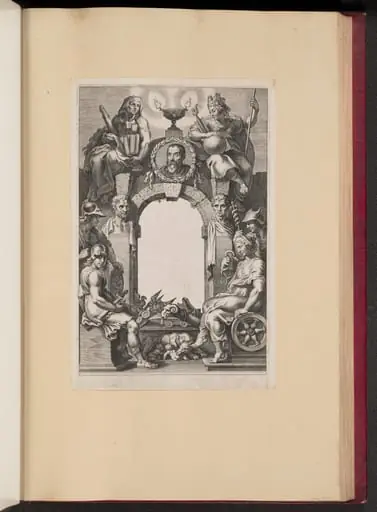
Title Page for Justus Lipsius, Opera Omnia, I is an ink print by the Baroque artist Cornelis Galle I. It dates from 1637 and is held in the collection of the National Gallery of Art.
About this work
Overview
Galle’s career spanned both artistic production and commercial distribution, positioning him as a key figure in early 17th-century Northern European publishing.
Cornelis Galle the Elder, an Antwerp engraver trained by his father Philip Galle, created the title page for Justus Lipsius’s collected works in 1637. Executed in engraving on laid paper, the print exemplifies the family’s long-standing role in the city’s print trade. Galle’s career spanned both artistic production and commercial distribution, positioning him as a key figure in early 17th-century Northern European publishing.
Subject & Meaning
The composition centers on a bearded man, likely Lipsius, crowned by two allegorical female figures—one holding a lamp, the other a scepter—symbolizing wisdom and authority. Below, armored figures and scribes gather around a fractured column, while a serpent coils around its base and a winged creature lies lifeless. These elements suggest the decline of older intellectual traditions and the emergence of renewed scholarly order through Lipsius’s writings.
Technique & Style
Galle employed fine, precise lines typical of Northern engraving, rendering intricate details across a densely packed scene. The use of cross-hatching and delicate tonal gradations creates depth and texture, particularly in the figures’ drapery and the column’s surface. His style reflects both his training under his father and a matured command of spatial complexity, balancing narrative clarity with ornamental richness.
History & Provenance
The print was produced in Antwerp as the frontispiece for Lipsius’s collected works, published in 1637. Galle, active in the city’s vibrant print market, likely collaborated with publishers to ensure wide dissemination. As a printseller as well as an engraver, he helped circulate such works among scholars and collectors, embedding the image within the intellectual networks of the time.
Context
Justus Lipsius was a leading humanist whose writings on Stoicism and classical antiquity influenced European thought. His posthumous collected edition was a major scholarly undertaking. The title page’s iconography aligns with contemporary practices of using allegory to honor intellectuals, merging classical symbolism with the emerging print culture that elevated scholarly authority through visual representation.
Legacy
Galle’s engraving stands as a representative example of Antwerp’s printmaking tradition, where artistic skill served scholarly publishing. Though not widely reproduced in modern collections, it remains a significant artifact of how visual imagery was used to frame academic legacy in the early modern period, reflecting the interplay between art, text, and intellectual identity.
Artist & collection

Artist
Cornelis Galle the Elder (1576 – 29 March 1650), a younger son of Philip Galle, was born at Antwerp in 1576, and was taught engraving by his father.

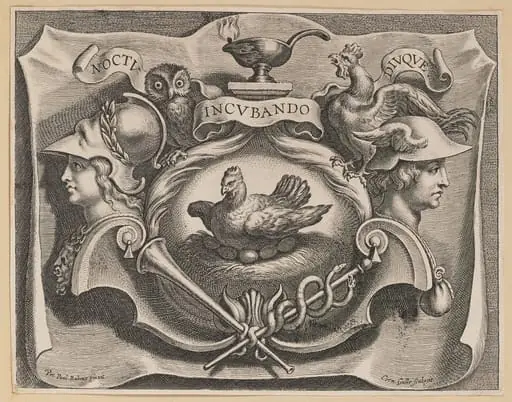 Vignette for the Title Page of Martinus Bonacina, Opera Omnia
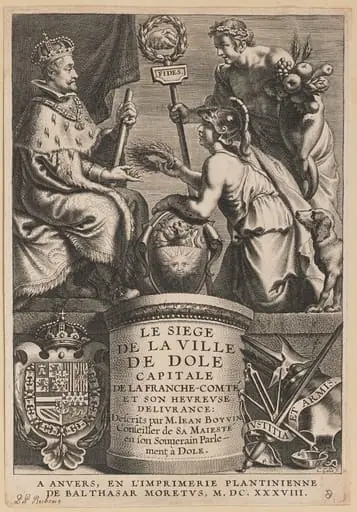 Title Page for Jean Boyvin, Le Siege de la Ville de Dole
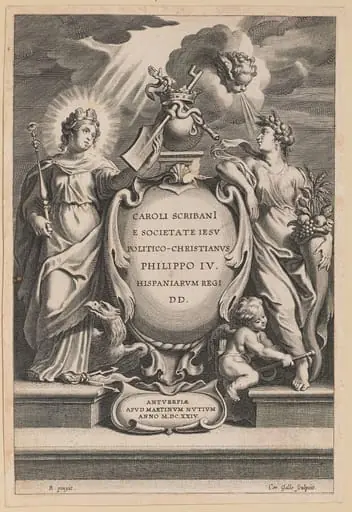 Title Page for Carolus Scribani, Politico-Christianus
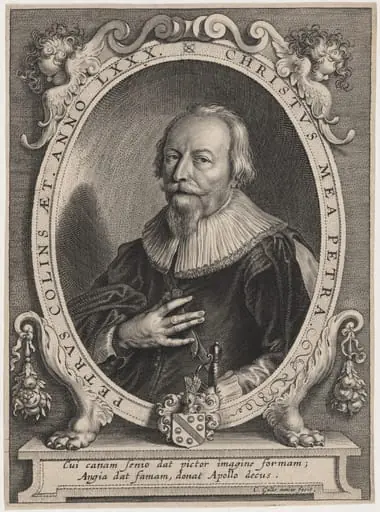 Petrus Collins
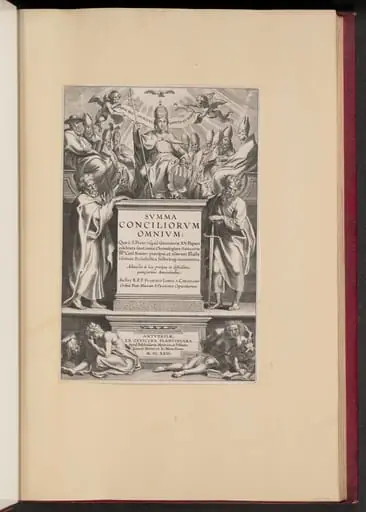 Title Page for F. Longo a Coriolano's "Svmma Conciliorvm Omnivm"
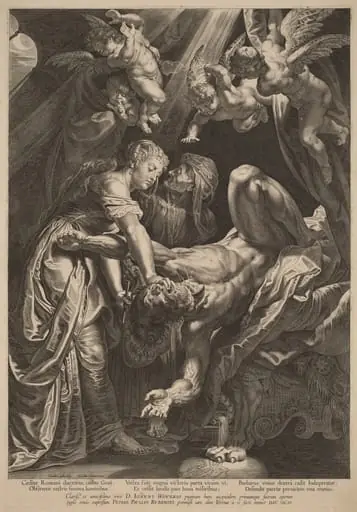 Judith Beheading Holofernes
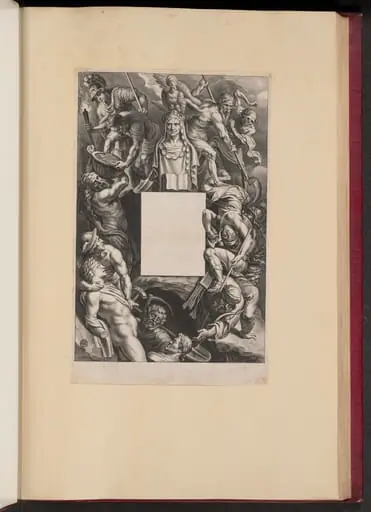 Title Page for Hubert Goltzius, Romanae et Graecae Antiqvitatis Monvmenta (Opera Omnia, I)
 Title Page for Ludovicus Blosius, Opera
 Title Page for Justus Lipsius, Opera Omnia, I
 Title Page for Hubert Goltzius's Icones Imperatorvm Romanorvm (Opera Omnia, V)
 Title Page for Hubert Goltzius, Romanae et Graecae Antiqvitatis Monvmenta (Opera Omnia, I)
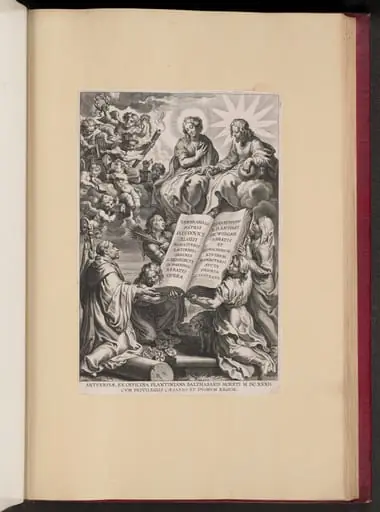 Title Page for Ludovicus Blosius, Opera
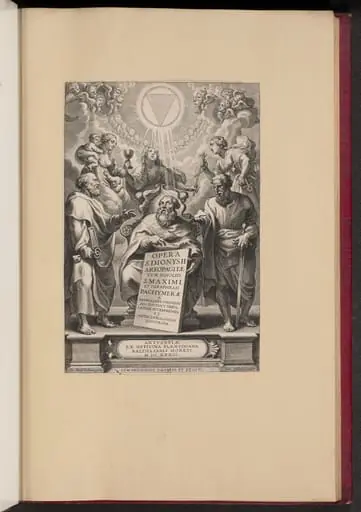 Title Page for Balthasar Cordier's "Opera S. Dionysii Areopagitae, I"
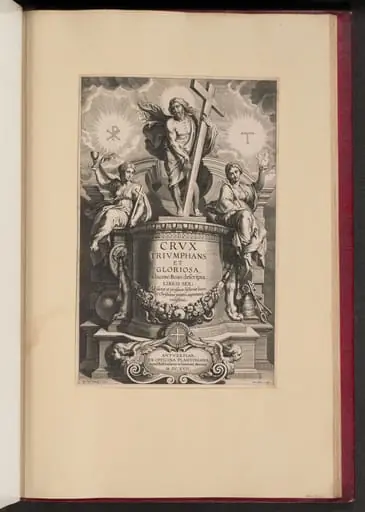 Title Page for Giacomo Bosio, Crux Triumphans et Gloriosa
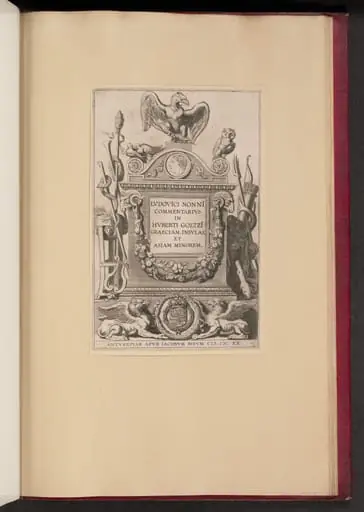 Title Page for Ludovicus Nonnius, Commentarius in Huberti Goltzi Graeciam, Insulas, et Asiam Minorem
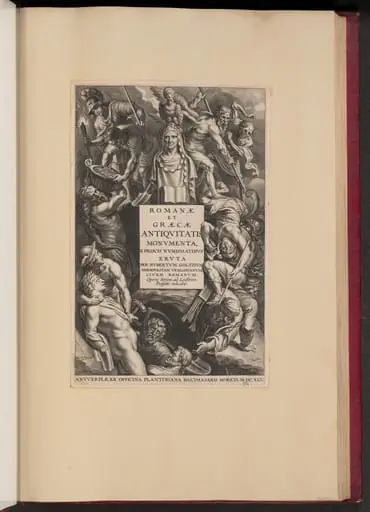 Title Page for Hubert Goltzius, Romanae et Graecae Antiqvitatis Monvmenta (Opera Omnia, I)