Artwork
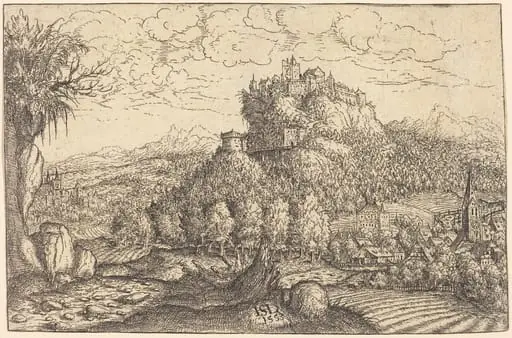
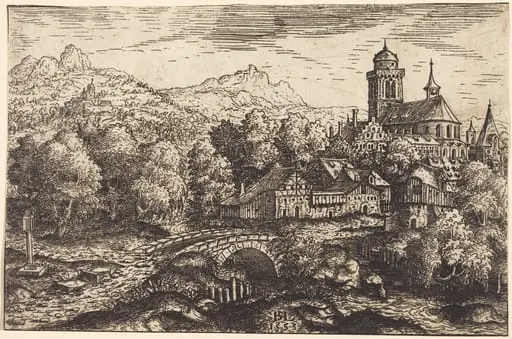
Landscape with a Castle
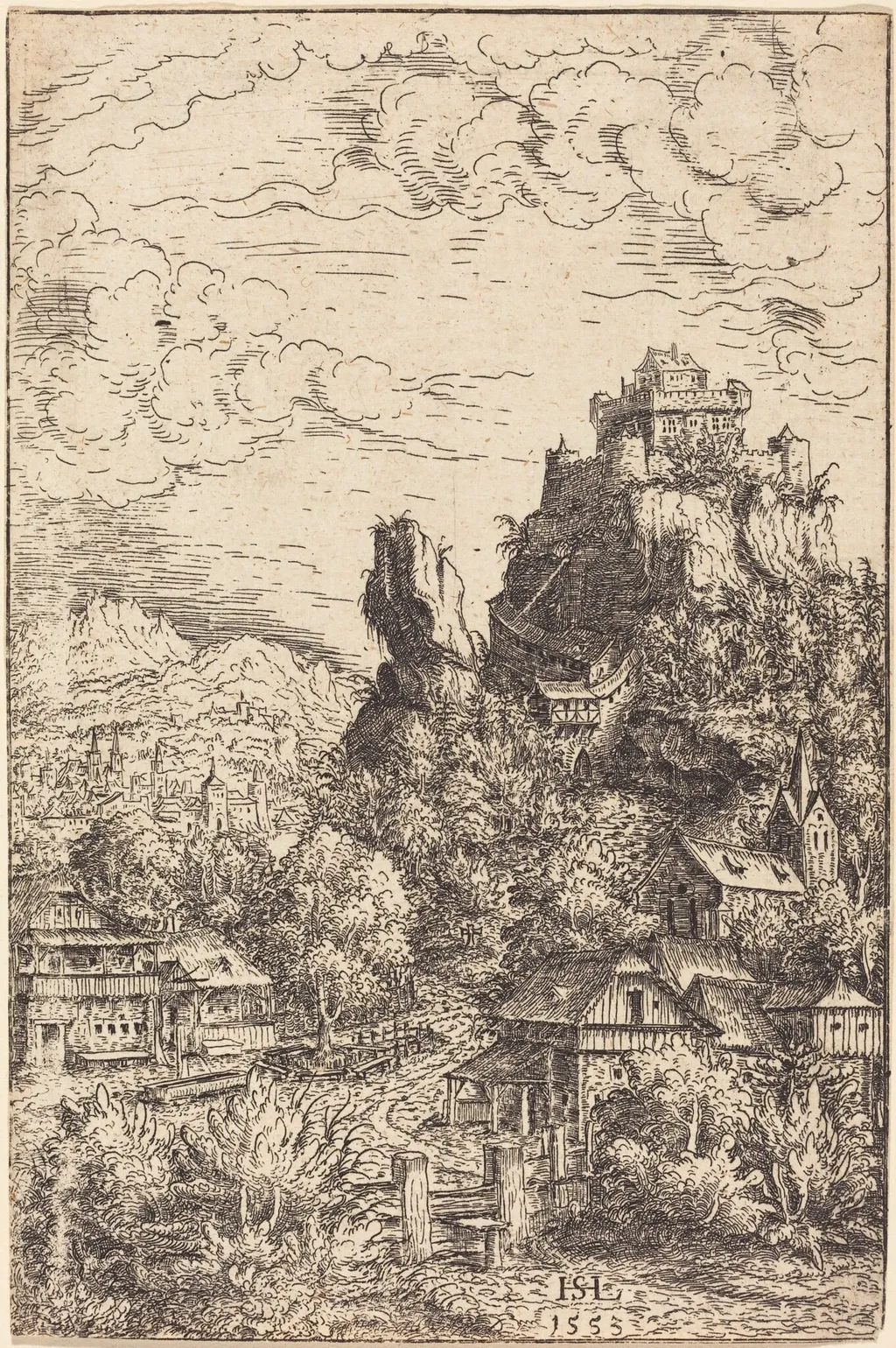
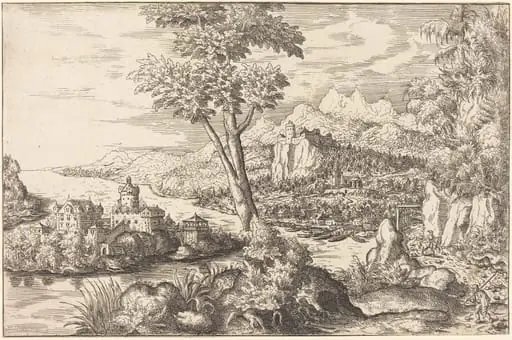
Landscape with a Castle is an ink print by the Renaissance artist Hanns Lautensack. It dates from 1553 and is held in the collection of the National Gallery of Art.
About this work
Overview
The plate was etched with a needle, allowing fine detail and tonal variation, characteristic of Northern European print traditions of the period.
Landscape with a Castle is an etching created in 1553 by Hanns Lautensack, a German artist active in the mid-16th century. Born in Bamberg and later based in Nuremberg, Lautensack turned to printmaking as a primary medium. This work exemplifies his skill in capturing natural terrain with precise, incised lines. The plate was etched with a needle, allowing fine detail and tonal variation, characteristic of Northern European print traditions of the period.
Subject & Meaning
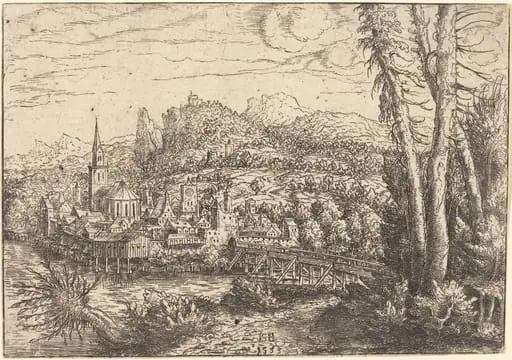
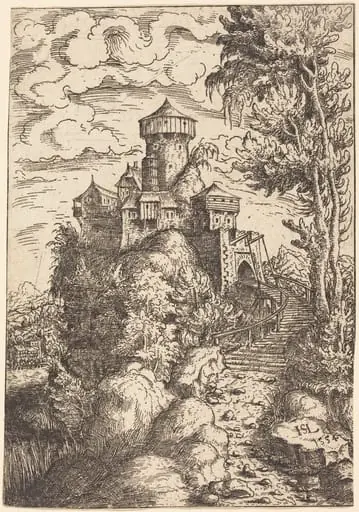
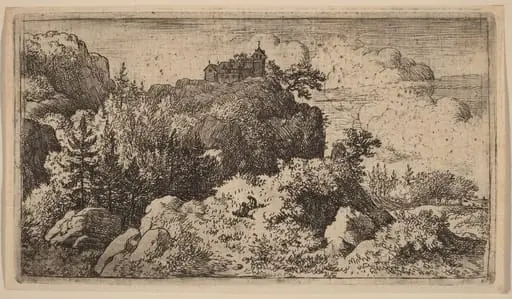
The scene depicts a rugged hill crowned by a fortified castle, overlooking a winding river that threads through a dense woodland. Small structures and boats along the water suggest human activity within a vast, quiet landscape. The composition does not narrate a specific event but evokes a contemplative atmosphere, reflecting Renaissance interest in nature as a structured, observable world rather than a symbolic realm.
Technique & Style
Lautensack employed etching, a process involving acid-bitten lines on a metal plate, to achieve delicate textures and atmospheric depth. The sky is rendered with rapid, swirling strokes that suggest movement and cloud formation, while the trees are simplified into vertical marks, enhancing the sense of scale. His use of fine, controlled lines and subtle contrasts reflects a meticulous approach to tonal gradation, typical of skilled Northern etchers of the time.
History & Provenance
Lautensack, the son of painter Paul Lautensack, worked primarily in Nuremberg before relocating to Vienna around 1556, possibly under imperial patronage. His etchings were circulated among collectors and artists, though few survive in large numbers. This particular print bears his monogram, a common practice for identifying his work. Its survival suggests it was valued within contemporary print networks, though its early ownership remains undocumented.
Context
In mid-16th century Germany, landscape prints gained popularity as independent subjects, moving beyond mere backgrounds for religious or historical scenes. Artists like Lautensack responded to growing interest in topographical accuracy and natural observation. His work aligns with a broader trend among Nuremberg printmakers who combined technical precision with poetic rendering of terrain, influenced by both local traditions and emerging Renaissance ideals.
Legacy
Lautensack’s etchings, though not widely known today, contributed to the development of landscape as a print genre in Northern Europe. His refined technique and attention to natural detail influenced later generations of printmakers. While few of his works survive, those that do offer insight into the evolving relationship between art, observation, and the printed image during the Reformation era.
Artist & collection
Artist
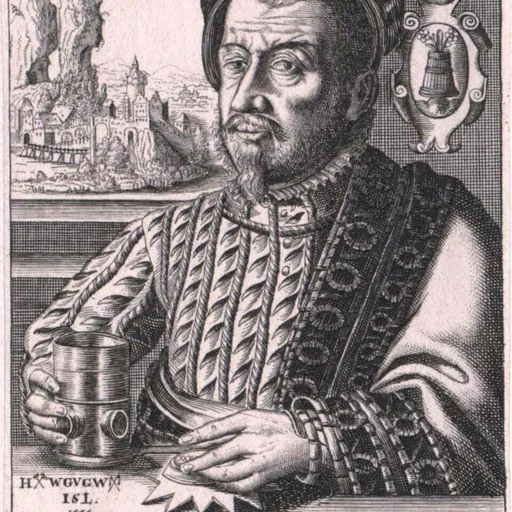
Hanns Lautensack (sometimes erroneously referred to as Hans Sebald Lautensack) (1524 – c.

![View of Nuremberg from the West [center section], by Hanns Lautensack](https://artifactworldgallery.com/img/hanns-lautensack--view-of-nuremberg-from-the-west-center-section--12422dca269411c0-w320.webp)