Artwork
The Good Samaritan
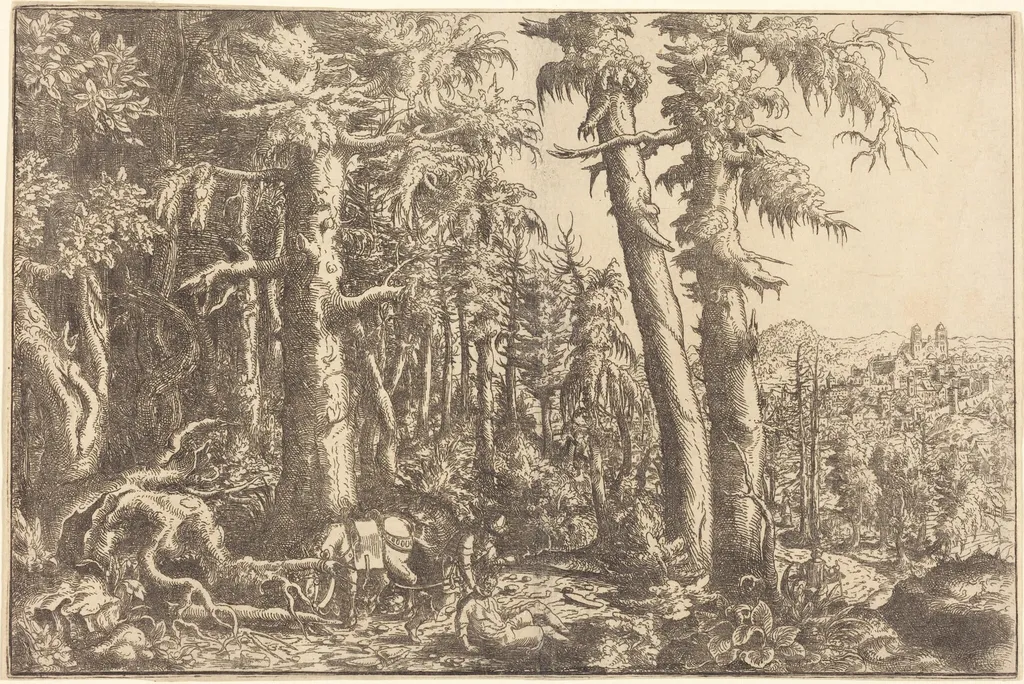
The Good Samaritan is an ink print by the Renaissance artist Hanns Lautensack. It dates from 1558 and is held in the collection of the National Gallery of Art.
About this work
Overview
The Good Samaritan is an etching by Hanns Lautensack, a German artist active in the Northern Renaissance. Created around 1558, it is a print that showcases the artist's skill in detailed printmaking.
Subject & Meaning
The etching illustrates the biblical parable of the Good Samaritan, capturing the moment when the Samaritan provides aid to an injured traveler. The scene is set in a dense forest with a distant town and winding river in the background.
Technique & Style
The print features intricate details, including twisted trees, tangled roots, and tiny figures scattered throughout the forest. The use of shadows and light creates depth, giving the trees a rough, gnarled appearance characteristic of Lautensack's work and the Northern Renaissance style.
Artist & collection
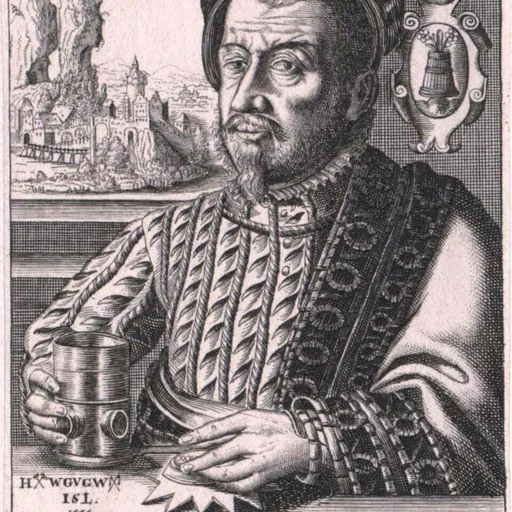
Artist
Hanns Lautensack (sometimes erroneously referred to as Hans Sebald Lautensack) (1524 – c.

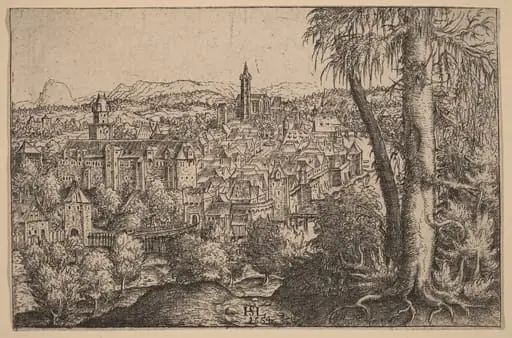
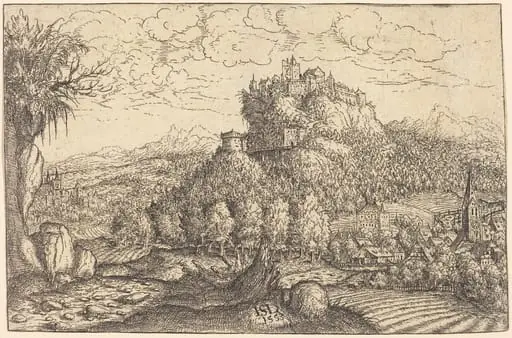
![View of Nuremberg from the West [center section], by Hanns Lautensack](https://artifactworldgallery.com/img/hanns-lautensack--view-of-nuremberg-from-the-west-center-section--12422dca269411c0-w320.webp)
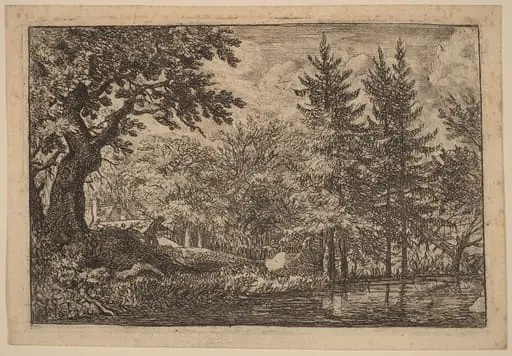 Fir Trees at the Water
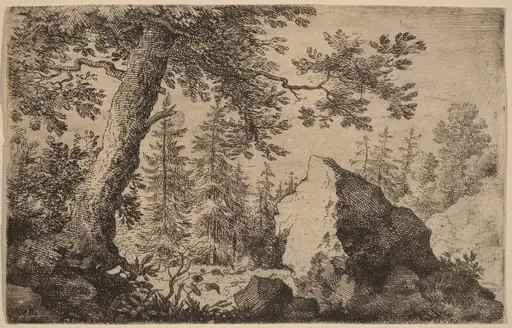 Boulder in the Woods
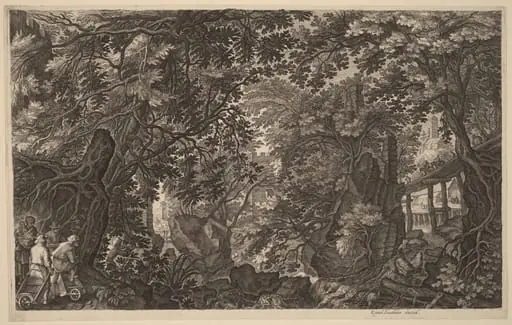 River Landscape with a Duck Hunter
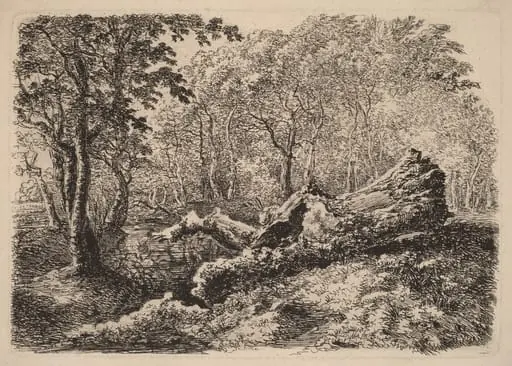 Mouldering Tree Trunk
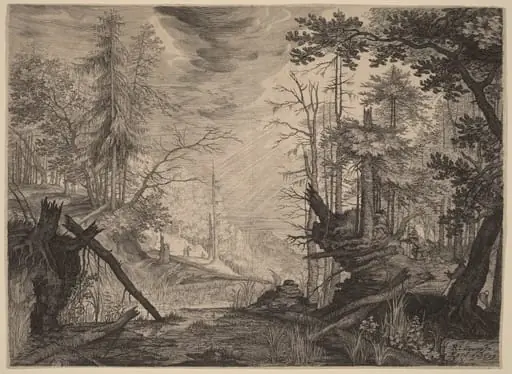 Three Hunters and Two Dogs near a Pool
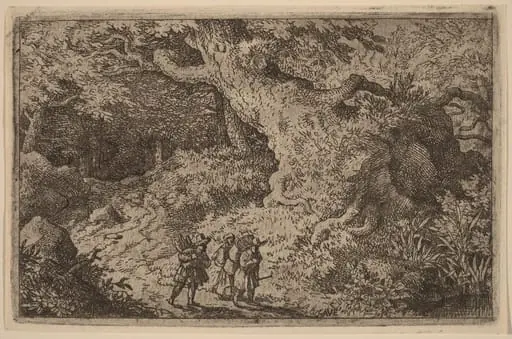 A Thick Forest
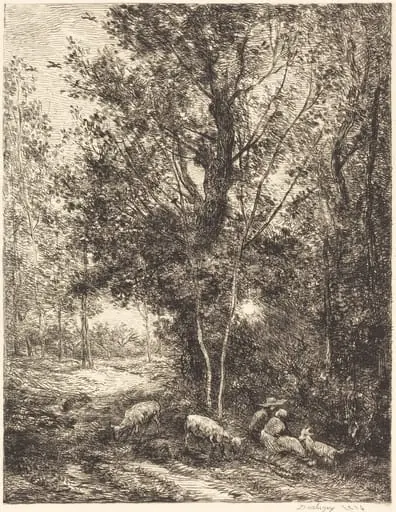 Shepherd and Shepherdess (Le Berger et la bergere)
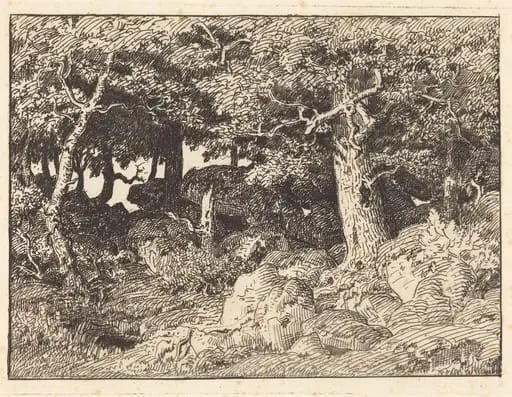 Rock Oaks
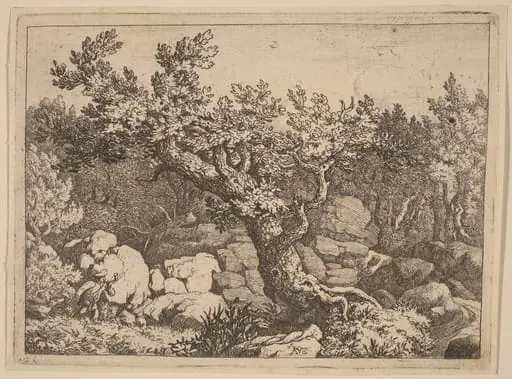 Sportsman near a Large Tree
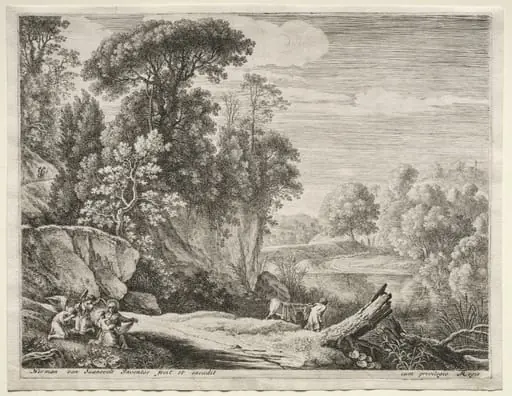 The Flight into Egypt: The Donkey Led to the River
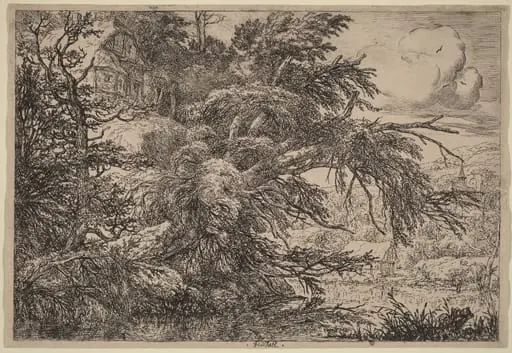 Cottage on a Hill