Artwork
A Hall In An Assyrian Temple Or Palace, Restored From Actual Remains, And From Fragments Discovered In The Ruins
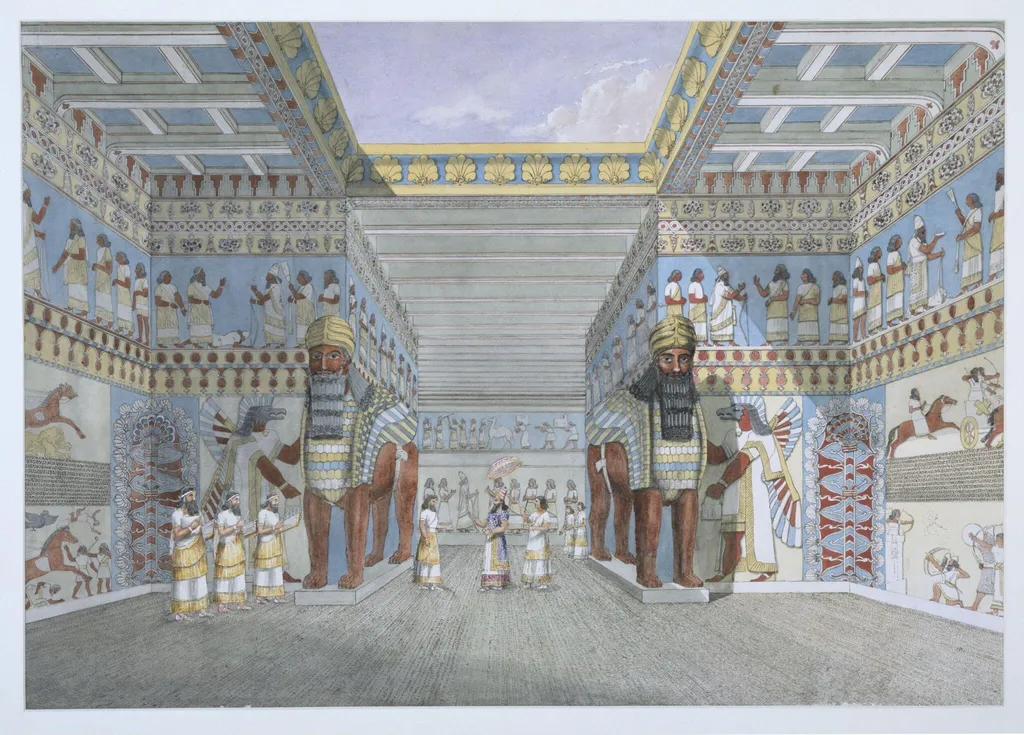
A Hall In An Assyrian Temple Or Palace, Restored From Actual Remains, And From Fragments Discovered In The Ruins is a watercolor work on paper by the Romanticist artist Austen Henry Layard. It dates from 1849 and is held in the collection of the Victoria and Albert Museum. This watercolour depicts a reconstructed Assyrian palace room, based on Layard's excavations at Nimrud.
About this work
Overview
This watercolour depicts a reconstructed Assyrian palace room, based on Layard's excavations at Nimrud. It showcases the artist's interpretation of ancient Assyrian architecture and sculpture.
Subject & Meaning
The painting represents the principal ceremonial room in the palace of King Ashurnasirpal II, featuring man-headed winged bulls. It conveys the grandeur and power of the Assyrian kingdom, as described in biblical accounts.
Technique & Style
Layard's watercolour combines actual remains with imaginative reconstruction, resulting in a vivid representation of ancient Assyrian splendour. Some details are now known to be inaccurate, reflecting the limitations of archaeological knowledge at the time.
History & Provenance
The watercolour was reproduced as a lithograph in Layard's book 'The Monuments of Nineveh' in 1849. It played a role in popularizing Assyrian archaeology and influencing artistic and literary works, including Dante Gabriel Rossetti's poem 'The Burden of Nineveh'.
Legacy
Layard's discoveries and reconstructions, including this watercolour, inspired poets and artists, and contributed to the creation of the 'Assyrian Court' at the relocated Great Exhibition building in Sydenham, South London.
Artist & collection
Artist
Austen Henry Layard dug up ancient cities in the 1840s while most people still thought ruins were just old piles of rubble.

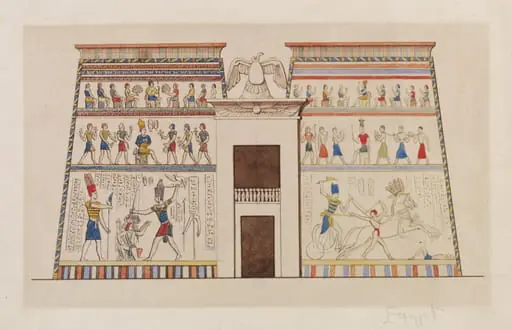 Architectural drawing of an entrance pylon to an Egyptian temple
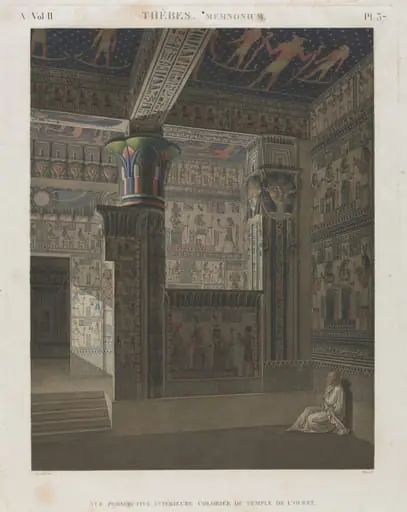 Description of Egypt: Thebes. Memnonium, Vol. II, Pl. 37
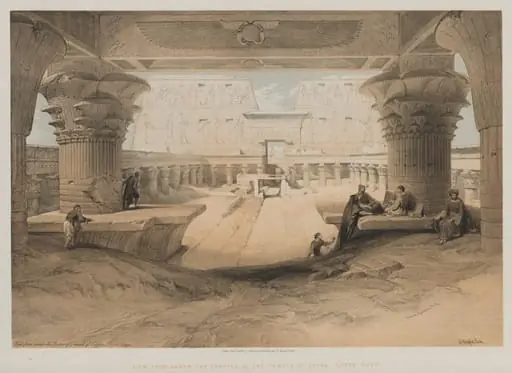 Egypt and Nubia, Volume I: View from Under the Portico of the Temple of Edfou, Upper Egypt
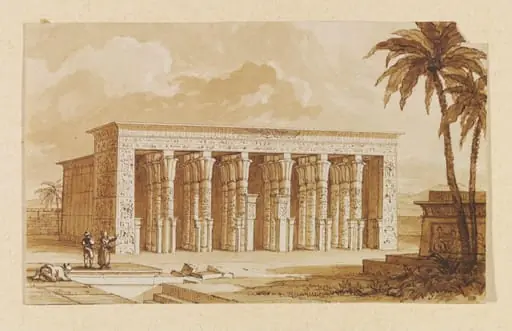 Perspective view of the Temple of Antaeopolis
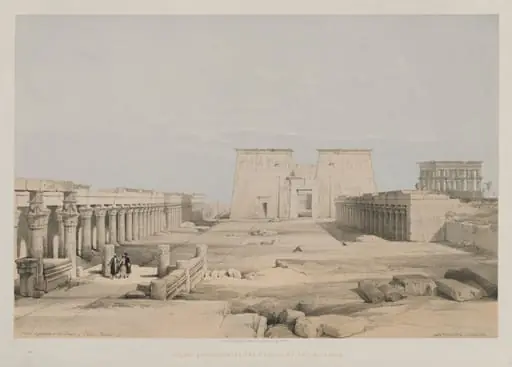 Egypt and Nubia, Volume I: Grand Approach to the Temple of Philae, Nubia
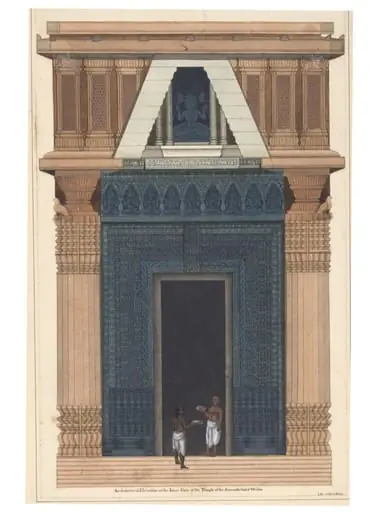 Elevation of the East Gateway of the Black Pagoda
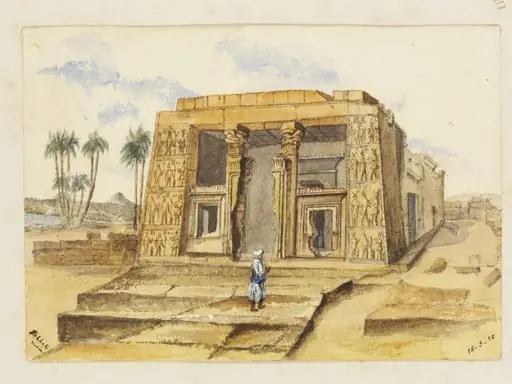 `Dakheh Nubia'
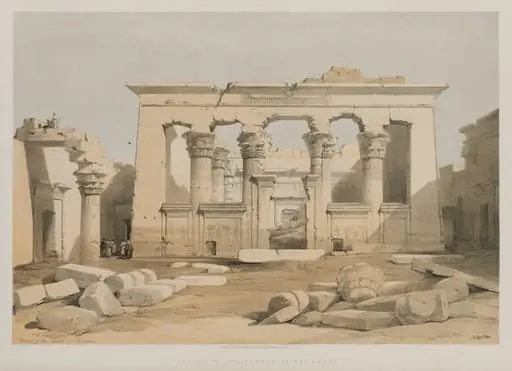 Egypt and Nubia, Volume I: Portico of the Temple of Kalabshe
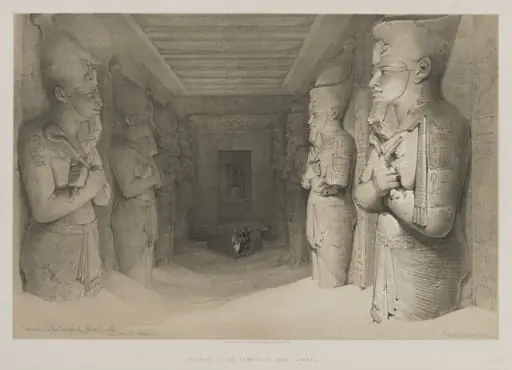 Egypt and Nubia, Volume I: Interior of the Temple of Aboo-Simbel
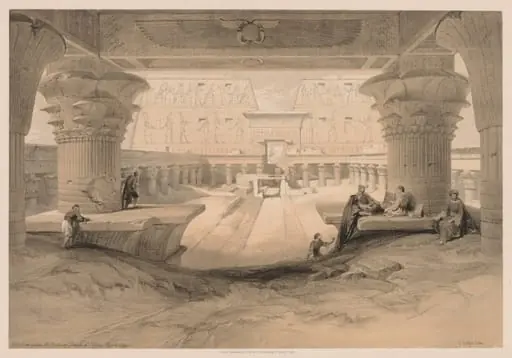 Egypt and Nubia: Volume I - No. 32, View from under the Portico of the Temple of Edfou, Upper Egypt
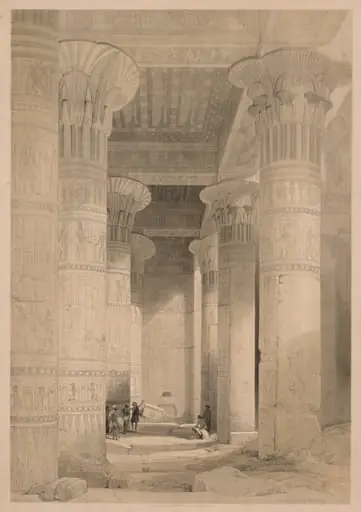 Egypt and Nubia: Volume I - Frontispiece, View under the Grand Portico, Philae
 Excavation of the Great Temple of Ramesses II at Abu Simbel