Artwork
Chien courent (Running Hound)
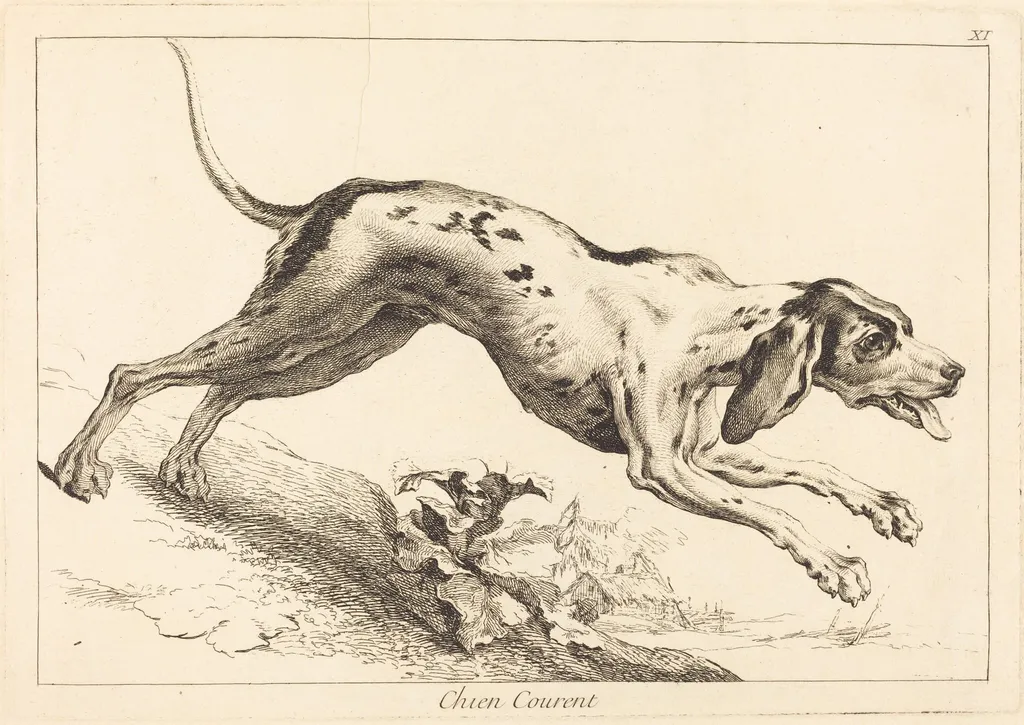
Chien courent (Running Hound) is an ink print by the Baroque artist Jacques-Philippe Le Bas. It dates from 1745 and is held in the collection of the National Gallery of Art.
About this work
Overview
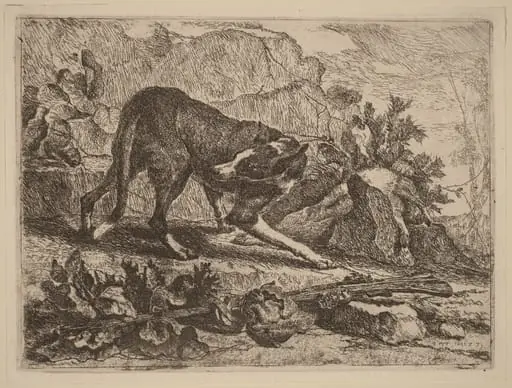
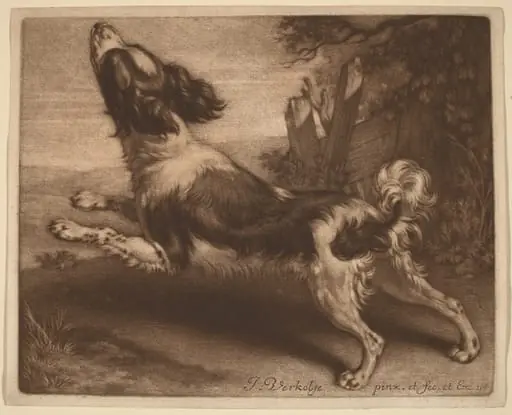
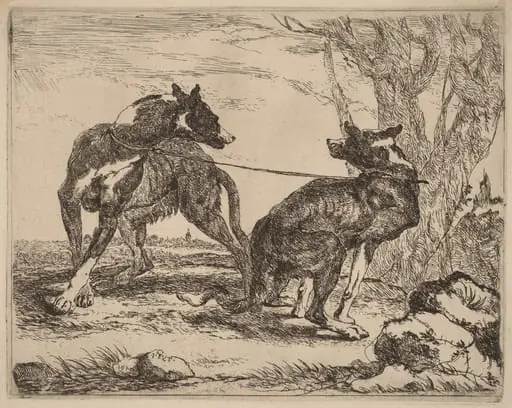
Jacques-Philippe Le Bas produced the print titled Chien courent (Running Hound) in 1745. Executed as an etching and engraving, the work depicts a single dog captured in mid‑stride, its body low to the ground and tail lifted, conveying a sense of rapid motion.
Subject & Meaning
The composition centers on a hound with an open mouth and protruding tongue, suggesting a chase—perhaps after a rabbit hidden among the grass. The animal’s muscular outline and dynamic posture emphasize vitality and the instinctual drive of the hunting dog.
Technique & Style
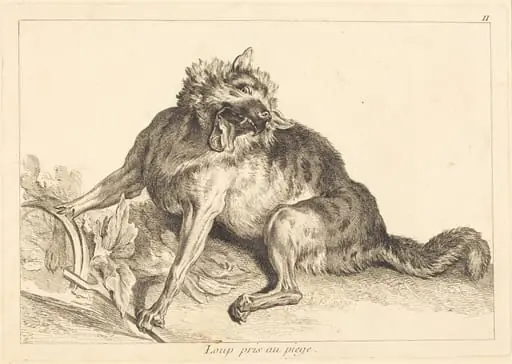
Le Bas employed fine linear incisions typical of 18th‑century engraving, using varied line weight to model the dog’s fur, musculature, and the suggestion of speed. The background is rendered with minimal foliage and a faint landscape, allowing the intricate line work on the animal to dominate the visual field.
Context
During the mid‑1700s, prints of animals were popular among collectors interested in natural history and decorative motifs. Le Bas, a prolific French printmaker, often produced works that combined scientific observation with artistic flair, situating this hound within that broader trend.
Legacy
Chien courent exemplifies the period’s skill in translating kinetic subjects into static media. The print continues to be referenced in studies of animal representation in early modern European engraving, illustrating how line can suggest movement and texture without color.
Artist & collection