Artwork
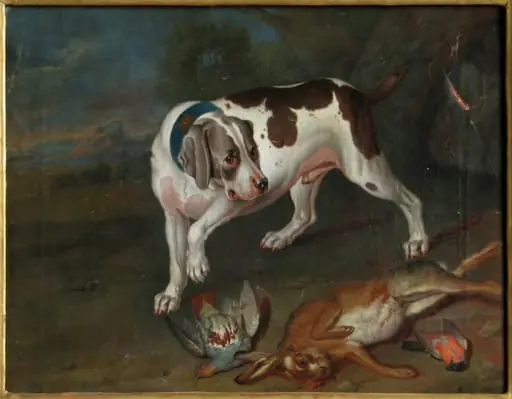
Perro y perdices
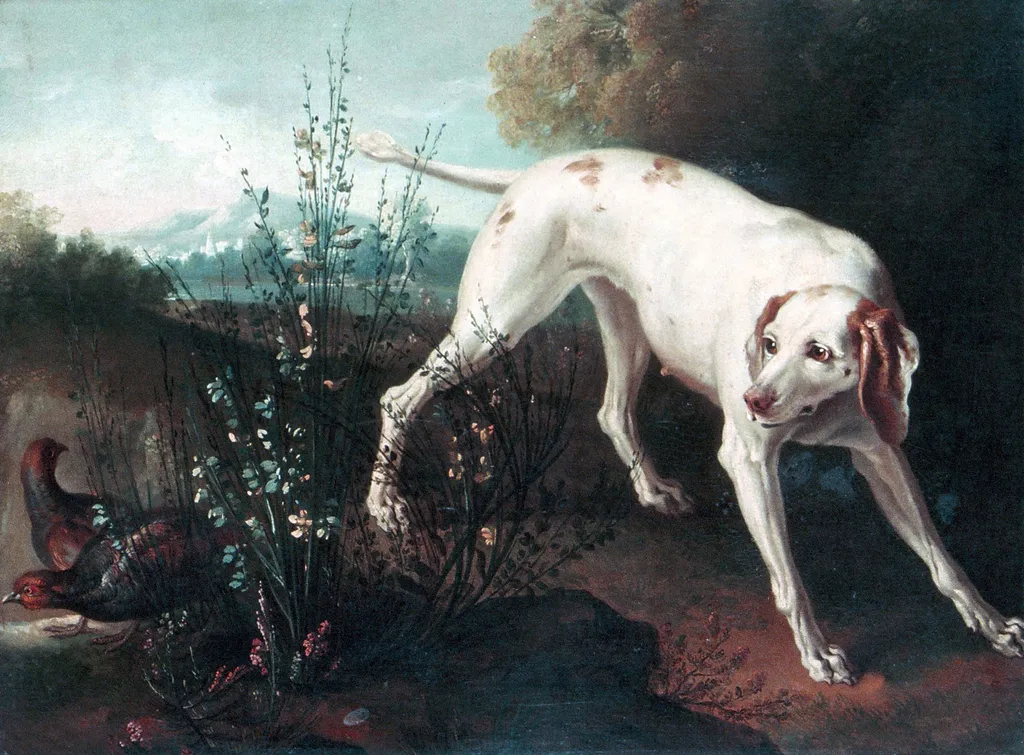
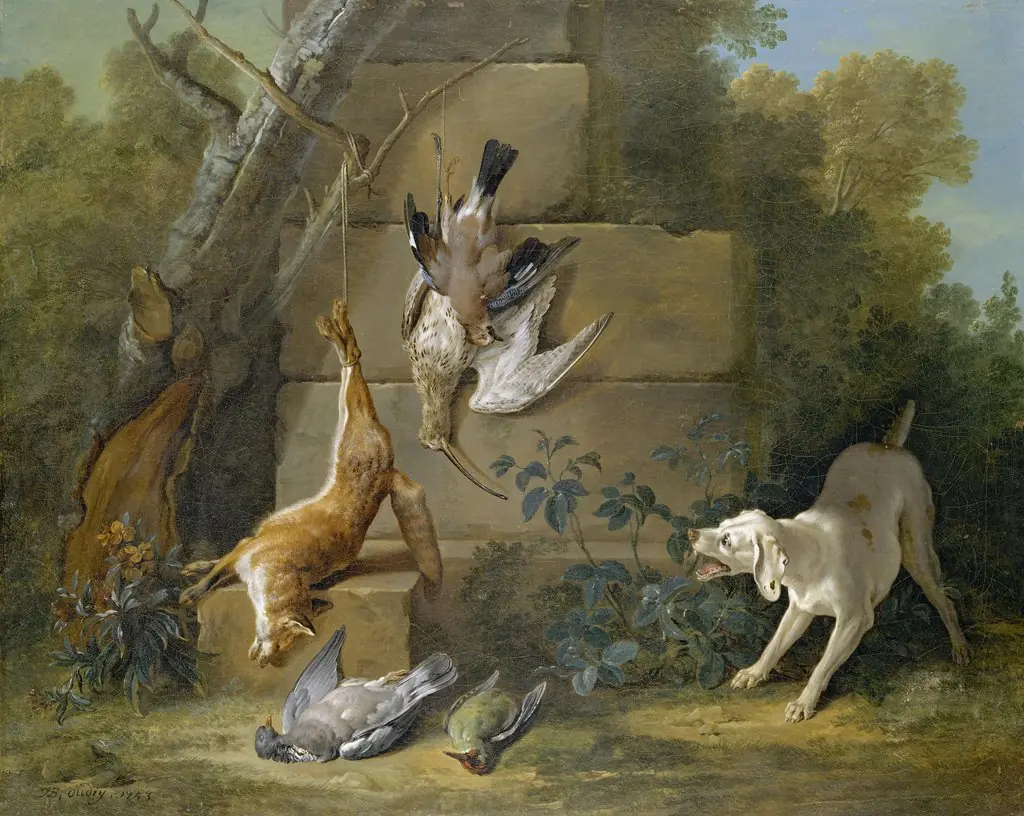
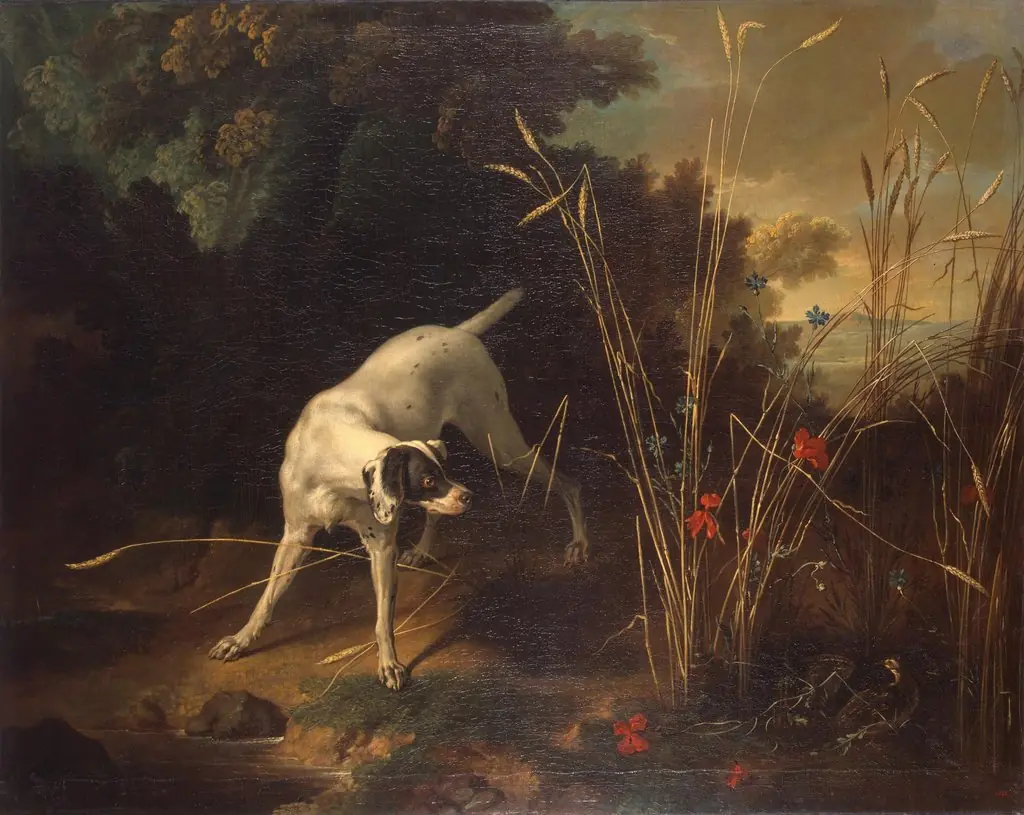
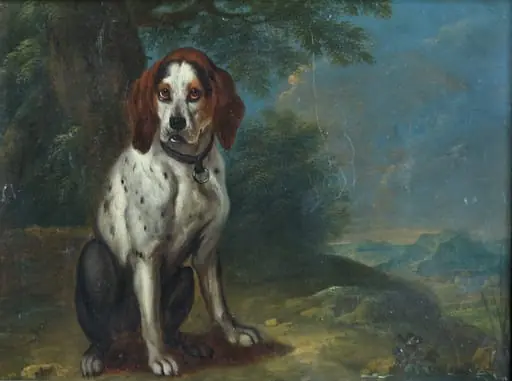
Perro y perdices is an oil painting by the Rococo painting artist Jean-Baptiste Oudry. It dates from 1730 and is held in the collection of the National Museum of Fine Arts, Argentina.
About this work
Overview
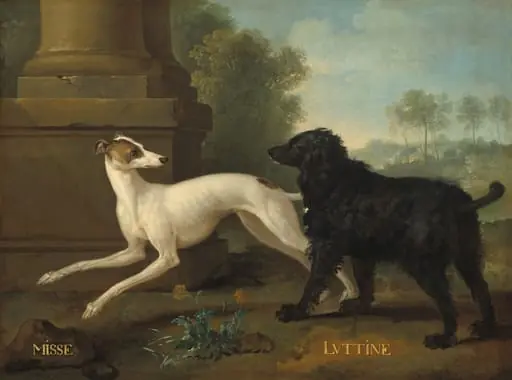
Painted around 1730 by Jean-Baptiste Oudry, this oil on canvas work depicts a white dog with brown markings standing in a quiet outdoor setting. The painting is part of the collection at the National Museum of Fine Arts in Buenos Aires. It reflects Oudry’s interest in naturalistic animal portraiture, rendered with careful attention to texture and ambient light.
Subject & Meaning
The central figure is a calm, alert dog, its gaze directed toward the viewer, suggesting a moment of pause rather than action. Beside it, a slender plant with fine leaves introduces organic contrast, while distant water and landscape imply an expansive, undisturbed environment. The composition conveys stillness and harmony, aligning with 18th-century ideals of nature as orderly and serene.
Technique & Style
The palette remains muted, dominated by earth tones and pale hues, reinforcing the tranquil mood and observational realism characteristic of his animal studies.
Oudry employs chiaroscuro to model the dog’s fur and define spatial depth, softening transitions between light and shadow. The brushwork is precise yet unobtrusive, capturing the texture of fur, foliage, and water without overt stylization. The palette remains muted, dominated by earth tones and pale hues, reinforcing the tranquil mood and observational realism characteristic of his animal studies.
History & Provenance
The painting entered the collection of the National Museum of Fine Arts in Buenos Aires in the 20th century, though its earlier ownership remains undocumented. Created during Oudry’s peak period as a royal painter in France, it likely originated as part of a series of animal subjects commissioned for aristocratic patrons, though no specific provenance before its arrival in Argentina is confirmed.
Context
In early 18th-century France, depictions of game and hunting dogs were popular among the nobility, often symbolizing status and control over nature. Oudry, appointed painter to the royal tapestry works, elevated such subjects through naturalism. This work reflects a shift from purely symbolic representations toward intimate, lifelike portrayals of animals in their environments.
Legacy
Oudry’s approach influenced later naturalist painters by prioritizing anatomical accuracy and atmospheric presence over idealization. While not among his most famous works, this painting exemplifies his contribution to the genre of animal portraiture, bridging decorative art and scientific observation. Its presence in Buenos Aires underscores the global reach of French academic traditions in the 19th and 20th centuries.
Own this work as a print
Artist & collection

Artist
Jean-Baptiste Oudry was a French Rococo painter, engraver, and tapestry designer. He is particularly well known for his naturalistic pictures of animals and his hunt pieces depicting game. His son, Jacques-Charles Oudry, was also a painter.

Museum
National Museum of Fine Arts, Argentina
Continue through works from the same source collection.