Artwork
H Beard Print Collection
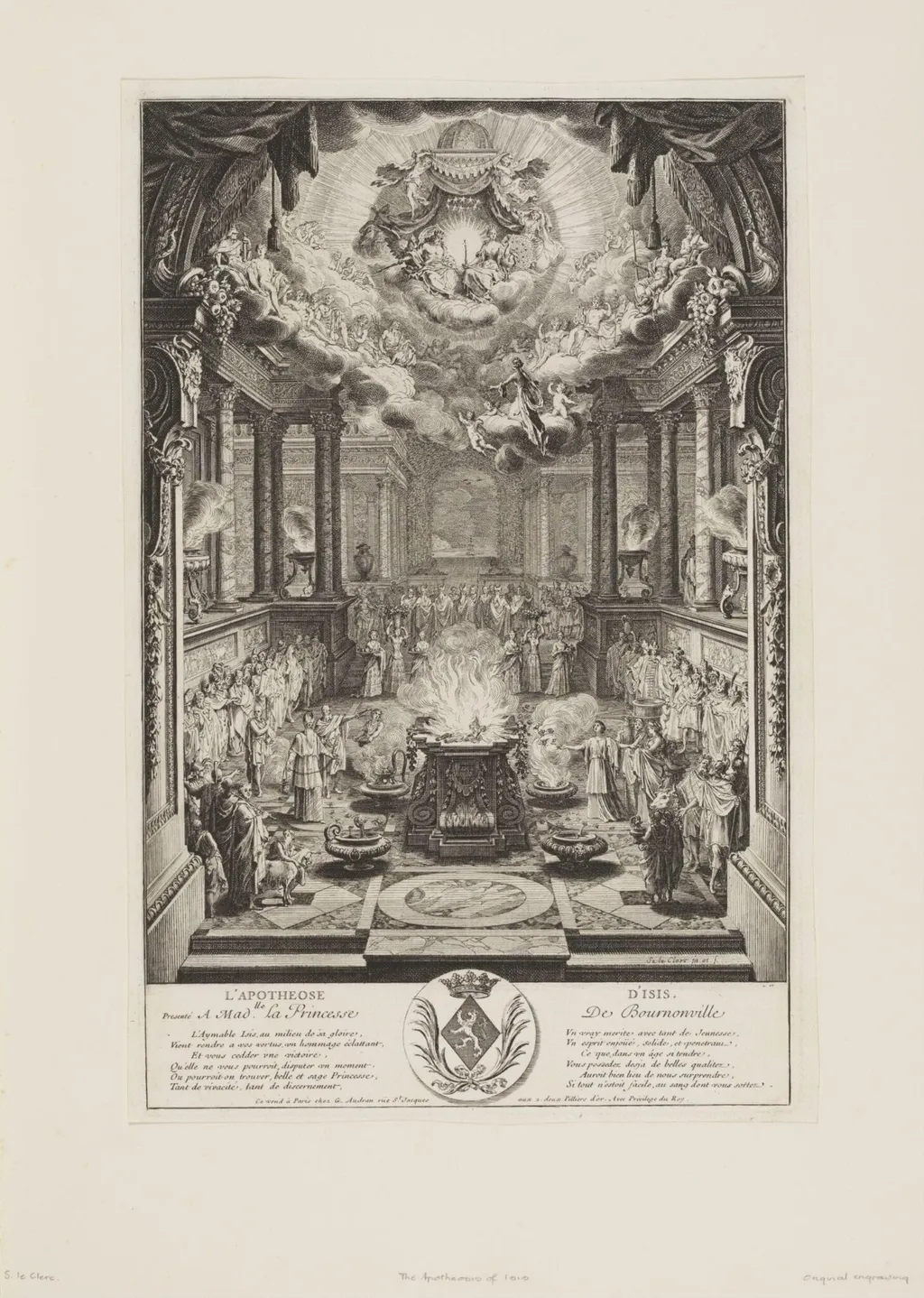
H Beard Print Collection is a print by the Baroque artist Sébastien Le Clerc. It dates from 1637 and is held in the collection of the Victoria and Albert Museum.
About this work
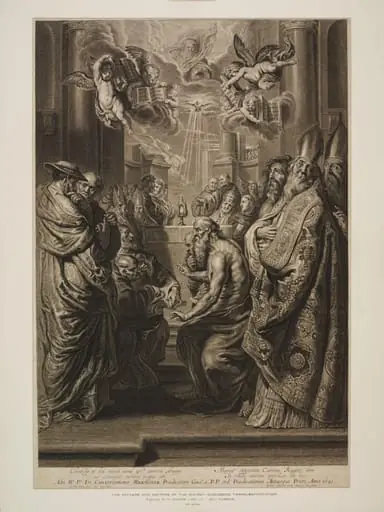
This print by Sébastien Le Clerc the Elder shows a scene from *L'Apotheose d'Isis* with the Princess of Bournonville. It’s an etching, a kind of printmaking where lines are carved into metal.
The work was made sometime between 1637 and 1714. It sits in the Victoria and Albert Museum’s collection today.
Check out Le Clerc, Sébastien (the elder) for more of his prints.
Overview
Created between 1637 and 1714, the work exemplifies Le Clerc’s skill in fine-line engraving and stage-related imagery.
This etching by Sébastien Le Clerc the Elder depicts a scene from the theatrical spectacle L'Apotheose d'Isis, featuring Mlle La Princesse de Bournonville as a central figure. Created between 1637 and 1714, the work exemplifies Le Clerc’s skill in fine-line engraving and stage-related imagery. It is part of the H Beard Print Collection held at the Victoria and Albert Museum, where it contributes to the archive of early modern European performance documentation.
Subject & Meaning
The print illustrates a moment from L'Apotheose d'Isis, a courtly theatrical allegory celebrating the divine elevation of its lead performer. Mlle La Princesse de Bournonville, a prominent dancer at the French court, is portrayed in a mythological guise, aligning her with the Egyptian goddess Isis. The imagery blends theatrical spectacle with symbolic elevation, reinforcing the aristocratic ideal of performers as embodiments of divine grace.
Technique & Style
Executed as an etching, the image relies on acid-bitten lines on a metal plate to achieve fine detail and tonal variation. Le Clerc’s hand is precise, with delicate hatching defining drapery and architectural elements. The composition is orderly and frontal, typical of stage designs of the period, emphasizing clarity and ceremonial presence over dramatic movement or emotional intensity.
History & Provenance
The print was produced during Le Clerc’s active years in Paris, likely for circulation among courtly patrons or as a record of ephemeral performances. It entered the H Beard Print Collection, a significant 19th-century assemblage of theatrical imagery, and was later acquired by the Victoria and Albert Museum. Its preservation reflects early interest in documenting performance as cultural heritage.
Context
L'Apotheose d'Isis was one of many elaborate court entertainments staged under Louis XIV, where dance and myth converged to glorify the monarchy. Prints like this served as souvenirs and propaganda, extending the reach of performances beyond the palace. Le Clerc, known for his architectural and scientific engravings, here applied his draftsmanship to the ephemeral world of ballet and spectacle.
Legacy
As a record of 17th-century French court theater, the print offers insight into the intersection of performance, iconography, and print culture. Though the original production is lost, Le Clerc’s etching preserves its visual language and the status of its performers. It remains a reference for scholars studying the material culture of early modern entertainment and the role of print in shaping public memory.
Artist & collection

Artist
Sébastien Leclerc or Le Clerc was an artist from the French province of the Three Bishoprics.

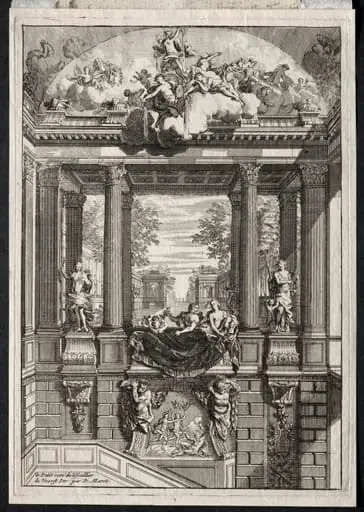 Staircase at the Palace of Voorst in Holland
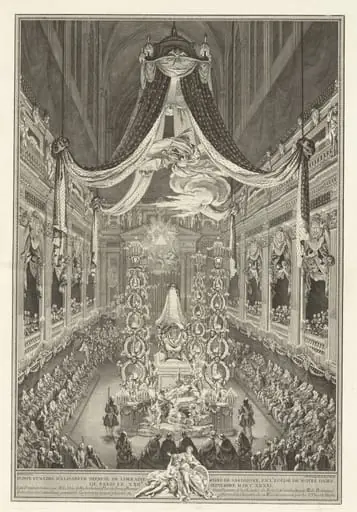 Pompe funèbre d'Élisabeth Therèse de Lorraine
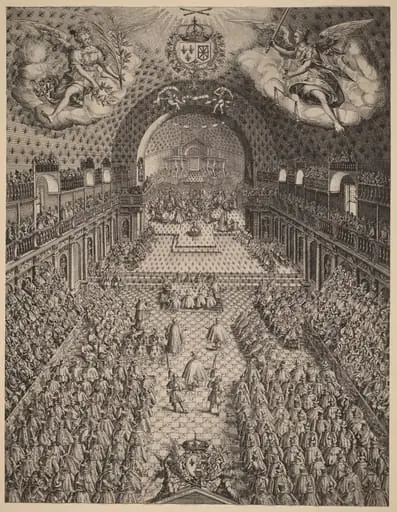 The States General of France (Les Etats Generaux de France)
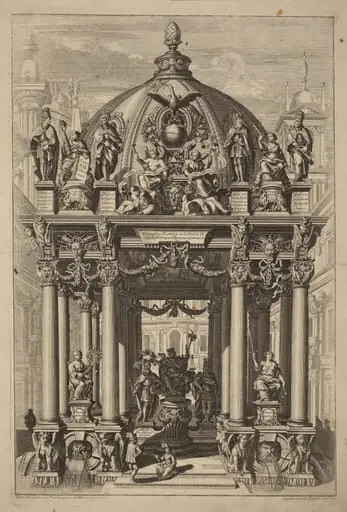 Triumphal Arch for Lotharius II
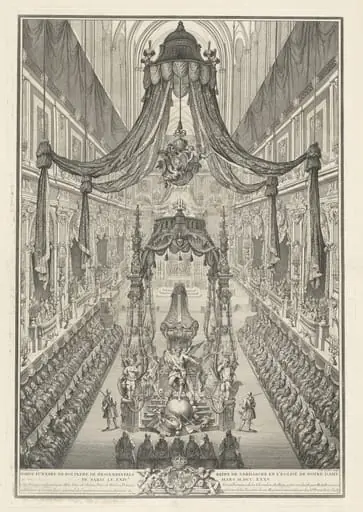 Pompe funèbre de Polixène de Hesse-Rhinfels
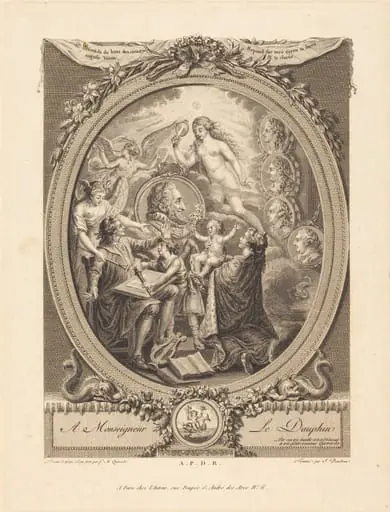 Allegory in Honor of Henri IV
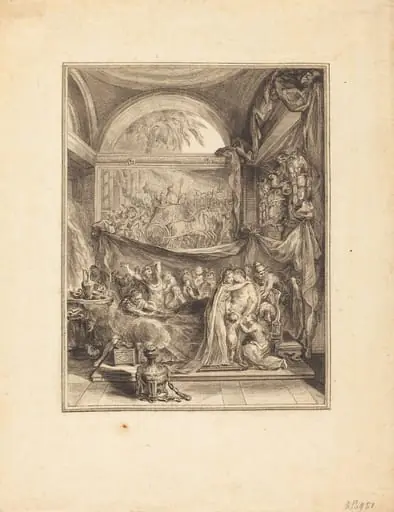 La mort de Germanicus
![Coupole du Salon de la Guerre (Cupola of the Salon of War) [pl. 35], by Jean-Baptiste Massé](https://artifactworldgallery.com/img/jean-baptiste-masse--coupole-du-salon-de-la-guerre-cupola-of-the-salon-of-war-pl--2b9793f18c09c4bc-w320.webp) Coupole du Salon de la Guerre (Cupola of the Salon of War) [pl. 35]
Coupole du Salon de la Guerre (Cupola of the Salon of War) [pl. 35]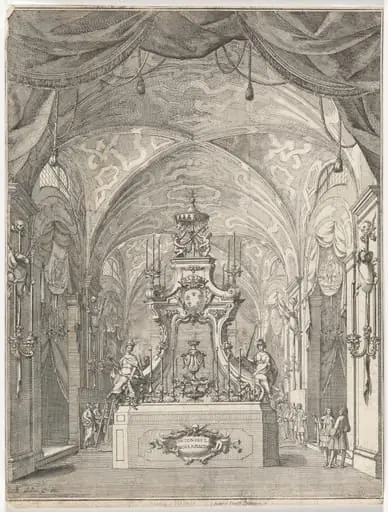 Catafalque for the Funeral of the Duke of Parma Antonio I in the Church of S. Maria Maddalena in Bologna
 Untitled
![Interior of the Minor Church (Interno della chiesa minore) [plate F], by Jacopo Ligozzi](https://artifactworldgallery.com/img/jacopo-ligozzi--interior-of-the-minor-church-interno-della-chiesa-minore-pla--c09c0b35db0c2fbf-w320.webp) Interior of the Minor Church (Interno della chiesa minore) [plate F]
Interior of the Minor Church (Interno della chiesa minore) [plate F]