Artwork
Coupole du Salon de la Guerre (Cupola of the Salon of War) [pl. 35]
![Coupole du Salon de la Guerre (Cupola of the Salon of War) [pl. 35], by Jean-Baptiste Massé, ink, 1752](https://artifactworldgallery.com/img/jean-baptiste-masse--coupole-du-salon-de-la-guerre-cupola-of-the-salon-of-war-pl--2b9793f18c09c4bc-w1024.webp)
Coupole du Salon de la Guerre (Cupola of the Salon of War) [pl. 35] is an ink print by the Romanticist artist Jean-Baptiste Massé. It dates from 1752 and is held in the collection of the National Gallery of Art.
About this work
Overview
At its core stands a female figure on a cloud, spear in hand, surrounded by winged and armed figures, while a chaotic battle unfolds beneath.
The 1752 engraving titled *Coupole du Salon de la Guerre* presents a circular composition that combines an imagined architectural interior with a mythic tableau. At its core stands a female figure on a cloud, spear in hand, surrounded by winged and armed figures, while a chaotic battle unfolds beneath. Ornamental borders frame the scene, filled with smaller narrative vignettes rendered in fine line work.
Subject & Meaning
The central allegorical woman, poised on a cloud, likely symbolizes Victory or the triumph of war, her spear reinforcing martial authority. The surrounding airborne participants, some winged, suggest divine or heroic intervention, whereas the ground-level combat depicts the human cost of conflict. Together the elements convey a celebratory yet complex vision of warfare as both a celestial endorsement and a terrestrial struggle.
Technique & Style
Executed as an engraving on laid paper, the image relies on delicate, intersecting lines to model space, texture, and movement. Massé’s precise hatching creates depth within the vaulted interior and the crowded figures, while the ornamental margins display a decorative baroque sensibility. The print’s linear clarity allows intricate details—such as armor, horse tack, and cloud formations—to be reproduced faithfully for multiple copies.
History & Provenance
Created by Jean‑Baptiste Massé, a French miniature painter and court artist to Louis XV, the work formed part of a larger series of history paintings. Massé is also noted for his role in the *Galerie de Versailles* publications, which documented Charles Le Brun’s oeuvre. The engraving has survived in several museum collections, reflecting its inclusion in 18th‑century print portfolios circulated among aristocratic patrons.
Context
The cupola design references the grand salons of Versailles, where military triumphs were often celebrated through elaborate decorative programs. Produced during the reign of Louis XV, the print aligns with contemporary propaganda that linked royal authority to victorious warfare. Massé’s training of artists such as Jean‑Étienne Liotard and Cornelius Høyer further situates the engraving within a network of courtly artistic production.
Artist & collection
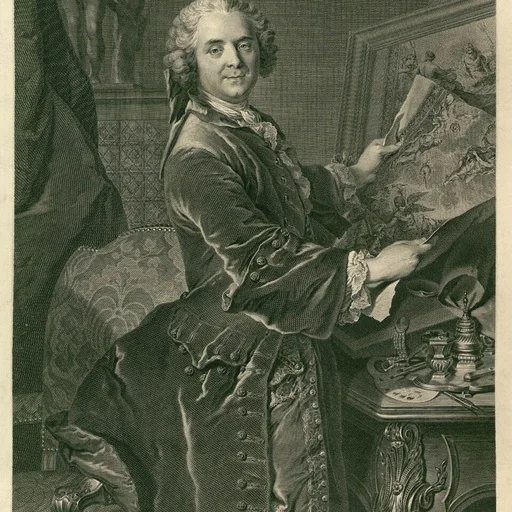
Artist
Jean-Baptiste Massé (29 December 1687, in Paris – 26 September 1767, in Paris) was a French miniature painter, engraver, and draftsman, best remembered as the court painter of Louis XV, for training Jean-Étienne Liotard…

 Pierre Louis Dubus (1721–1799), Called Préville, of the Comédie-Française
![Protection accordée aux beaux-arts 1663 (Protection Granted to the Fine Arts 1663) [pl. 24], by Jean-Baptiste Massé](https://artifactworldgallery.com/img/jean-baptiste-masse--protection-accordee-aux-beaux-arts-1663-protection-granted-t--045f3db9c3e49b51-w320.webp) Protection accordée aux beaux-arts 1663 (Protection Granted to the Fine Arts 1663) [pl. 24]
Protection accordée aux beaux-arts 1663 (Protection Granted to the Fine Arts 1663) [pl. 24]![Coupole du Salon de la Paix (Cupola of the Salon of Peace) [pl. 44], by Jean-Baptiste Massé](https://artifactworldgallery.com/img/jean-baptiste-masse--coupole-du-salon-de-la-paix-cupola-of-the-salon-of-peace-pl--083dda9da8b00531-w320.webp) Coupole du Salon de la Paix (Cupola of the Salon of Peace) [pl. 44]
Coupole du Salon de la Paix (Cupola of the Salon of Peace) [pl. 44]![La Prééminence de la France reconnue par l'Espagne 1662 (The Preeminance of France Recognized by Spain 1662) [pl. 17], by Jean-Baptiste Massé](https://artifactworldgallery.com/img/jean-baptiste-masse--la-preeminence-de-la-france-reconnue-par-l-espagne-1662-the--0865c0d8271fc4b5-w320.webp) La Prééminence de la France reconnue par l'Espagne 1662 (The Preeminance of France Recognized by Spain 1662) [pl. 17]
La Prééminence de la France reconnue par l'Espagne 1662 (The Preeminance of France Recognized by Spain 1662) [pl. 17]![L'Allemagne Cintre du Salon de la Guerre du côté des appartemens du Roi (Germany, Center of the Salon of War next to the King's Chambers) [pl. 37], by Jean-Baptiste Massé](https://artifactworldgallery.com/img/jean-baptiste-masse--l-allemagne-cintre-du-salon-de-la-guerre-du-cote-des-apparte--107e6bb2bd4fa1ce-w320.webp) L'Allemagne Cintre du Salon de la Guerre du côté des appartemens du Roi (Germany, Center of the Salon of War next to the King's Chambers) [pl. 37]
L'Allemagne Cintre du Salon de la Guerre du côté des appartemens du Roi (Germany, Center of the Salon of War next to the King's Chambers) [pl. 37]![L'Espagne Cintre du Salon de la Paix sur l'Arcade de la Galerie (Spain, Center of the Salon of Peace in the Gallery's Arcade) [pl. 47], by Jean-Baptiste Massé](https://artifactworldgallery.com/img/jean-baptiste-masse--l-espagne-cintre-du-salon-de-la-paix-sur-l-arcade-de-la-gale--1780f995882c221b-w320.webp) L'Espagne Cintre du Salon de la Paix sur l'Arcade de la Galerie (Spain, Center of the Salon of Peace in the Gallery's Arcade) [pl. 47]
L'Espagne Cintre du Salon de la Paix sur l'Arcade de la Galerie (Spain, Center of the Salon of Peace in the Gallery's Arcade) [pl. 47]![L'Europe Chrêtienne en Paix Cintre du Salon de la Paix du côté des appartemens de la Reine (Christian Europe in Peace, Center of the Salon of Peace next to the Queen's Chambers) [pl. 45], by Jean-Baptiste Massé](https://artifactworldgallery.com/img/jean-baptiste-masse--l-europe-chretienne-en-paix-cintre-du-salon-de-la-paix-du-co--42b41626259ce77e-w320.webp) L'Europe Chrêtienne en Paix Cintre du Salon de la Paix du côté des appartemens de la Reine (Christian Europe in Peace, Center of the Salon of Peace next to the Queen's Chambers) [pl. 45]
L'Europe Chrêtienne en Paix Cintre du Salon de la Paix du côté des appartemens de la Reine (Christian Europe in Peace, Center of the Salon of Peace next to the Queen's Chambers) [pl. 45]![L'Allemagne Cintre du Salon de la Paix en face de la Galerie (Germany, Center of the Salon of Peace Opposite the Gallery) [pl. 46], by Jean-Baptiste Massé](https://artifactworldgallery.com/img/jean-baptiste-masse--l-allemagne-cintre-du-salon-de-la-paix-en-face-de-la-galerie--447dbb6c5f024d11-w320.webp) L'Allemagne Cintre du Salon de la Paix en face de la Galerie (Germany, Center of the Salon of Peace Opposite the Gallery) [pl. 46]
L'Allemagne Cintre du Salon de la Paix en face de la Galerie (Germany, Center of the Salon of Peace Opposite the Gallery) [pl. 46]
 Collection of Various Caprices and New Designs of Cartouches and Ornaments: No 11
 Quarts de plafons
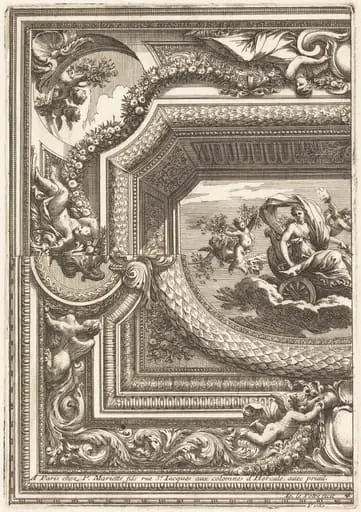 Quarts de plafons
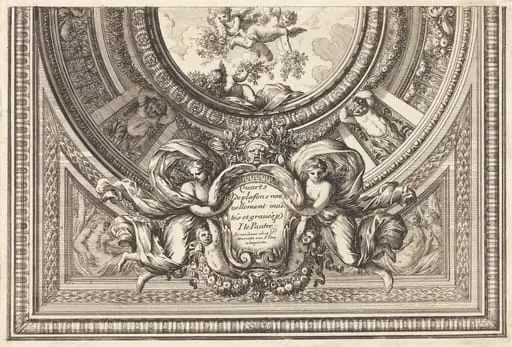 Title Page
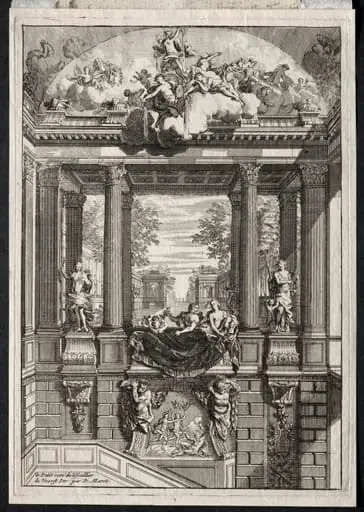 Staircase at the Palace of Voorst in Holland
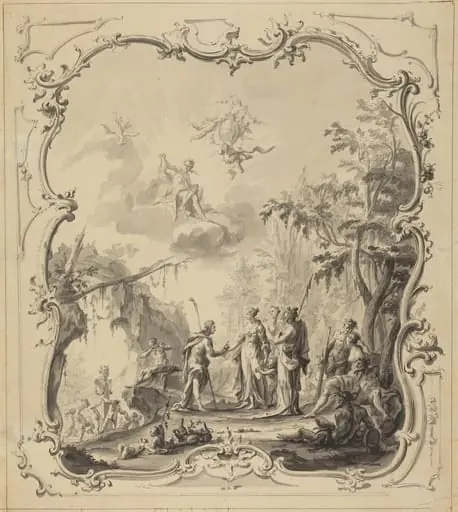 The Judgment of Paris
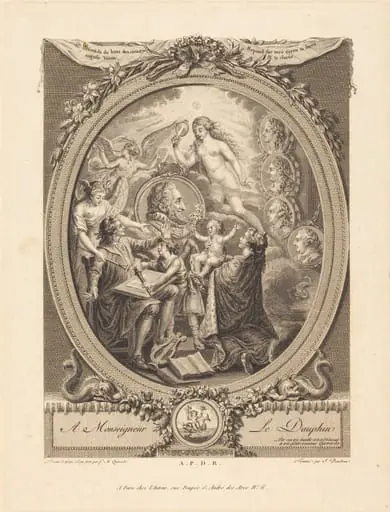 Allegory in Honor of Henri IV
![Renouvellement d'Alliance avec les Suisses 1663 (Renewal of Alliance with the Swiss 1663) [pl. 18], by Jean-Baptiste Massé](https://artifactworldgallery.com/img/jean-baptiste-masse--renouvellement-d-alliance-avec-les-suisses-1663-renewal-of-a--b0549fa383211be6-w320.webp) Renouvellement d'Alliance avec les Suisses 1663 (Renewal of Alliance with the Swiss 1663) [pl. 18]
Renouvellement d'Alliance avec les Suisses 1663 (Renewal of Alliance with the Swiss 1663) [pl. 18]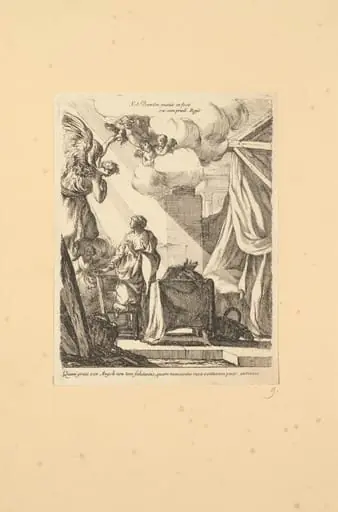 The Annunciation
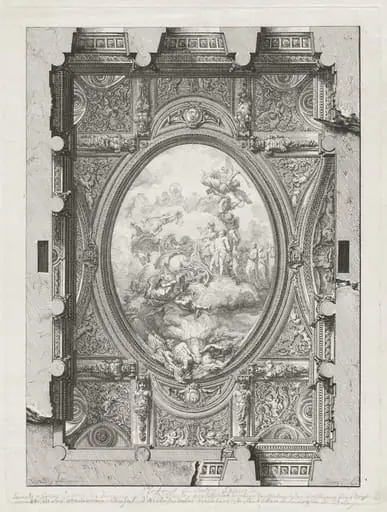 Design for the Ceiling of the Salon of the Palazzo Spinola, Genoa