Artwork
Julie s'évanouit dans un fauteuil
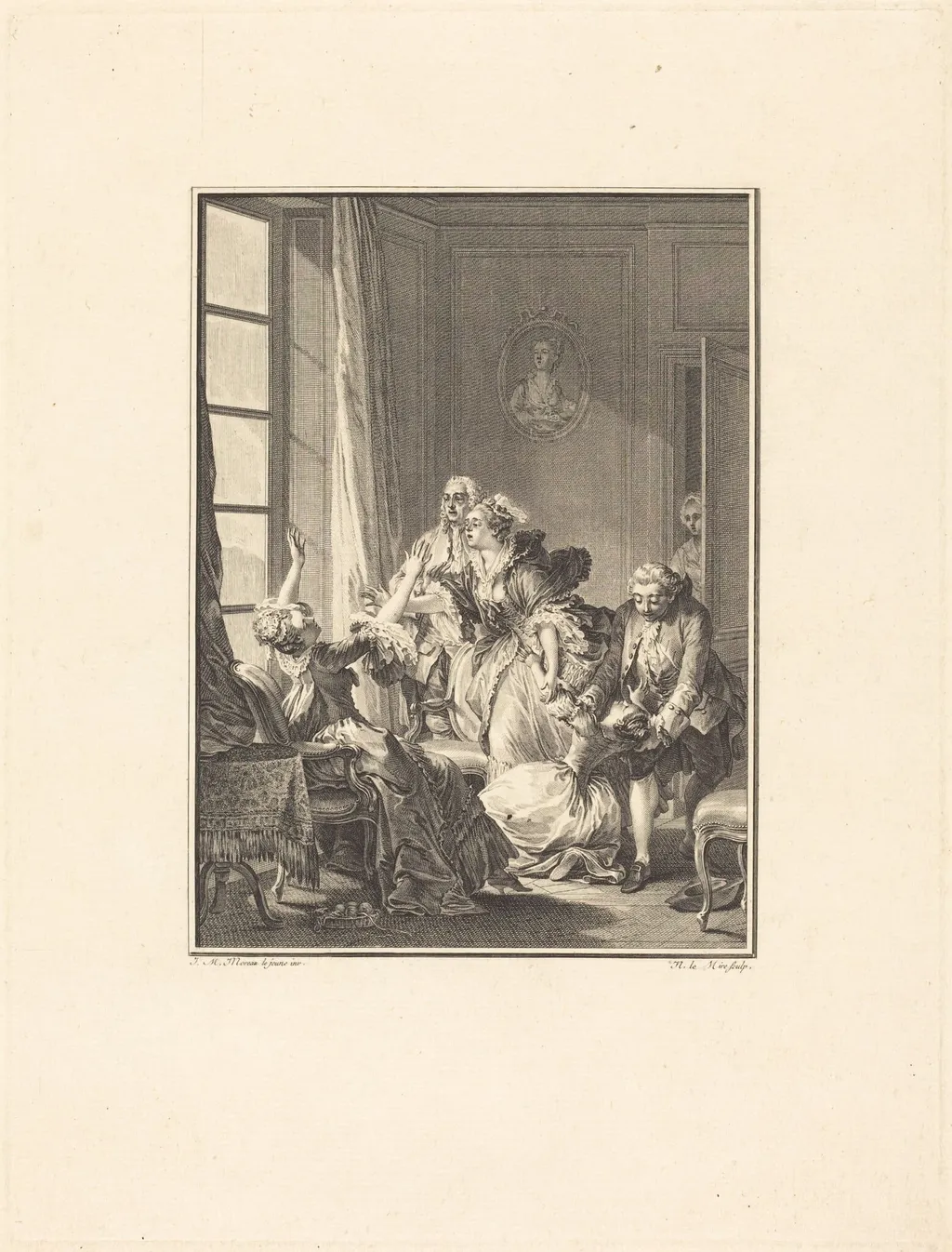
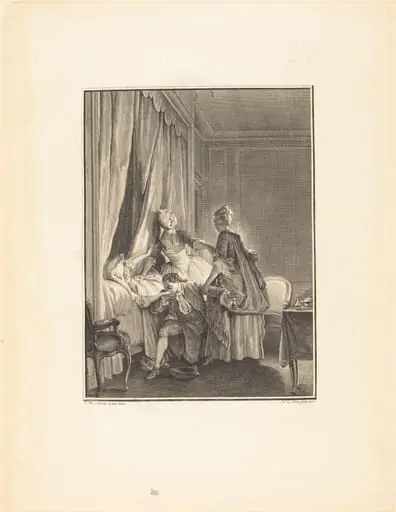
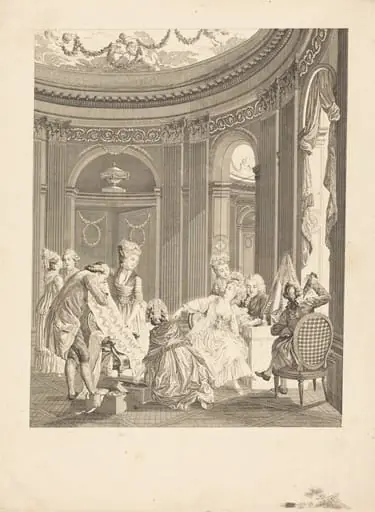
Julie s'évanouit dans un fauteuil is an ink print by the Baroque artist Noël Le Mire. It dates from 1762 and is held in the collection of the National Gallery of Art.
About this work
Overview
Julie s'évanouit dans un fauteuil is a black-and-white print made in 1762 by Noël Le Mire using etching and engraving techniques.
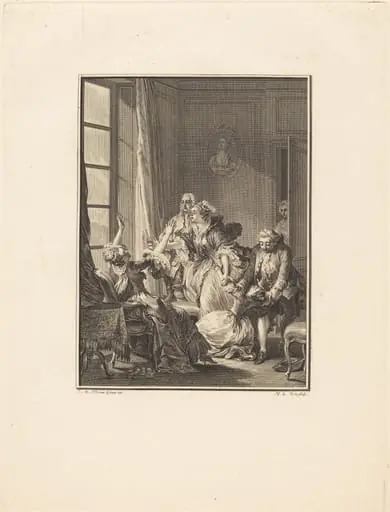
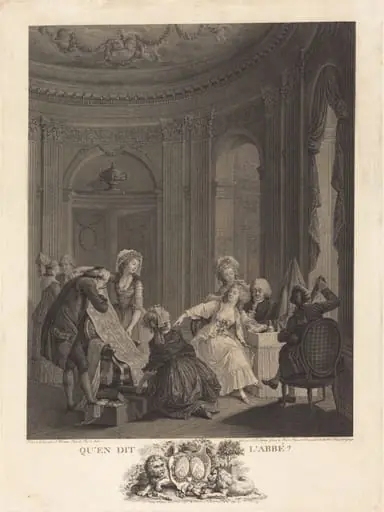
Julie s'évanouit dans un fauteuil is a black-and-white print made in 1762 by Noël Le Mire using etching and engraving techniques. It depicts a domestic moment of sudden distress: a woman collapses into an armchair while those around her react with concern. The composition is tightly framed, emphasizing the emotional tension without overt theatricality, characteristic of 18th-century narrative prints intended for private collections.
Subject & Meaning
The scene captures a moment of physical collapse, likely representing a fainting fit common in depictions of refined femininity during the period. The figures surrounding Julie—some reaching, others hesitating—suggest social etiquette and emotional restraint. The inclusion of a small portrait on the wall may imply familial connection or moral reflection, grounding the drama in domestic realism rather than myth or grand history.
Technique & Style
Le Mire employed fine, controlled lines typical of engraving to define textures and gestures, from the folds of silk to the tension in outstretched hands. The contrast between the dim interior and the faint light from curtained windows enhances the scene’s intimacy. Sharp contours and minimal shading focus attention on facial expressions and body language, conveying psychological nuance without color or elaborate detail.
History & Provenance
Created in 1762, the print was likely produced for a market interested in sentimental and moralizing imagery. Though specific early owners are unrecorded, such works circulated among middle-class collectors who valued narrative art for its emotional resonance. Its survival in institutional collections today reflects its status as a representative example of French printmaking in the decades before the Revolution.
Context
In mid-18th-century France, prints like this were popular for their accessibility and moral undertones. Fainting scenes, often tied to female vulnerability, aligned with contemporary ideals of sensibility and emotional refinement. Le Mire’s work fits within a broader tradition of domestic genre scenes, where private moments were rendered with precision to appeal to viewers’ sense of propriety and empathy.
Legacy
Though not widely known today, Julie s'évanouit dans un fauteuil remains a quiet example of how printmakers translated social norms into visual language. Its preservation in museum collections underscores its value as a document of 18th-century visual culture, illustrating how everyday emotions were framed through art for contemplation rather than spectacle.
Artist & collection